
 Pevita Pearce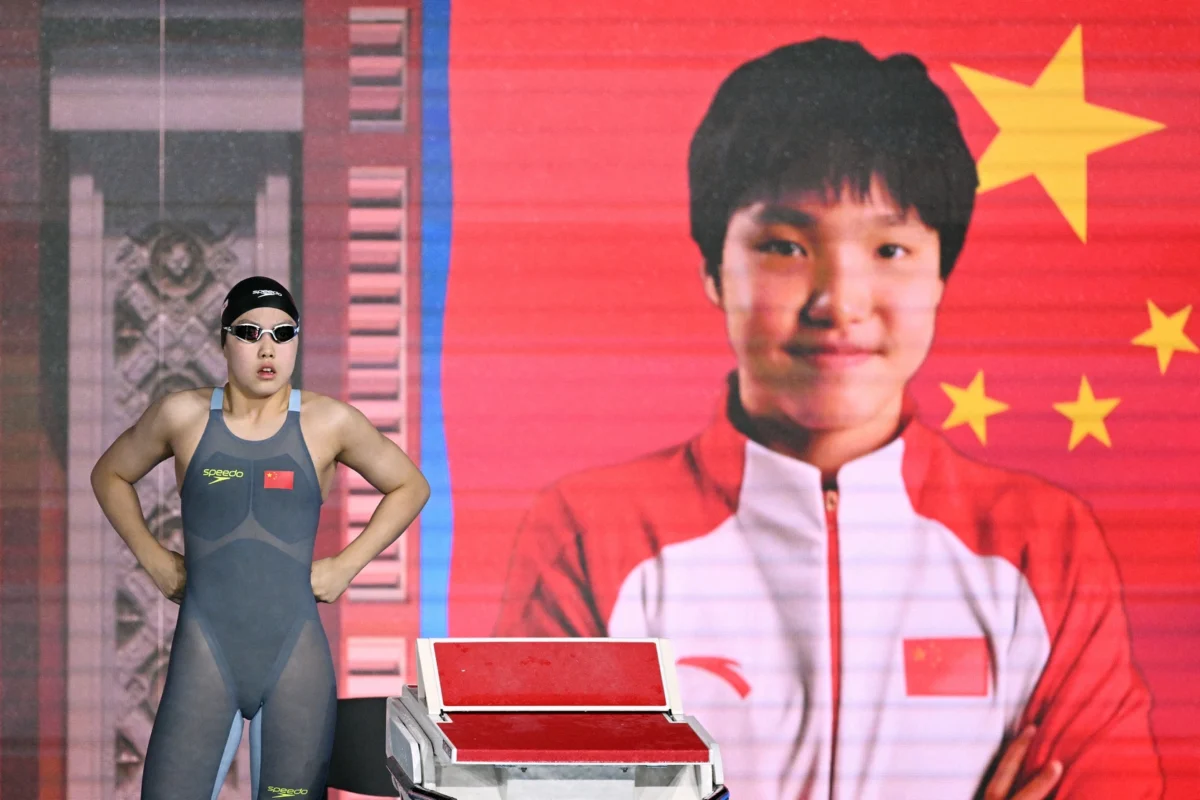
Yu Zidi, the prodigious Chinese swimmer who etched her name into the annals of sporting history last year by becoming the youngest-ever medallist at the swimming world championships at just 12 years old, now stands at the vanguard of China’s ambitious bid for supremacy at the upcoming Asian Games. Her meteoric rise has not only captivated the global swimming community but has also firmly placed Olympic glory within her sights as she embarks on the next chapter of her burgeoning career as a teenager.
The Ascent of a Young Star: A Chronology of Breakthroughs
Yu Zidi’s journey from a promising junior to a global sensation has been remarkably swift and impactful. Born and raised in Baoding, a city approximately 150 kilometres south of Beijing, Yu began her swimming odyssey at the tender age of six. Her inherent talent was evident early on, but it was her performance in 2025 that truly announced her arrival on the international stage.
At the 2025 World Aquatics Championships held in Singapore, then aged 12, Yu Zidi made headlines for her extraordinary prowess. While she did not swim in the final of the 4x200m women’s freestyle relay, her crucial contribution in the heats helped the Chinese team qualify. China subsequently secured a third-place finish in the final, earning Yu a historic bronze medal and making her the youngest medallist in the history of the championships. This achievement was particularly significant given the competitive landscape of elite international swimming, where physical maturity and extensive experience often dictate success.

Beyond her relay success, Yu narrowly missed individual medals in several highly competitive events, demonstrating her versatility and depth across various strokes and distances. She clinched fourth place in the 200m individual medley, the 400m individual medley, and the 200m butterfly. These performances, while not podium finishes, underscored her potential to compete at the highest level against seasoned international athletes. Her times in these events were remarkably competitive, placing her within striking distance of the world’s best. For instance, a fourth-place finish in a World Championship final, especially for a swimmer of her age, is often seen as a strong indicator of future medal potential.
The momentum from the World Championships carried into November of the same year when Yu, having just turned 13, competed at China’s National Games. There, she delivered another stunning performance, clocking a blistering 2:07.41 in the women’s 200m medley. This time not only secured her a victory but also set a new Asian record for the event, further solidifying her status as a generational talent within the continent. The Asian record shattered previous benchmarks, signaling a new era for Chinese swimming and highlighting Yu’s capacity to consistently perform at an elite level.
Her current focus is squarely on the upcoming Asian Games in Aichi-Nagoya, Japan, scheduled to open on September 19. While training with the national team in Beijing, she conveyed her excitement for her Asian Games debut to local media, stating, “Train well, don’t slack off. Demonstrate the level of your training and work hard to break past yourself.” This quote, reported by state news agency Xinhua, reflects a determined mindset characteristic of top athletes, even at such a young age.
China’s Swimming Prowess and the National Talent Pipeline
China has long been a formidable force in global swimming, consistently producing Olympic and World Champions. The nation’s success is rooted in a highly structured and comprehensive sports development system designed to identify and nurture talent from a very young age. This system integrates specialized sports schools, rigorous training regimes, and a strong emphasis on national pride and achievement. Athletes like Yu Zidi are often identified in early childhood and integrated into provincial and national training programs, receiving intensive coaching, nutritional support, and academic arrangements designed to accommodate their demanding schedules.

The national sports strategy views major multi-sport events like the Asian Games as critical stepping stones towards Olympic success. For China, dominating the Asian Games swimming events is not merely a matter of regional pride but a strategic imperative to gauge the strength of its talent pool and refine competitive strategies ahead of the Olympics. Swimmers like Sun Yang, Ye Shiwen, and Zhang Yufei have previously emerged from this system to achieve global recognition, setting a high bar for the next generation. Yu Zidi is seen as the latest, and perhaps one of the most promising, products of this system. Her emergence at such a young age indicates the continued effectiveness of China’s talent identification and development programs. The expectation for her to headline China’s bid for Asian Games domination underscores the confidence the national sports authorities have in her abilities and potential.
Navigating the Pressures of Prodigy Status
Despite her extraordinary achievements, Yu Zidi’s journey is not without its significant challenges, particularly concerning the immense pressure placed upon her young shoulders. Her coach, Ha Sinan, once aptly described Yu with a Chinese saying that translates to "a newborn calf fearless of tigers," highlighting her natural courage and lack of inhibition in competition. However, Yu herself has candidly spoken about the heavy load she experiences.
Balancing a demanding academic curriculum with an elite training regimen has been a constant struggle since she started swimming at six. "Being in class all day and still having to train was really tiring," she admitted in January. The physical toll of this dual commitment is profound, leading to moments of extreme exhaustion. She recounted, "Sometimes I was so tired I could fall asleep even while eating," a vivid illustration of the intensity of her daily life. These statements, made at an event celebrating Hebei province’s National Games wins, offer a rare glimpse into the personal sacrifices made by young athletes striving for excellence.
While Yu maintains that she "never considered quitting" and always harbored a dream of becoming a national champion, the psychological burden of competition can be overwhelming. She described a particularly challenging period during the tune-up for last year’s National Games, where the intense desire to win the 400m medley nearly became unbearable. "It was like a big stone that weighed on me and made it hard to breathe," she shared, articulating the suffocating nature of high expectations. In a moment of vulnerability, she eventually confessed to her coach that she desired to do anything other than train. Her coach’s response — to persevere and "believe in yourself" — highlights the crucial role of mentorship and psychological support in navigating such pressures. Following this, Yu remarkably went on to secure four medals at the National Games, demonstrating her resilience and mental fortitude.

The discussion surrounding young athletes like Yu Zidi extends to the broader implications of high-level training and competition on their mental and physical well-being. Sports psychologists and child development experts often emphasize the importance of a holistic approach to athlete development, ensuring that intense training does not compromise a child’s overall growth, education, or psychological health. The potential for burnout, injury, and emotional distress is a significant concern when children are pushed to elite levels at a very early age. Yu’s frank admissions provide valuable insight into the realities faced by many young sporting prodigies globally.
The Regulatory Landscape: Age and International Competition
Yu Zidi’s participation in the World Aquatics Championships at 12 years old sparked discussions within the swimming world regarding the appropriate age for high-level international competition. World Aquatics (formerly FINA), the international governing body for aquatic sports, has established minimum age rules for international championships to safeguard the welfare of young athletes. The general rule dictates that the minimum age for competing in international championships is 14 years old.
However, the rules also allow for exceptions, particularly for exceptionally talented younger swimmers who demonstrate times that meet stringent qualification standards. Yu Zidi falls into this category, having proven herself fast enough to compete with and excel against older athletes. The rationale behind these age restrictions is multifaceted: it aims to protect young athletes from excessive physical strain that could lead to long-term injuries, to ensure they have adequate time for physical and mental development, and to prevent undue pressure that could negatively impact their overall well-being and enjoyment of the sport.
The debate over age limits is ongoing, balancing the desire to witness exceptional young talent with the imperative to protect vulnerable athletes. Proponents of allowing younger swimmers to compete argue that talent should not be artificially restricted and that some athletes mature faster than others, both physically and mentally. They contend that preventing a truly exceptional young talent from competing could hinder their development and deny them valuable experience. Conversely, those advocating for stricter age limits emphasize the long-term health and psychological benefits of a more gradual entry into elite competition. Yu Zidi’s case serves as a prominent example in this complex discussion, illustrating both the immense potential and the inherent challenges associated with young athletic prodigies.

Asian Games: A Crucial Proving Ground
The Asian Games represent a significant milestone in Yu Zidi’s career trajectory. As one of the largest multi-sport events in the world, second only to the Olympic Games, the Asian Games offer a highly competitive platform for athletes from across the continent. For swimmers, it is often considered a critical proving ground, a chance to test their mettle against regional rivals and to fine-tune their competitive strategies in a major championship setting.
For China, success at the Asian Games is paramount. The swimming events, in particular, are viewed as a key indicator of the nation’s strength in aquatics and a precursor to its potential performance at the upcoming Olympic Games. With Yu Zidi headlining the Chinese swimming contingent, the expectations are undoubtedly high. Her performances in Aichi-Nagoya will be meticulously scrutinized by national coaches, international observers, and potential Olympic rivals. A strong showing, particularly individual gold medals, would not only bolster her confidence but also send a powerful message about China’s continued dominance in the pool and the emergence of its next generation of stars. The experience gained from managing the pressure of a multi-sport event, adapting to new environments, and competing in multiple races over several days will be invaluable for her development towards her ultimate Olympic aspirations.
Eyes on Olympic Gold: The Road to Los Angeles 2028
The ultimate goal for any elite swimmer is Olympic glory, and for Yu Zidi, the path to the Olympic podium appears increasingly clear. It seems all but certain that she will be a formidable competitor at the Los Angeles 2028 Olympics, by which time she will be 15 years old. Based on her current trajectory and rapidly improving times, she is expected to be a major medal threat.
Her recent performances offer compelling evidence of her Olympic potential. In June, at China’s national championships, she won the women’s 400m medley with a time of 4:30.79. To put this into perspective, this time would have easily earned her a silver medal at the Paris Games in 2024, highlighting her world-class speed and competitive readiness well in advance of her prime swimming years. Such a comparison underscores not only her current exceptional ability but also the significant room for improvement she still possesses as she physically matures and gains more experience.

Yu Zidi is acutely aware of the international attention her success has garnered at such a young age. Yet, she maintains a grounded perspective, recognizing that innate talent, while a starting point, must be coupled with relentless dedication. "Although talent determines where you start, going further and standing taller is dependent on perseverance and effort day after day," she articulated at the January event, echoing a sentiment shared by many enduring champions. Her words reveal a maturity beyond her years and a profound understanding of the commitment required to reach the pinnacle of her sport.
Looking ahead, Yu Zidi’s aspirations are firmly fixed on the highest echelon of competitive swimming. "There is still a long road ahead," she acknowledged, indicating a clear-eyed view of the challenges that lie before her. Her ultimate ambition, stated with unwavering conviction, is to "keep holding fast to my original dream, drawing strength from my team, to stand on the Olympic podium." This declaration encapsulates the ambition, resilience, and team spirit that define her journey. As she prepares for the Asian Games and beyond, the swimming world watches with bated breath, eager to witness the continued ascent of this extraordinary young talent who embodies the future of Chinese and global swimming.

 Jia Lissa
 Suro Senen