Iffa Jayyana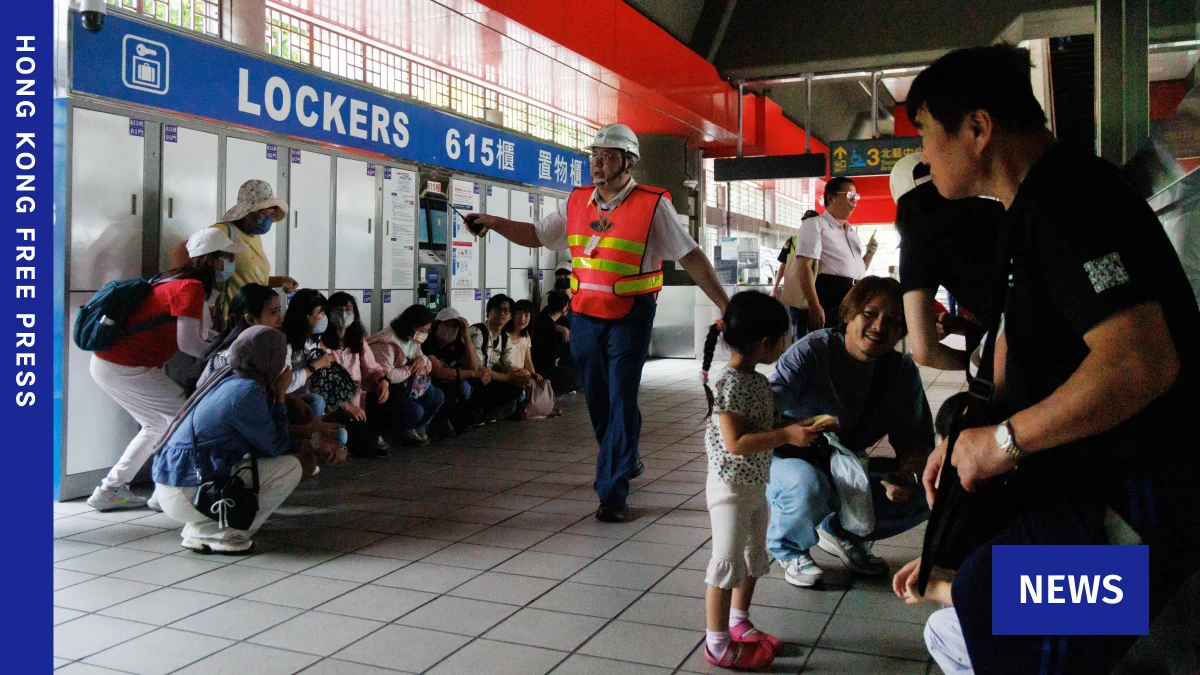
Millions of people in Taiwan were forced indoors and mobile internet speeds slowed for 30 minutes on Thursday during a simulation of a Chinese attack on the island democracy. This nationwide drill, a critical component of Taiwan’s annual “Han Kuang” military exercises, underscored the island’s commitment to preparing its 23 million citizens for a potential invasion by mainland China, a scenario that continues to loom large over regional security.
Nationwide Alert and Public Response
The drill, which commenced on Thursday afternoon at precisely 2:30 PM local time (0630 GMT), saw air raid sirens wail across the bustling capital, Taipei, and other urban centers. Residents were instructed to seek immediate shelter, transforming normally vibrant streets into eerily quiet thoroughfares. Police forces actively directed traffic to pull over and guided civilians into designated safe havens, including underground parking garages, subway stations, shopping malls, and office buildings. This widespread mobilization aimed to familiarize the public with emergency procedures and test the efficacy of existing civil defense protocols in the face of an imminent threat.

A novel element introduced this year was the temporary reduction of mobile internet speeds. This measure was designed to simulate the impact of an attack on critical communication infrastructure, a plausible tactic in a modern conflict. For approximately 30 minutes, citizens experienced disruptions to services reliant on stable internet connectivity, including video calls, live streaming platforms, and popular food delivery applications. Analysts suggest this inclusion was intended not necessarily to replicate a complete internet blackout, but to provide a tangible experience of communication disruptions and to assess the resilience of Taiwan’s digital infrastructure under duress.
Ben Lewis, an analyst with PLATracker, had anticipated the significance of this new dimension to the drills. He noted prior to the exercise, "Whether it’s going to reflect a total internet shutdown, I think is unlikely. But I think having people get a sense of how it may feel to have an internet disruption is important. I think also to test the resilience of civilian communications and internet systems is very important." This forward-thinking approach highlights Taiwan’s efforts to address evolving threats in the digital age.
The Han Kuang Exercises: A Comprehensive Preparedness Strategy
The simulated air raid was part of the broader 10-day Han Kuang military exercise, which concludes on Friday. These annual drills are the cornerstone of Taiwan’s defense strategy, involving extensive participation from its armed forces and reservist corps. The exercises are meticulously designed to hone the combat readiness of troops and their ability to respond effectively to a wide spectrum of potential Chinese military actions, including amphibious assaults, aerial bombardments, and naval blockades.

Beyond the urban civil defense simulation, this year’s Han Kuang exercises have featured a range of realistic combat scenarios. On Wednesday, a joint exercise involving coast guard and navy vessels demonstrated the critical task of escorting a vital transport ship during a simulated Chinese naval blockade in the waters east of Taiwan. This scenario directly addresses one of the most significant threats Beijing could pose to the island’s economic lifeline and ability to receive external support.
The exercises also extended to crucial aspects of wartime logistics and medical care. A demonstration held in the underground parking lot of a hospital near Taipei showcased the establishment and operation of a wartime medical facility. This practical exercise allowed medical personnel to simulate the transfer of operations to a secure underground location and adapt to the unique challenges of providing care under attack.
Gary Chen, a 39-year-old hospital worker who participated in the medical drill as a simulated patient, shared his perspective on the importance of such exercises: "If I play the role of a patient and actually experience and understand the situation, I think it can help me with some of my emergency responses in the future." Similarly, ICU nurse Lily Ku emphasized the operational adaptations required: "The resources would be different so we would simplify everything," she stated, explaining the process of moving hospital beds to the basement and managing patient care with potentially limited resources. These insights underscore the drills’ value in fostering practical preparedness among essential service providers.

Geopolitical Context: The Shadow of Beijing’s Claims
The recurring Han Kuang exercises and the simulated invasion scenarios are conducted against a backdrop of increasingly assertive rhetoric and military posturing from Beijing. The People’s Republic of China (PRC) views Taiwan as a renegade province that must be reunified with the mainland, by force if necessary. This claim is enshrined in China’s “One China Principle,” a diplomatic stance that most countries officially acknowledge, though many also maintain unofficial relations with Taiwan.
In recent years, China has significantly ramped up its military activities around Taiwan, including frequent incursions into Taiwan’s Air Defense Identification Zone (ADIZ) with its aircraft and naval patrols. These actions are widely interpreted as efforts to intimidate Taiwan, test its defenses, and normalize China’s military presence in the region. Taiwan, in response, has bolstered its defense spending and sought closer security cooperation with like-minded democratic nations, particularly the United States, which is legally obligated to provide Taiwan with the means to defend itself under the Taiwan Relations Act.
Supporting Data and Analysis
Taiwan’s strategic location in the First Island Chain makes it a critical component of regional security architecture. A conflict over Taiwan would have profound global economic and geopolitical implications, disrupting vital shipping lanes and supply chains, particularly for semiconductors, of which Taiwan is the world’s leading producer. The island’s semiconductor industry, led by Taiwan Semiconductor Manufacturing Company (TSMC), is indispensable to the global technology sector, from smartphones to advanced military hardware.

The Han Kuang exercises are not merely symbolic; they are a reflection of Taiwan’s commitment to asymmetric warfare capabilities, aiming to make any potential invasion prohibitively costly for China. This strategy involves investing in mobile, resilient, and often unconventional defense systems, such as anti-ship missiles, unmanned aerial vehicles, and cyber warfare capabilities, alongside traditional military assets. The integration of civil defense into these military drills underscores a comprehensive approach to national security, recognizing that civilian resilience is as crucial as military might in deterring aggression and surviving conflict.
Broader Impact and Implications
The drills serve multiple purposes. Firstly, they act as a crucial deterrent by demonstrating Taiwan’s preparedness and resolve to China. Secondly, they reassure Taiwan’s allies and international partners of its commitment to self-defense, potentially bolstering diplomatic and military support. Thirdly, and perhaps most importantly, they educate and engage the Taiwanese populace, fostering a shared sense of responsibility and preparedness for a crisis.
The inclusion of simulated cyberattacks and communication disruptions highlights the evolving nature of modern warfare. As nations increasingly rely on digital infrastructure, the ability to withstand or recover from cyber threats has become paramount. Taiwan’s proactive approach in testing these vulnerabilities during its Han Kuang exercises signals a sophisticated understanding of contemporary security challenges.

The international community closely monitors Taiwan’s defense preparations, viewing them as a barometer of regional stability. The ongoing military activities and simulations underscore the persistent geopolitical friction between Beijing and Taipei, a situation with the potential to impact global peace and prosperity. Taiwan’s commitment to self-defense, as exemplified by the Han Kuang exercises, remains a critical factor in maintaining the delicate balance of power in the Indo-Pacific region.
The exercises are a testament to Taiwan’s unwavering determination to safeguard its democratic way of life and its sovereignty against external threats. By continuously adapting its defense strategies and involving its entire population in preparedness efforts, Taiwan seeks to enhance its resilience and deter any potential aggression, ensuring its future remains in the hands of its people.


 Sagoh
Sagoh
 Laily UPN