Suro Senen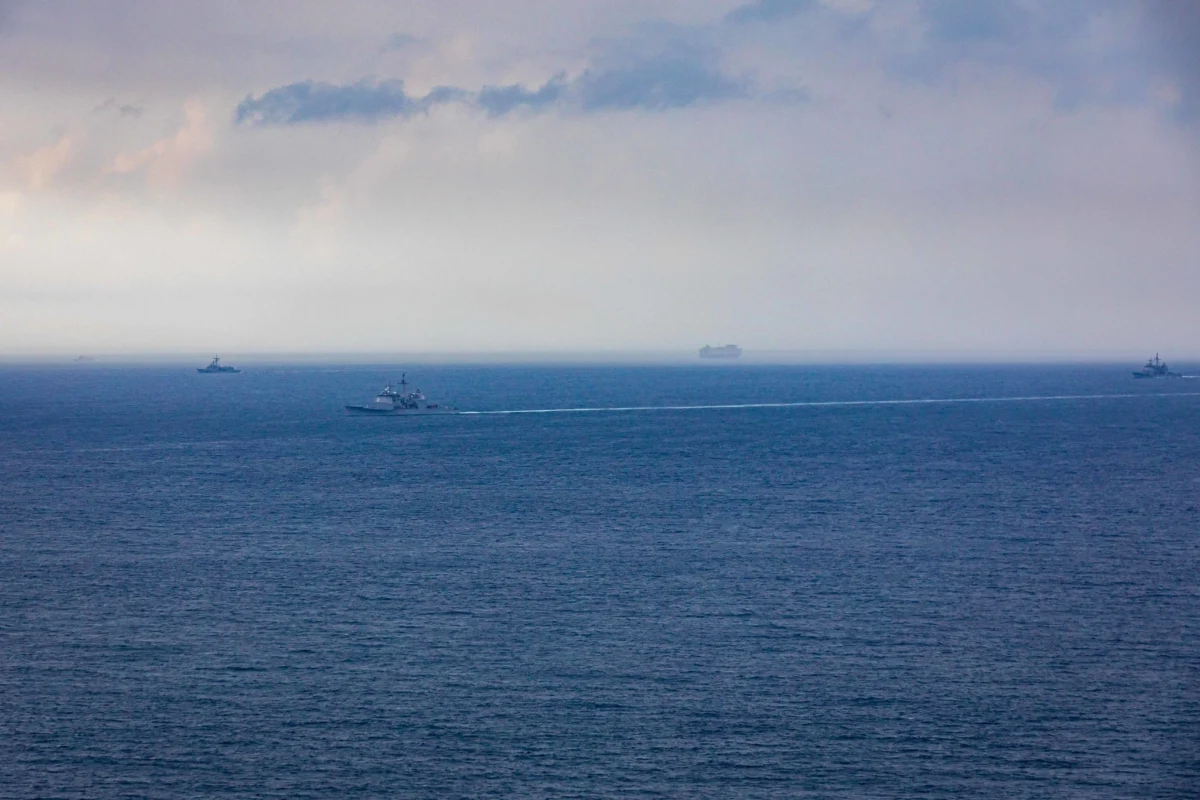
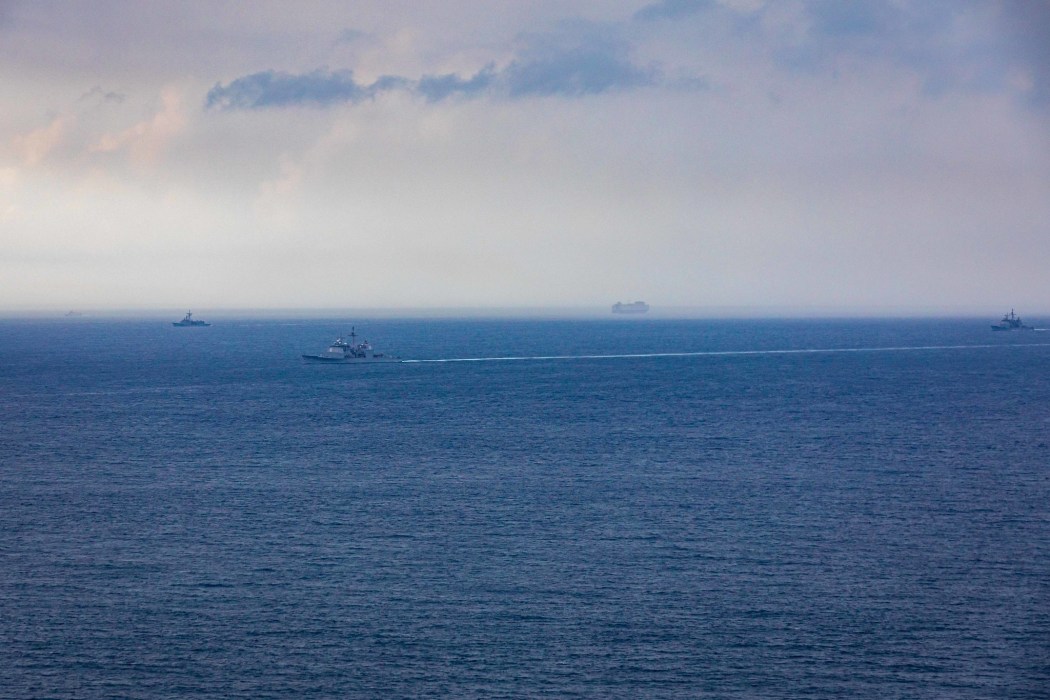
Taiwan detected a sharp rise in the number of Chinese ships entering waters around the island democracy last month, a Taiwanese coast guard official said, as Beijing intensifies pressure on Taipei. This surge in activity, particularly by China Coast Guard (CCG) vessels, signals a concerning escalation in Beijing’s efforts to assert its sovereignty claims over the self-governing island, which it considers a breakaway province. The increased presence and tactics employed by Chinese maritime forces are being characterized by Taiwanese officials as "grey zone harassment," aimed at gradually encroaching on Taiwan’s maritime space and testing its resolve without triggering overt conflict.
Escalation of "Grey Zone" Tactics in June
Official figures released by Taiwan reveal a substantial uptick in Chinese maritime activity in June. A total of 263 Chinese vessels, encompassing coast guard, rescue, and research ships, were observed in waters surrounding Taiwan and its outlying islands. This represents a notable increase from the 200 vessels recorded in May and a significant jump from the 171 Chinese ships detected in June of the previous year. Crucially, these figures do not include the presence of Chinese naval warships, which are also a regular feature in the region.

A Taiwanese coast guard official, speaking on condition of anonymity to discuss sensitive security matters with the media, described the increase as "significant" in both the types and numbers of government vessels engaged in "grey-zone harassment." These activities, previously more sporadic, have become a more consistent and aggressive feature of China’s approach to the Taiwan Strait and surrounding waters.
New Chinese Maritime Strategies Emerge
Beyond the sheer volume of vessels, the nature of China’s maritime operations has also evolved. For the first time, Chinese Coast Guard ships were observed conducting "law enforcement" patrols in waters east of Taiwan. This marks a departure from their previous activities, which were largely confined to participating in military drills around the island.
During these patrols, Chinese Coast Guard vessels initiated direct communication with commercial cargo ships transiting near Taiwan. They radioed these vessels, requesting information about their crews and destinations. This tactic, according to a senior Taiwanese government official, is designed not only to disrupt shipping but also to impede Taiwan’s ability to receive essential supplies. "What it is trying to do is put into practice what it has long talked about – using quarantine-like measures to carry out an anaconda strategy against Taiwan," the official stated, also on the condition of anonymity. This "anaconda strategy" refers to a form of blockade aimed at gradually constricting an adversary’s resources and options.
Analysis of China’s Maritime Capabilities and Intentions
The increasing assertiveness of China’s maritime presence is underpinned by the modernization and expansion of its Coast Guard fleet. Taiwanese defense analysts note that many of China’s newer coast guard ships are military-grade, double-hulled vessels transferred from the People’s Liberation Army Navy. These vessels are described as being "stronger than Taiwan’s," with the primary distinction being their paint scheme rather than their underlying capabilities. This shared pedigree with naval assets explains their resilience and operational effectiveness, even in challenging maritime conditions.
Furthermore, the practice of Chinese Coast Guard ships operating in pairs creates a "considerable burden" on Taiwan’s smaller and less numerous coast guard fleet, which is tasked with monitoring their extensive operational area. This coordinated approach allows China to project greater presence and exert more pressure across a wider maritime expanse.
Taiwan’s Response and Preparations
In response to these escalating tactics, Taiwan is actively preparing its defenses. The coast guard official confirmed that Taiwan will conduct live drills specifically designed to practice responding to potential quarantine or blockade scenarios. While details of these drills were not provided, the intention is clear: to enhance the island’s readiness to counter Beijing’s evolving coercive strategies.
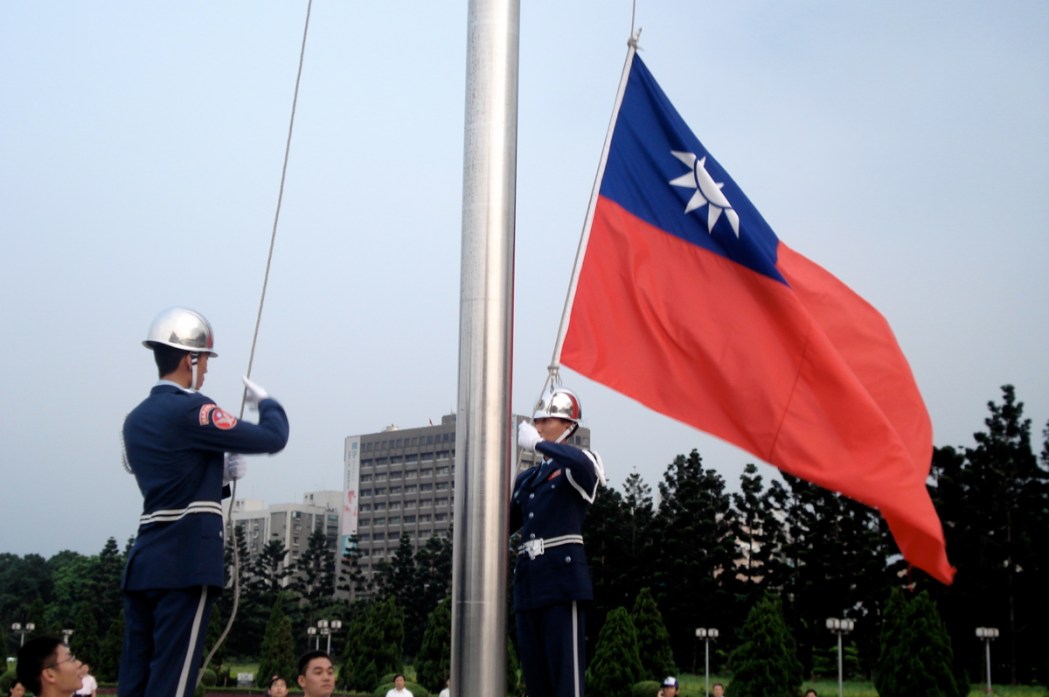
Taiwanese President Lai Ching-te has been a vocal proponent of the island’s sovereignty and democratic way of life. He recently urged his political party to stand firm against what he termed China’s "red terror" and to safeguard Taiwan’s "democratic and free way of life." His remarks underscore the political and ideological dimensions of the ongoing tensions, framing the maritime incursions as part of a broader campaign to undermine Taiwan’s autonomy.
Background and Historical Context
China has consistently asserted its claim of sovereignty over Taiwan since the end of the Chinese Civil War in 1949. Beijing views the island as a renegade province that must eventually be reunified with the mainland, by force if necessary. This claim is rejected by the democratically elected government in Taipei, which asserts Taiwan’s right to self-determination.
In recent years, China has intensified its military and maritime activities around Taiwan. These actions include frequent incursions of military aircraft into Taiwan’s Air Defense Identification Zone (ADIZ) and the deployment of naval vessels and coast guard patrols in the waters surrounding the island. These maneuvers are often interpreted as a form of psychological warfare and a demonstration of China’s growing military capabilities and its willingness to use them to pressure Taiwan.

The current escalation follows a period of heightened cross-strait tensions, often exacerbated by political events such as high-level visits between Taiwan and other countries, or by significant developments in Taiwan’s domestic politics. China’s consistent narrative frames these actions as necessary responses to provocations aimed at undermining its territorial integrity.
International Implications and Geopolitical Significance
The situation in the Taiwan Strait remains a critical flashpoint in global geopolitics. Taiwan’s strategic location in the First Island Chain and its role in global supply chains, particularly in semiconductor manufacturing, make its security of paramount international concern. Any disruption or conflict in the region would have profound economic and security implications worldwide.
The United States and several other democratic nations have reiterated their commitment to peace and stability in the Indo-Pacific and have expressed concern over China’s assertive actions. While most nations maintain unofficial relations with Taiwan, they also advocate for a peaceful resolution of cross-strait differences and have warned against unilateral changes to the status quo.

The increasing use of coast guard vessels in "grey zone" tactics is a global trend observed in maritime disputes, as nations seek to assert their claims and project power without crossing the threshold into overt military conflict. This strategy allows for plausible deniability and avoids the immediate international repercussions associated with naval aggression. However, as demonstrated by the recent events, these tactics can be highly provocative and significantly increase the risk of miscalculation and escalation.
Broader Impact on Regional Stability
The intensified maritime activities are part of a broader pattern of coercive behavior by Beijing, aimed at isolating Taiwan internationally and pressuring its government to accept Beijing’s terms. By normalizing such incursions and expanding the scope of its maritime "law enforcement" operations, China seeks to gradually alter the de facto situation in the Taiwan Strait and to project an image of control.
Taiwan, meanwhile, is determined to defend its sovereignty and its democratic system. Its ongoing efforts to bolster its defense capabilities, including its coast guard, and its commitment to live drills underscore its resolve to deter aggression and to protect its territorial integrity. The coming months will be critical in observing how both sides navigate this increasingly complex and volatile maritime environment. The international community will continue to monitor these developments closely, recognizing that the security of Taiwan is inextricably linked to regional and global stability. The tactics employed by China, particularly the use of coast guard vessels in what are perceived as aggressive maneuvers, highlight the evolving nature of geopolitical competition in the 21st century and the persistent challenges in maintaining peace in contested maritime spaces.

 Siti Muinah
 Lina Irawan