Pevita Pearce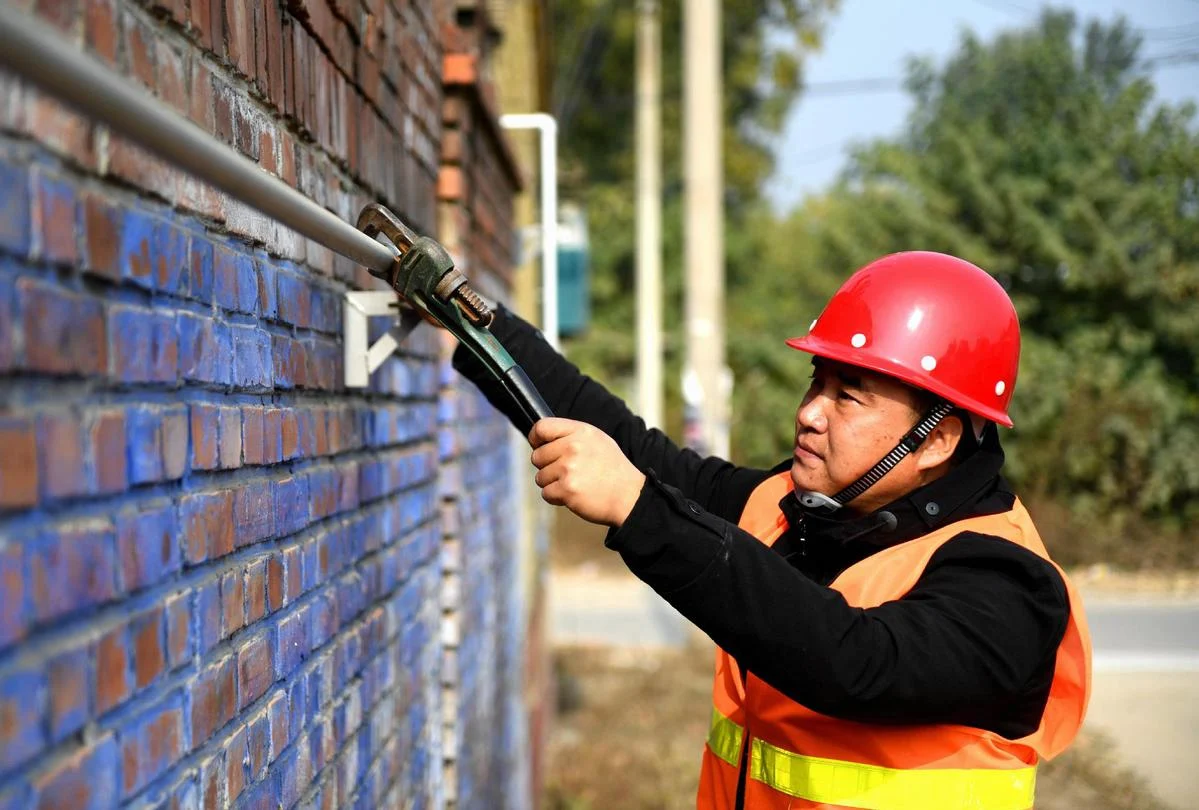
The Asian Infrastructure Investment Bank (AIIB) on Monday announced a significant $250 million loan for a natural gas project in Beijing, marking a pivotal moment as the bank’s inaugural investment of its kind within China. This strategic financing is explicitly designed to support Beijing’s ambitious efforts to curtail coal consumption and dramatically enhance air quality across the capital region, aligning with China’s broader environmental commitments.
This landmark loan, which also represents the AIIB’s first foray into corporate financing, will be extended to the Beijing Gas Group Co. The funds are earmarked to accelerate the implementation of extensive coal-to-gas conversion projects, primarily targeting rural households. The initiative aims to transition these communities from traditional coal-fired heating and cooking methods to cleaner natural gas alternatives. The scope of the project encompasses the comprehensive construction of new natural gas distribution networks, the laying of essential pipelines, and the installation of household connection facilities, as detailed in a statement from the Beijing-based multilateral financial institution.
A Crucial Step Towards Cleaner Air
The project is slated for completion by 2021 and is projected to yield substantial environmental benefits. According to the AIIB, it will facilitate an annual reduction of approximately 650,000 metric tons of coal use. This impressive reduction will be achieved by connecting around 216,750 households across approximately 510 rural villages to the newly established natural gas distribution network. This direct intervention addresses a significant source of particulate matter and greenhouse gas emissions, particularly during the colder winter months when heating demand is at its peak.
China has been grappling with severe air pollution issues for decades, particularly in its rapidly industrializing and urbanizing regions. In response, the nation has launched an aggressive "war on pollution," adopting increasingly stringent environmental regulations and implementing comprehensive strategies. Among these, the coal-to-gas conversion programs stand out as a cornerstone policy aimed at reducing emissions from residential heating and industrial processes. The AIIB’s investment underscores the international recognition and support for these critical national environmental initiatives.
AIIB’s Mandate and Green Development Focus
Jin Liqun, President of the AIIB, emphasized that the bank’s maiden investment in its host country perfectly aligns with its core mission of supporting members’ green and sustainable development. "China’s commitment to reducing its reliance on coal will change lives and improve the environment, and that is why we are investing in a project aligned with that ambitious plan," Jin stated in a press release. He further elaborated that the project would contribute to China’s efforts to introduce sustainable infrastructure, ultimately leading to a reduction in greenhouse gas emissions and stimulating one of Asia’s most vital economic hubs.
The Asian Infrastructure Investment Bank, officially launched in January 2016, was conceived to address the immense infrastructure deficit in Asia while promoting regional connectivity and sustainable development. With its headquarters in Beijing, the bank focuses on investing in energy and power, transport and telecommunications, rural infrastructure and agriculture, water supply and sanitation, environmental protection, and urban development. Its operational philosophy prioritizes projects that are financially sustainable, environmentally friendly, and socially acceptable. This $250 million loan exemplifies the AIIB’s commitment to these principles, particularly its growing emphasis on "green financing" and climate-resilient infrastructure. The bank’s strategic pivot towards corporate financing, as demonstrated by this loan to Beijing Gas Group, also signifies an evolution in its operational modalities, allowing it to directly support viable enterprises driving sustainable change.
The Context of Beijing’s Air Quality Crisis and China’s Energy Transition
For years, Beijing has been infamous for its persistent smog, often reaching hazardous levels. The city’s air quality crisis is a complex issue, exacerbated by a confluence of factors including industrial emissions from surrounding provinces, vehicle exhaust, and, significantly, coal burning for heating, especially in rural areas on the city’s periphery. Prior to the concerted governmental efforts, PM2.5 (fine particulate matter) concentrations in Beijing frequently exceeded World Health Organization guidelines by many multiples, leading to widespread public health concerns and international scrutiny.
In 2013, the Chinese government declared a "war on pollution," initiating a nationwide crackdown on environmental degradation. For Beijing and the surrounding Hebei province, this translated into aggressive measures to shut down polluting factories, restrict vehicle use, and, crucially, implement large-scale coal-to-gas and coal-to-electricity conversion programs. The "coal-to-gas" initiative, often referred to as "gasification," aims to replace millions of small, inefficient, and highly polluting coal-fired furnaces and stoves with cleaner natural gas systems. While these efforts have yielded tangible improvements in air quality, they have also presented challenges, including the rapid increase in natural gas demand and the need for extensive new infrastructure.
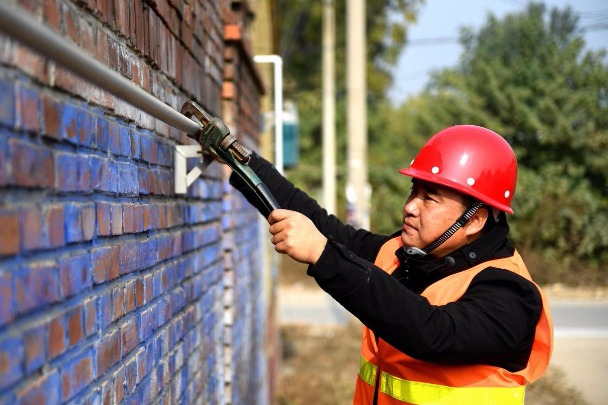
China’s broader energy strategy involves a significant shift away from its historical reliance on coal, which has traditionally fueled the vast majority of its economic growth. The nation is actively diversifying its energy mix by expanding investments in renewable energy sources like solar and wind power, developing nuclear energy, and increasing the utilization of natural gas as a transitional fuel. Natural gas, while still a fossil fuel, burns more cleanly than coal, emitting significantly less sulfur dioxide, nitrogen oxides, and particulate matter, and about half the carbon dioxide per unit of energy. This makes it a crucial component in China’s pathway towards achieving its peak carbon emissions before 2030 and striving for carbon neutrality by 2060.
Chronology of Efforts and Project Milestones
The timeline leading to this significant AIIB investment can be traced back through several key developments:
- 2013: China officially launches its "war on pollution" campaign, signaling a national priority shift towards environmental protection.
- 2014-2016: Pilot coal-to-gas and coal-to-electricity programs begin in key regions, including Beijing-Tianjin-Hebei, demonstrating initial successes and identifying logistical challenges.
- January 2016: The Asian Infrastructure Investment Bank officially commences operations, establishing its mandate for sustainable infrastructure development in Asia.
- 2017 (Specific Monday, likely November): The AIIB formally announces the $250 million loan to Beijing Gas Group Co., marking a significant international partnership in China’s environmental efforts.
- November 2, 2017: (Date of accompanying image) Illustrates ongoing work in Hebei province, highlighting the active implementation of gas pipeline infrastructure in villages.
- 2021: The target completion year for the AIIB-funded coal-to-gas conversion project, at which point an estimated 216,750 households are expected to be connected.
This chronology underscores a consistent and escalating commitment from both the Chinese government and international partners like the AIIB to tackle environmental challenges through concrete infrastructure projects.
Broader Impact and Implications
The energy project funded by the AIIB is expected to have far-reaching implications, extending beyond immediate air quality improvements. Zeng Gang, a financial researcher at the Chinese Academy of Social Sciences, posited that this investment could signal a trend where the multilateral financial institution offers more financing for environment-related infrastructure projects within China, a key member of the AIIB. "Green financing in China will clearly be an important target for the AIIB," Zeng affirmed. He further elaborated on the rationale, stating, "It is reasonable that the AIIB is the provider of long-term financing with relatively low cost for such infrastructure projects, especially when Chinese commercial banks are facing greater liquidity pressure." This highlights the crucial role of multilateral development banks in providing patient capital for large-scale, long-term infrastructure projects that commercial banks might be less willing or able to finance on favorable terms.
For the AIIB itself, this project marks several important firsts: its first corporate financing deal, demonstrating an expanded operational scope beyond sovereign guarantees, and its first direct investment in China. This move solidifies the bank’s commitment to its founding principles of supporting sustainable development and showcases its practical application in one of the world’s largest and most dynamic economies. It also serves as a testament to the growing global recognition of "green finance" as a critical tool for achieving climate and environmental objectives.
However, the expansion of natural gas use in China is not without its challenges. Li Li, energy research director at ICIS China, an energy consulting firm, while welcoming AIIB financing, emphasized that the nation must also bolster investment in seasonal gas storage facilities, diversify import channels, and improve the pricing mechanism to address potential shortages. China has experienced periods of natural gas supply crunch, particularly during peak winter demand, due to insufficient domestic production, inadequate infrastructure for imports, and limited storage capacity. Ensuring a stable and affordable supply of natural gas is paramount for the sustained success of the coal-to-gas conversion program and to prevent households from reverting to coal. Diversifying import sources, including pipelines from Central Asia and Russia, and increasing Liquefied Natural Gas (LNG) imports from various global suppliers, will be crucial for energy security. Furthermore, a market-oriented pricing mechanism can help balance supply and demand and incentivize further investment in the gas sector.
Looking Ahead: Sustainable Development and Green Finance
The AIIB’s $250 million loan to Beijing Gas Group represents more than just a financial transaction; it is a strategic investment in China’s environmental future and a blueprint for sustainable development in Asia. By enabling hundreds of thousands of rural households to switch from coal to natural gas, the project will directly contribute to cleaner air, improved public health, and a significant reduction in carbon emissions, thereby supporting China’s nationally determined contributions under the Paris Agreement.
This initiative also reinforces the growing global consensus that economic development must go hand-in-hand with environmental stewardship. The partnership between the AIIB and China on this project exemplifies how multilateral financial institutions can play a transformative role in channeling capital towards green infrastructure, fostering innovation, and helping countries achieve their ambitious climate goals. As China continues its journey towards a greener, more sustainable future, projects like this will be instrumental in demonstrating the tangible benefits of transitioning to a cleaner energy mix and will likely serve as a model for similar initiatives across the region. The focus on corporate financing also opens new avenues for the AIIB to engage directly with enterprises that are at the forefront of implementing sustainable solutions, further diversifying its impact and reach.

 Nana Wu
 Iffa Jayyana