
 Dwi Wanna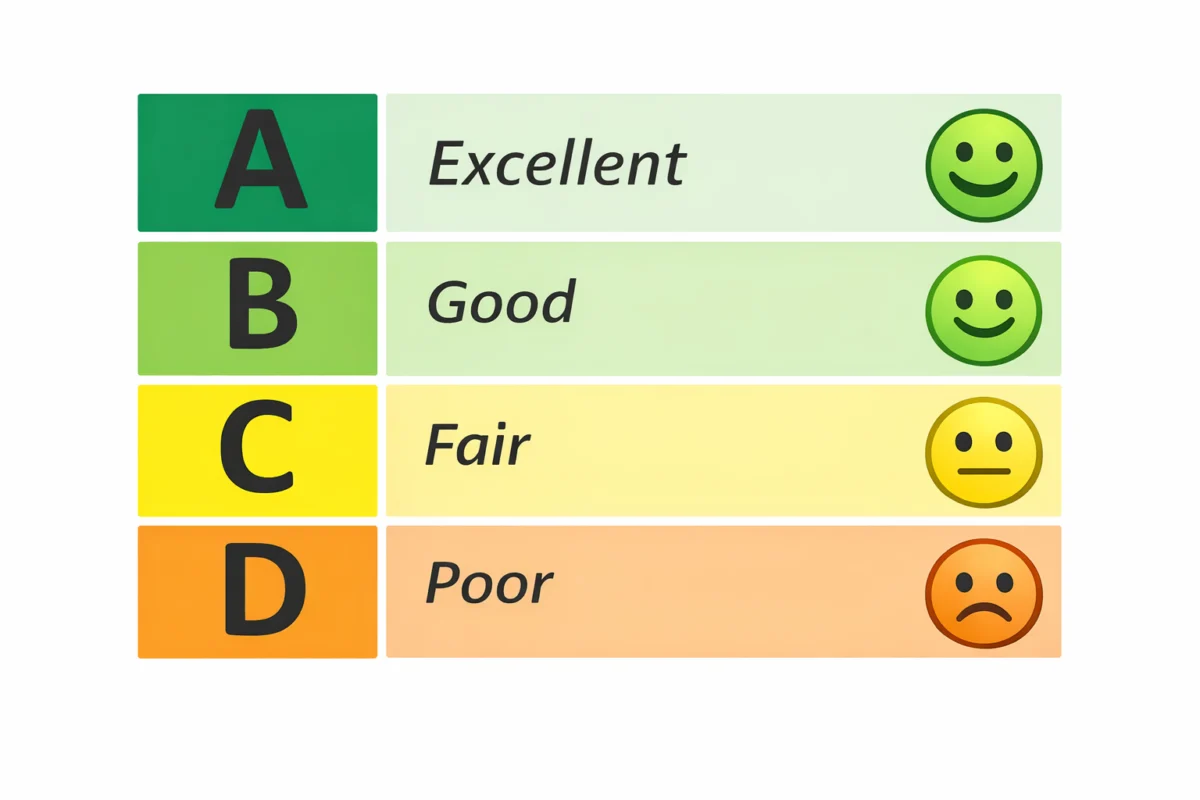
The implementation of China’s social credit system has long been a subject of international scrutiny, often characterized in Western media as a dystopian, all-encompassing "citizen score" that ranks individuals based on their political loyalty and daily behavior. However, the release of a new implementation plan for the Establishment of a Comprehensive Enterprise Credit Status Assessment System provides further evidence that the primary focus of the system remains firmly on corporate regulation rather than individual monitoring. This new framework aims to refine how businesses are evaluated, moving toward a standardized, data-driven approach that distinguishes between government-led regulatory assessments and market-driven credit reporting.
The Evolution of China’s Social Credit Framework
To understand the current trajectory of the Comprehensive Enterprise Credit Status Assessment System, it is necessary to look back at the developmental pillars of the Social Credit System (SCS). Since its formal inception in the early 2010s, the SCS has been built upon three distinct but interconnected pillars: Credit Regulation, Credit Reporting, and Creditworthiness.
Credit Regulation, often referred to as "credit-based regulation," is the mechanism by which government agencies adjust their level of oversight based on a subject’s history of legal compliance. In practice, this means that companies with a history of violations face more frequent inspections and stricter scrutiny, while those with a "clean" record enjoy "green channel" services and reduced administrative burdens.

The second pillar, Credit Reporting, functions similarly to Western financial credit systems. Managed under the auspices of the People’s Bank of China (PBOC), it focuses on assessing the likelihood of a business or individual defaulting on financial obligations. The third pillar, Creditworthiness (Chengxin), is more abstract, tied to the "Core Socialist Values" campaign. It seeks to promote honesty and professional ethics across society, though its legal application has been largely limited to educational and publicity efforts rather than punitive measures.
Chronology of Key Social Credit Milestones
The path toward the current comprehensive assessment system has been marked by several critical policy shifts:
- 2014: The State Council issues the "Planning Outline for the Construction of a Social Credit System (2014–2020)," setting the foundation for national data sharing.
- 2019: Public credit assessments for businesses are officially advanced as a core component of the Credit Regulation framework, shifting the focus from manual oversight to algorithmic grading.
- 2021: The central government begins publishing official "Basic Catalogs of Public Credit Information," standardizing what data points can be used to judge a company’s standing.
- 2022: A draft "Social Credit Law" is released for public comment, attempting to codify the various local and sectoral experiments into a unified national legal framework.
- 2024–2026: The current Implementation Plan is rolled out, aiming to integrate industry-specific assessments with a global "Comprehensive Public Credit Assessment" led by the National Development and Reform Commission (NDRC).
Understanding Public vs. Market Credit Assessments
The new implementation plan clarifies a vital distinction that has often confused foreign observers: the difference between public credit assessments and market credit assessments.
Public Credit Assessments are generated by government authorities based on "Public Credit Information." This includes data generated by the state during the performance of its duties, such as administrative permits, penalties for misconduct, and judicial records. These assessments are divided into two categories: Industry Public Credit Assessments, which are sector-specific (e.g., environmental compliance for a chemical plant), and Comprehensive Public Credit Assessments, which provide a "macro" view of a company’s legal standing across all jurisdictions.

In contrast, Market Credit Assessments are commercial products produced by private credit reporting institutions. These assessments are used by banks, investors, and business partners to determine the financial risk of a contract. While the government encourages these private firms to consider public credit grades in their calculations, market assessments remain fundamentally distinct from the state’s regulatory grading.
Data Inputs and the Four-Grade Output Scale
A significant portion of the new plan is dedicated to the "Data Catalog," which specifies exactly what information is fed into the comprehensive assessment. The inputs are strictly defined to prevent arbitrary grading. Key data points include:
- Judicial Information: Records of "judgment defaulters," including case numbers, the name of the legal representative, and the specific circumstances of the conduct.
- Contract Violations: Information on breaches found through judicial procedures and corporate accounts in arrears.
- Administrative Management: A comprehensive list of administrative permits granted and, crucially, administrative punishments issued, including fines and license revocations.
- Incentives for Trustworthiness: Positive markers such as "Class A Taxpayer" status or high-level customs certifications.
- Seriously Untrustworthy Entities: The "Blacklist" system, which tracks entities that have committed severe violations of law.
The output of these assessments is a simplified four-grade scale: A, B, C, or D. Grade A represents high compliance and low regulatory risk, while Grade D indicates a high-risk entity that will likely be subject to intensified inspections, restricted access to subsidies, and public "naming and shaming."
Mechanisms for Credit Repair and Dispute Resolution
Recognizing that a permanent "black mark" could stifle economic dynamism, the Chinese government has formalized a "Credit Repair" (Xinyong Xiufu) system. This process allows businesses that have corrected their behavior to apply for the removal of negative information from the public record after a minimum display period.

The new plan also introduces more robust—though still developing—procedures for objecting to an assessment. If a company believes its Grade C or D was based on inaccurate or incomplete data, it can file an objection with the department that issued the assessment. Third-party market institutions are also prohibited from charging fees for correcting or updating inaccurate information, a move intended to prevent "credit extortion" by private agencies.
Analysis of Implications for Foreign and Domestic Firms
The shift toward a unified, comprehensive assessment system has profound implications for the business environment in China. For multinational corporations, the system offers a double-edged sword. On one hand, the move toward transparency and standardized catalogs reduces the risk of arbitrary "local protectionism" where local officials might punish a firm based on vague criteria. The public nature of the "Credit China" website allows firms to perform due diligence on potential Chinese partners with unprecedented ease.
On the other hand, the "Comprehensive" nature of the new assessment means that a violation in one province or one sector can now more easily impact a company’s operations nationwide. A safety violation in a factory in Guangdong could, in theory, lower a company’s comprehensive grade, thereby affecting its ability to bid on government contracts in Beijing or its interest rates from state-owned banks.
Analysts suggest that the biggest challenge remains the "Creditworthiness" pillar. While the government maintains that punishments are only for violations of law, the inclusion of "social responsibility" and "ethics" in the broader social credit discourse leaves a door open for more subjective evaluations. If a company’s "creditworthiness" is judged by its alignment with state economic goals, the system could evolve from a transparency tool into a tool for industrial policy enforcement.

The Road Toward Integration
The ultimate goal of the NDRC and the PBOC appears to be the creation of a "unified, comprehensive enterprise credit assessment." This would merge the state’s compliance data with the market’s financial risk data. However, this raises significant questions about the function of such a hybrid score. If a company is legally compliant but financially unstable, or financially robust but a frequent violator of minor administrative rules, a single "A-D" grade may fail to provide a meaningful picture to either regulators or investors.
Furthermore, the role of industry associations and chambers of commerce is set to expand. The plan encourages these "quasi-regulatory" bodies to conduct non-profit market assessments. While intended to maintain industry standards, there is a risk that these associations could use credit assessments to exclude non-members or foreign competitors from local markets, despite the plan’s explicit prohibition against such discriminatory practices.
Conclusion
China’s Comprehensive Enterprise Credit Status Assessment System represents a sophisticated evolution of corporate oversight. By moving away from the "fantasy" of a citizen-ranking panopticon and toward a data-centric regulatory framework, Beijing is attempting to solve a perennial problem: the lack of trust in a rapidly expanding market economy.
For the international community, the new plan serves as a reminder that the Social Credit System is, first and foremost, a project of administrative modernization. It is a system designed to automate the "hand of the state," ensuring that the consequences of corporate misconduct are swift, public, and digitally recorded. As the 2026 deadline for full implementation approaches, the global business community will be watching closely to see if this system fosters a fairer market or becomes a new instrument of state control.


 Sagoh
Sagoh





Provisions on Ensuring the Healthy and Safe Use of the Internet by Minors Draft for Soliciting Comments
The Cyberspace Administration of China (CAC) has unveiled a comprehensive draft of the Provisions on Ensuring the Healthy and Safe Use of the Internet by Minors, marking a significant escalation…