 Evan Lee Salim
The fourth phase of the Yangshan Deep-Water Port, distinguished as the world’s largest unmanned container terminal, was officially inaugurated and commenced operations on Sunday, heralding a significant advancement in global maritime logistics. The milestone was announced by China Communication Construction Co. (CCCC), the primary constructor responsible for the port’s ambitious development. This latest expansion of the critical deep-water facility introduces an unprecedented level of automation, including what CCCC describes as the world’s largest automated mechanical dock, representing the cutting edge of port technology.
The Yangshan Deep-Water Port is an indispensable component of the broader Shanghai port system, a colossal enterprise that consistently ranks as the world’s busiest container port. Its operational efficiency directly impacts global trade flows, handling a staggering volume of container traffic that accounts for over 40 percent of Shanghai’s total throughput. With the full integration of its fourth phase, the Yangshan port alone is projected to handle an additional 4 million twenty-foot equivalent units (TEUs) annually. This substantial increase will elevate the total annual capacity for all ports within the Shanghai system to an astounding 40 million TEUs, solidifying its dominant position in international shipping. A hallmark of this new phase is its advanced automated functions, which are designed to drastically reduce human labor involvement by approximately 70 percent while simultaneously enabling continuous, around-the-clock operations, thereby enhancing both efficiency and safety.
The Strategic Genesis of Yangshan: Addressing Shanghai’s Maritime Future
The development of the Yangshan Deep-Water Port was born out of a strategic necessity to overcome the inherent geographical limitations of Shanghai’s traditional port facilities. Situated along the Yangtze River Delta, Shanghai’s existing riverine and coastal ports, while extensive, faced constraints in terms of water depth and available land area. As global shipping trends moved towards larger, "mega" container vessels requiring deeper drafts, Shanghai risked losing its competitive edge without a truly deep-water solution.
The vision for Yangshan emerged in the late 1990s, proposing an offshore port complex built on islands within Hangzhou Bay, connected to the mainland by an extensive sea bridge. This ambitious project aimed to create a world-class deep-water gateway capable of accommodating the largest container ships, thereby securing Shanghai’s future as a preeminent global shipping hub. The port’s strategic location also positioned it as a vital artery for the economic powerhouse of the Yangtze River Delta, a region teeming with manufacturing and export industries that rely heavily on efficient maritime transport. Yangshan is not merely a port; it is a critical node in China’s broader economic strategy, including the "Belt and Road" Initiative, serving as a pivotal link in the Maritime Silk Road component, facilitating trade and connectivity across continents.
A Phased Journey Towards Automation: Yangshan’s Developmental Timeline
The journey to the fully automated Phase IV has been a methodical, multi-stage process, reflecting a sustained commitment to infrastructure development and technological innovation.
- Phase I (Opened 2005): The inaugural phase marked a monumental engineering feat, creating deep-water berths on artificial islands connected by the 32.5-kilometer Donghai Bridge, one of the longest cross-sea bridges in the world. This initial phase immediately expanded Shanghai’s capacity for handling larger vessels.
- Phase II (Opened 2006): Building on the success of Phase I, this expansion further increased berth capacity and operational capabilities, demonstrating the scalability of the Yangshan concept.
- Phase III (Opened 2008): This phase continued the expansion, bringing more berths online and further cementing Yangshan’s role as a major international transshipment hub. Each successive phase incorporated improvements in operational efficiency and technology available at the time, but none approached the comprehensive automation achieved in Phase IV.
- Phase IV (Construction began 2014, Opened 2017): The conception and execution of Phase IV represented a paradigm shift. Moving beyond incremental capacity additions, this phase was envisioned from its inception as a fully automated, "smart" terminal. Construction involved extensive land reclamation and the installation of highly sophisticated infrastructure, including advanced sensor networks, communication systems, and automated machinery. The six-berth terminal, spanning 2.23 million square meters, was meticulously designed to integrate cutting-edge robotics and artificial intelligence from the ground up, culminating in its official operational launch on Sunday.
Globally, the trend towards port automation has been gaining momentum for decades, with pioneering terminals in places like Rotterdam, Hamburg, and Singapore gradually introducing automated stacking cranes and gate systems. However, Yangshan Phase IV distinguishes itself by achieving comprehensive automation across all major operational areas – from ship-to-shore activities to yard management and landside transport – on an unprecedented scale, setting a new global benchmark for integrated smart port technology.
Technological Marvels and Operational Mechanics: The Unmanned Advantage
The operational mechanics of Yangshan Deep-Water Port Phase IV represent a significant leap forward in port logistics, fundamentally transforming how containers are managed and moved. As Wang Yan, project manager of Shanghai Zhenhua Shipping, a subsidiary of CCCC, articulated, "Compared to traditional container terminals, what makes this one special is that this terminal has achieved automation in loading and transporting." He further elaborated, "It means now we don’t require any human labor to be involved in the container dock and yard. Not only can the quayside container cranes operate automatically, but the container trucks can also be run by remote control in the monitoring room."
This comprehensive automation is orchestrated by a sophisticated central control system powered by artificial intelligence, internet of things (IoT) technologies, and big data analytics. This "brain" of the terminal coordinates every movement, from the moment a ship docks to the final dispatch of a container.
Key technological components include:
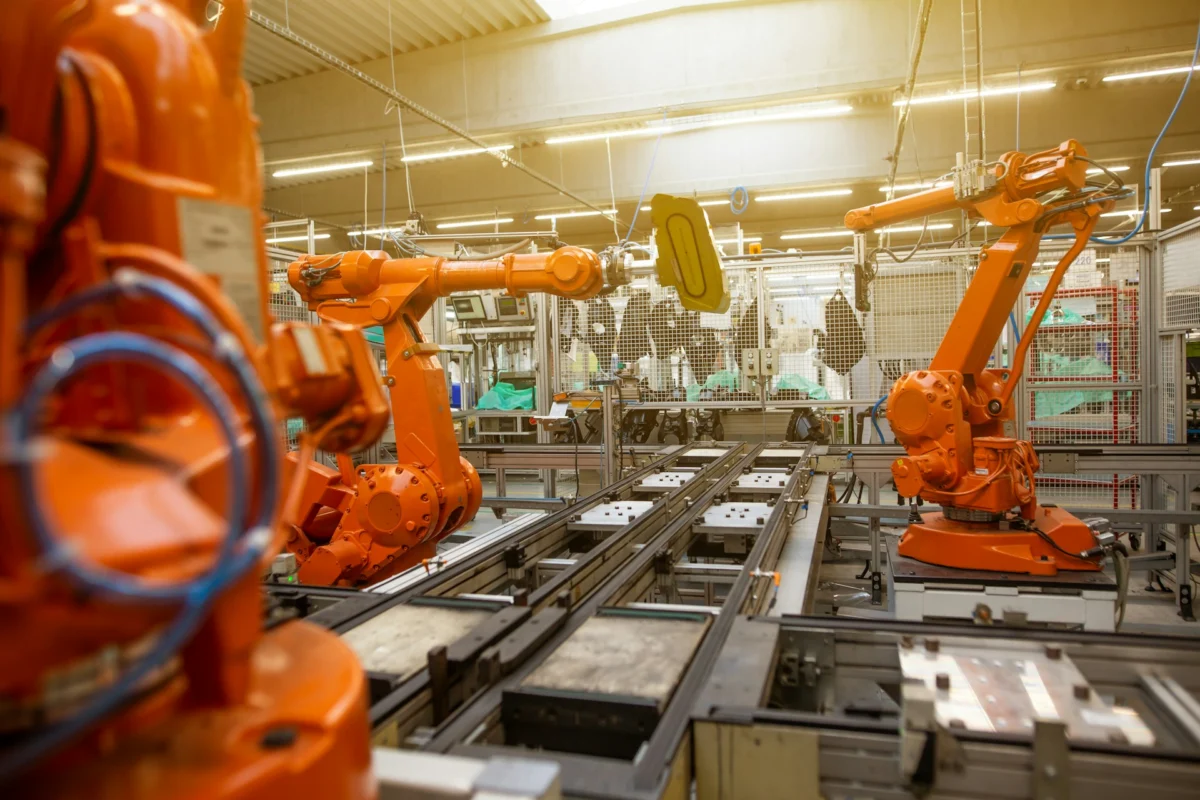
- Automated Quayside Container Cranes (QCs): These enormous cranes, operating autonomously, precisely lift containers from vessels and place them onto automated guided vehicles (AGVs) or directly into the yard. Their movements are optimized by AI algorithms to minimize cycle times and maximize throughput.
- Automated Guided Vehicles (AGVs): These driverless electric vehicles transport containers between the quayside, the container yard, and the gate areas. Navigating through the terminal using GPS, laser scanners, and sophisticated path-planning software, AGVs replace traditional manned trucks, eliminating human error and significantly improving safety. Their electric power source also contributes to reduced emissions and noise pollution.
- Automated Rail-Mounted Gantry Cranes (RMGs) and Automated Stacking Cranes (ASCs): Within the container yard, these automated cranes efficiently stack, retrieve, and organize containers. They operate with high precision in dense storage areas, optimizing space utilization and ensuring rapid access to specific containers when needed.
- Intelligent Gate Systems: Containers entering and leaving the terminal pass through automated gates equipped with optical character recognition (OCR) for container ID verification, weigh-in-motion sensors, and automated security checks, streamlining the entire process.
The "70 percent labor reduction" is not just a statistic; it signifies a profound shift in workforce requirements. Manual crane operators, truck drivers, and yard managers are largely replaced by a smaller team of highly skilled technicians and engineers who monitor the systems from a central control room. This transformation allows the port to operate continuously, 24 hours a day, seven days a week, without the constraints of human shift changes, fatigue, or adverse weather conditions, leading to significantly faster ship turnaround times and more predictable logistics for shipping lines.
With the capacity to handle 4 million TEUs, Yangshan Phase IV represents a substantial increment to global shipping capacity. When combined with other phases and Shanghai’s riverine ports, the city’s total port capacity of 40 million TEUs firmly establishes it as the world’s leading container hub. To put this in perspective, major ports like Singapore, Rotterdam, and Los Angeles/Long Beach, while highly efficient, operate with different scales and levels of automation, making Yangshan’s fully integrated and massive automated operation a distinct benchmark.
Official Responses and Industry Perspectives: A Vision for the Future
The official commissioning of Yangshan Phase IV has drawn significant attention and positive reactions from various stakeholders, underscoring its strategic importance.
China Communication Construction Co. (CCCC), as the constructor, has naturally highlighted the engineering prowess and technological innovation embodied by the project. Executives from CCCC have emphasized that Yangshan Phase IV is not just a triumph of engineering but a testament to China’s commitment to leading the world in smart infrastructure development. They view the project as a showcase of domestic capabilities in automated port solutions, signaling potential for similar projects both within China and internationally. Statements often focus on the port’s role in enhancing global supply chain resilience and efficiency, positioning CCCC as a leader in delivering such complex, high-tech solutions.
Shanghai Port Authority and Government Officials have consistently framed the Yangshan Deep-Water Port, and particularly its automated phase, as a cornerstone of Shanghai’s ambition to be a global maritime center and an innovation hub. They underscore the port’s contribution to national strategic goals, including the development of the Yangtze River Delta economic zone and the broader "Made in China 2025" initiative, which aims to elevate China’s industrial capabilities. Officials frequently reiterate Shanghai’s commitment to smart port development, emphasizing environmental sustainability through electric equipment and optimized operations, as well as the creation of a highly efficient logistics environment that benefits businesses across the region.
Industry Analysts and Shipping Experts generally view Yangshan Phase IV as a disruptive force that will set new standards for port operations worldwide. They predict that its unparalleled efficiency and 24/7 operational capability will reduce vessel waiting times, lower operating costs for shipping lines, and provide greater predictability in cargo movement. Analysts also point to the competitive pressure this will exert on other major global ports, compelling them to accelerate their own automation initiatives to remain relevant in an increasingly high-tech and fast-paced maritime industry. The success of Yangshan Phase IV is seen as a strong indicator of China’s growing technological leadership in critical infrastructure.
For Global Shipping Lines, the implications are largely positive. Faster turnaround times mean ships spend less time in port and more time at sea, improving fleet utilization and reducing fuel consumption. The predictability offered by an automated system also helps in scheduling and route optimization, leading to more reliable supply chains. While there might be initial adjustments, the long-term benefits in terms of cost savings and operational efficiency are significant.
Broader Impact and Implications: Reshaping Global Maritime Trade
The full operationalization of Yangshan Deep-Water Port Phase IV carries profound implications across economic, technological, labor, and environmental spheres, extending far beyond the immediate confines of the port itself.
Economic Impact: The enhanced capacity and efficiency of Yangshan solidify Shanghai’s standing as the world’s premier container port, further integrating it into the global economy. This boost in logistics capability directly supports the manufacturing and export sectors of the Yangtze River Delta, a vital economic engine for China. By facilitating faster, more reliable trade, Yangshan contributes to China’s overall economic resilience and its pivotal role in global supply chains. It also attracts further investment into the region, fostering economic growth and job creation in related industries, such as logistics management, IT, and maintenance.
Technological Leadership: Yangshan Phase IV serves as a powerful testament to China’s rapidly advancing capabilities in high-tech infrastructure and industrial automation. The successful implementation of such a complex, large-scale automated system positions China as a global leader in smart port technology. This achievement not only demonstrates engineering prowess but also offers a template for future port developments both domestically and internationally, potentially leading to the export of Chinese expertise and technology in this domain. It underscores the nation’s strategic focus on innovation and its commitment to becoming a technological powerhouse.
Labor Market Transformation: While the port significantly cuts down on traditional manual labor, this does not necessarily imply a net loss of jobs but rather a significant shift in the nature of work. The 70 percent reduction in human labor refers to direct operational roles like crane operators and truck drivers. However, the automated port requires a new generation of highly skilled professionals: software engineers, AI specialists, data analysts, robotics technicians, cybersecurity experts, and remote monitoring personnel. This transformation presents both a challenge and an opportunity. The challenge lies in retraining and upskilling the existing workforce, while the opportunity involves creating new, high-value jobs that require advanced technical skills, thereby driving innovation in the local labor market. Addressing the socio-economic implications for displaced workers through comprehensive retraining programs will be crucial.
Environmental Impact: The shift to automation brings notable environmental benefits. The widespread use of electric Automated Guided Vehicles (AGVs) significantly reduces the port’s reliance on fossil fuels, leading to lower carbon emissions and improved air quality within the port area. Optimized operational flows, driven by AI, also minimize unnecessary movements and idle times, further enhancing energy efficiency. The advanced design and precision of automated systems contribute to quieter operations and potentially more efficient land use, reducing the overall environmental footprint of port activities.
Global Maritime Trade: Yangshan Phase IV sets a new global benchmark for port efficiency and automation. Its success will undoubtedly exert pressure on other major international ports to accelerate their own modernization and automation initiatives to remain competitive. This push towards greater automation across the industry could lead to a global improvement in supply chain reliability, speed, and cost-effectiveness. As more ports adopt similar technologies, the entire maritime logistics ecosystem could become more interconnected, predictable, and resilient, fundamentally reshaping the dynamics of international trade for decades to come.
Future Outlook: The inauguration of Yangshan Phase IV is not an endpoint but a significant milestone in a continuous journey of innovation. Future developments are likely to focus on further integrating the port with broader logistics networks, leveraging blockchain for enhanced security and transparency in cargo tracking, and exploring advanced predictive analytics to anticipate and mitigate disruptions. The vision for "smart ports" across China, with Yangshan leading the charge, aims to create a highly efficient, sustainable, and technologically advanced maritime logistics network that will underpin China’s economic growth and global trade connectivity well into the 21st century.


 Suro Senen