 Siti Muinah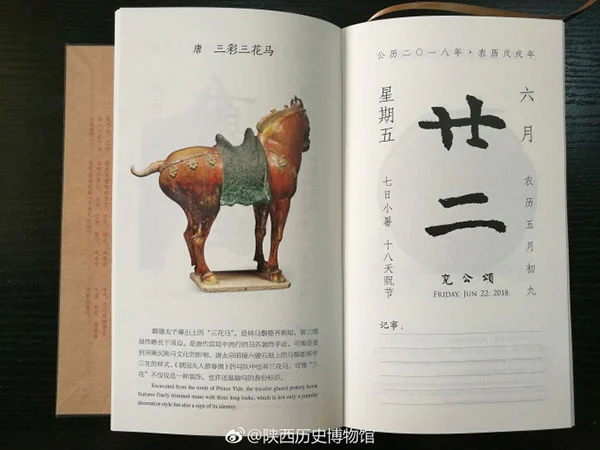
The Shaanxi History Museum has unveiled its first-ever calendar dedicated to cultural relics, a significant initiative aimed at bringing the rich history and artistic heritage of Shaanxi province to a wider audience. Released on Tuesday, the 2018 "Shaanxi History Museum Calendar" meticulously showcases 365 exquisite pieces from its vast collection, offering a daily glimpse into the splendors of ancient China. This ambitious project, themed "Glamour of Chang’an, the Tang Treasures," represents a strategic collaboration between the esteemed curators of the Shaanxi History Museum and the highly successful design team behind the renowned "Palace Museum Calendar," a publication that has previously achieved considerable commercial and cultural success.
The calendar’s innovative design caters to both educational and functional purposes. Each page is thoughtfully divided, with the left side dedicated to presenting high-quality images and bilingual (Chinese-English) introductions of carefully selected cultural relics. This dual-language approach ensures accessibility for an international audience, fostering a deeper understanding and appreciation of China’s historical artifacts. The right side of each page features the daily dates, accompanied by ample space for personal note-taking, a practical element for daily use. Intriguingly, the dates and major festivals are not merely printed but are presented as collections of words derived from the inscriptions of ancient masters, adding an artistic and historical dimension to the calendar’s functionality.
A Legacy of Chang’an: The Tang Dynasty at the Forefront
The thematic focus on "Glamour of Chang’an, the Tang Treasures" is particularly noteworthy. Chang’an, the ancient name for modern-day Xi’an, was the capital of numerous dynasties, most famously the Tang Dynasty (618–907 AD), which is widely regarded as a golden age of Chinese civilization. This era was characterized by unprecedented economic prosperity, cultural florescence, and territorial expansion, making it a pivotal period in Chinese history. The Tang Dynasty’s influence extended far beyond its borders, fostering vibrant international trade and cultural exchange through the Silk Road.
The Shaanxi History Museum, itself a repository of millennia of Chinese history, holds an unparalleled collection of artifacts from this illustrious period. The Tang Dynasty is renowned for its advancements in art, poetry, calligraphy, ceramics, and metallurgy. Its capital, Chang’an, was one of the largest and most cosmopolitan cities in the world, a melting pot of cultures and ideas. By dedicating the calendar’s theme to Tang treasures, the museum is highlighting a period that continues to capture the imagination and embody the peak of Chinese imperial power and artistic achievement.
Collaboration for Cultural Dissemination
The partnership with the design team of the "Palace Museum Calendar" is a strategic move designed to leverage proven success in cultural product development. The "Palace Museum Calendar," produced by the Palace Museum in Beijing, has consistently been a bestseller, demonstrating a strong market demand for high-quality, aesthetically pleasing, and historically informative publications. This collaboration suggests a shared vision for how to effectively disseminate cultural heritage beyond the museum walls, transforming static collections into engaging, everyday experiences.
Experts from the Shaanxi History Museum, with their deep knowledge of the provincial collections, were instrumental in selecting the 365 pieces to be featured. This meticulous curation process likely involved evaluating the historical significance, artistic merit, rarity, and visual appeal of each artifact. The goal was to present a diverse and representative cross-section of Shaanxi’s cultural legacy, spanning various dynasties and forms of artistic expression.
The Cultural Significance of the Calendar
This initiative goes beyond a simple desk accessory. It represents a modern approach to cultural heritage dissemination, utilizing a popular and accessible format to educate and engage the public. In an era where digital media often dominates, the creation of a tangible, beautifully designed calendar emphasizes the enduring appeal of physical objects and the stories they tell.
The inclusion of bilingual information is crucial for international outreach. As tourism to China continues to grow, and as global interest in Chinese history and culture intensifies, resources like this calendar can serve as valuable introductory tools for foreigners. They offer a curated and accessible entry point into understanding the complexities and richness of China’s past.
Furthermore, the calendar serves as a promotional tool for the Shaanxi History Museum itself. By showcasing its most prized possessions, it aims to attract more visitors to the museum, encouraging them to experience these artifacts firsthand. The success of the "Palace Museum Calendar" suggests a strong potential for the "Shaanxi History Museum Calendar" to reach a broad audience, including scholars, art enthusiasts, students, and the general public.
Supporting Data and Context
Shaanxi province is a cradle of Chinese civilization, boasting a history that stretches back over 3,000 years. It has been the capital for numerous influential dynasties, including the Western Zhou, Qin, Han, and Tang. The Shaanxi History Museum, established in 1983, is one of China’s premier institutions dedicated to preserving and exhibiting the region’s historical treasures. Its collection comprises over 370,000 artifacts, with a significant portion dating back to the pre-Qin era and the imperial dynasties.
The Tang Dynasty, in particular, is a period of immense historical and cultural importance for Shaanxi. Chang’an, during the Tang, was a thriving metropolis, a center of trade, diplomacy, and culture. Its population is estimated to have reached over a million people, making it the largest city in the world at the time. The Silk Road, a vital network of trade routes connecting East and West, had its eastern terminus in Chang’an, facilitating the exchange of goods, ideas, and technologies.
Artifacts from the Tang Dynasty are highly sought after for their artistic sophistication and historical insights. These include exquisite Tang Sancai (three-color glazed pottery), intricate gold and silver ware, jade carvings, Buddhist sculptures, and tomb murals that offer vivid depictions of daily life, courtly activities, and foreign visitors. The selection for the calendar likely draws from these iconic categories, aiming to represent the diverse artistic expressions of the era.
Chronology of Cultural Dissemination Efforts
The release of the "Shaanxi History Museum Calendar" can be seen as part of a broader trend in China’s cultural institutions to engage the public through innovative products.
- Early 2000s: Many museums began to develop basic merchandise, such as postcards and small replicas, to supplement their income and provide souvenirs.
- Mid-2000s onwards: The Palace Museum in Beijing pioneered more sophisticated product development, leading to the creation of the highly successful "Palace Museum Calendar" and a wide range of other creative cultural products. This marked a significant shift towards leveraging intellectual property and historical collections for wider appeal.
- 2010s: Other major museums across China began to follow suit, developing their own lines of cultural merchandise, books, and calendars, recognizing the potential for these products to educate and generate revenue.
- 2017: The Shaanxi History Museum, building on this established trend and seeking to highlight its unique heritage, launches its inaugural cultural relics calendar, specifically focusing on the Tang Dynasty’s treasures.
This timeline illustrates a growing sophistication in how Chinese museums approach public engagement and cultural heritage promotion. The Shaanxi History Museum’s initiative represents a mature stage in this evolution, moving beyond simple souvenirs to a comprehensive educational and artistic product.
Potential Reactions and Inferred Statements
While direct quotes from museum officials beyond the initial announcement are not provided, it is logical to infer enthusiastic responses regarding the calendar’s potential impact. A museum spokesperson might express: "We are thrilled to launch our first cultural relics calendar, a project that embodies our commitment to sharing the magnificent heritage of Shaanxi with the world. The Tang Dynasty represents a pinnacle of Chinese civilization, and we believe this calendar will offer a daily source of inspiration and learning for its users."
Curators involved in the selection process would likely emphasize the meticulous nature of their work. "Each piece chosen for this calendar has been carefully selected for its historical significance, artistic beauty, and its ability to tell a compelling story of ancient China," a curator might state. "We aimed to create a collection that not only showcases the splendor of the Tang era but also provides a window into the daily lives, beliefs, and artistic achievements of people from over a millennium ago."
Designers from the "Palace Museum Calendar" team, known for their innovative approach, would likely comment on the collaborative process. "Working with the Shaanxi History Museum has been an incredibly rewarding experience. Their collection is truly breathtaking, and we have strived to translate the grandeur of these artifacts into a visually stunning and user-friendly format. The integration of ancient inscriptions into the calendar’s design was a deliberate choice to add an authentic layer of historical artistry."
Fact-Based Analysis of Implications
The release of the "Shaanxi History Museum Calendar" has several significant implications:
- Enhanced Public Engagement: By making 365 artifacts accessible on a daily basis, the calendar demystifies historical objects and encourages a more personal connection with the past. This can foster greater public interest in history and archaeology.
- Cultural Diplomacy and Soft Power: The bilingual nature of the calendar makes it an effective tool for cultural diplomacy. It introduces foreign audiences to China’s rich history and artistic achievements, contributing to a more nuanced understanding of the country. This aligns with China’s broader efforts to enhance its soft power on the global stage.
- Economic Impact: The calendar, as a premium cultural product, has the potential to generate significant revenue for the museum and contribute to the local economy through its production and sale. It also supports the broader cultural tourism industry by raising the profile of Shaanxi’s historical assets.
- Preservation and Education: The calendar serves as a modern form of documentation and promotion for the museum’s collection. The detailed introductions and high-quality imagery can also serve as an educational resource for students and researchers.
- Benchmarking and Innovation: The success of this initiative, building upon the precedent set by the Palace Museum, establishes a new benchmark for cultural heritage dissemination in China. It encourages other institutions to explore innovative ways to engage the public with their collections.
In conclusion, the "Shaanxi History Museum Calendar" is more than just a calendar; it is a carefully curated gateway to ancient China, a testament to the enduring legacy of the Tang Dynasty, and a prime example of how cultural institutions can adapt to modern communication strategies to enrich public understanding and appreciation of history. Its release marks a significant step in bringing Shaanxi’s unparalleled cultural heritage into the daily lives of people both within China and around the world.

 Asep Darmawan
 Rifan Muazin