 Layla Zulfa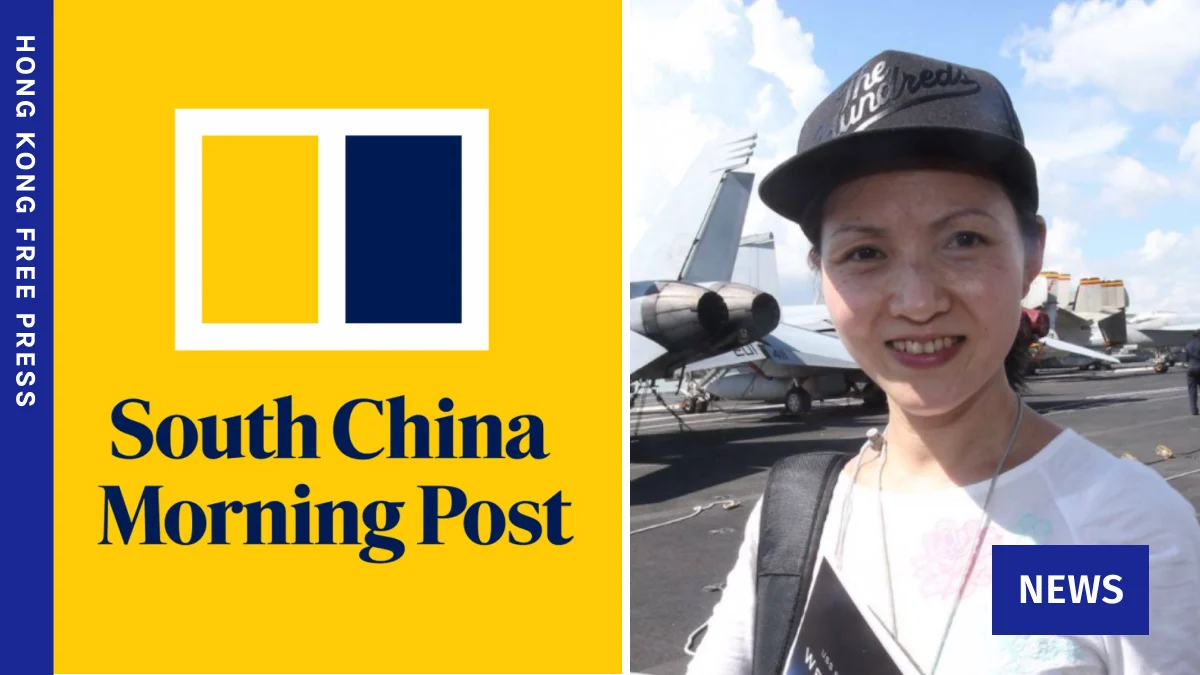
Reporters Without Borders (RSF), a prominent international NGO dedicated to safeguarding press freedom, has formally expressed grave concern over the protracted absence of Minnie Chan, a respected defense reporter for the South China Morning Post (SCMP). Chan was last heard from in October 2023, a period spanning nearly three years since initial reports of her disappearance surfaced. Her last known engagement was covering the Xiangshan Forum, a significant three-day security conference held annually in Beijing.
The silence surrounding Chan’s whereabouts has amplified anxieties within the international journalism community. RSF, citing multiple sources within China, indicated that Chan is believed to be detained by the Chinese regime. These sources suggest that the charges against her, while not publicly disclosed, are likely related to national security, and that she could face a prison sentence of at least 10 years. RSF has stressed that it has been unable to independently verify this information or uncover definitive evidence of her detention.

A Pattern of Concern: The Case of Minnie Chan
Minnie Chan built a reputation as a diligent and insightful reporter specializing in defense and security matters, a beat that often requires navigating sensitive geopolitical landscapes. Her reporting for the SCMP has been recognized for its depth and the access it provided to complex defense issues. Her last known activity, covering the Xiangshan Forum, placed her in a context where information flow and journalistic scrutiny are particularly delicate.
The Xiangshan Forum, officially the Beijing Xiangshan Forum, is a high-level international security dialogue hosted by China. It serves as a platform for military and defense officials, scholars, and analysts from various countries to discuss pressing security challenges. While intended as a forum for exchange, it also operates within the stringent information control environment of the People’s Republic of China. Journalists attending such events are subject to the regulations and scrutiny of the host nation.

RSF’s Appeal for Transparency and Release
Aleksandra Bielakowska, Advocacy Manager at RSF’s Asia-Pacific office, issued a strong statement emphasizing the urgency of the situation. "Minnie Chan’s whereabouts must be made public," Bielakowska declared. "The international community must do everything in its power to secure the release of this talented journalist, who does not belong in a Chinese prison." RSF’s call underscores the fundamental right of journalists to report freely and without fear of reprisal, particularly in contexts where their work involves sensitive national security topics.
The lack of official confirmation or denial from Chinese authorities has only fueled speculation and concern. When questioned about Minnie Chan in 2023, China’s Foreign Ministry spokesperson Wang Wenbin responded with a dismissive "I’m not aware of that [situation]," a statement that has been interpreted by many as a deflection rather than a genuine lack of knowledge, given the prominence of Chan’s reporting.

SCMP’s Response and Broader Implications
Reporters Without Borders stated that it had approached the South China Morning Post to seek clarity on Minnie Chan’s situation. Their inquiries focused on her current employment status with the newspaper, confirmation of her alleged detention, the nature of any charges she might be facing, and details regarding the support the SCMP is providing to her, assuming she is indeed detained. As of the time of reporting, the SCMP had not responded to these inquiries.
This silence from the SCMP is particularly noteworthy. When the initial reports of Minnie Chan’s apparent disappearance emerged, the SCMP had previously threatened legal action against Hong Kong Free Press (HKFP) over its coverage of the matter. At that time, the newspaper stated that the safety of journalists was of paramount importance and claimed to have no further information to disclose. This stance has led to criticism from press freedom advocates who argue that a proactive approach and greater transparency are warranted when one of their reporters is missing under such circumstances.

The implications of Minnie Chan’s disappearance extend beyond an individual case. China has consistently ranked among the countries with the most journalists imprisoned globally. According to RSF’s own data, China is often referred to as the "world’s largest prison for journalists," with a significant number of media professionals currently incarcerated. The detention of foreign or China-based journalists, particularly those reporting on sensitive topics like defense and national security, raises serious questions about China’s commitment to press freedom and its willingness to allow independent reporting on matters of national interest.
Historical Context of Journalist Detentions in China
Minnie Chan’s situation is unfortunately not an isolated incident. The history of foreign and local journalists facing detention or disappearance in China is a recurring concern for international human rights organizations and media watchdogs.

- Haze Fan (Bloomberg News): In 2020, Haze Fan, a Chinese national working for Bloomberg News, disappeared in China. While her detention was confirmed, it took approximately two years before she was reportedly released on bail in 2022, with the specifics of her case and the charges against her remaining largely undisclosed.
- Cheng Lei (Australian Journalist): Cheng Lei, an Australian journalist who worked for CGTN (China Global Television Network), was detained in China in August 2020. She was formally charged with espionage and after a lengthy period of detention and trial, was released in October 2023, coinciding with a period of heightened diplomatic activity between Australia and China.
- Gui Minhai (Hong Kong Bookseller): Although not strictly a journalist, Gui Minhai’s case highlights a broader pattern of individuals associated with media and publishing disappearing and subsequently being detained in China. Gui, a Swedish citizen and a co-owner of a Hong Kong bookstore that published books critical of the Chinese leadership, disappeared in Thailand in 2015. He was later revealed to be in Chinese custody and was eventually imprisoned.
These cases illustrate a pattern where individuals involved in disseminating information, particularly information that might be deemed critical or sensitive by the Chinese authorities, can face severe consequences. The use of national security charges, often vague and difficult to challenge, serves as a powerful tool for the state to control narratives and silence dissent.
The Role of International Pressure and Media Support
The intervention of organizations like Reporters Without Borders is crucial in shining a light on such cases and exerting international pressure on governments to uphold journalistic freedoms. The continued silence from the SCMP, coupled with China’s standard approach to such inquiries, creates an environment of uncertainty and concern for Minnie Chan’s well-being and her rights.

The implications for journalism in China are significant. The risk of detention and the lack of transparency surrounding such cases create a chilling effect on reporting, discouraging both local and foreign journalists from investigating sensitive topics. This can lead to a more restricted information landscape, where critical analysis and public scrutiny are curtailed.
The international community, including media organizations, governments, and human rights advocates, must continue to monitor the situation closely and advocate for Minnie Chan’s immediate release and for clarity regarding her circumstances. The pursuit of truth and accountability hinges on the ability of journalists to report freely and safely, a principle that appears to be increasingly challenged in certain parts of the world. The case of Minnie Chan serves as a stark reminder of the ongoing struggles for press freedom and the vital importance of defending journalists who are dedicated to informing the public.

 Asep Darmawan
 Lina Hope