Jia Lissa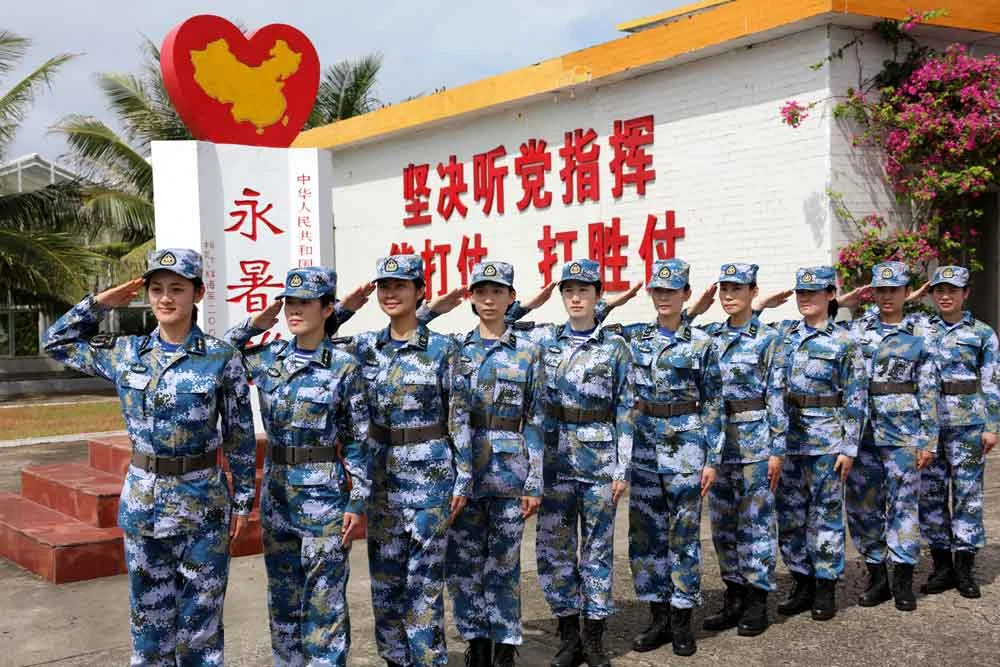
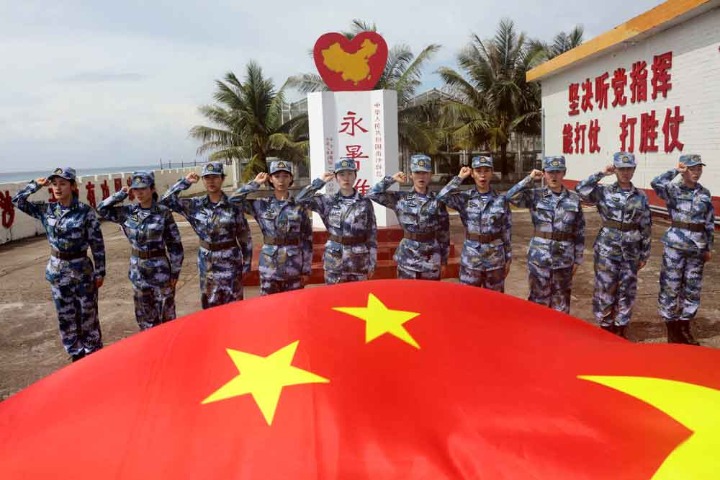
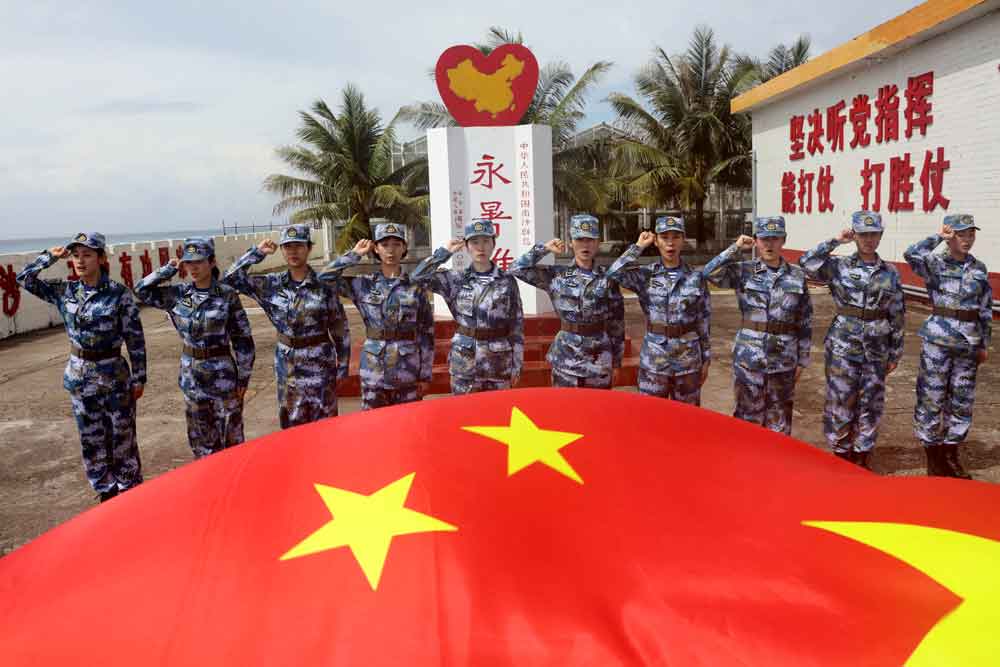
A historic development in the People’s Liberation Army (PLA) saw the deployment of 10 female service members to the garrison guarding the Nansha Islands (internationally known as the Spratly Islands) in the South China Sea, marking the first instance of women being permanently stationed in China’s southernmost territories. The announcement, made by the PLA Navy in a news release on Monday, December 11, 2017, underscored a significant evolution in the operational and social fabric of China’s military, particularly concerning its presence in strategically vital and geopolitically sensitive regions. The contingent formally commenced their duties on Yongshu Reef, one of the largest features in the Nansha archipelago developed by China, signaling a new chapter in the PLA’s long-term commitment to its outposts in the contested waters.
Background and Geopolitical Significance of the Nansha Islands
The Nansha Islands are a collection of more than 100 small islands, reefs, and atolls situated in the South China Sea, an area rich in natural resources, including vast oil and gas reserves, and crucial for global shipping lanes. The archipelago is subject to overlapping territorial claims by several nations, including China, Vietnam, the Philippines, Malaysia, Brunei, and Taiwan. China asserts historical sovereignty over nearly the entire South China Sea, encapsulated by its "nine-dash line" claim, a stance that has generated considerable international friction and regional disputes. Over recent decades, China has undertaken extensive land reclamation and construction activities on various features within the Nansha Islands, transforming previously submerged reefs into artificial islands capable of hosting military facilities, airstrips, and civilian infrastructure. These developments have been met with concern by other claimant states and international powers, particularly the United States, which views them as efforts to alter the status quo and militarize the region.
The PLA’s establishment and expansion of garrisons on these features are central to China’s strategy of asserting and enforcing its territorial claims. These outposts serve multiple functions, including surveillance, maritime patrol, search and rescue operations, and scientific research, alongside their primary role in demonstrating continuous presence and control. The harsh environment, characterized by tropical heat, high humidity, and susceptibility to typhoons, combined with the remote and isolated nature of these postings, presents unique challenges for personnel stationed there.
Evolution of Women’s Roles in the People’s Liberation Army
The deployment of female personnel to the Nansha Islands reflects a broader trend within the PLA towards greater integration and diversification of roles for women. Historically, women in the Chinese military primarily served in support roles such as communications, medical services, and cultural work. However, in recent decades, the PLA has progressively expanded opportunities for women, allowing them to serve in more combat-oriented and specialized capacities. This shift aligns with global military trends where women are increasingly recognized for their capabilities across a wider spectrum of military operations.
From the late 1980s and 1990s, the PLA began to integrate women into technical and scientific roles, as well as in peacekeeping missions abroad. By the early 21st century, women were actively participating in fields such as aviation, naval operations, special forces, and missile command units. This gradual but significant transformation has aimed to leverage a broader talent pool, enhance military professionalism, and project an image of a modern, inclusive fighting force. The deployment to the Nansha Islands, therefore, is not an isolated event but a logical progression within this ongoing modernization and gender integration strategy, demonstrating the PLA’s commitment to deploying its most capable personnel, irrespective of gender, to key strategic locations.
Details of the Inaugural Female Deployment
The 10 women deployed to Yongshu Reef are a highly qualified group, comprising both officers and sergeants, with an average age of 23. Notably, all of them possess a university diploma, underscoring the PLA’s emphasis on educational attainment and intellectual capability for personnel serving in critical and technologically advanced roles. This academic background suggests that these women are not merely filling symbolic positions but are expected to contribute significantly to the operational efficiency and management of the garrison.
Their assigned posts span a wide range of essential functions, including staff, communications, and medical service. In a remote and self-contained environment like Yongshu Reef, these roles are paramount. Staff positions involve administrative duties, logistical coordination, and strategic planning, ensuring the smooth functioning of the base. Communications specialists are vital for maintaining reliable links with mainland command centers and other maritime assets, a critical requirement for situational awareness and operational coordination in the vast South China Sea. Medical service personnel are indispensable for the health and well-being of the entire garrison, providing immediate care and managing health-related challenges unique to the tropical marine environment, far from advanced medical facilities. The diverse nature of their assignments highlights the practical need for their skills and expertise rather than a purely ceremonial presence.
Living Conditions and Welfare Measures
Life on the Nansha Islands garrisons can be challenging due to their isolated nature and the demanding environmental conditions. However, significant investments have been made in infrastructure development on features like Yongshu Reef to improve living standards for personnel. Zhou Yaling, one of the newly deployed female service members, offered an optimistic perspective on her new surroundings, stating that Nansha was "more beautiful than what they had imagined." Her observations painted a picture of a developed outpost, describing the presence of "airports, harbors, streets, hospitals and sporting grounds," which collectively make the islands "like a lovely city on the sea." This portrayal suggests that the living conditions, while still austere compared to mainland bases, are far from primitive and include amenities designed to support long-term deployments and foster a sense of normalcy.
Recognizing the psychological and physical demands of such remote postings, the PLA has instituted specific welfare measures. Zhang Jiahong, political commissar of the PLA Nansha Islands Garrison, confirmed that these female members would be sent back to the mainland every several months for rest periods. This rotational policy is crucial for ensuring their sustained health and morale, mitigating the effects of prolonged isolation, and preventing burnout. Such measures are indicative of a modern military’s approach to personnel management, prioritizing the well-being of its service members, especially those in high-stress, remote assignments. The provision for regular rotation also underscores the long-term nature of these deployments, signifying a permanent, rather than temporary, female presence.
Precedent and Distinction from Previous Deployments
While this deployment marks the first permanent stationing of female personnel, it is important to distinguish it from previous instances of women serving on the Nansha Islands. Prior to this, female PLA members had indeed been present on the islands, but their missions were typically short-term and temporary. These earlier deployments were often for specific tasks, inspections, or brief tours, and the personnel remained under the direct command of their original units on the mainland. The key difference with the current deployment is its permanent nature; these 10 women are formally assigned to the Nansha Islands Garrison, integrated directly into its operational structure, and are expected to serve for extended periods, rotating out for rest rather than completing a short mission and returning to their original base. This shift from temporary assignments to permanent integration signifies a deeper commitment to utilizing female talent within the garrison’s core operational framework.
Broader Implications and Analysis
The deployment of female service members to the Nansha Islands carries several significant implications, both domestically and internationally.
Symbolic and Operational Significance:
Domestically, it represents a symbolic stride for gender equality within the PLA, showcasing the military’s progressive stance and its commitment to utilizing the full spectrum of its human resources. It can serve as a powerful message for recruitment, demonstrating that career paths in even the most challenging military environments are open to women. Operationally, the integration of women into diverse roles like communications and medical services enhances the garrison’s overall capabilities, bringing new skills and perspectives that contribute to a more robust and well-rounded defense posture.
Reinforcing Sovereignty Claims:
Internationally, this deployment further solidifies China’s long-term commitment to its presence and claims in the South China Sea. By normalizing the demographic composition of its garrisons and investing in comprehensive welfare for its personnel, China projects an image of routine administration and continuous habitation on these disputed features. This move can be interpreted by other claimant states as another step in China’s incremental strategy to strengthen its de facto control over the Nansha Islands, gradually transforming them into established outposts akin to any other domestic territory. The emphasis on "city-like" infrastructure further supports this narrative of established presence.
Geopolitical Repercussions:
While the immediate operational impact on regional geopolitics may be subtle, the symbolic weight is considerable. Other nations with claims in the South China Sea, as well as international observers, will likely view this as part of China’s broader strategy of "salami slicing" – gradually asserting control without provoking outright conflict. It underscores the permanence of China’s military installations and its intention to develop these outposts into fully functional, self-sustaining entities. This development may prompt other claimant nations to reassess their own strategies for maintaining presence and asserting claims in the face of China’s expanding footprint.
Challenges and Future Outlook:
Despite the advancements in living conditions, personnel on remote outposts still face unique challenges, including psychological stress from isolation, the demanding climate, and the inherent geopolitical tensions of the region. The PLA’s commitment to regular rotation and robust support infrastructure will be crucial for the long-term success of these deployments. As China continues to modernize its military and expand its global reach, the role of women in critical and front-line positions is likely to grow further. The Nansha Islands deployment serves as a precedent and a testament to the evolving nature of the People’s Liberation Army, demonstrating its capacity to adapt to both strategic imperatives and social transformations.
The deployment of female PLA members to the Nansha Islands garrison is a multifaceted development, reflecting advancements in military gender integration, strategic consolidation of territorial claims, and the ongoing modernization of China’s armed forces. It underscores China’s unwavering resolve to maintain its presence in the South China Sea while simultaneously showcasing a more inclusive and professional image of the People’s Liberation Army on the global stage.

 Nana Wu
 Lina Hope