Reynand Wu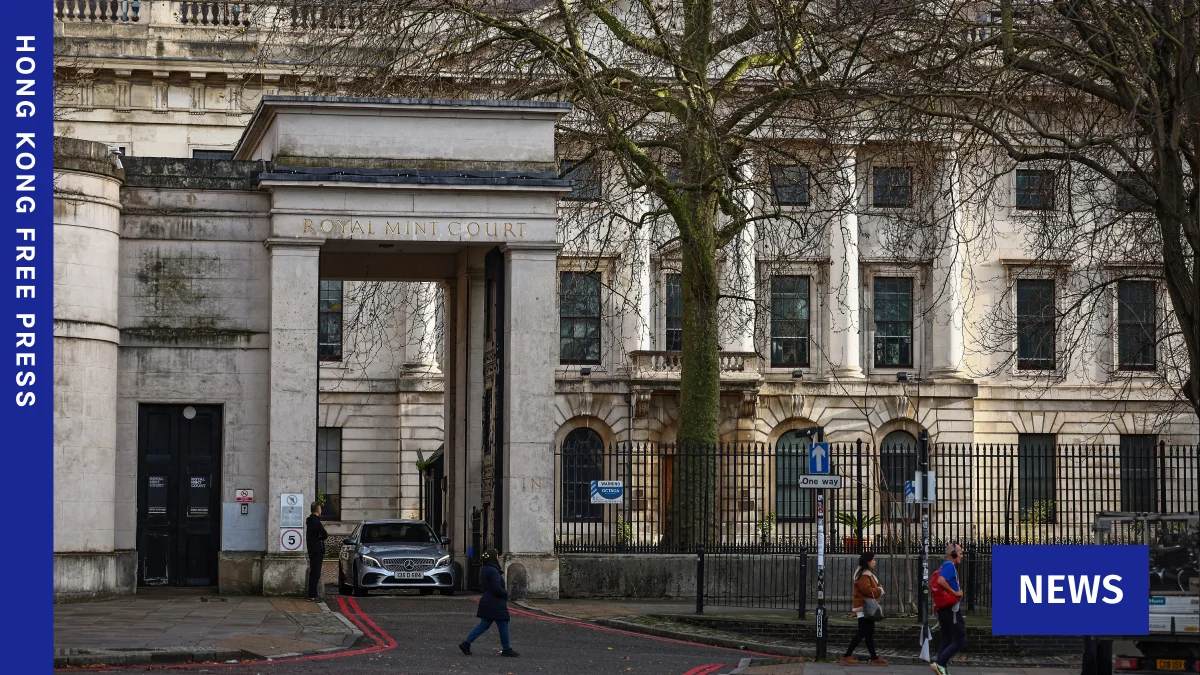
An English court on Friday dismissed a legal challenge against planning permission for a substantial new Chinese embassy in central London, a decision that opponents, including local residents and human rights advocates, have vowed to contest further. The High Court ruled that the housing minister acted lawfully in granting permission for the vast diplomatic complex, a decision that has been met with a mixture of relief from proponents and continued defiance from those concerned about the project’s implications.
The legal challenge was brought by a coalition of local residents and businesses, bolstered by support from opposition politicians and Hong Kong pro-democracy activists. They had petitioned the court to re-examine the government’s decision, citing significant concerns regarding the proposed embassy’s scale and its proximity to historical landmarks like the Tower of London. Key arguments presented by the claimants centred on fears of increased security risks, potential for espionage, and the perceived threat to dissidents living in the UK.

However, after a hearing earlier this month, two High Court judges concluded that the government’s decision-making process had not been unlawful. The judgment specifically focused on the legality of the minister’s actions in granting planning permission, rather than on the merits or wisdom of the planning decision itself. This distinction is crucial, as it means the court did not rule on whether the embassy was a good idea, but rather on whether the process by which it was approved followed legal procedures.
Following the court’s ruling, the Royal Mint Court Residents Association announced its intention to seek permission to appeal the decision, with aspirations for the case to be heard by the UK’s Supreme Court. To fund this continued legal battle, the association has reactivated its crowdfunding efforts.
Opposition Vows to "Fight On" Against "CCP Power Centre"

The dismissal of the legal challenge has been met with strong condemnation from various groups opposing the embassy’s construction. Luke de Pulford, head of the Inter-Parliamentary Alliance on China, issued a statement asserting that the court’s decision is not the final word. "Beijing thinks this judgement is the final word. It isn’t. The appeal is already in the works," he stated, adding, "If they expect us to roll over and allow our own capital to become a CCP power centre, they have completely misjudged the strength of opposition to this mega embassy."
The project has drawn significant criticism from individuals and organizations concerned about China’s human rights record and its geopolitical influence. Former Conservative opposition leader, Sir Iain Duncan Smith, a vocal critic of the embassy plans, indicated his intention to raise the issue of "China policy" with the new Prime Minister, Andy Burnham. Sir Iain has repeatedly alleged that Beijing exerted pressure on the British government to approve the construction. "The price we pay when we kowtow to China is in human lives," he declared at a press conference organised by the claimants, underscoring the perceived human cost of appeasing Beijing.
Chloe Cheung, a Hong Kong pro-democracy activist, articulated the broader implications of the embassy’s establishment. She emphasised that the case transcends mere architectural planning, questioning whether dissidents targeted by Chinese authorities can genuinely "feel safe in Britain." This sentiment reflects a wider concern among diaspora communities about the long reach of authoritarian regimes and their potential to extend surveillance and harassment beyond national borders.

A Site Steeped in History, Now a Diplomatic Flashpoint
The chosen site for the new Chinese embassy is the historic former Royal Mint, located adjacent to the iconic Tower of London. Beijing acquired the prime Thames-side property in 2018 for a reported $327 million. The intention was to consolidate China’s seven current diplomatic missions in London into a single, expansive complex, a move proponents argue would offer clear security advantages.
The plan to relocate the embassy to this prominent location has been a source of considerable controversy since its inception. The project’s approval process, particularly the granting of diplomatic consent by then-Foreign Minister Boris Johnson, faced scrutiny. The scale of the proposed embassy is unprecedented; the site is slated to become the largest embassy complex in the UK by area, covering approximately 20,000 square metres (235,000 square feet).

The design, developed by David Chipperfield Architects, involves the restoration and partial demolition of existing historic structures, alongside substantial new construction. Planning documents indicate the projected floor space could exceed 50,000 square metres, making it larger than the new US embassy, which is located about 5.1 kilometres to the southwest. This would position it not only as the largest Chinese embassy in Western Europe but likely the largest embassy of any nation in the region based on floor area.
Concerns Over Security and "Secret Rooms"
Adding to the controversy, The Daily Telegraph reported that it had obtained unredacted plans suggesting Beijing’s intention to construct a "concealed chamber" within a network of 208 "secret rooms" beneath the embassy. These subterranean facilities would be situated in close proximity to sensitive underground communication cables, raising significant security concerns among critics.
The court’s judgment addressed these concerns, stating that while the plans submitted to UK authorities were redacted and not all rooms were fully identified, there was "no possible ambiguity as to the nature of the intended use of the premises." This suggests that the authorities were aware of the potential implications, even if specific details were not fully disclosed in the public-facing documents.
In January, Security Minister Dan Jarvis assured Members of Parliament that any associated risks were being "appropriately managed." He cited intelligence chiefs who had reportedly developed a "range of measures" to mitigate potential threats. However, these assurances have done little to quell the anxieties of opposition groups and residents.
Timeline of the Contested Project:

- 2018: Beijing purchases the former Royal Mint site for a reported $327 million, signalling its intention to build a new, larger embassy.
- Pre-2024: The project faces mounting opposition from local residents, human rights groups, and critics of the Chinese Communist Party. Numerous concerns are raised regarding security, espionage, and the potential harassment of dissidents.
- January (Year not specified, but implied recent): Keir Starmer’s government grants planning permission for the embassy shortly before a ministerial visit to Beijing. This decision draws criticism from opposition politicians and international figures, including then-US President Donald Trump.
- Early this month (Month not specified): A legal challenge against the planning permission is heard in the High Court.
- Friday (Date of original publication): The High Court dismisses the legal challenge, ruling that the housing minister acted lawfully in granting permission.
- Friday (Date of original publication): The Royal Mint Court Residents Association announces its intention to seek permission to appeal to the Supreme Court and relaunches crowdfunding efforts.
Broader Implications and Geopolitical Context
The saga of the new Chinese embassy in London highlights the complex geopolitical landscape of diplomatic relations in the 21st century. The UK, like many Western nations, navigates a delicate balance between fostering international trade and investment with China and addressing legitimate concerns about its human rights record, territorial ambitions, and global influence.
The decision to grant planning permission, particularly at such a sensitive historical and strategic location, underscores the challenges faced by governments in responding to the expanding diplomatic footprint of global powers. The protracted opposition and the ongoing legal battles reflect a growing public awareness and concern regarding the potential for foreign diplomatic missions to be used for purposes beyond traditional diplomacy, including intelligence gathering and political interference.

The controversy also underscores the vulnerability of dissidents and exiled communities in democratic nations. The fear that their safety could be compromised by the presence of powerful foreign embassies is a recurring theme in discussions about international relations and human rights. The commitment of groups like the Inter-Parliamentary Alliance on China and Hong Kong pro-democracy activists to continue their fight, even after a judicial setback, signals a determination to hold governments accountable for their decisions and to advocate for the protection of fundamental freedoms.
The future of the London embassy project remains uncertain, with the possibility of further legal challenges. Regardless of the ultimate outcome, the episode has brought to the forefront critical questions about national security, diplomatic sovereignty, and the ethical considerations that must guide international relations in an increasingly interconnected yet politically charged world. The prolonged debate serves as a stark reminder that diplomatic immunity and the rights of host nations often intersect in complex and contentious ways.

 Asep Darmawan
 Lina Hope