Laily UPN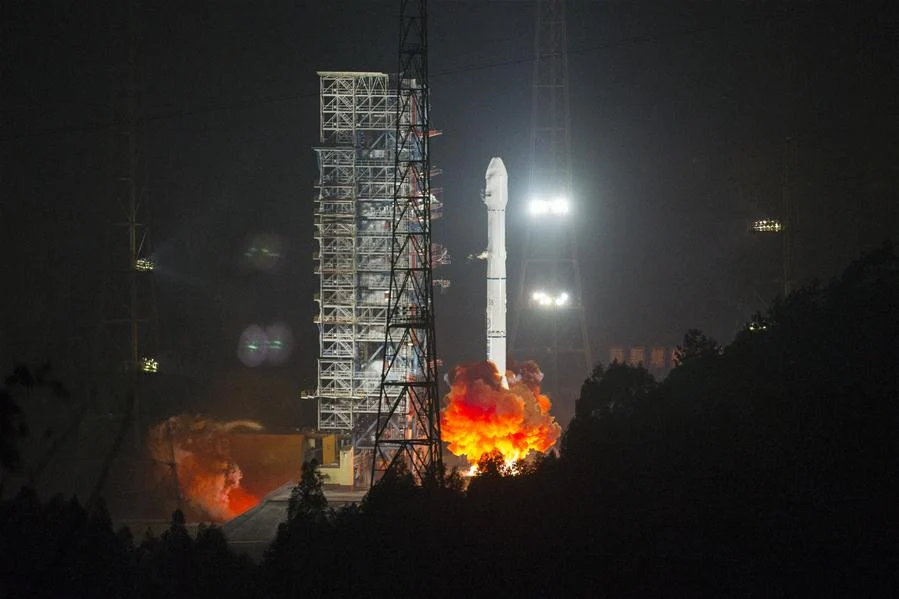
The successful launch of Alcomsat-1, Algeria’s inaugural communication satellite, from China’s Xichang Satellite Launch Center on December 11, 2017, marks a significant milestone in the burgeoning space cooperation between China and Arab nations. This achievement underscores the deepening comprehensive strategic partnership between China and Algeria, initiating a new era of collaboration in the aerospace sector and holding substantial implications for Algeria’s national development and social progress. The event was celebrated with congratulatory messages exchanged between Chinese President Xi Jinping and Algerian President Abdelaziz Bouteflika, highlighting the shared commitment to strengthening bilateral ties and exploring new avenues of cooperation.
A New Era of Space Cooperation and National Development
President Xi Jinping, in his message, underscored the symbolic importance of the Alcomsat-1 project, characterizing it as a "manifestation of the China-Algeria comprehensive strategic partnership." He further emphasized that this endeavor sets a precedent for aerospace cooperation between China and Arab countries, signaling a broader trend of China’s growing influence and capabilities in the global space industry. The satellite’s primary mission is to bolster Algeria’s telecommunications infrastructure, offering enhanced services for broadcasting, internet access, and emergency communications. This technological advancement is poised to play a pivotal role in promoting Algeria’s economic development by facilitating business operations and digital transformation, improving the livelihood of its citizens through better access to information and services, and fostering social progress by bridging the digital divide and enhancing connectivity across the nation.
President Xi also took the opportunity to look ahead, noting that 2018 would mark the 60th anniversary of diplomatic relations between China and Algeria. He expressed Beijing’s readiness to collaborate with Algeria to enhance exchanges and cooperation across a spectrum of fields. This proactive stance aims to propel the comprehensive strategic partnership to greater depths, ultimately benefiting both nations and their peoples. The successful satellite launch serves as a powerful testament to the trust and mutual understanding that underpins this enduring relationship.
Algerian President Acknowledges Milestone Achievement
Algerian President Abdelaziz Bouteflika, in his reciprocal message, echoed President Xi’s sentiments, describing the successful launch of Alcomsat-1 as a "remarkable achievement in aerospace cooperation between Algeria and China." He further elaborated that this accomplishment is a clear reflection of the "deep traditional friendship" that exists between the two nations. This historical friendship, forged over decades, has provided a fertile ground for substantive cooperation in various sectors. President Bouteflika conveyed Algeria’s eagerness to continue working closely with China to advance cooperation in diverse fields, with the shared objective of achieving even more significant outcomes. This sentiment underscores Algeria’s strategic vision to leverage its partnership with China for its own socio-economic advancement.
Background and Context: China’s Ascending Role in the Global Space Arena
The launch of Alcomsat-1 is not an isolated event but rather a significant step in China’s ambitious and rapidly expanding space program. Over the past two decades, China has transformed from a nascent space power into a global leader, demonstrating remarkable progress in satellite technology, launch capabilities, and space exploration. The nation’s Long March rocket series, which has a stellar launch record, has been instrumental in deploying a diverse array of satellites for both domestic and international clients. These include communication satellites, Earth observation satellites, navigation satellites (forming the BeiDou system, a direct competitor to GPS), and scientific research satellites.
China’s Belt and Road Initiative (BRI) has also provided a framework for its growing space diplomacy. By offering advanced space technologies and services, China is fostering partnerships with developing nations, many of whom are seeking to leapfrog technological barriers and enhance their national capabilities. Algeria, strategically located in North Africa, is a key partner in this initiative, and the Alcomsat-1 launch exemplifies the tangible benefits of this collaboration. This partnership aligns with Algeria’s national development goals, particularly its vision to modernize its infrastructure and improve public services.
Chronology of the Alcomsat-1 Mission
The journey of Alcomsat-1 from conception to orbit involved a complex and multi-stage process, reflecting the collaborative nature of the project:
- Early Planning and Agreement: Discussions and agreements between the Chinese and Algerian governments regarding satellite cooperation likely began several years prior to the launch. These discussions would have outlined technical specifications, financial arrangements, and the overarching objectives of the mission.
- Design and Manufacturing: Following the agreement, Chinese aerospace firms, such as the China Academy of Space Technology (CAST), would have been responsible for the design and manufacturing of the Alcomsat-1 satellite. This phase involves rigorous testing and quality control to ensure the satellite’s reliability and functionality.
- Ground Segment Development: Simultaneously, Algeria would have been developing its ground segment infrastructure, including satellite control centers and ground stations, to manage and operate Alcomsat-1 once it was in orbit. This often involves training Algerian personnel in satellite operations.
- Satellite Integration and Testing: The satellite would have undergone comprehensive integration with its launch vehicle components and undergone extensive testing at the launch site to verify its readiness for space.
- Launch Preparations: In the weeks and days leading up to the launch, the satellite would have been carefully encapsulated within the payload fairing of the chosen Long March rocket. Final checks of the launch vehicle and satellite systems would have been conducted.
- Launch Day (December 11, 2017): At the Xichang Satellite Launch Center, the Long March rocket carrying Alcomsat-1 lifted off precisely at the designated time. The launch was meticulously monitored by engineers and mission controllers.
- Orbit Insertion: The rocket’s upper stages performed a series of precise burns to place Alcomsat-1 into its intended geostationary transfer orbit.
- Satellite Deployment and In-Orbit Testing: Once in orbit, the satellite would have been deployed from the rocket’s upper stage. Following deployment, extensive in-orbit testing would have commenced to confirm all satellite systems were functioning as expected and to calibrate its communication payloads.
- Operational Handover: Upon successful completion of in-orbit testing, Alcomsat-1 would have been handed over to Algerian operators for full operational deployment.
Supporting Data and Technical Specifications
While the specific technical specifications of Alcomsat-1 are not detailed in the provided text, typical communication satellites of this nature are designed for geostationary orbit (GEO). Satellites in GEO orbit at an altitude of approximately 35,786 kilometers (22,236 miles) above the Earth’s equator, completing one orbit in the same time it takes for the Earth to rotate once. This allows them to appear stationary from a fixed point on the ground, making them ideal for continuous communication services like broadcasting and telephony.
Alcomsat-1 is reported to be Algeria’s first communication satellite, implying a significant upgrade from its existing telecommunications infrastructure. Previous communication services in Algeria likely relied on leased transponders on international satellites or terrestrial networks. The deployment of its own satellite offers greater control, capacity, and potentially lower operational costs in the long run.
China’s Long March series of rockets are known for their reliability and payload capacity. The specific rocket used for the Alcomsat-1 launch would have been chosen based on the satellite’s mass and the required orbital parameters. These rockets are the backbone of China’s space launch capabilities and have a proven track record of successfully delivering payloads into various orbits.
Official Responses and Broader Implications
The exchange of congratulatory messages between President Xi and President Bouteflika signifies a high level of diplomatic engagement and mutual recognition of the importance of this joint venture. This level of presidential endorsement elevates the Alcomsat-1 project beyond a mere technical undertaking, framing it as a cornerstone of the bilateral relationship.
From China’s Perspective: This launch reinforces China’s position as a trusted partner and provider of advanced space technologies. It demonstrates the effectiveness of its "peaceful use of outer space" policy and its commitment to sharing technological advancements with developing nations. The success of Alcomsat-1 can serve as a powerful reference for future collaborations with other countries in the Middle East, Africa, and beyond. It also contributes to China’s growing influence in international space governance.
From Algeria’s Perspective: The acquisition of its own communication satellite represents a significant leap forward in national sovereignty and self-reliance in a critical technological domain. It empowers Algeria to better serve its citizens, stimulate economic growth through enhanced connectivity, and improve the delivery of public services, including education and healthcare, particularly in remote areas. The satellite can also play a crucial role in disaster management and national security communications.
Analysis of Implications: A Catalyst for Digital Transformation and Regional Connectivity
The implications of the Alcomsat-1 launch extend far beyond the immediate enhancement of Algeria’s communication capabilities.
- Digital Transformation: With increased broadband access and improved broadcasting services, Alcomsat-1 is expected to accelerate Algeria’s digital transformation. This includes facilitating e-commerce, enabling remote learning opportunities, and fostering innovation across various sectors of the economy. The satellite can also support the development of smart city initiatives and improve the efficiency of public administration.
- Economic Diversification: A robust communication infrastructure is a prerequisite for attracting foreign investment and fostering a more dynamic private sector. Alcomsat-1 can help diversify Algeria’s economy, which has historically been reliant on hydrocarbon exports, by creating new opportunities in the digital economy and related service industries.
- Bridging the Digital Divide: Algeria, like many nations, faces challenges in providing equitable access to telecommunications services across its vast territory. Alcomsat-1 can significantly improve connectivity in rural and underserved regions, ensuring that all citizens have access to essential information and services, thereby promoting social inclusion and reducing regional disparities.
- Regional Cooperation and Influence: As a prominent Arab nation, Algeria’s successful deployment of a communication satellite with Chinese assistance can inspire and facilitate similar initiatives among other countries in the region. This could lead to increased regional cooperation in space applications and the development of a more interconnected North African and Middle Eastern digital landscape.
- Strengthening China-Arab Ties: The Alcomsat-1 project serves as a concrete example of successful China-Arab cooperation in a high-tech sector. It builds upon decades of political and economic ties, demonstrating a shared vision for technological advancement and mutual prosperity. This success is likely to pave the way for further collaborations in areas such as remote sensing, scientific research, and potentially even space exploration.
In conclusion, the launch of Alcomsat-1 is a landmark event that signifies a new chapter in China-Algeria relations and a testament to the evolving global landscape of space technology. It represents a strategic investment by Algeria in its future, facilitated by a robust partnership with China, and is poised to deliver substantial benefits for the nation’s development for years to come.


 Nana Wu
 Suro Senen