Jia Lissa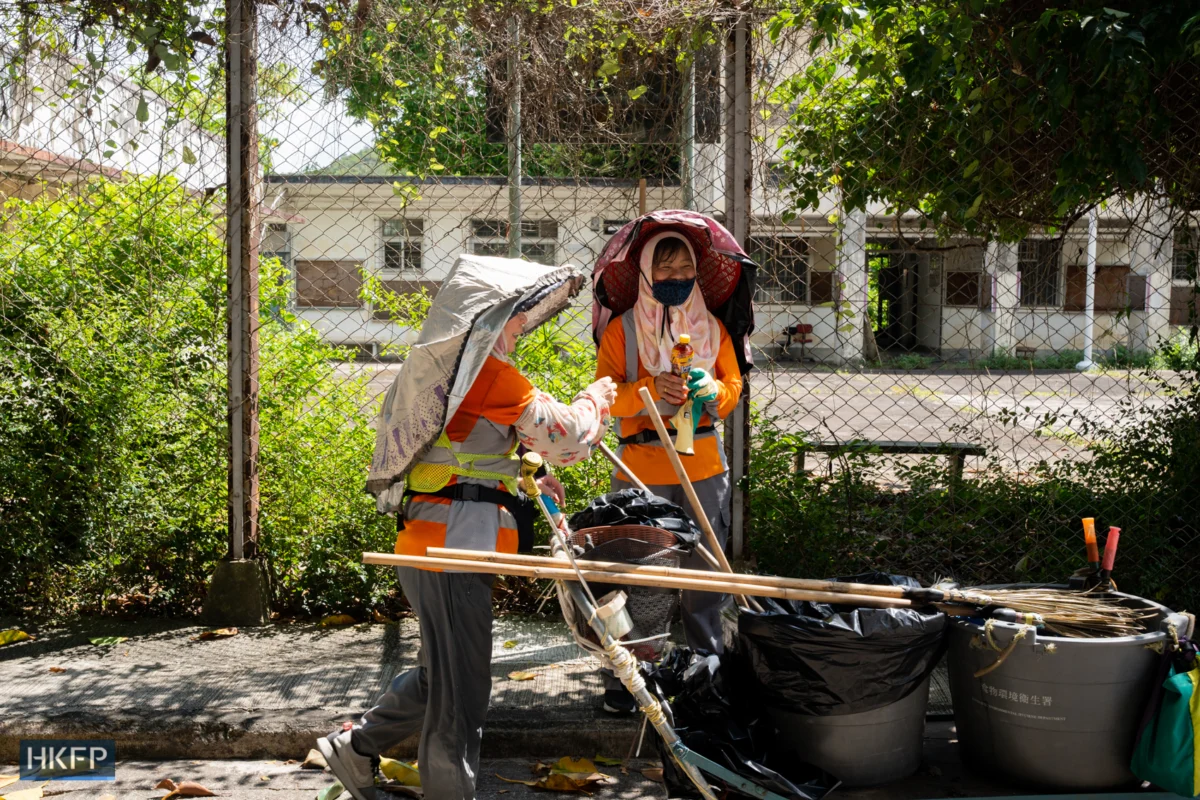
A former chief of the Hong Kong Observatory has strongly criticized the government’s heat stress warning system, arguing that it failed to adequately reflect the severity of Sunday’s record-breaking heatwave by issuing only the lowest alert level. Lam Chiu-ying, who served as the Observatory’s director from 2003 to 2009, expressed his bewilderment that the "Amber" Heat Stress At Work Warning was the highest level issued, despite temperatures reaching unprecedented highs across the territory.
Lam’s critique, voiced through a Chinese Facebook post, highlights a significant concern regarding the effectiveness and responsiveness of the current heat warning mechanism. He pointed out that the amber alert, the least severe of the three-tiered system (amber, red, black), has reportedly been triggered over 200 times since its inception in May 2023, while the more stringent red and black warnings have never been activated. "Isn’t that a bit strange?" Lam questioned, implying that the system’s frequent activation of the lowest alert dilutes its significance and potentially misleads the public and affected workers about the true risks posed by extreme heat.

The record-breaking heatwave, influenced by Tropical Cyclone Dolphin, saw temperatures soar on Sunday. In Sheung Shui, the mercury climbed to a scorching 39.8 degrees Celsius, while the official temperature recorded at the Hong Kong Observatory headquarters reached a still-alarming 36.9 degrees Celsius. These figures represent the highest temperatures recorded in the territory’s history, underscoring the critical need for accurate and robust public health advisories.
The Heat Stress At Work Warning system, introduced to protect outdoor workers and those in non-air-conditioned environments, comprises amber, red, and black alerts. Each level corresponds to specific rest arrangements recommended for employees, with more severe warnings mandating greater rest periods and, in the case of red and black alerts, potentially work suspensions for those engaged in strenuous physical labor. However, a crucial caveat of the system is that these recommendations are not legally binding upon employers, leaving the ultimate implementation to their discretion.
Lam Chiu-ying’s assessment that the system, particularly the red and black warnings, has become a "decorative display piece" due to its perpetual non-activation is a stark indictment. He posed a pointed rhetorical question: "If even record-breaking temperatures fail to trigger [the red warning], is it not just a decorative display piece?" This sentiment suggests a disconnect between the observed environmental conditions and the official response, raising questions about the system’s calibration and its ability to provide timely and appropriate warnings during extreme weather events.

The triggers for the warning levels are based on the Hong Kong Heat Index. An index reading of 30 or above activates the amber warning, while 32 and 34 are the thresholds for the red and black warnings, respectively. The index itself is a composite measure that accounts for ambient air temperature, humidity, wind speed, and solar radiation. This multi-faceted approach aims to provide a more holistic picture of perceived heat stress than simple air temperature readings.
Critique of the Hong Kong Heat Index: Underestimating Direct Solar Radiation
A significant point of contention raised by Lam Chiu-ying and echoed by other safety advocates is the composition of the Hong Kong Heat Index itself. Lam argues that the index "underestimates the heat stress effects of direct solar radiation, especially for outdoor workers." He specifically noted that "The solar radiation weighting within the Hong Kong Heat Index is very low, making it unsuitable for outdoor work environments." This suggests that while the index attempts to account for various factors, its weighting of solar radiation may not accurately reflect the intense impact of direct sunlight on individuals engaged in strenuous outdoor activities.

According to the Observatory’s methodology, the Natural Wet-Bulb Temperature, which measures the effectiveness of sweat evaporation for cooling the body, accounts for a substantial 80 percent of the index’s calculation. This emphasis is reportedly based on the premise that most heat-related hospitalizations are linked to impaired sweat evaporation. Conversely, the Black Globe Temperature, which directly measures radiant solar heat, constitutes only 5 percent of the formula. This low weighting for direct solar heat is a primary reason for Lam’s criticism, as it potentially downplays the immediate and severe physiological strain imposed by direct sunlight, particularly on construction workers, sanitation workers, and others who spend extended periods outdoors.
The Observatory’s approach prioritizes factors correlating with general population hospital admissions, which are heavily influenced by humidity and its impact on evaporative cooling. However, critics argue that this does not adequately account for the specific occupational hazards faced by outdoor workers. The intense radiant heat from direct sunlight, coupled with physical exertion, can lead to rapid dehydration and heatstroke, even if the ambient humidity is not exceptionally high.
Alternative Heat Stress Measurement: The Wet Bulb Globe Temperature (WBGT)

In light of these concerns, Lam Chiu-ying proposed that the government consider adopting the Wet Bulb Globe Temperature (WBGT) as the primary indicator for heat stress warnings. The WBGT is another composite heat index that utilizes similar environmental measurements (air temperature, humidity, wind speed, and solar radiation) but assigns a higher weighting to the Black Globe Temperature, at 20 percent, compared to the Hong Kong Heat Index’s 5 percent. This increased emphasis on radiant heat is seen as more appropriate for assessing the risks faced by individuals exposed to direct sunlight.
Fay Siu, chief executive of the Association for the Rights of Industrial Accident Victims, corroborated Lam’s concerns and supported the adoption of the WBGT. She stated in a press release that the WBGT had reached "red" warning levels on several recent occasions, even when the local Hong Kong Heat Index only registered amber. This discrepancy highlights the potential for the current system to underestimate the actual thermal stress experienced by workers. For instance, a situation with a temperature of 30 degrees Celsius but high humidity could trigger an amber warning under the local index, but the WBGT might indicate a more severe risk due to concurrent direct solar radiation.
The Need for Stronger Worker Protections and a Dual-Track System

The debate over the heat warning system is intrinsically linked to the broader issue of worker safety and rights in Hong Kong, particularly for those in physically demanding outdoor occupations. The Association for the Rights of Industrial Accident Victims has called for stronger protections, pointing out that current definitions of work-related injuries and fatalities may not adequately cover heat-related deaths. Siu explained that if an underlying condition like a heart condition contributes to a heat-related death, it may not be classified solely as a work injury, leaving victims and their families unprotected.
"If an injury or death must be solely caused by work, ‘labelling heatstroke as a work injury would be virtually meaningless, and workers and their families will be utterly unprotected,’" Siu stated. This highlights a critical loophole where heatstroke, even if exacerbated by working conditions, might not be recognized as a direct cause of death or injury under existing labor laws, thereby limiting compensation and support for affected individuals.
To address these shortcomings, the Association recommended a "dual-track system." Under this proposal, whichever heat index—the Hong Kong Heat Index or the WBGT—triggers a warning first would take precedence. This approach would ensure that the most sensitive and potentially severe warning is activated, providing a more immediate and robust response to dangerous heat conditions.

Official Response and Broader Implications
A spokesperson for the Labour Department acknowledged the concerns, stating that the amber warning was issued on Sunday in accordance with the established mechanism, as the heat index at ten stations ranged between 30 and 32. The department also noted that despite the high temperatures, relative humidity was below the summer average and wind conditions were favorable, which may have influenced the index readings. The department indicated that it will continue to monitor weather conditions and the effectiveness of the heat stress warning system to assess the need for any optimizations.
The discussion surrounding Hong Kong’s heat warning system takes place against the backdrop of escalating global climate change. The Intergovernmental Panel on Climate Change (IPCC) has repeatedly warned about the increasing intensity and frequency of heatwaves driven by human activities. Research indicates that Hong Kong has already experienced a significant warming trend since the Industrial Revolution, and projections suggest that heat and humidity could reach lethal levels for extended periods by the end of the century, posing a substantial risk to public health and outdoor workforces.

The incident and the subsequent criticism underscore the critical importance of having responsive and scientifically sound public health advisories, especially in the face of a changing climate. The effectiveness of warning systems, their calibration against real-world impacts, and their legal enforceability are crucial elements in protecting vulnerable populations, particularly outdoor workers, from the escalating dangers of extreme heat. As temperatures continue to rise, the urgency for Hong Kong to reassess and potentially overhaul its heat stress warning system becomes increasingly apparent, ensuring that it provides genuine protection rather than mere symbolic alerts. The future of worker safety in an era of climate change hinges on such proactive and robust measures.

 Layla Zulfa
 Ammar Sabilarrohman