Sagoh
Sagoh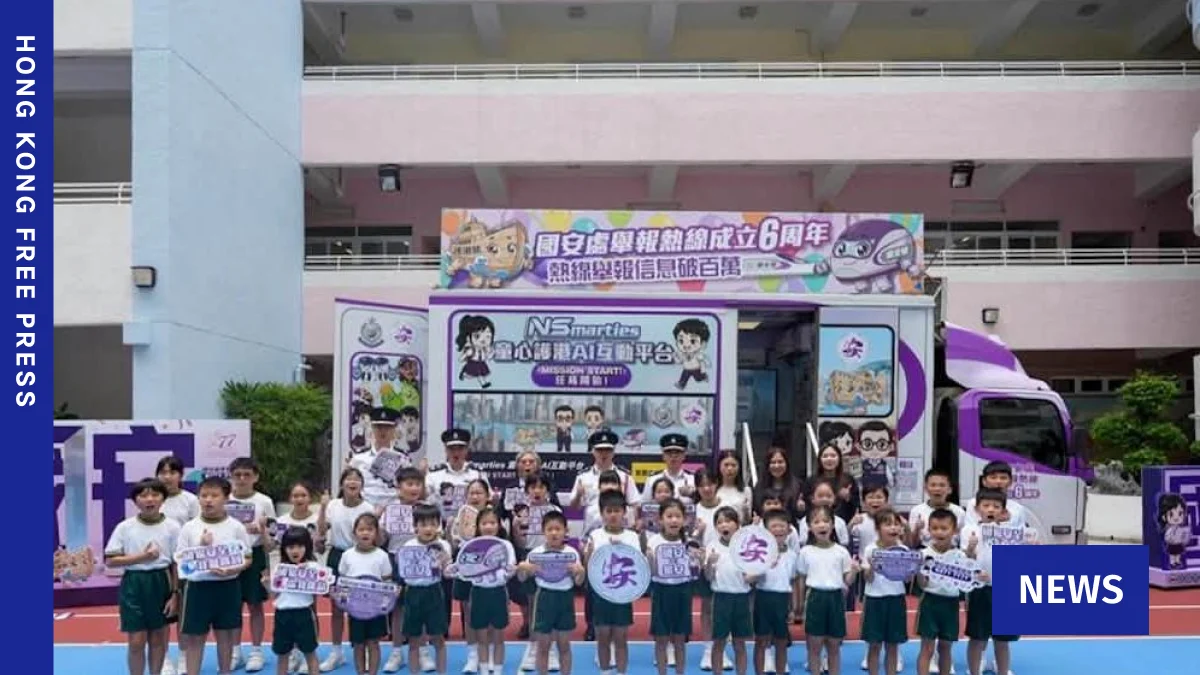
Hong Kong police have launched an artificial intelligence-powered national security education platform designed to instill an understanding of national security concepts in the city’s youth. The initiative, officially named the NSmarties AI Interactive Platform, was formally inaugurated last week during a ceremony held at Precious Blood Primary School in Ap Lei Chau. Approximately 700 pupils attended the event, marking a significant step in the integration of advanced technology into national security education for young learners.
A New Era of National Security Education
The NSmarties platform represents a novel approach to educating students about national security, a topic that has gained heightened prominence in Hong Kong since the imposition of the National Security Law by Beijing in 2020. Police Commissioner Joe Chow, speaking at the launch ceremony, articulated the campaign’s core objective: to "plant the seeds of national security in students’ hearts." This sentiment underscores the government’s commitment to embedding national security awareness from an early age, utilizing modern tools to achieve this goal.

The platform is a collaborative effort between the Hong Kong Police Force and Hong Kong Qianfan Technology. Its innovative design allows students to generate personalized stories. These narratives are centered around China’s "holistic approach to national security," a concept championed by President Xi Jinping. This comprehensive framework extends beyond traditional military and political security, encompassing a broad spectrum of areas including politics, economics, ecology, and technology. By making these complex concepts relatable through personalized storytelling, the platform aims to foster a deeper and more engaging understanding among young students.
Furthermore, the NSmarties platform features audio contributions from prominent security officials, including Police Commissioner Joe Chow and Security Chief Chris Tang. Their voices are integrated to provide clear explanations of Hong Kong’s national security laws and critical security information, offering authoritative guidance directly to the students.
Genesis and Evolution of the Platform
The NSmarties platform was initially previewed on National Security Education Day in April of the same year, though it was not fully accessible to the public at that stage. The recent ceremony signifies its complete rollout and official integration into the educational landscape. This phased introduction allowed for refinement and preparation before a wider public launch, ensuring a more robust and effective educational tool.

The development and deployment of this AI-powered platform come against a backdrop of significant changes in Hong Kong’s approach to national security education. Following the extensive pro-democracy protests and unrest in 2019, Beijing enacted a national security law in June 2020. This legislation was integrated directly into Hong Kong’s Basic Law, the city’s mini-constitution. The law criminalizes acts of subversion, secession, collusion with foreign forces, and terrorism. These definitions are broad, with the potential to encompass activities such as disrupting transportation and other essential infrastructure.
Broader Context: National Security in Post-2020 Hong Kong
The introduction of the National Security Law in 2020 marked a watershed moment for Hong Kong. It granted law enforcement agencies extensive new powers, leading to hundreds of arrests and the establishment of new legal precedents. Concurrently, a significant number of civil society groups ceased operations or were disbanded. Authorities maintain that the law has been instrumental in restoring stability and peace to the city. However, this perspective contrasts with criticisms from international trade partners, United Nations bodies, and non-governmental organizations, who have voiced concerns about the impact on human rights and fundamental freedoms.
The government’s emphasis on national security education has intensified since 2020. This includes efforts to integrate national security concepts into school curricula. The Education Bureau has previously stated that Hong Kong schools are on the "frontline" of preventing "soft resistance," a term often used to describe dissent or critical viewpoints that do not involve overt illegal actions. The NSmarties platform can be seen as an extension of this broader strategy, employing technology to reinforce the government’s narrative on national security.

Technological Innovation in Security Education
The use of artificial intelligence in this context is noteworthy. AI’s ability to personalize content and adapt to individual learning styles could, in theory, make educational materials more effective. The NSmarties platform’s capacity to generate customized stories allows for a more dynamic and potentially engaging learning experience compared to traditional textbook-based approaches. The inclusion of voice recordings from senior police officials also aims to lend an air of authority and gravitas to the educational content.
However, the integration of AI into national security education also raises potential considerations regarding data privacy, algorithmic bias, and the potential for the technology to be used for surveillance or the promotion of a singular, state-approved narrative. The "holistic approach to national security" promoted by the platform, while presented as comprehensive, is rooted in a specific political ideology. The personalized stories generated by the AI will inevitably reflect and reinforce this framework.
Reactions and Implications
While the police hailed the platform as a "milestone" in leveraging innovative technologies for national security education, reactions from broader society are likely to be varied. Proponents view it as a necessary step to ensure the younger generation understands their responsibilities in safeguarding the nation. Critics, however, may express concerns about the early indoctrination of children and the potential impact on critical thinking and academic freedom.

The platform’s focus on Xi Jinping’s "holistic approach to national security" signals a deepening alignment with mainland China’s security doctrines. This is consistent with the broader trend of increasing integration between Hong Kong and mainland China in various sectors, including education and security.
The long-term implications of such an initiative are significant. By embedding national security education through technologically advanced and engaging means, the government aims to cultivate a generation that is not only aware of national security concerns but also actively supportive of the policies designed to address them. The effectiveness of this approach in fostering genuine understanding versus rote compliance remains to be seen. It also raises questions about the balance between promoting national security and upholding the principles of open inquiry and diverse perspectives that were once hallmarks of Hong Kong’s educational system.
The development of the NSmarties platform is a clear indicator of the evolving strategies employed by authorities to strengthen national security awareness. As technology continues to advance, its role in shaping public discourse and individual understanding, particularly among young people, is likely to grow, presenting both opportunities and challenges for societies worldwide. The Hong Kong experience with this AI-powered platform will undoubtedly be closely observed as other regions grapple with similar imperatives in national security education.

 Rifan Muazin
 Ammar Sabilarrohman