Layla Zulfa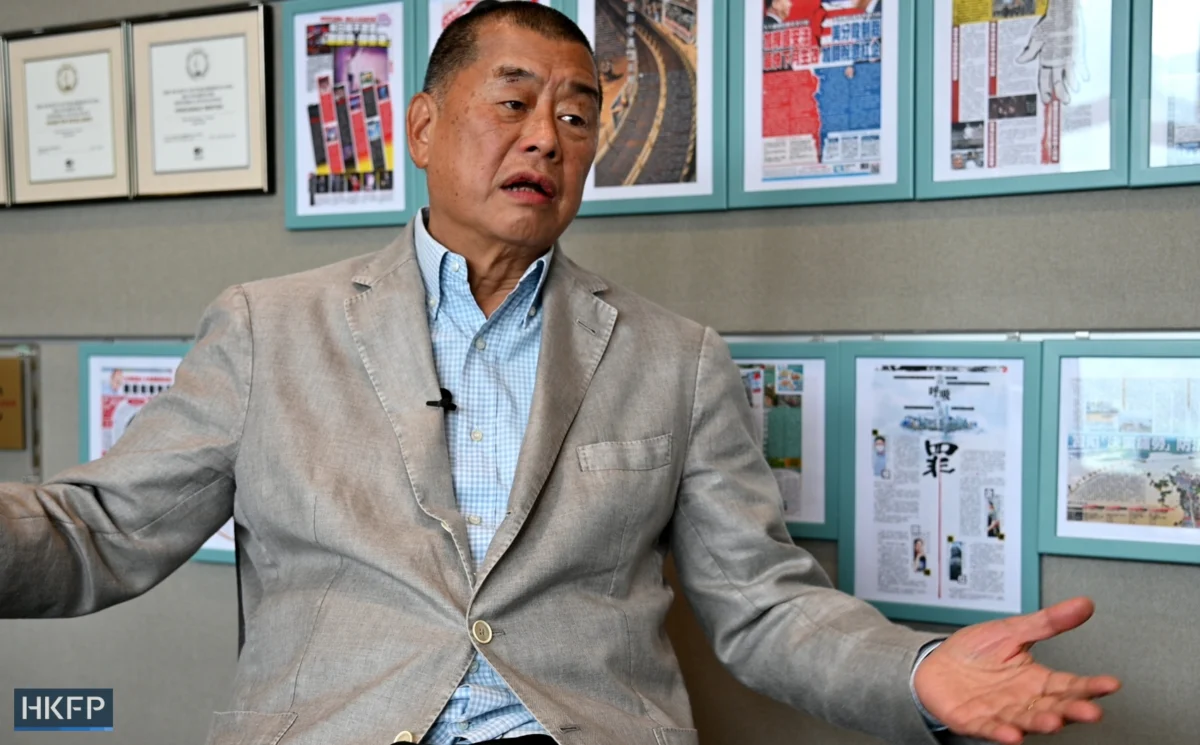
Hong Kong authorities have vehemently condemned a recent hearing held by U.S. lawmakers concerning the imprisoned pro-democracy media tycoon Jimmy Lai, labeling their actions as collusion with "anti-China and destabilising elements" aimed at influencing upcoming high-level diplomatic discussions. The strong rebuke came ahead of a planned summit between Chinese leader Xi Jinping and U.S. President Donald Trump, highlighting the escalating tensions surrounding Lai’s detention and the broader political landscape of Hong Kong.
The Hong Kong government issued a statement on Thursday, expressing its "firm rejection" of the Congressional-Executive Commission on China (CECC), a U.S. government body tasked with monitoring human rights in China. The CECC had convened a hearing the previous day, featuring testimony from Jimmy Lai’s son, Sebastien Lai, and subsequently introduced a bill seeking the release of Lai and other individuals detained in Hong Kong.

U.S. Lawmakers Call for Immediate Release
During the CECC hearing, co-chairs Senator Dan Sullivan and Representative Chris Smith voiced strong criticism of Lai’s lengthy prison sentence. Senator Sullivan described the 20-year sentence as "appalling" and stated that Lai was imprisoned "simply for exercising his God-given rights and standing up for the people of Hong Kong," demanding his immediate release. Representative Smith characterized the sentence as "unjust, politically motivated, and an affront to free speech and human dignity."
The CECC leaders introduced legislation designed to secure the release of Lai and other prominent figures, including "democracy advocates, journalists, former legislators, and civil society leaders," who have been imprisoned in Hong Kong. Sebastien Lai testified at the hearing, while his sister, Claire Lai, was scheduled to appear but withdrew due to a recent cancer diagnosis. The children of Jimmy Lai have been actively lobbying Western governments, alleging that their father is being held in solitary confinement without air conditioning and that his health is deteriorating.

Hong Kong Government’s Rebuttal: "Nothing to Do with Freedom of the Press"
In its official statement, the Hong Kong government unequivocally rejected the U.S. lawmakers’ characterization of Jimmy Lai’s case. The statement asserted that Lai’s imprisonment "has nothing to do with freedom of the press at all." It further accused defendants, including Lai, of using journalism as a "guise to wantonly create social conflicts, incite social antagonism, incite hatred and glorify violence, bringing harm to our country and Hong Kong."
The government also criticized what it termed the "hypocrisy and double standards" of the countries and politicians, including the CECC, for criticizing Hong Kong’s efforts in "safeguarding national security." This defense directly counters the narrative promoted by Lai’s family and international human rights advocates, who argue that his prosecution is a direct consequence of Beijing’s crackdown on dissent and the erosion of freedoms in the city following the imposition of the National Security Law.

Timeline of Events and Legal Proceedings
Jimmy Lai, the 78-year-old founder of the now-defunct Apple Daily newspaper, was sentenced in February to 20 years in prison. The conviction was based on charges of foreign collusion and sedition, stemming from his alleged use of his media outlet to lobby foreign nations for sanctions against China and Hong Kong, and for inciting hatred against authorities through his newspaper’s opinion pieces.
Lai’s legal battles began long before his substantial prison sentence. He was arrested in August 2020 as part of a wider crackdown on dissent in Hong Kong. The charges against him escalated, culminating in the national security law violations that led to his lengthy incarceration. The trial itself was highly contentious, with concerns raised about due process and the independence of the judiciary in Hong Kong.

International Calls for Humanitarian Release
Beyond the CECC, international bodies have also called for Jimmy Lai’s release on humanitarian grounds. The United Nations has previously urged for his freedom, citing his age, health, and the prolonged period of detention he has already endured. Sebastien and Claire Lai have consistently highlighted their father’s deteriorating health and the harsh conditions of his confinement, including allegations of solitary confinement and inadequate medical care.
The Hong Kong government, however, has countered these claims, asserting that Lai receives "adequate and comprehensive" medical services while in custody and that the Correctional Services Department is providing sufficient attention. This stark contrast in narratives underscores the deep division between the Hong Kong government’s official stance and the concerns raised by international observers and Lai’s family.

Broader Implications for Hong Kong and U.S.-China Relations
The U.S. lawmakers’ hearing and the subsequent strong rebuke from Hong Kong authorities underscore the international scrutiny of Hong Kong’s political and legal landscape. The case of Jimmy Lai has become a potent symbol of the broader crackdown on dissent and the perceived erosion of freedoms in the city since the introduction of the National Security Law in 2020.
The timing of the hearing, ahead of a significant diplomatic meeting between President Trump and President Xi, suggests a deliberate attempt by U.S. lawmakers to leverage the issue of human rights in Hong Kong to exert pressure on Beijing. President Trump himself has stated that he mentioned Lai’s case during a previous summit with Xi in May, but received a signal that Lai’s release was "unlikely," describing it as a "tough one for him to do." This suggests that the issue remains a sensitive point in bilateral relations.

The Hong Kong Legislative Council also issued a statement condemning the U.S. lawmakers’ actions as "maliciously provocative political maneuvering and alarmist talk." This unified response from Hong Kong’s government and legislature demonstrates a coordinated effort to deflect international criticism and reaffirm their commitment to enforcing national security laws as interpreted by Beijing.
The implications of this diplomatic friction are far-reaching. For Hong Kong, it signals a continued tightening of control and a less tolerant environment for dissent, further impacting its international standing as a global financial hub. For U.S.-China relations, the Jimmy Lai case serves as a recurring flashpoint, highlighting fundamental disagreements over human rights, rule of law, and the interpretation of "one country, two systems." As diplomatic engagements continue, the fate of Jimmy Lai and the broader trajectory of freedoms in Hong Kong are likely to remain central to these complex international dialogues. The differing perspectives presented by U.S. lawmakers and Hong Kong authorities paint a stark picture of the ongoing struggle to balance national security imperatives with fundamental human rights and freedoms.

 Evan Lee Salim
 Nana
Nana