Raul Delapena Setiawan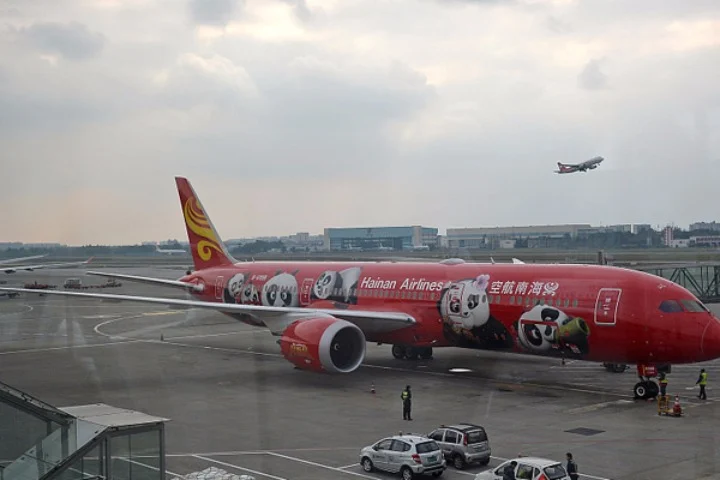
Hainan Airlines, China’s largest private air carrier, is actively pursuing new flying rights to establish direct services between Shanghai and prominent cities across the United States, signifying an aggressive strategy to capture a larger share of the burgeoning trans-Pacific travel market. This move comes as the airline aims to further capitalize on the escalating demand from Chinese travelers visiting the U.S., a trend that continues to invigorate the vitality of the bilateral aviation sector. The carrier’s ambition extends beyond route expansion, encompassing plans to significantly deepen its cooperation with American airlines through extensive code-sharing agreements, thereby solidifying its network presence, particularly along the highly trafficked East and West Coasts of the United States.
Strategic Push for Shanghai-US Routes
The airline’s strategic focus on Shanghai is a pivotal element of its broader expansion blueprint. Pubin Liang, Regional Managing Director of Hainan Airlines in the United States, articulated the carrier’s determination to secure permissions for direct flights connecting Shanghai with major U.S. cities, especially those already served by direct routes from Beijing. This mirrors a common industry strategy where airlines seek to establish dual-hub operations from China’s two largest metropolitan centers, Shanghai and Beijing, to key international destinations. Shanghai, as China’s financial hub and a global gateway, represents a critical market for both business and leisure travel, offering a vast catchment area for passenger traffic. By securing these rights, Hainan Airlines aims to directly compete with existing carriers on these lucrative routes and offer travelers from the Yangtze River Delta region more convenient, direct access to North America.
Leveraging Second-Tier Cities for Growth
Beyond the primary hubs, Hainan Airlines has demonstrated a pioneering approach by launching direct flights from China’s rapidly developing second-tier cities to major U.S. destinations. Liang highlighted this strategy as a response to the increasing demand emanating from these smaller, yet economically vibrant, Chinese urban centers. This forward-thinking approach has allowed Hainan Airlines to tap into underserved markets, often becoming the first carrier to offer direct international long-haul services from these regions.
A prime example of this strategy’s success is the recent introduction of direct flights connecting Chongqing and New York on October 20, followed swiftly by Chengdu and New York on October 26. These routes marked a significant milestone, being the first direct services from Western China to the Big Apple. The airline also maintains direct connections between these two pivotal Western Chinese cities and Los Angeles, further underscoring its commitment to expanding accessibility from inland China. "The successful launch of flights between those two Chinese cities and New York has been a significant breakthrough for us, and we are looking to launch more direct flights between New York and Chinese cities in the future," Liang affirmed, signaling continued investment in these promising corridors. This focus on second-tier cities not only provides convenience for local populations but also stimulates economic development and tourism in these regions, creating new market segments that complement the more saturated routes from Tier-1 cities.
Bolstering US Network Through Code-Sharing
To enhance its network coverage within the United States, particularly across the East and West Coasts, Hainan Airlines has outlined plans for expanded cooperation with U.S. domestic carriers. Beginning next year, the airline intends to initiate code-sharing programs with Alaska Airlines and JetBlue Airways. These partnerships are crucial for Hainan Airlines, allowing it to offer seamless onward connections for its trans-Pacific passengers to numerous destinations across the U.S. that it does not directly serve. Such agreements are standard practice in the global aviation industry, enabling airlines to extend their reach and offer a more comprehensive travel experience without incurring the immense operational costs of establishing their own extensive domestic networks. For instance, a passenger flying Hainan Airlines from Beijing to Seattle could then seamlessly connect to other U.S. cities via Alaska Airlines under a single ticket, simplifying travel logistics and enhancing the overall customer journey.
A Decade of Trans-Pacific Growth: Hainan Airlines’ Journey
Hainan Airlines’ journey into the trans-Pacific market commenced in June 2008 with its inaugural China-US direct flight connecting Beijing and Seattle. This foundational route paved the way for an impressive expansion, establishing Hainan Airlines as the Chinese airline operating the highest number of direct flights—currently 12 routes—between the two nations. This extensive network includes crucial connections such as Beijing-Chicago, Beijing-San Jose, Beijing-Las Vegas, and Shanghai-Boston, demonstrating a calculated strategy to link major Chinese and American economic and cultural centers.
- June 2008: Hainan Airlines launches its first China-US direct flights between Beijing and Seattle, marking its entry into the lucrative trans-Pacific market.
- September 2013: The airline initiates direct flights between Beijing and Chicago, notably the first such route operated by a Chinese airline, challenging established carriers.
- June 2014: Hainan Airlines launches nonstop flights between Beijing and Boston, connecting two significant educational and innovation hubs.
- June 2015: A period of rapid expansion sees the launch of direct flights between Shanghai and Seattle, as well as Beijing and San Jose, California. Concurrently, the airline establishes direct flights connecting Shanghai and Boston, further strengthening its East Coast presence.
- December 2016: Hainan Airlines introduces direct flights between Beijing and Las Vegas, providing the first direct air link between the Chinese mainland and the entertainment capital, tapping into a significant leisure travel market.
- January 2017: Direct flights commence between Changsha, capital of Hunan province in Central China, and Los Angeles, illustrating the ongoing strategy to serve second-tier cities.
- October 2017: Hainan Airlines significantly expands its reach to New York with direct flights from Chongqing and Chengdu, representing the first direct air links between New York and these two major Western Chinese cities, highlighting a strategic penetration into previously underserved regions.
This chronological expansion underscores Hainan Airlines’ long-term commitment and evolving strategy in the critical China-US market, adapting to changing travel patterns and leveraging new opportunities.
Financial Performance and Market Leadership
Hainan Airlines’ aggressive expansion has translated into robust financial performance within its China-US operations. Between January and September of the current year, the airline reported sales revenue of 2.59 billion yuan ($390 million) from its China-US flights, marking a significant 19 percent increase year-on-year. This growth rate notably surpasses the overall market growth for international routes during the same period, indicating strong market penetration and effective route management. Crucially, the average passenger load ratio for these flights consistently exceeded 80 percent, a benchmark often considered indicative of healthy profitability in the aviation industry. A load factor above 80% suggests that the airline is efficiently filling its seats, optimizing revenue per flight, and managing capacity effectively across its trans-Pacific network.
The airline observes distinct seasonal patterns in its sales performance. The busy China-US flight seasons, typically from June to October and extending through December and January, witness outstanding sales. These periods align with summer holidays, major festive seasons like Christmas and Chinese New Year, and academic breaks, driving high demand for trans-Pacific travel. Conversely, during off-peak seasons, the airline acknowledges facing operational pressures. To mitigate these challenges and stimulate demand, Hainan Airlines proactively adjusts its business strategies by offering attractive promotions, including package deals that bundle flights with tourism destination resort tickets and hotel accommodations. This dynamic pricing and bundling strategy helps maintain passenger volumes and revenue during leaner periods, showcasing an adaptive commercial approach.
Navigating Competitive Headwinds and Market Saturation
Despite its successes, Hainan Airlines operates within an intensely competitive landscape. The market for flights between major Chinese cities and the United States is becoming increasingly saturated, leading to heightened competition among both Chinese and American carriers. This saturation often results in yield pressures, where airlines might need to lower ticket prices to attract passengers, potentially impacting profitability.
A case in point illustrating these competitive dynamics is Hainan Airlines’ past cooperation with American Airlines. While initially collaborating on code-sharing and connecting flights, this partnership reportedly weakened after Hainan Airlines launched its direct service between Beijing and Chicago, a route also operated by American Airlines. Pubin Liang candidly admitted, "This has a significant negative impact, especially on our expansion of networks in the Midwest. Now, we face significant challenges in growing our business in this area with Chicago as the hub." This highlights the inherent tension between cooperation and competition in the airline industry, where direct route overlaps can undermine prior partnerships. The Midwest, with Chicago as a major hub, is a crucial market for connecting traffic, and challenges there could impact Hainan Airlines’ ability to extend its reach beyond its direct gateways.
Lin Zhijie, an aviation industry analyst and columnist at Carnoc, a prominent civil aviation website in China, echoed these sentiments, noting that while flights between major Chinese and U.S. cities are "quite saturated," airlines are increasingly looking to launch direct flights between second-tier Chinese cities and the United States. He cautioned, however, that such routes often entail higher operating cost pressures compared to high-volume primary routes. Furthermore, Zhijie emphasized a critical geopolitical consideration: "There is still demand for more China-US routes, but the possible fluctuation of Sino-US relations should also be taken into consideration." This underscores the broader, non-commercial risks that can impact an airline’s long-term strategic planning in this bilateral market, including potential changes in travel policies, visa regulations, or overall diplomatic climate.
The Broader Landscape of China-US Aviation
Hainan Airlines’ expansion is set against a backdrop of phenomenal growth in China-US travel over the past two decades. The rise of China’s middle class, coupled with increased disposable income and a growing appetite for international travel, has transformed the global tourism landscape. Visa facilitation policies, such as the reciprocal 10-year visa agreement between China and the U.S., have further streamlined travel, making it easier and more appealing for citizens of both countries to visit.
The economic impact of direct flights is substantial. Each new direct route not only provides convenience for travelers but also serves as an economic conduit, facilitating trade, investment, and cultural exchange. U.S. cities benefit from increased tourism revenue, job creation in the hospitality and service sectors, and enhanced business connectivity with one of the world’s largest economies. Similarly, Chinese cities gain improved access to American markets and cultural influences. The "Open Skies" agreement between the two countries, though occasionally subject to political considerations, generally fosters competition and allows airlines greater freedom to operate routes, contributing to this growth.
However, the rapid increase in capacity has led to intense competition. Beyond Hainan Airlines, major Chinese state-owned carriers like Air China, China Eastern, and China Southern, alongside prominent U.S. airlines such as United, Delta, and American, all vie for market share on trans-Pacific routes. This competition drives innovation in services, pricing, and network strategies, ultimately benefiting consumers with more choices and potentially lower fares.
Economic and Cultural Implications
The expansion of direct air links by carriers like Hainan Airlines carries profound economic and cultural implications for both China and the United States. Economically, these routes are catalysts for growth, boosting tourism, business travel, and cargo transport. For U.S. cities, direct flights from China translate into increased spending by Chinese tourists, who are among the highest-spending international visitors. This supports local businesses, from hotels and restaurants to retail and entertainment venues. For Chinese cities, direct connections to the U.S. facilitate inbound investment, foster international trade relationships, and provide easier access for students and business professionals.
Culturally, these flights serve as vital bridges, promoting cross-cultural understanding and exchange. They enable students to pursue education abroad, families to visit relatives, and tourists to experience diverse cultures firsthand. This increased connectivity can foster stronger people-to-people ties, which are essential for navigating the broader diplomatic and economic relationship between the two global powers.
Future Outlook and Analyst Perspectives
Looking ahead, Hainan Airlines’ strategy appears to be a calculated gamble on the continued upward trajectory of China-US travel demand, particularly from emerging urban centers. The success of its new routes from Chongqing and Chengdu to New York will likely inform future decisions regarding similar expansions. The anticipated code-sharing agreements with Alaska Airlines and JetBlue Airways are critical for optimizing its network in the U.S. and offering a more competitive product against established alliances.
Analysts like Lin Zhijie continue to highlight the dual nature of the market: immense potential alongside significant competitive and geopolitical risks. The "possible fluctuation of Sino-US relations" remains a potent wild card that could impact everything from visa policies to consumer sentiment. Airlines must maintain agility and adaptability in their strategies to navigate this dynamic environment.
Hainan Airlines, by focusing on both strategic primary hubs like Shanghai and underserved second-tier cities, while simultaneously building robust domestic partnerships in the U.S., is positioning itself for sustained growth. Its track record of innovation, from being the first Chinese airline on certain routes to its proactive seasonal promotions, suggests a resilience that will be crucial in the evolving, yet undeniably vital, trans-Pacific aviation market. The carrier’s ambition to secure more Shanghai-US rights is a clear signal that it intends to not only maintain its leading position among Chinese airlines but also to significantly challenge the established order in one of the world’s most important international air travel corridors.


 Evan Lee Salim
 Suro Senen