 Laily UPN
BEIJING – Over the past five years, Chinese President Xi Jinping has meticulously forged a distinctive "China-style major-country diplomacy," fundamentally reshaping the nation’s global engagement and positioning him as China’s "chief diplomat." Through an unprecedented series of overseas trips, comprising 29 visits to 58 countries and numerous major international and regional organizations across all five continents, President Xi has spearheaded a comprehensive diplomatic offensive aimed at elevating China’s leadership role in global peace, security, governance, and development. These extensive engagements have simultaneously fostered a deeper worldwide understanding of China’s vision and approach, characterized by a commitment to win-win cooperation and the ambitious pursuit of building a community with a shared future for mankind.
The Ascent of China’s "Chief Diplomat"
The period between 2013 and 2018 marked a pivotal era in China’s foreign policy, witnessing a strategic pivot from a relatively low-profile international stance to a more proactive and assertive diplomatic presence. This transformation coincided with President Xi Jinping’s ascension to power, bringing with it a renewed emphasis on China’s global responsibilities and its unique contributions to international affairs. The "China-style major-country diplomacy" departs from traditional power politics, advocating for sovereign equality, mutual respect, non-interference in internal affairs, and the principle of win-win cooperation as foundational elements of a new international relations paradigm. This approach is underpinned by a belief that global challenges necessitate collective action and that a zero-sum mentality is ill-suited for the complexities of the 21st century.
President Xi’s extensive travels were not merely ceremonial; they served as platforms to articulate China’s worldview, propose solutions to pressing global issues, and cultivate robust bilateral and multilateral partnerships. His consistent messaging on economic globalization, multilateralism, and sustainable development has resonated across various forums, positioning China as a significant voice in shaping the future of global governance.
A Diplomatic Chronology: Key Milestones
The evolution of China’s major-country diplomacy can be traced through a series of significant events and pronouncements over these five years:
- March 2013: Moscow Debut and the Call for a New International Relations Type. President Xi’s inaugural foreign trip as head of state to Moscow was highly symbolic. Addressing the Moscow State Institute of International Relations, he unveiled his diplomatic philosophy, critiquing an outdated "Cold War mentality" and advocating for a new type of international relations centered on win-win cooperation. This speech laid the theoretical groundwork for China’s subsequent diplomatic initiatives.
- September-October 2013: The Birth of the Belt and Road Initiative. During visits to Kazakhstan and Indonesia, President Xi introduced the "Silk Road Economic Belt" and the "21st Century Maritime Silk Road," collectively known as the Belt and Road Initiative (BRI). This ambitious vision aimed to build vast trade and infrastructure networks connecting Asia, Europe, and Africa, fundamentally altering global connectivity and economic geography.
- 2014: Consolidating Regional Ties and Multilateral Engagement. China hosted the APEC Economic Leaders’ Meeting in Beijing, where President Xi championed regional economic integration and put forward the "Asia-Pacific Dream." This year also saw continued efforts to deepen ties with European and African nations, including key forums like the Forum on China-Africa Cooperation (FOCAC).
- September 2015: Unveiling "A Community with a Shared Future for Mankind" at the UN. Addressing the 70th session of the UN General Assembly, President Xi eloquently articulated the concept of "a community with a shared future for mankind," proposing a global governance architecture built on shared interests, mutual responsibilities, and collective prosperity. This vision became a central pillar of China’s diplomatic doctrine, emphasizing interconnectedness and common destiny. China also pledged significant contributions to UN peacekeeping and a substantial climate fund.
- September 2016: Hosting the G20 Summit in Hangzhou. China successfully hosted the G20 Leaders’ Summit, where President Xi called for innovation-driven growth, more inclusive and interconnected global economic governance, and a rejection of protectionism. The summit demonstrated China’s capacity to lead discussions on global economic challenges.
- January 2017: Davos Speech and a Defense of Globalization. At the World Economic Forum (WEF) in Davos, President Xi delivered a widely acclaimed speech firmly defending economic globalization amidst rising protectionism in Western countries. He outlined a path forward for globalization based on innovation, open cooperation, equitable governance, and balanced development, asserting China’s role as a staunch advocate for an open global economy.
- May 2017: The First Belt and Road Forum for International Cooperation. Beijing hosted the inaugural BRI Forum, drawing leaders and representatives from over 100 countries and international organizations. This event showcased the growing international embrace of the initiative and facilitated further collaboration on infrastructure and connectivity projects.
- September 2017: BRICS Xiamen Summit. China hosted the BRICS summit in Xiamen, focusing on "BRICS: Stronger Partnership for a Brighter Future." President Xi advocated for deeper cooperation among emerging markets and developing countries, emphasizing multilateralism and shared growth.
Pillars of Engagement: Bilateral Ties
President Xi’s diplomatic efforts have significantly strengthened China’s bilateral relationships across the globe:
- Russia: An Anchor for Global Stability. Xi’s six visits to Russia and more than 20 meetings with President Vladimir Putin underscore the strategic importance of the China-Russia comprehensive strategic partnership of coordination. This relationship has reached its "best in history," characterized by robust energy cooperation, increasing trade volumes, joint military exercises, and coordinated stances on many international issues within the UN Security Council. Vyacheslav Volodin, Chairman of the Russian State Duma, has lauded this bilateral model as an exemplar of civilized interaction for the 21st century, affirming its role as a crucial anchor for global peace and security.
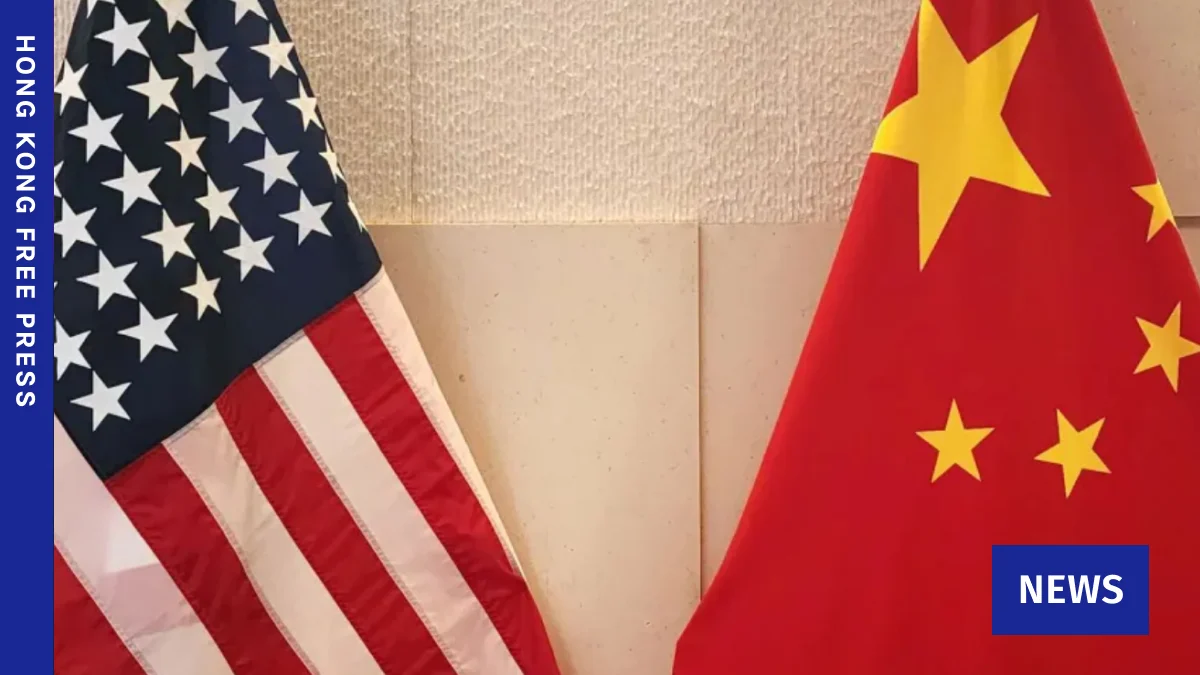
- United States: Navigating Complexities. Despite shifts in White House leadership and inherent uncertainties, China-US relations have been guided by President Xi’s principles of non-conflict, non-confrontation, mutual respect, and win-win cooperation. His exchanges with US President Donald Trump led to the establishment of new high-level dialogue mechanisms, including the Comprehensive Economic Dialogue and the Diplomatic and Security Dialogue, aimed at managing differences and promoting global peace and security, even as trade tensions began to emerge during this period.
- Europe: Expanding Partnerships. Xi’s numerous tours to the European continent have substantially expanded China-Europe relations. China actively seeks a partnership with the European Union based on peace, growth, reform, and mutually beneficial cooperation. Initiatives like the "16+1" cooperation framework (now 17+1 with Greece), aimed at Central and Eastern European countries, have further diversified China’s engagement, largely easing some initial European concerns about China’s growing influence by demonstrating tangible cooperation and investment.
- Neighbors: Regional Integration and Prosperity. Half of President Xi’s overseas visits during this period were dedicated to fostering closer ties with China’s neighbors. This focus has yielded significant results, including the establishment of the Lancang-Mekong Cooperation mechanism, the upgraded version of the China-Association of Southeast Asian Nations (ASEAN) Free Trade Area, and the advancement of the Bangladesh-China-India-Myanmar Economic Corridor. These initiatives underscore China’s commitment to regional stability, shared prosperity, and interconnected development.
- Developing World: Bridging Development Gaps. Cooperation with developing countries in Africa and Latin America has seen exponential growth. China’s involvement in a myriad of infrastructure and development projects, often facilitated through platforms like the Forum on China-Africa Cooperation (FOCAC) and the China-CELAC Forum, has provided critical support for economic growth, job creation, and poverty reduction in these regions. From railways and ports to hospitals and industrial parks, China’s engagement has been transformational, offering an alternative development financing model.
Championing Multilateralism and Global Governance
A central pillar of President Xi’s diplomacy is the strengthening of multilateralism, with the concept of a "community with a shared future for mankind" serving as its philosophical core. This vision underpins China’s active engagement with regional and international organizations, advocating for collective action over unilateralism.
- United Nations: An Indispensable Partner. From the UN General Assembly to various specialized agencies, President Xi has consistently reaffirmed China’s commitment to UN-led multilateralism and global peace. China has significantly increased its contributions to UN peacekeeping missions, becoming the second-largest financial contributor and the largest troop contributor among the permanent members of the Security Council, with over 2,500 peacekeepers deployed globally. This tangible support underscores China’s dedication to international peace and security operations. UN Secretary-General Antonio Guterres has lauded China as a "strong pillar of multilateralism," while his predecessor, Ban Ki-moon, described China as an "indispensable partner for the UN’s agenda."
- Global Economic Forums: At the World Economic Forum (WEF) in Davos, the Asia-Pacific Economic Cooperation (APEC) leaders’ meetings, and the Group of 20 (G20) forum, President Xi has steadfastly championed economic globalization. He has robustly countered arguments falsely blaming globalization for global economic sluggishness, rising protectionism, and social inequalities. Instead, he advocates for an innovation-driven, open, and win-win approach to global economic governance, promoting fairer rules and more inclusive development.
- BRICS Summit: The BRICS group (Brazil, Russia, India, China, South Africa) has been a crucial platform for China to enhance cooperation among emerging markets and developing countries. At summits, President Xi has emphasized strengthening the global economic governance system, increasing the representation and voice of developing countries, and fostering South-South cooperation.
The Belt and Road Initiative: A Vision for Connectivity
Perhaps the most tangible manifestation of China’s "community with a shared future" vision and its commitment to win-win cooperation is the Belt and Road Initiative (BRI). Proposed in 2013, the BRI is a monumental global development strategy focused on infrastructure development and investment in nearly 150 countries and international organizations.
The initiative aims to construct vast networks of railways, roads, ports, pipelines, and digital infrastructure, fostering trade, financial integration, and people-to-people bonds across continents. Early projects included the China-Europe freight rail services, which rapidly expanded, connecting dozens of Chinese cities with European counterparts, significantly reducing transit times for goods. Investments poured into port facilities in places like Pakistan (Gwadar) and Greece (Piraeus), transforming them into regional logistics hubs.
Critically, the BRI projects are designed to align with the development strategies of participating countries and are implemented with the United Nations 2030 Sustainable Development Goals (SDGs) in mind. By enhancing connectivity and facilitating economic activity, the BRI contributes directly to poverty reduction, infrastructure development, industrialization, and sustainable energy transitions in numerous nations. This unprecedented scale of global public goods provision through infrastructure development represents a significant offering from China to the world, aimed at fostering shared prosperity and interconnected growth.
Impact and Enduring Legacy of China’s Diplomacy
The five years of President Xi Jinping’s "chief diplomat" role have profoundly impacted the global landscape. China’s proactive diplomacy has:
- Reshaped Global Governance: China has cemented its position as a major player in multilateral institutions, advocating for a more multipolar world order and championing principles of equity and justice in international relations. Its consistent support for the Paris Agreement on climate change, even after the US withdrawal, underscored its commitment to global environmental governance and responsible international leadership.
- Deepened Economic Interdependence: Through initiatives like the BRI and expanded trade agreements, China has woven a denser web of economic interdependence, particularly with developing nations. This has opened new markets, spurred infrastructure development, and offered alternative financing models, often with fewer conditionalities than traditional lenders.
- Elevated China’s Soft Power: While not without scrutiny, China’s diplomatic outreach, its emphasis on win-win cooperation, and its provision of global public goods have generally enhanced its soft power and image, particularly in the Global South. The narrative of a rising power offering development opportunities and promoting a harmonious world order has gained traction.
- Stabilized Key Bilateral Relationships: Despite inherent complexities, China’s proactive engagement has helped manage and stabilize critical bilateral relationships, notably with Russia and the United States, thereby contributing to broader global stability.
As the world continues to grapple with geopolitical shifts, economic uncertainties, and transnational challenges, the "China-style major-country diplomacy" forged under President Xi Jinping’s leadership has established a significant and enduring legacy. It signals a new era where China not only participates in the global order but actively seeks to shape it, advocating for a more integrated, cooperative, and shared future for all of mankind.

 Raul Delapena Setiawan
 Lina Irawan