Asep Darmawan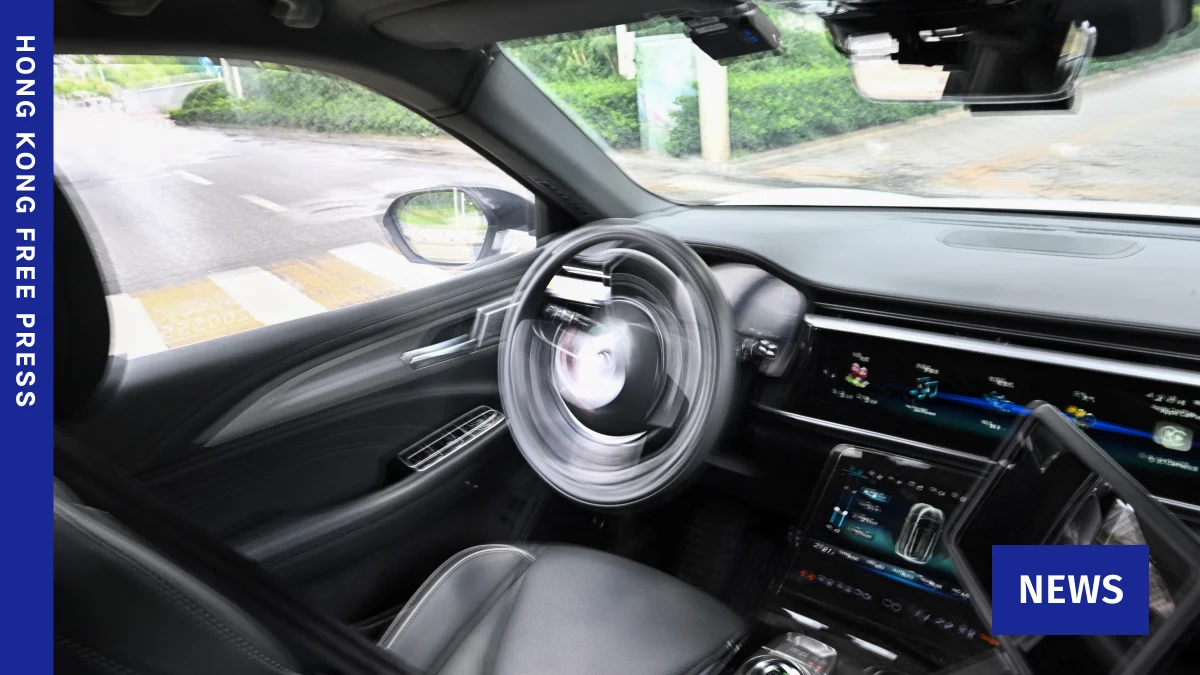
Beijing, China – China has officially implemented a comprehensive set of new safety regulations for the rapidly expanding sector of autonomous vehicles (AVs) operating on its roads, including a pivotal requirement for a mandatory deactivation override system. Announced by the government on Tuesday, these stringent new standards are poised to reshape the development and deployment of self-driving technology within the world’s largest automotive market. The Ministry of Industry and Information Technology (MIIT) confirmed that the regulations, slated to take effect on July 1, 2027, will apply to a broad spectrum of autonomous vehicles, encompassing those that necessitate a human backup driver and fully independently operating vehicles, such as the widely recognized robotaxis produced by companies like the U.S. manufacturer Waymo, which have begun trials in various Chinese cities.
The core objective of these new directives is to ensure that autonomous systems can demonstrably achieve and maintain a safety performance level equivalent to or superior to that of human drivers. This benchmark underscores a significant shift towards greater accountability and verifiable safety metrics for AV developers. Furthermore, the regulations stipulate that manufacturers must thoroughly inform potential buyers of any inherent limitations within their autonomous systems, fostering transparency and managing consumer expectations. The MIIT emphasized that these rules are designed to standardize the critical interactions between humans and machines, thereby "preventing risks of misuse or abuse" of autonomous driving functionalities. Key operational requirements include the implementation of secure and intuitive procedures for both activating and deactivating automated driving systems. For vehicles designed with a human backup driver, the autonomous system will be obligated to continuously monitor the driver’s readiness and capacity to assume control, ensuring a seamless and safe transition when necessary.
Contextualizing China’s Autonomous Driving Ambition
China has long identified artificial intelligence (AI) and autonomous driving as strategic national priorities, pouring significant investment into research, development, and infrastructure to foster a leading position in these fields. The nation’s ambition is not merely to adopt but to innovate and dominate the global landscape of smart mobility. This push is driven by a confluence of factors, including the desire to enhance urban transportation efficiency, reduce accident rates, alleviate traffic congestion, and create new economic growth engines. Major technology giants and traditional automakers alike have heavily invested in the sector, with companies like Baidu (through its Apollo platform), Pony.ai, WeRide, and state-backed enterprises rapidly deploying robotaxi fleets and engaging in extensive testing across numerous cities such, as Wuhan, Guangzhou, and Beijing.

The sheer scale of China’s market, coupled with its supportive regulatory environment for testing and deployment, has made it a crucial battleground for AV innovation. However, this rapid expansion has also brought to the forefront complex questions regarding safety, liability, and public acceptance. As autonomous vehicles transition from controlled test environments to public roads, the need for robust, standardized regulations becomes paramount to building consumer trust and ensuring the technology’s responsible evolution.
A Growing Market Under Scrutiny
The Chinese autonomous vehicle market has experienced exponential growth over the past few years. Industry reports indicate that the market size for autonomous driving in China is projected to reach hundreds of billions of yuan by the end of the decade, with significant capital flowing into startups and established players. For instance, Baidu’s Apollo Go robotaxi service, depicted in the August 1, 2024 photo from Wuhan, has expanded its operational footprint significantly, offering rides to the public in multiple urban centers. Other players like Pony.ai and WeRide have also secured crucial permits for driverless operations, showcasing the advanced stage of AV development in the country. This proliferation of AVs, while promising innovation and convenience, also naturally raises safety concerns, especially given the dynamic and often unpredictable nature of Chinese urban traffic.
The global autonomous vehicle industry has faced inherent challenges, primarily centered around safety concerns and the immense cost associated with developing and validating next-generation self-driving systems. While AVs promise a future of fewer accidents caused by human error, the complexities of real-world scenarios, unforeseen technical glitches, and cybersecurity threats present formidable hurdles. These challenges have, to some extent, complicated the pace of widespread introduction of autonomous vehicles globally, making regulatory clarity and robust safety frameworks indispensable.
The Catalyst for Stricter Regulations: Past Incidents and Global Precedents

The impetus for these new, more rigorous safety rules in China was significantly amplified by a fatal crash in 2025 involving a Xiaomi vehicle operating in assisted driving mode. This tragic incident served as a stark reminder to leading automakers and regulators alike that existing safety protocols needed to be more tightly enforced and, in some cases, fundamentally re-evaluated. The Xiaomi crash, while not necessarily involving a fully autonomous vehicle, highlighted the critical ambiguities and potential dangers associated with advanced driver-assistance systems (ADAS) and the human-machine interface. It underscored the necessity for clear operational boundaries, reliable handoff mechanisms, and unambiguous responsibility in vehicles that blend human and artificial intelligence control.
Beyond domestic incidents, China’s new regulations also align with and follow broader international efforts to standardize AV safety. Notably, a United Nations agency adopted the first global regulations for fully autonomous vehicles in June of the preceding year, a move that China actively supported. This international collaboration reflects a global consensus on the urgent need for harmonized standards to facilitate the safe and responsible deployment of AV technology across borders. By integrating global best practices and addressing specific domestic concerns, China aims to establish a robust regulatory framework that both fosters innovation and guarantees public safety.
Key Provisions and Their Operational Impact
The specific provisions of the new Chinese regulations are designed to address critical safety gaps and standardize operational procedures:
- Mandatory Deactivation Override: This is perhaps the most critical new requirement. It mandates that all autonomous vehicles must incorporate a reliable, easily accessible mechanism allowing a human operator (or, in some contexts, external authorities) to immediately disengage the autonomous driving system and assume full manual control. This acts as a crucial failsafe, empowering human intervention in unforeseen circumstances or system malfunctions, thereby significantly reducing the risk of catastrophic failures.
- Matching Human Safety Levels: The requirement for autonomous systems to "match the safety of human drivers" sets a high bar. This implies that manufacturers will need to demonstrate, through extensive testing and data analysis, that their AVs perform at least as safely as, if not safer than, an average competent human driver in a wide range of driving conditions, including adverse weather, complex urban environments, and unexpected events. This will likely necessitate advanced simulation, real-world mileage accumulation, and sophisticated accident prediction and avoidance capabilities.
- Informing Buyers of Limitations: Transparency is key to building trust. By mandating that buyers be informed of "any limitations in autonomous systems," China aims to prevent over-reliance or misunderstanding of AV capabilities. This could include specifying operational domains (e.g., geofenced areas, weather conditions), speed limits for autonomous mode, or scenarios where human intervention is expected.
- Standardized Human-Machine Interactions: The rules to "standardise interactions between humans and machines to prevent risks of misuse or abuse" are vital. This will likely lead to uniform user interfaces, clear visual and auditory cues for system status, and consistent procedures for activating and deactivating automated driving features across different manufacturers. The goal is to minimize driver confusion, ensure predictable system behavior, and reduce the likelihood of accidental engagement or disengagement.
- Human Back-up Driver Readiness Monitoring: For Level 3 (L3) autonomous vehicles and similar systems where a human driver is expected to take over, the system must "monitor their readiness to take over." This could involve eye-tracking, head position monitoring, or other biometric sensors to ensure the driver is attentive and capable of regaining control within a safe timeframe. This directly addresses the "handoff problem," a known safety challenge in partially autonomous vehicles.
The operational impact of these provisions on AV manufacturers will be substantial. They will need to invest heavily in advanced sensor suites, sophisticated AI algorithms, robust cybersecurity measures, and rigorous validation processes. Companies that have prioritized rapid deployment over comprehensive safety validation may face significant challenges in adapting to the new regulatory landscape.

Industry Reactions and Adaptation Challenges
While specific official statements from major AV developers are yet to be widely published, the industry’s reaction is expected to be a mix of cautious optimism and strategic adaptation. On one hand, clear, comprehensive regulations can provide a much-needed framework for long-term planning and investment, potentially accelerating public acceptance and commercialization by instilling greater confidence. On the other hand, meeting these stringent standards, particularly the "matching human safety" benchmark and implementing reliable deactivation overrides, will demand substantial engineering efforts, financial investment, and potentially slower development cycles.
Companies like Baidu, which has been at the forefront of robotaxi deployment in China, will likely leverage their extensive testing data and operational experience to demonstrate compliance. Smaller startups, however, might find the increased regulatory burden a significant barrier, potentially leading to industry consolidation. International players like Waymo, if they choose to expand their presence in China, will need to ensure their global safety standards are adaptable to meet these specific Chinese requirements. Experts anticipate a period of intense innovation and collaboration within the industry to collectively raise safety benchmarks and develop standardized testing methodologies.
Fostering Public Trust and Consumer Protection
A paramount goal of these new regulations is to foster public trust in autonomous vehicle technology. The fatal Xiaomi crash in 2025 undoubtedly rattled public confidence, highlighting the perception of risk associated with emerging technologies. By introducing mandatory safety features, demanding transparent disclosure of limitations, and enforcing rigorous performance standards, the Chinese government aims to reassure the public that their safety is the top priority. Increased trust is crucial for widespread adoption, which is essential for the economic and societal benefits of autonomous driving to be fully realized.

Moreover, the rules enhance consumer protection. Prospective buyers will receive clearer information about what their AVs can and cannot do, reducing the potential for misleading marketing or unrealistic expectations. This focus on informed consent and transparency is a critical step in establishing a healthy and sustainable market for autonomous mobility.
The Broader Implications for Autonomous Mobility
These new regulations position China at the forefront of global AV safety governance. By establishing comprehensive national standards, China not only protects its citizens but also potentially influences international regulatory trends. Countries developing their own AV frameworks may look to China’s approach as a model, particularly given the scale of its AV deployments. The mandate for human-level safety and mandatory overrides could become a global best practice.
The long-term implications for autonomous mobility are profound. While the immediate effect might be a slight deceleration in the pace of full autonomy deployment as companies adapt, the eventual outcome is likely a more robust, safer, and ultimately more trusted autonomous transportation ecosystem. This could accelerate the transition to smart cities, revolutionize logistics, and significantly impact urban planning. The regulatory framework signals China’s commitment to a future where autonomous vehicles are not just technologically advanced but also unequivocally safe and reliable.
Looking Ahead: The Road to Full Autonomy

As the July 1, 2027, effective date approaches, the autonomous vehicle industry in China will be intensely focused on integrating these new safety requirements into their product development and operational protocols. The journey to full, Level 5 autonomy, where vehicles operate completely without human intervention in all conditions, remains long and complex. However, these new regulations represent a critical and necessary step in that evolution. They underscore the understanding that technological advancement must be meticulously balanced with public safety and ethical considerations. China’s proactive stance in establishing these comprehensive rules demonstrates its commitment to leading not just in the innovation of autonomous driving, but also in ensuring its safe and responsible integration into daily life, setting a benchmark for the global industry to follow.


 Raul Delapena Setiawan
 Lina Irawan