Dwi Wanna
Beijing Automotive Group Co (BAIC Group), one of China’s largest state-owned automakers, has announced a landmark decision to cease the production and sales of conventional fuel-powered cars under its proprietary brand nationwide by 2025. This audacious strategy, revealed by BAIC Group Chairman Xu Heyi, underscores the company’s aggressive pivot towards new energy vehicles (NEVs) and aligns with China’s broader national agenda to accelerate the adoption of electric and hybrid automobiles. The initial phase of this transition will see BAIC-branded conventional fuel vehicles withdrawn from the Beijing market by 2020, setting an expedited timeline for its home base.
A Strategic Shift Driven by National Imperatives and Market Dynamics
The announcement, made during an event commemorating the launch of a significant new energy car technology and innovation center in Beijing, reflects a profound transformation within China’s automotive industry. This shift is not merely a corporate initiative but a direct response to, and an active participation in, the Chinese government’s vigorous push for sustainable transportation solutions. China, already the world’s largest automotive market, has also emerged as the global leader in NEV production and sales, driven by a combination of stringent environmental regulations, substantial government subsidies, and a strategic vision to dominate the future of automotive technology.
For years, the Chinese government has been implementing policies designed to curb rampant air pollution in major urban centers and reduce the nation’s reliance on fossil fuels. These policies include aggressive NEV production quotas, a dual-credit system that penalizes manufacturers for failing to meet NEV sales targets, and a vast network of charging infrastructure development. These initiatives have created an unparalleled environment for NEV growth, compelling domestic automakers like BAIC to reorient their long-term strategies. BAIC’s declaration represents one of the most definitive commitments yet from a major Chinese automotive player to fully embrace the electric future.
BAIC’s Visionary Roadmap: A Timeline of Transition
BAIC Group’s multi-stage plan outlines a clear trajectory for its transition away from internal combustion engine (ICE) vehicles:
- 2020 (Beijing First): The immediate goal is to halt sales of self-developed conventional fuel-powered cars within Beijing. This targeted approach for the capital city is particularly symbolic, given Beijing’s prominent efforts to combat air pollution and its role as a policy vanguard for the nation. It sets a precedent for other major Chinese metropolises to follow.
- 2025 (Nationwide Rollout): Building on the Beijing experience, BAIC aims to completely cease the production and sales of its proprietary conventional fuel-powered vehicles across all of China. This ambitious deadline positions BAIC at the forefront of the global automotive industry’s electrification trend, challenging established norms and signaling a significant industrial overhaul.
- Ongoing Investments (2017-2022 and Beyond): The company has already committed substantial resources to underpin this transition. BJEV, BAIC’s new energy vehicle arm, plans to invest approximately 10 billion yuan ($1.5 billion at the time of the announcement) into research and development over the subsequent three to five years. This investment is earmarked for launching two to three new NEV models annually, ensuring a continuous stream of innovative products to market. Furthermore, BJEV envisions deploying 500,000 new energy cars for the burgeoning taxi and ride-sharing sectors across 1,000 cities by 2022, demonstrating a commitment to fleet electrification and public transportation solutions. Addressing a critical hurdle for NEV adoption, BAIC also announced a 10 billion yuan investment earlier in 2017 to construct 3,000 solar-powered battery changing stations, offering a potentially revolutionary solution to slow charging times and range anxiety.
This carefully orchestrated timeline illustrates a comprehensive strategy that encompasses R&D, product development, market penetration, and critical infrastructure build-out, positioning BAIC as a key architect of China’s NEV future.
The Genesis of Innovation: The New Energy Car Technology and Innovation Center
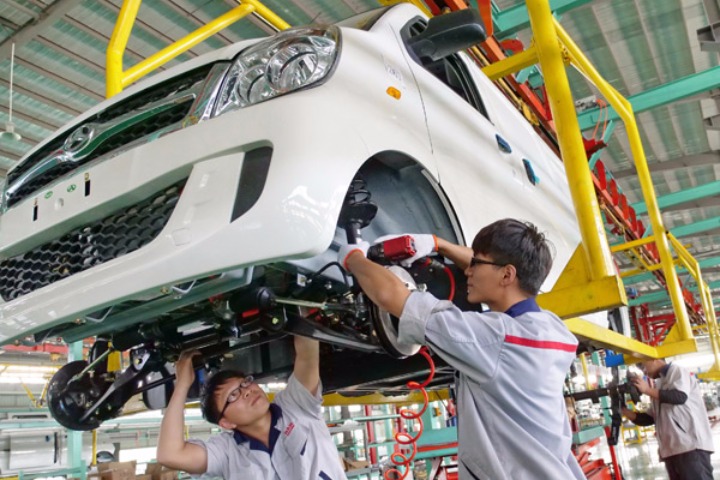
The announcement regarding the conventional fuel phase-out was strategically timed with the inauguration of a pivotal new energy car technology and innovation center in Beijing. This collaborative initiative brings together BAIC Group with 14 other influential institutions, including its dedicated NEV subsidiary BJEV, the prestigious Tsinghua University, and the leading battery manufacturer Contemporary Amperex Technology Co. Ltd. (CATL).
The center is designed to serve as an open, collaborative platform, mobilizing global innovative resources and fostering synergy among diverse stakeholders. Its mandate is to facilitate cooperation between companies, academic institutions, research facilities, and even end-users, creating an ecosystem conducive to rapid technological advancement. Xu Qiang, head of the Beijing Municipal Science and Technology Commission, lauded the center as a vital and practical step towards enhancing cooperation, improving innovative capabilities, and strengthening core competitiveness within the NEV sector. This collaborative model is emblematic of China’s approach to industrial development, leveraging state-backed enterprises, academic excellence, and private sector innovation to achieve national strategic goals. The involvement of CATL, a global powerhouse in battery technology, is particularly significant, as battery performance, cost, and charging efficiency remain central to the widespread adoption of electric vehicles.
Robust Market Performance and Future Projections
BAIC Group’s commitment to NEVs is underpinned by strong market performance, particularly from its BJEV brand. In November preceding the announcement, BJEV recorded impressive sales of 21,598 cars, marking an 85 percent surge from the previous month. This robust growth propelled its year-to-date sales (January to November) to over 88,000 units. These figures highlight BAIC’s established position as a leading new energy carmaker within China’s dynamic market.
The broader Chinese NEV market demonstrated significant momentum throughout 2017. Data from the China Association of Automobile Manufacturers (CAAM) revealed that from January to November, China sold 609,000 new energy cars, representing a substantial 51.4 percent year-on-year growth. CAAM estimated that total NEV sales for the full year 2017 could reach approximately 700,000 units, a testament to the accelerating pace of electrification. This rapid expansion positions China not just as a market for NEVs, but as a global incubator for NEV innovation and manufacturing, attracting significant international investment and collaboration.
Broader Implications and Industry Impact
BAIC’s definitive pledge to phase out conventional fuel vehicles carries far-reaching implications, not only for the company itself but for the entire automotive ecosystem in China and globally.
- Environmental Benefits: The most immediate and tangible impact will be on environmental quality. A significant reduction in ICE vehicles, particularly in densely populated urban centers like Beijing, will contribute directly to lower tailpipe emissions, improved air quality, and a reduced carbon footprint. This aligns perfectly with China’s national commitments under the Paris Agreement and its aggressive domestic environmental targets.
- Technological Leadership: By committing substantial R&D investments and establishing a cutting-edge innovation center with key partners, BAIC aims to solidify China’s position as a leader in NEV technology. This includes advancements in battery technology (range, lifespan, cost, charging speed), electric powertrains, intelligent connectivity, and potentially autonomous driving systems, which are often integrated into next-generation electric platforms.
- Economic Transformation: The transition will spur significant economic restructuring. It will necessitate a reallocation of resources from ICE manufacturing to NEV production, fostering job creation in new sectors such as battery manufacturing, electric motor production, software development for connected cars, and charging infrastructure deployment. It also positions China to export NEV technology and vehicles globally, enhancing its industrial competitiveness.
- Competitive Landscape and Joint Ventures: BAIC’s bold move will undoubtedly exert pressure on other domestic and international automakers operating in China. The company also maintains significant joint ventures with global giants like South Korean carmaker Hyundai and Germany’s Daimler AG (owner of Mercedes-Benz). While Xu Heyi’s announcement specifically addressed BAIC’s self-developed brands, these joint ventures will inevitably face increasing pressure to accelerate their own NEV strategies within the Chinese market to remain competitive and compliant with local regulations. This could lead to a faster adoption of electric platforms and technologies across the entire spectrum of vehicles sold in China.
- Consumer Adoption and Infrastructure: The success of BAIC’s strategy, and indeed China’s NEV ambitions, hinges on widespread consumer adoption. This requires not only compelling products but also robust and convenient charging infrastructure. BAIC’s proactive investment in 3,000 solar-powered battery changing stations is a forward-thinking approach to address range anxiety and charging convenience, potentially offering a quicker alternative to traditional plug-in charging. This innovative solution, if successful, could become a model for other manufacturers and regions.
- Supply Chain Evolution: The shift away from ICE vehicles will fundamentally alter the automotive supply chain. Demand for traditional engine components will dwindle, while demand for electric motors, power electronics, advanced batteries, and lightweight materials will surge. This presents both challenges for existing suppliers and immense opportunities for new entrants and specialized technology companies.
In conclusion, BAIC Group’s declaration to phase out conventional fuel cars by 2025 is a powerful statement of intent, signaling a new era for one of China’s automotive stalwarts. It is a strategic move that aligns with national priorities, capitalizes on market momentum, and positions the company to be a key player in the global transition towards sustainable mobility. The confluence of ambitious corporate strategy, robust government support, and significant technological investment underscores China’s unwavering commitment to electrifying its transportation future.

 Evan Lee Salim
 Suro Senen