Siti Muinah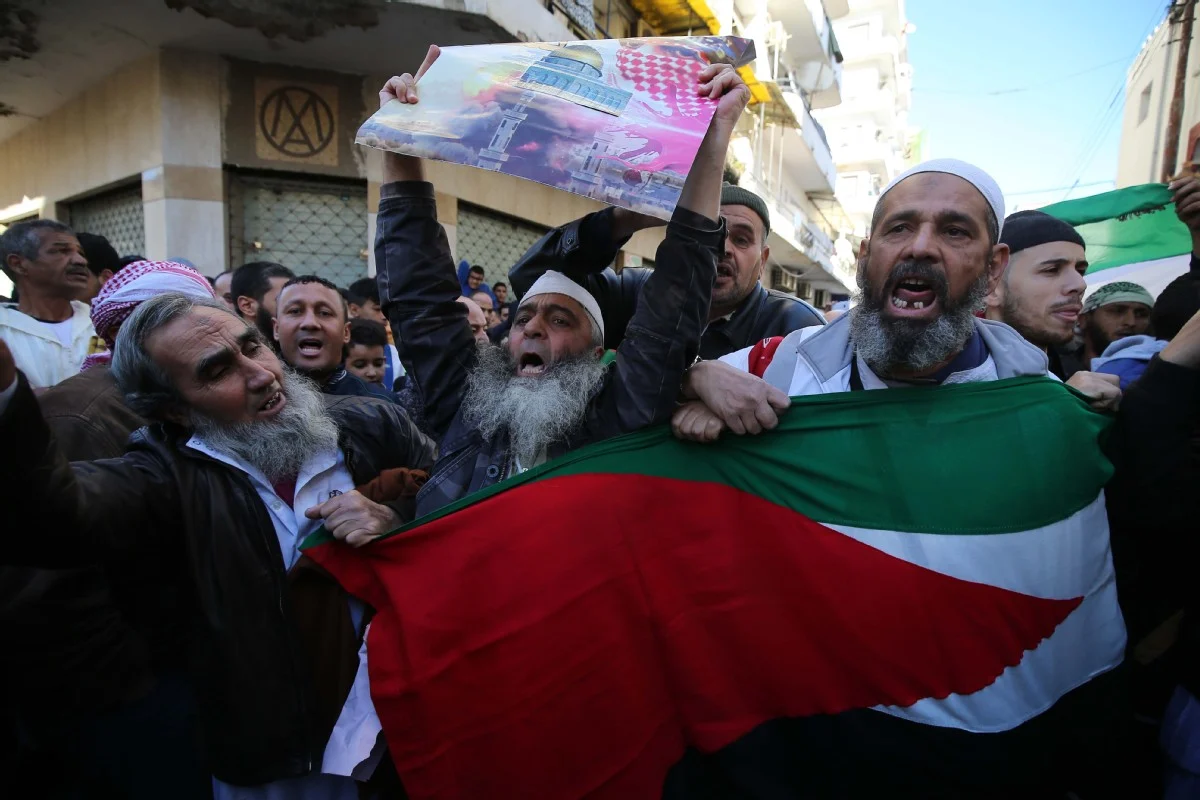
CAIRO – Arab foreign ministers convened in Cairo on Sunday, issuing a strong demand for the United States to reverse President Donald Trump’s decision to recognize Jerusalem as the capital of Israel. The ministers characterized the move as a "grave" development that aligns Washington with "occupation" and a blatant violation of international law. While the resolution adopted by the emergency meeting was rich in condemnatory language, it lacked immediate concrete punitive actions against the United States, a point that drew criticism and highlighted internal divisions among Arab nations.
The ministers resolved to call upon the United Nations Security Council to pass a resolution condemning Trump’s decision. However, they realistically acknowledged that such a move would likely face a veto from the United States, a permanent member of the council. Should a UN Security Council resolution be blocked, Palestinian Foreign Minister Riyad Al-Maliki indicated during a pre-dawn press conference that Arab nations would pursue a similar resolution in the UN General Assembly.
The two-page resolution, adopted after an emergency meeting that commenced on Saturday night, notably omitted any calls for punitive measures against the U.S., such as boycotting American products or downgrading diplomatic ties. This lack of immediate, forceful action appeared to stand in contrast to the palpable anger and widespread protests erupting in the Gaza Strip and the West Bank, where Palestinians have been demonstrating for three consecutive days against Trump’s declaration.
"We have taken a political decision not meant to reflect (what is going on in) the streets. Political work is responsible work," stated Arab League chief Ahmed Aboul-Gheit, addressing the press conference. He characterized the ongoing struggle over Jerusalem as an "extended battle, a battle that will be escalated," emphasizing the historical context of Jerusalem’s occupation for 50 years.
The resolution outlined a plan for the ministers to reconvene within a month, also holding open the possibility of an emergency Arab summit in Jordan to further deliberate on the critical issue of Jerusalem.
Background to the Jerusalem Decision
President Trump’s announcement on December 6, 2017, declaring Jerusalem as Israel’s capital and signaling his intent to relocate the U.S. embassy from Tel Aviv, sent shockwaves across the globe. The move drew widespread denunciation, even from some of Washington’s closest allies, who expressed concern that it would unnecessarily inflame tensions in an already volatile region. The status of Jerusalem is a cornerstone of the protracted Israeli-Palestinian conflict, and Trump’s decision was widely interpreted as a clear endorsement of Israel’s position. History has demonstrated that even minor disputes concerning Jerusalem’s status, particularly regarding the holy sites within its ancient Old City, have historically ignited deadly violence.
Divergent Approaches Among Arab Nations
Sources within Arab diplomatic circles revealed that some member states of the Arab League had advocated for a more robust resolution, one that would include punitive measures against countries that might follow the U.S. example and recognize Jerusalem as Israel’s capital. However, these more hard-line proposals were reportedly deemed too radical by a bloc of more moderate Arab nations and were ultimately dropped from the final resolution. These diplomats spoke on condition of anonymity as they were not authorized to brief the media.
Despite these reported internal disagreements, Palestinian Foreign Minister Riyad Al-Maliki attempted to downplay the differences, asserting that the meeting had achieved "complete" unity among Arab nations. He acknowledged that "differences in assessment when we moved to specifying measures" had existed but concluded that the agreement reached was to pursue "gradually escalating measures."
Both Aboul-Gheit and Al-Maliki reiterated the commitment of Arab nations to the 2002 Arab Peace Initiative. This landmark initiative proposed the normalization of relations with Israel in exchange for its withdrawal from territories occupied during the 1967 Middle East war. Al-Maliki underscored the significance of this plan, stating, "That plan is a key reference in the Middle East peace process."
International Law and the Status of Jerusalem
The Arab resolution explicitly condemned Trump’s decision, labeling it "illegal" and a "dangerous violation" of international law. It further characterized the move as a "dangerous development that places the United States at a position of bias in favor of the occupation and the violation of international law and resolutions."
The historical context of Jerusalem’s status is crucial to understanding the gravity of the situation. Israel occupied the eastern part of Jerusalem during the 1967 Six-Day War and subsequently annexed it, declaring the entire city as its eternal capital. Palestinians, however, envision East Jerusalem as the capital of their future independent state. This fundamental disagreement over sovereignty and control of Jerusalem, particularly its holy sites, has been a persistent flashpoint throughout the Israeli-Palestinian conflict.
Timeline of Key Events Leading to the Arab League Meeting:
- 1947: The United Nations Special Committee on Palestine (UNSCOP) proposes a partition plan for Mandatory Palestine, recommending Jerusalem be an international city (corpus separatum).
- 1948: The State of Israel is declared. The first Arab-Israeli War ensues, resulting in the division of Jerusalem between Israel (West Jerusalem) and Jordan (East Jerusalem).
- 1967: The Six-Day War. Israel occupies East Jerusalem and the West Bank.
- 1980: Israel passes the Jerusalem Law, effectively annexing East Jerusalem and declaring the city its undivided capital. This annexation is not recognized by the international community.
- 2002: The Arab Peace Initiative is adopted by the Arab League, proposing full Israeli withdrawal from Arab lands occupied in 1967 and the establishment of a Palestinian state with East Jerusalem as its capital, in exchange for normalization of relations with Israel.
- December 6, 2017: U.S. President Donald Trump announces his decision to recognize Jerusalem as Israel’s capital and initiate the process of relocating the U.S. embassy.
- December 7-9, 2017: Widespread protests erupt across the Palestinian territories (Gaza Strip and West Bank) and in various Arab and Muslim-majority countries.
- December 9, 2017: An emergency meeting of the Arab League is convened in Cairo to discuss the U.S. decision.
- December 10, 2017: The Arab League foreign ministers adopt a resolution condemning the U.S. decision and calling for international action.
Broader Implications and Future Prospects
The Arab League’s resolution, while expressing strong condemnation, highlights the delicate diplomatic balancing act faced by Arab nations. The decision to refrain from immediate punitive measures reflects a concern about potential economic and political repercussions from the United States, a significant global power and, for many Arab states, a crucial security and economic partner.
The commitment to pursuing action at the UN, even with the expectation of a U.S. veto, signifies a strategy of internationalizing the issue and garnering broader global consensus against the U.S. decision. The potential escalation to the UN General Assembly, where resolutions are non-binding but carry significant political weight, represents the next phase of this diplomatic effort.
The Arab League’s reaffirmation of the 2002 Arab Peace Initiative serves as a reminder of the established framework for a comprehensive Arab-Israeli peace. The initiative remains the most significant Arab consensus proposal for resolving the conflict, offering a clear quid pro quo for peace: Israeli withdrawal and Palestinian statehood in exchange for regional normalization. The U.S. decision to recognize Jerusalem as Israel’s capital is seen by many as a move that undermines this framework and complicates any future peace negotiations.
The situation remains fluid, with the potential for further escalation on the ground in the Palestinian territories and increased diplomatic pressure internationally. The coming weeks and months will be critical in determining the long-term impact of President Trump’s decision on the Israeli-Palestinian conflict and the broader geopolitical landscape of the Middle East. The Arab League’s commitment to continued dialogue and gradually escalating measures suggests a long-term strategy, but the immediate future remains uncertain, marked by widespread discontent and a deepening of the political chasm.


 Nana Wu
 Suro Senen