Lina Hope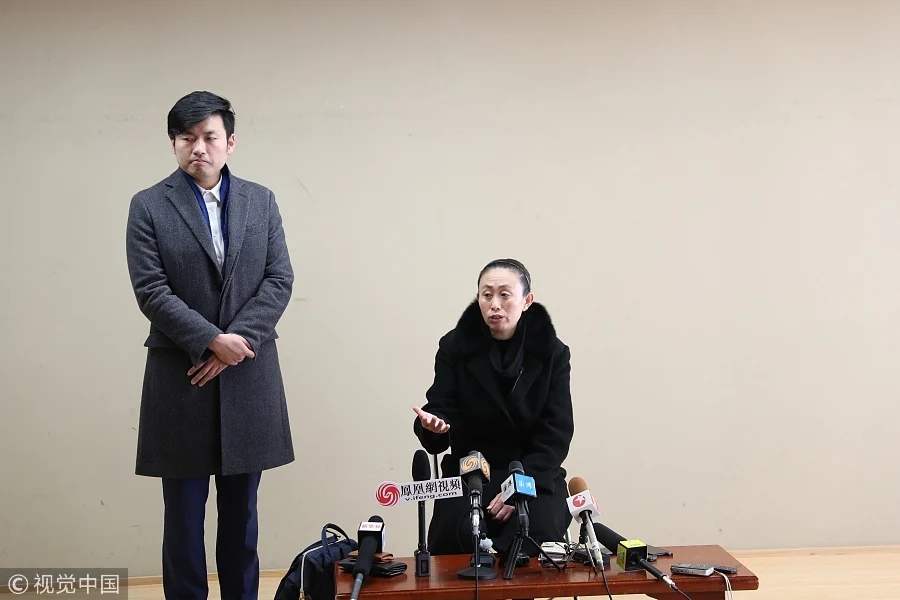
The trial of Chen Shifeng, the man accused of the brutal murder of Chinese postgraduate student Jiang Ge in Tokyo, commenced on Monday, December 11, 2017, marked by graphic details from the autopsy report and poignant displays of grief from the victim’s mother. Chen, facing charges that could lead to the death penalty, asserted that the killing was not premeditated, a claim sharply contrasted by the physical evidence and the victim’s mother’s unwavering pursuit of justice. The seven-day trial, held at the Tokyo District Court, is expected to conclude with a verdict on December 20, with the deeply emotional proceedings capturing significant public attention both in China and Japan.
Autopsy Reveals Defensive Wounds, Contradicting Accused’s Account
A crucial element presented during the trial, as revealed through Jiang Ge’s autopsy report, directly challenged Chen Shifeng’s narrative of the events leading to her death. The report indicated that Jiang suffered between five and six defensive injuries prior to the fatal stab, strongly suggesting she attempted to protect herself. This finding stands in stark opposition to Chen’s assertion that Jiang fell and succumbed to the very first stab wound. Furthermore, the autopsy detailed a harrowing total of 11 to 12 stab injuries to Jiang’s neck, underscoring the ferocity of the attack. The revelation of these defensive wounds served as powerful evidence against Chen’s claims of an unplanned act.
Jiang Qiulian, Jiang Ge’s mother, was visibly distraught throughout the proceedings, breaking down in tears multiple times in court. Her emotional presence underscored the profound personal tragedy at the heart of the legal battle. Her enduring grief and determination to see justice served have been a central theme of the trial, resonating with many observers.
Accused Claims Lack of Premeditation, Alleges Roommate’s Involvement
Chen Shifeng, the alleged perpetrator, presented his defense by denying any premeditation in the killing of Jiang Ge, a 24-year-old postgraduate student. According to reports from ifeng.com, Chen told the court that Jiang Ge’s roommate, Liu Xin, had passed a fruit knife to Jiang from inside their apartment before immediately closing the door. Chen described how Jiang attempted to get Liu Xin to open the door by ringing the doorbell multiple times with her elbow, but to no avail.
Chen’s testimony suggested that Jiang Ge died from blood loss. He maintained that she fell when he initially stabbed her, but crucially, he stated, "I didn’t any motive to kill her when I first stabbed her." He further attempted to distance himself from the full extent of the violence by asserting that "the next nine stabs had no causal relationship with the first stab." This statement implied a disjointed or reactive sequence of events, rather than a deliberate plan to kill. Throughout his testimony, Chen reportedly remained outwardly calm.
Notably, reports indicated that Jiang Ge’s mother, Jiang Qiulian, did not attend the court hearing on the first day, a decision that, while understandable given the emotional toll, highlighted the different paths of engagement with the judicial process for the prosecution and the victim’s family.
Chronology of Events Leading to the Trial
The tragic incident that led to this trial unfolded over a year prior to the commencement of court proceedings. Jiang Ge, a promising student, was fatally attacked outside her apartment in Tokyo. Reports suggest the attack occurred after she intervened to protect her roommate, Liu Xin, from Chen Shifeng, who was Liu Xin’s former boyfriend.
- Late 2016: Jiang Ge, a 24-year-old Chinese postgraduate student, is fatally stabbed outside her apartment in Tokyo. The circumstances suggest she was defending her roommate, Liu Xin, from Chen Shifeng.
- Following the incident: Chen Shifeng is apprehended and charged with the murder. Jiang Ge’s mother, Jiang Qiulian, begins a prolonged stay in Japan, advocating for the harshest possible penalty for Chen and expressing strong criticism towards Liu Xin for her perceived indifference.
- December 11, 2017: The trial of Chen Shifeng begins at the Tokyo District Court.
- December 20, 2017: The verdict is expected.
The victim’s mother, Jiang Qiulian, has been in Japan for approximately 30 days leading up to the trial, dedicating her time to petitioning for a death sentence for Chen. Her public statements have also been critical of Liu Xin, whom she accuses of being ungrateful for Jiang Ge’s ultimate sacrifice, igniting considerable debate online among netizens. Liu Xin, as Jiang Ge’s former roommate and the person Jiang was reportedly trying to protect, is slated to appear in court as a witness, adding another layer of complexity and emotional weight to the proceedings.
Background and Broader Context
The case of Jiang Ge has resonated deeply within the Chinese diaspora and sparked widespread discussion on social media platforms regarding friendship, responsibility, and the justice system. The perceived lack of immediate remorse or proactive assistance from Liu Xin, as interpreted by Jiang’s mother and many online observers, fueled a significant public outcry. This sentiment highlights a broader societal expectation for individuals to demonstrate empathy and support in times of crisis, particularly among close friends.
The legal framework in Japan, like in many countries, grapples with determining intent and culpability in cases of homicide. The distinction between premeditated murder and manslaughter, or even accidental death, hinges on complex legal definitions and the evidence presented. Chen’s defense strategy appears to focus on undermining the premeditation aspect, suggesting that while his actions were fatal, they were not part of a pre-conceived plan to kill Jiang Ge. The autopsy findings, particularly the presence of defensive wounds, are crucial in countering this narrative, suggesting a struggle and a clear intent to inflict harm.
Official Responses and Societal Impact
While official statements from the Japanese judiciary are typically limited during ongoing trials to maintain impartiality, the proceedings themselves are under intense scrutiny. The Tokyo District Court is tasked with evaluating all evidence, including forensic reports, witness testimonies, and the statements of the accused and the victim’s family. The court’s ultimate decision will be based on Japanese law, which permits the death penalty for certain severe crimes, including murder.
The case has also highlighted the challenges faced by international students living abroad, particularly concerning personal safety and the complexities of navigating legal and social systems in a foreign country. Jiang Ge’s tragic death has served as a somber reminder of the vulnerabilities that can arise when individuals are far from their support networks.
The online discourse surrounding the case, particularly the criticism directed at Liu Xin, has also raised questions about the ethics of public shaming and the impact of social media on individuals involved in sensitive legal matters. While public interest is natural, the intensity of the online commentary underscores the deep emotional investment many have in the outcome of this trial.
Potential Implications and Future Considerations
The verdict in Chen Shifeng’s trial will have significant implications. For Jiang Ge’s mother, it represents the culmination of a long and arduous journey for justice. For the legal system, it will be a test of its ability to fairly adjudicate a case marked by profound tragedy and public emotion.
Should Chen be convicted of premeditated murder, the likelihood of a severe sentence, potentially including the death penalty, increases. Conversely, if the court finds insufficient evidence of premeditation, the sentence could be less severe, a prospect that would undoubtedly be devastating for Jiang Qiulian.
Beyond the immediate legal outcome, the case may prompt further discussions about:
- Interpersonal relationships and responsibility: The role of friends and roommates in crisis situations.
- Online vigilantism and its consequences: The ethical boundaries of public commentary on ongoing legal cases.
- Support systems for international students: The need for enhanced safety measures and resources for students living abroad.
As the trial progresses, the Tokyo District Court will weigh the stark realities of the autopsy report against the defendant’s claims, seeking to establish the truth behind Jiang Ge’s untimely death. The world watches, hoping for a just resolution that honors the memory of a young life tragically cut short.


 Nana Wu
 Suro Senen