Azzam Bilal Chamdy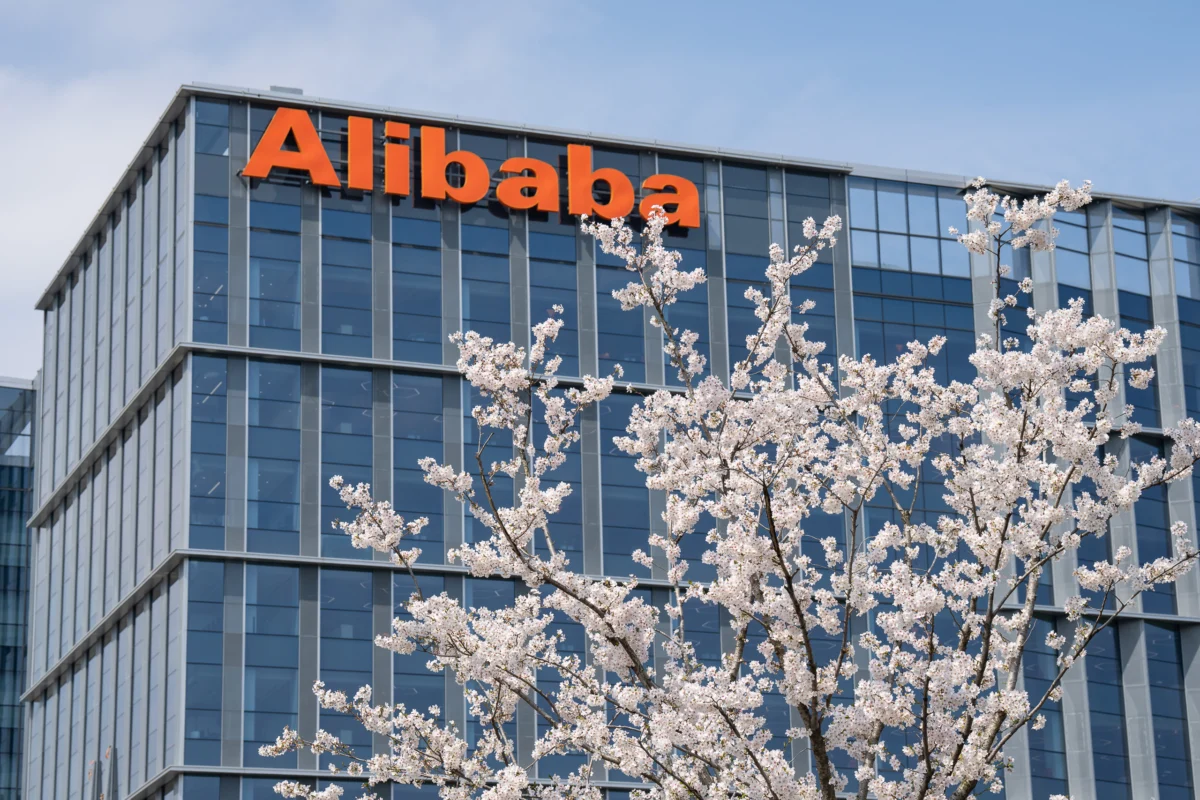
Alibaba Group Holding Limited has successfully priced a placement of 710 million new Hong Kong-listed shares at HK$112.70 each, a strategic move designed to raise approximately HK$80 billion, equivalent to US$10.21 billion. This substantial capital injection is slated to bolster the e-commerce and technology conglomerate’s burgeoning artificial intelligence (AI) capabilities and expand its critical AI infrastructure. The transaction, a significant development in the company’s long-term strategic pivot, is anticipated to officially close on August 26, marking a pivotal moment in Alibaba’s commitment to leading the global AI race.
Strategic Capital Infusion for AI Leadership
The decision to raise such a considerable sum underscores Alibaba’s aggressive acceleration of spending on AI computing and cloud services. In an increasingly competitive global technology landscape, where AI stands as the next frontier for innovation and economic growth, companies are pouring vast resources into developing proprietary AI models, computing power, and talent. Alibaba’s explicit allocation of all net proceeds to "strengthen its full-stack AI capabilities and expand related infrastructure" highlights a clear strategic imperative: to establish and maintain a dominant position in the rapidly evolving artificial intelligence sector. This full-stack approach implies investment across the entire AI value chain, from foundational research and chip development to large language models (LLMs) and their integration into various business applications and cloud services.
The HK$112.70 per share pricing for the placement represents a discount to the company’s prevailing market price, a common practice in such large-scale capital raises designed to attract institutional investors. While the immediate market reaction saw Alibaba’s shares fall by approximately 8% following the announcement, reflecting typical short-term dilution concerns or market adjustments, the long-term implications of this investment are expected to be profoundly positive for the company’s growth trajectory and competitive standing.
Alibaba’s Deep Roots and Ambitious Future in AI
Alibaba’s engagement with artificial intelligence is not a recent phenomenon but rather an evolution of decades of investment in data, cloud computing, and advanced technologies. The company has long leveraged AI across its vast ecosystem, from personalizing shopping experiences on Taobao and Tmall to optimizing logistics networks for Cainiao and powering recommendation engines for Youku. Alibaba Cloud, the group’s digital technology and intelligence backbone, has been a key driver of AI development, offering a comprehensive suite of AI services to enterprises across various industries.
Key components of Alibaba’s existing AI ecosystem include:
- Alibaba Cloud: Provides the foundational infrastructure, including high-performance computing, storage, and networking, essential for AI development and deployment. It offers AI platform services, machine learning platforms, and specialized AI solutions.
- Damo Academy: Established in 2017, this global research institute is Alibaba’s spearhead for cutting-edge technological exploration, focusing on areas like machine intelligence, quantum computing, autonomous driving, and natural language processing. Damo Academy has been instrumental in developing many of Alibaba’s core AI technologies and algorithms.
- T-Head Semiconductor: Alibaba’s chip development arm, responsible for designing processors tailored for cloud and AI applications, such as the Hanguang 800 AI inference chip. This initiative is critical for Alibaba’s aspirations for hardware self-sufficiency, especially amidst global semiconductor supply chain uncertainties and geopolitical tensions.
- Large Language Models (LLMs): In recent years, Alibaba has significantly ramped up its efforts in generative AI, culminating in the unveiling of its large language model, Tongyi Qianwen. This model, akin to OpenAI’s GPT series or Google’s Bard, is designed to power various applications, from enterprise communication and content generation to customer service and search functions. The development and continuous training of such models are immensely resource-intensive, requiring vast amounts of data, sophisticated algorithms, and immense computational power.
The US$10.21 billion capital raise is therefore not merely an incremental investment but a strategic escalation. It aims to accelerate the development of next-generation AI models, enhance the training and inference capabilities of its existing models, and build out the physical infrastructure – including state-of-the-art data centers equipped with advanced AI chips – necessary to support these ambitions at scale. This comprehensive investment will strengthen Alibaba’s competitive edge against domestic rivals like Tencent and Baidu, and global tech giants such as Amazon, Microsoft, and Google, all of whom are vying for leadership in the AI domain.
Chronology and Market Context of the Placement
The announcement of the share placement arrived at a time when global technology companies, particularly those with significant cloud computing operations, are making substantial investments in AI. The transaction details emerged shortly before the expected closing date of August 26, indicating a swift execution following market soundings and investor commitments.
- Early August: Alibaba likely engaged with institutional investors to gauge interest and secure commitments for the placement. Such a large-scale offering typically involves major global investment banks acting as bookrunners.
- Mid-August: Pricing of the 710 million new Hong Kong-listed shares at HK$112.70 per share was finalized, raising HK$80 billion (US$10.21 billion). The pricing represented a discount to the recent trading price, a standard mechanism to ensure successful subscription.
- Immediate Aftermath: Following the announcement, Alibaba’s Hong Kong-listed shares experienced a notable decline of approximately 8%. This dip can be attributed to several factors:
- Share Dilution: The issuance of 710 million new shares increases the total number of outstanding shares, which can dilute the earnings per share and value of existing shares in the short term.
- Market Sentiment: While the investment is strategic, some investors may view such a large capital raise as potentially impacting short-term profitability due to the massive expenditure required for AI development, which has a long return on investment cycle.
- Broader Market Conditions: The broader market sentiment, especially concerning the Chinese technology sector, can also influence immediate stock reactions. Concerns about regulatory scrutiny, economic slowdowns, or geopolitical tensions can exacerbate negative reactions to capital raises.
- August 26: The expected closing date for the transaction, at which point the capital will be officially transferred to Alibaba, marking the formal completion of the placement.
This placement follows a period of significant strategic adjustments for Alibaba, including a major corporate restructuring announced in March 2023, which aims to split the company into six independent business units. This restructuring was widely seen as a move to unlock shareholder value and enhance agility, allowing each unit to pursue its own fundraising and IPOs. The current share placement, however, is a direct infusion into the parent company’s strategic AI initiatives, signaling a centralized commitment to this critical technological frontier.
Official Statements and Strategic Rationale
Alibaba’s official statement unequivocally declared that "all net proceeds will be used to strengthen its full-stack AI capabilities and expand related infrastructure." This concise declaration, while direct, encapsulates a monumental strategic shift and commitment. It signifies a holistic investment strategy that covers:
- Talent Acquisition and Retention: Attracting and retaining top-tier AI researchers, engineers, and data scientists is paramount. A significant portion of the funds will likely be allocated to competitive compensation packages, research grants, and state-of-the-art research facilities.
- Hardware Procurement and Development: This includes securing advanced AI chips (GPUs and specialized AI accelerators) from suppliers like NVIDIA, as well as investing in the research and development of its own proprietary chips through T-Head. Given global supply chain constraints and export restrictions, securing a stable and cutting-edge hardware supply is a critical challenge.
- Data Center Expansion and Upgrades: Building and operating AI infrastructure requires massive data centers with sophisticated cooling systems, high-speed networking, and immense power consumption. The funds will be crucial for expanding existing cloud regions and establishing new ones optimized for AI workloads.
- Research and Development: Continuous investment in foundational AI research, algorithm development, and the training of ever-larger and more complex AI models like Tongyi Qianwen. This includes advancements in natural language processing, computer vision, and multimodal AI.
- Integration and Commercialization: Developing and integrating AI solutions across Alibaba’s diverse business segments – from e-commerce and logistics to fintech (Ant Group), cloud computing, and digital entertainment – to enhance efficiency, create new revenue streams, and improve user experiences.
Executives within Alibaba have consistently emphasized the transformative potential of AI. While specific direct quotes relating to this placement are limited, previous statements from leaders like CEO Daniel Zhang (now former CEO) and current CEO Eddie Wu have highlighted AI as a core long-term growth driver. They view AI as essential for empowering businesses, fostering innovation, and maintaining competitiveness in the digital economy. The capital raise is a concrete manifestation of this long-held strategic vision.
Broader Impact and Implications
The US$10.21 billion share placement by Alibaba has far-reaching implications, not just for the company itself but for the broader technology industry in China and the global AI landscape.
For Alibaba:
- Enhanced Competitiveness: This capital infusion will significantly boost Alibaba’s ability to compete with global tech giants and domestic rivals in the fiercely contested AI market. It provides the financial muscle to accelerate its AI roadmap, potentially allowing it to leapfrog competitors in certain areas.
- Diversification and Future Growth: As its traditional e-commerce business matures, AI represents a critical avenue for new growth engines and revenue streams, particularly through Alibaba Cloud’s AI services and the commercialization of its LLMs.
- Technological Self-Reliance: Investment in full-stack AI, particularly chip development and core model research, aligns with China’s national strategy for technological self-sufficiency, reducing reliance on foreign technologies, especially in critical areas like semiconductors.
- Financial Performance: While the initial investment will be substantial, successful AI integration and innovation could lead to significant long-term returns through improved operational efficiency, new product offerings, and expanded market share.
For the Chinese AI Industry:
- Increased Competition and Innovation: Alibaba’s massive investment will likely spur other Chinese tech companies to increase their own AI spending, fostering a more competitive and innovative domestic AI ecosystem.
- Talent Migration: The demand for AI talent will intensify, potentially leading to a "brain drain" from smaller firms to larger players like Alibaba, or conversely, driving more individuals into AI-related fields.
- Infrastructure Development: The expansion of Alibaba’s AI infrastructure, including data centers, benefits the broader digital economy by increasing computing resources available within China.
For Global AI Landscape and Capital Markets:
- Geopolitical Implications: Alibaba’s aggressive AI push highlights China’s determination to lead in AI, potentially intensifying the technological rivalry between China and the United States. It underscores the global race for AI supremacy, with significant implications for economic power and national security.
- Investor Sentiment: While short-term stock reactions can be negative, successful execution of Alibaba’s AI strategy could boost long-term investor confidence in the company and the broader tech sector, demonstrating the potential for significant returns from AI investments. It also sets a precedent for other large-scale capital raises for AI-focused initiatives.
- Technology Trends: The placement reinforces the prevailing trend that AI is not just a feature but a fundamental layer of future technology, requiring unprecedented levels of investment and strategic focus from leading corporations worldwide.
In conclusion, Alibaba’s US$10.21 billion share placement is a bold declaration of intent, signaling its unwavering commitment to becoming a global leader in artificial intelligence. By funneling such a significant sum into its full-stack AI capabilities and infrastructure, Alibaba is not merely adapting to the future but actively shaping it, with profound implications for its own trajectory, the Chinese technology sector, and the global technological landscape. The coming years will reveal how effectively this massive capital injection translates into tangible AI breakthroughs and sustained market leadership.

 Nana Muazin
 Iffa Jayyana