Asro
Asro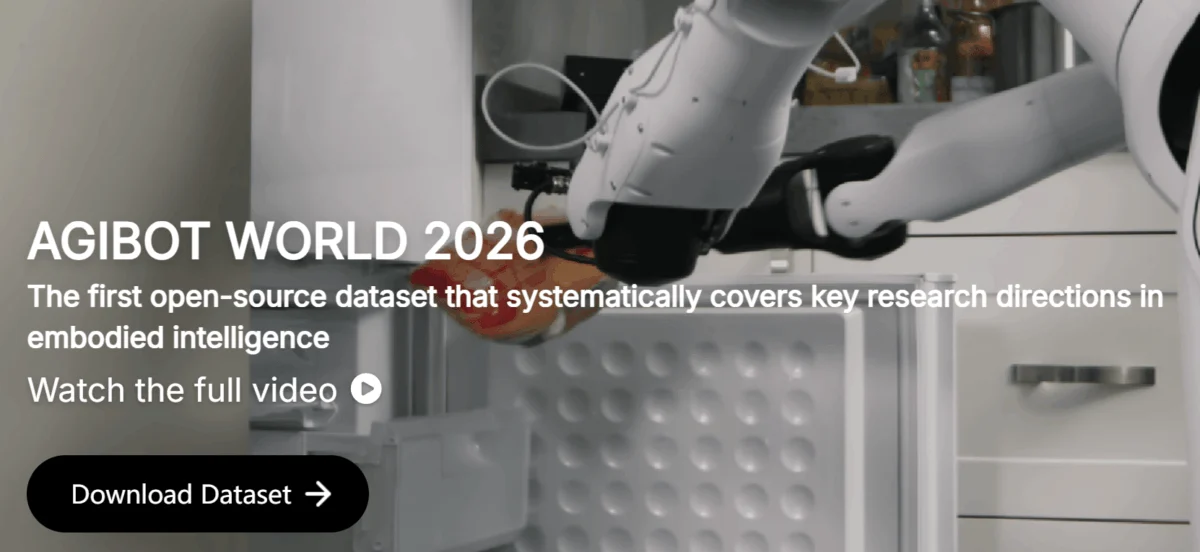
The landscape of humanoid robotics, once defined by mechanical prowess and hardware innovation, has undergone a profound transformation by 2026. What was once a straightforward race to build the most agile and reliable robot has evolved into a sophisticated competition centered on artificial intelligence, data ecosystems, and continuous learning capabilities. Leading this paradigm shift is AgiBot, whose strategic maneuvers throughout the year underscore a fundamental redefinition of what it means to be a robotics company.
From Hardware to Holistic AI: AgiBot’s Strategic Pivot
For years, the robotics industry’s competitive edge lay in superior mechanical design, advanced joint modules, precise motion control, and efficient supply chain management. Companies vied to produce robots that were more robust, dexterous, and cost-effective, believing that hardware excellence alone would secure market dominance. However, as numerous companies have largely overcome these foundational challenges, new, more complex bottlenecks have emerged. The critical questions now revolve around a robot’s cognitive abilities: its capacity to understand intricate environments, perform tasks without explicit prior programming, learn from singular experiences, and effectively transfer that knowledge across a fleet of robots. These inquiries resonate deeply with the core challenges faced in the broader field of artificial intelligence, signalling a convergence that few anticipated just a few years ago.
AgiBot’s trajectory in 2026 exemplifies this convergence. The company has consciously repositioned itself from primarily a hardware manufacturer to an integrated AI powerhouse, seamlessly blending its robotic platforms with cutting-edge foundation models, robust data platforms, and advanced simulation systems. This pivot marks a significant departure from traditional robotics business models, aligning AgiBot more closely with the operational paradigms of leading AI development firms.
Key Developments and Chronology in 2026
The year 2026 has been pivotal for AgiBot, marked by a series of strategic product advancements and platform launches designed to cement its leadership in embodied AI.
-
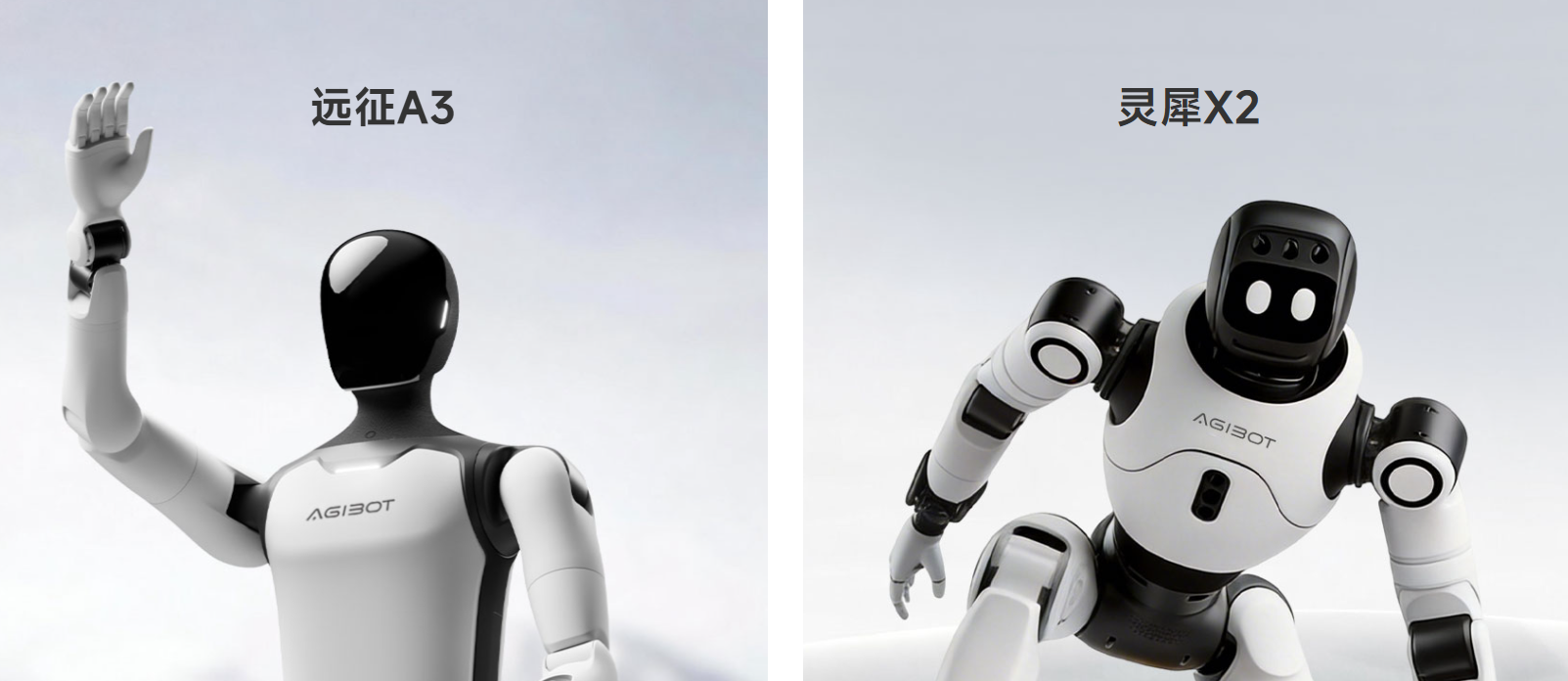
Continued Hardware Refinement: AgiBot maintained its commitment to hardware excellence, rolling out continued advancements for its flagship humanoid robot, the Expedition A3. While the focus has shifted, the underlying mechanical platform remains crucial, serving as the physical interface for its burgeoning intelligence. The Expedition A3’s enhanced stability, improved power efficiency, and modular design ensure it remains a formidable contender in the physical domain, capable of executing the complex instructions generated by its advanced AI.
-
April: Launch of GO-2 Embodied Foundation Model: A landmark moment occurred in April with the release of GO-2, AgiBot’s proprietary embodied foundation model. This sophisticated AI model represents a leap forward in robotic cognition. Unlike previous models tailored for specific tasks, GO-2 is designed for general-purpose intelligence, enabling robots to interpret diverse sensor inputs, formulate complex plans, and execute a wide array of physical tasks with unprecedented adaptability. Early benchmarks from internal testing suggest that GO-2-powered robots demonstrated a 30% improvement in task completion efficiency and a 45% reduction in error rates across unstructured environments compared to prior models. This model empowers robots to move beyond pre-programmed routines, fostering a dynamic interaction with their surroundings based on real-time understanding and predictive capabilities.
-
Genie Sim 3.0 and the Power of Synthetic Data: Concurrently, AgiBot significantly upgraded its simulation capabilities with Genie Sim 3.0. This advanced simulation environment is not merely a testing ground but a prolific generator of high-fidelity training data. Genie Sim 3.0 allows AgiBot to create millions of hours of simulated interactions, exposing robots to an expansive range of scenarios – from navigating cluttered warehouses to performing delicate assembly tasks – without the prohibitive costs and time constraints of real-world data collection. The company announced that Genie Sim 3.0 had generated over 10,000 hours of simulation data by mid-year, accompanied by an evaluation system capable of assessing robot performance across more than 100,000 distinct scenarios. This synthetic data is crucial for pre-training and refining the embodied AI models, providing a safe and scalable sandbox for iterative learning.
-
AGIBOT WORLD and GE-2 Action World Model: To bridge the gap between simulation and reality, AgiBot launched AGIBOT WORLD and the GE-2 Action World Model. AGIBOT WORLD, a previously established initiative, serves as a repository for millions of real-world robot data samples, collected from deployed Expedition A3 units operating in various industrial and logistical settings. This real-world data provides vital feedback, grounding the AI models in actual physical dynamics and environmental complexities. The GE-2 Action World Model, on the other hand, is an AI framework that learns predictive models of the physical world, allowing robots to anticipate the consequences of their actions and plan more effectively. Together, these projects weave a tight feedback loop, connecting physical hardware, real-world data, simulated learning, and advanced AI models into a continuously improving, integrated technology stack.
-
Hive Data Co-Creation Initiative: Recognizing the insatiable appetite of large AI models for data, AgiBot launched its "Hive Data Co-Creation Initiative" in the latter half of 2026. This ambitious program aims to scale data production capacity to tens of millions of hours annually. The initiative involves partnerships with early adopters and industrial clients, enabling AgiBot to leverage real-world operational data while offering enhanced performance to its partners. This collaborative approach not only accelerates data acquisition but also democratizes the process of improving embodied AI, creating a collective intelligence network for robotics.

The Ascendancy of Data: The New Competitive Frontier
The collective impact of these developments points to a decisive shift: the robot itself, while indispensable, is gradually transitioning from being the core product to becoming a sophisticated carrier for an intelligent system. The true value now resides in the underlying AI, its learning capabilities, and the vast datasets that fuel its continuous improvement.
In the past, competitive advantages were often measured by a robot’s speed, payload capacity, or manufacturing cost. Today, and increasingly so in 2026, the battleground for embodied AI has moved from manufacturing prowess to learning capabilities. The most significant change agent in this evolution is the rapidly growing importance of data.
AgiBot’s extensive data strategy is at the heart of its new competitive posture. The millions of real-world robot data samples accumulated through AGIBOT WORLD provide an invaluable foundation, offering granular insights into robot-environment interactions, task execution nuances, and failure modes. Supplementing this, Genie Sim 3.0’s ability to generate over 10,000 hours of high-fidelity simulation data, evaluated across more than 100,000 scenarios, provides a scalable and cost-effective means to diversify training experiences and rapidly iterate on model improvements.
The Hive Data Co-Creation Initiative, with its goal of tens of millions of hours of data production, underscores AgiBot’s commitment to building a comprehensive data flywheel. This integrated loop—encompassing real-world data collection, simulation training, continuous model upgrades, and optimized robot execution—is becoming the ultimate determinant of success.
Implications for the Robotics Industry and Broader Market

This paradigm shift carries profound implications for the entire robotics industry. Competition will no longer be solely predicated on hardware specifications but will increasingly hinge on the volume and quality of proprietary data, the sophistication and generality of AI models, and the speed at which companies can iterate and deploy improvements.
- Redefining Robotics Companies: The traditional distinction between hardware and software companies is blurring. Robotics firms must now cultivate deep expertise in machine learning, data engineering, and cloud infrastructure, alongside their traditional mechanical and electrical engineering capabilities. This necessitates a significant shift in talent acquisition and organizational structure.
- Data as a Strategic Asset: Data is rapidly becoming the most valuable strategic asset in robotics, akin to oil in the industrial age. Companies with superior data collection, processing, and utilization pipelines will possess a formidable advantage. This creates high barriers to entry for newcomers who lack the installed base or simulation capabilities to generate sufficient training data.
- The Power of Simulation: Advanced simulation environments like Genie Sim 3.0 are no longer just tools but integral components of the AI development cycle. They enable rapid experimentation, safe failure, and efficient data generation, accelerating the learning process for embodied AI models. The ability to transfer learned policies from simulation to the real world (sim-to-real transfer) is a critical technical challenge and a key differentiator.
- Ecosystem Development: AgiBot’s approach suggests a move towards platform ecosystems rather than discrete products. By offering an integrated stack of hardware, data, models, and development tools, AgiBot is positioning itself as a foundational layer for future robotic applications, potentially fostering a developer community around its platform, much like leading software or cloud companies.
- Market Consolidation and Investment Trends: This shift will likely drive consolidation in the market, with companies unable to invest heavily in AI and data infrastructure struggling to keep pace. Venture capital and corporate investments are increasingly flowing into companies demonstrating strong AI capabilities and data strategies, rather than just impressive hardware prototypes. Analysts project that investment in embodied AI solutions, which stood at approximately $5 billion globally in 2025, is set to surge by 60% to over $8 billion in 2026, largely driven by the perceived value of integrated AI-robotics platforms.
Expert Commentary and Future Outlook
"AgiBot’s strategy in 2026 is a clear signal of the future direction of humanoid robotics," stated Dr. Lena Chen, a leading AI ethicist and robotics analyst at the Global Robotics Institute. "They are not just building robots; they are building intelligence systems that happen to be embodied in physical forms. This shift prioritizes continuous learning and adaptability over static programming, opening up entirely new possibilities for automation in complex, unstructured environments."
"Our vision extends beyond just building capable robots; we are building a living, learning intelligence that can adapt and evolve," commented Dr. Alistair Finch, AgiBot’s CEO, in a recent industry conference. "With GO-2, Genie Sim 3.0, and our Hive Data Initiative, we are establishing the core infrastructure for robots to become truly intelligent agents, capable of solving real-world problems with increasing autonomy and efficiency. The Expedition A3 is merely the vessel; the intelligence within is what truly defines its capability."
While the importance of robust, cost-effective, and mass-manufacturable hardware cannot be overstated – it remains the essential interface with the physical world – future competition will transcend a simple hardware-versus-hardware comparison. Instead, it will be a multi-faceted contest encompassing hardware design, the sophistication of AI models, the scale and quality of training data, and the effectiveness of real-world deployment and continuous learning loops.
In essence, the central challenge facing the robotics industry in 2026 is no longer merely "Can robots move?" but rather, "Can robots learn?" AgiBot’s strategic blueprint for the year provides a compelling answer, signaling that the most valuable companies in the burgeoning field of robotics will increasingly be those that master the art and science of artificial intelligence. The transformation of robot companies into AI companies is not just a trend; it is the defining characteristic of the next era in robotics.


 Nila Kartika Wati
 Reynand Wu