
 Evan Lee Salim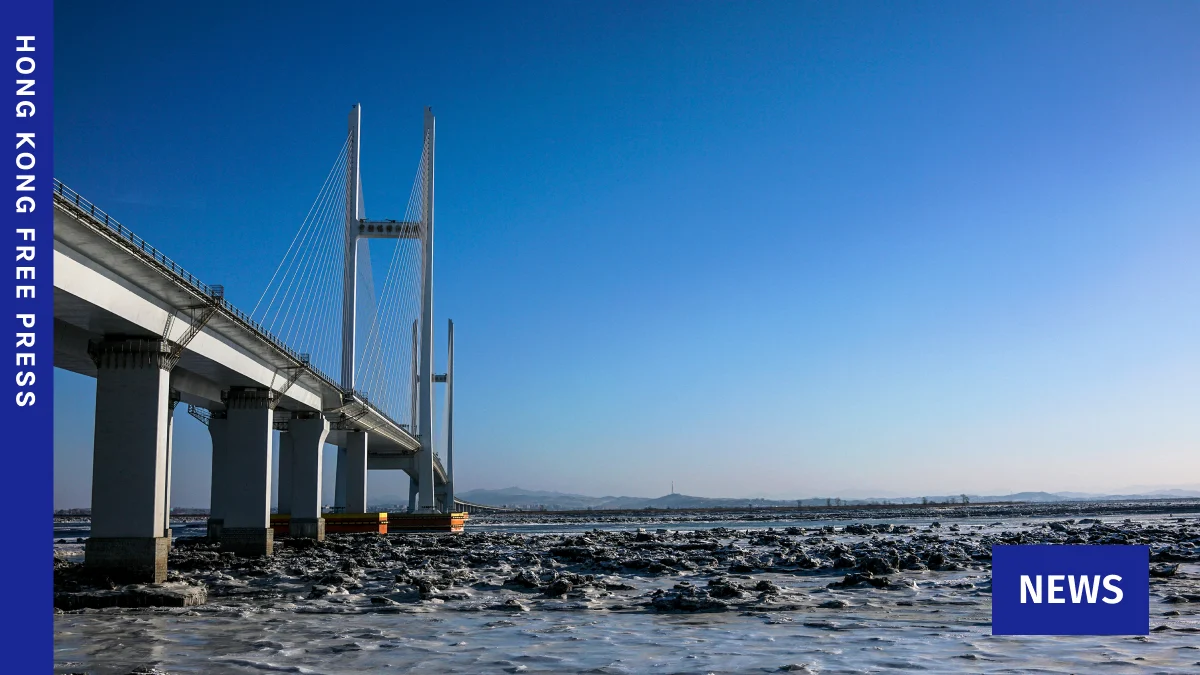
A new bridge linking China and North Korea, the New Yalu River vehicle bridge, is set to officially open this week, marking a significant milestone in the economic relationship between the two nations. The opening, scheduled for Thursday, comes 12 years after construction was completed, underscoring a prolonged period of anticipation and, according to reports, addressing infrastructural and logistical challenges on the North Korean side. This development is being widely interpreted as a further testament to the strengthening economic and diplomatic ties between Beijing and Pyongyang, particularly in the wake of recent global events and North Korea’s continued isolation.
A Decade in the Making: The New Yalu River Bridge
The New Yalu River vehicle bridge, a four-lane structure spanning 3,026 meters (9,927 feet), connects China’s northeastern border city of Dandong with the North Korean town of Sinuiju. Construction on the bridge concluded in 2014, but its operational launch was postponed due to a lack of essential infrastructure on the North Korean side. These impediments reportedly included the absence of connecting roads and the necessary customs facilities required for seamless cross-border trade and transit. The delay highlights the complex, often protracted, nature of bilateral infrastructure projects involving North Korea, which operates under a unique set of logistical and bureaucratic constraints.

Strategic Importance and Economic Implications
China stands as North Korea’s largest trading partner and its most crucial provider of diplomatic, economic, and political support. In this context, the New Yalu River bridge is poised to play a pivotal role in facilitating increased trade and economic activity. Experts suggest that the bridge will serve as a more efficient and higher-capacity alternative to the decades-old Sino-Korean Friendship Bridge, which currently handles a significant portion of the bilateral traffic but has limitations in its throughput.
Ahn Chan-il, a researcher originally from North Korea, commented on the potential impact: "Until now, exchanges across the Yalu River bridges in Dandong have been relatively limited in scale, but once the new bridge opens, hundreds of vehicles could cross it every day." He further elaborated, "The bridge could become a conduit for China’s abundant goods and resources to flow into North Korea and give its economy a significant boost." This influx of goods is expected to be particularly beneficial for North Korea’s civilian economy, offering much-needed supplies and materials for development.
Geopolitical Context and Recent Developments
The opening of the bridge occurs against a backdrop of shifting geopolitical dynamics in East Asia. North Korea has maintained stringent border controls throughout the COVID-19 pandemic, severely curtailing cross-border movement. Train services between China and North Korea only resumed in March of the current year after a six-year hiatus, signaling a gradual easing of restrictions.

Furthermore, the inauguration of the New Yalu River bridge follows closely on the heels of a similar development in September, when North Korea and Russia officially opened their first road bridge across the Tumen River. Pyongyang celebrated that event as a symbol of burgeoning relations with Moscow. While trade with Russia is often characterized by military supplies, the potential for increased trade with China through the new bridge is seen as more directly contributing to North Korea’s economic revitalization. Analysts suggest that exchanges with China could encompass a wider range of goods essential for the development of North Korea’s civilian sector, potentially impacting everything from consumer goods to industrial components.
Official Reactions and Monitoring
South Korea’s unification ministry has stated that Seoul is "closely monitoring" the situation surrounding the bridge’s opening. This watchful stance reflects Seoul’s ongoing interest in inter-Korean relations and any developments that could impact regional stability and economic flows. The ministry’s statement indicates an awareness of the potential implications of increased Sino-North Korean economic engagement.
Despite the opening of new transit routes, North Korea has not yet resumed issuing tourism visas to Chinese citizens, who historically constituted the majority of foreign visitors to the country. This continued restriction on tourism suggests that the focus of the renewed cross-border activity is primarily economic and logistical, rather than a broad reopening for general travel.

Historical Background of Border Infrastructure
The Yalu River, forming a natural boundary between China and North Korea, has long been a critical artery for trade and transportation. The existing Sino-Korean Friendship Bridge, built in 1943, has served as the primary crossing point for decades. Its limited capacity has been a persistent bottleneck for the growing trade volume between the two nations. The construction of a second, more modern bridge was conceived as a solution to alleviate this congestion and to accommodate a greater flow of goods and potentially people.
The initial plans for the New Yalu River bridge date back to the early 2000s, with construction commencing in 2008. The project aimed to enhance connectivity and foster economic cooperation. However, the geopolitical climate, including international sanctions against North Korea and its own internal development priorities, contributed to the extended delay in its operationalization. The final push to open the bridge signifies a strategic decision by both governments to prioritize economic interdependence.
Data and Projected Impact
While specific figures for the projected daily or annual traffic are not yet available, the bridge’s four-lane design suggests a significant increase in capacity compared to the older Friendship Bridge. The Sino-Korean Friendship Bridge, for instance, is primarily a railway bridge with limited road traffic. The new vehicle bridge is designed to handle a substantial volume of trucks, buses, and other road transport.

In 2023, bilateral trade between China and North Korea reached an estimated $2.1 billion, according to data from China’s General Administration of Customs. This figure represents a substantial increase from previous years, indicating a growing reliance on Chinese goods and markets by the North Korean economy. The opening of the New Yalu River bridge is expected to further bolster these trade figures by streamlining logistics and reducing transit times and costs.
The economic boost anticipated from the bridge is multifaceted. For North Korea, it offers a more reliable channel for essential imports, including food, fuel, and industrial materials, which are crucial for sustaining its population and economy. For China, it represents an expansion of its economic influence in a strategically important region and an opportunity to further integrate North Korea into its broader economic initiatives, such as the Belt and Road Initiative, albeit with modifications to account for international sanctions.
Broader Implications for Regional Dynamics
The increased connectivity between China and North Korea through the New Yalu River bridge could have wider implications for regional security and economic dynamics. It underscores China’s role as the primary economic lifeline for Pyongyang, a relationship that has been a constant factor in discussions about denuclearization and regional stability.

The development also comes at a time when North Korea has been actively seeking to strengthen ties with other countries, notably Russia. The parallel opening of the Russia-North Korea bridge and the China-North Korea bridge highlights a strategic effort by Pyongyang to diversify its international partnerships and leverage its geographic position. However, the economic impact of these new routes will likely differ significantly, with China’s role in supplying essential civilian goods being more pronounced.
The international community, particularly South Korea and the United States, will be closely observing the flow of goods and the economic activities facilitated by the new bridge. Any potential violations of UN Security Council sanctions related to North Korea will be a key area of concern. The transparency and compliance with international regulations surrounding the bridge’s operations will be critical in shaping the international response.
In conclusion, the opening of the New Yalu River bridge marks a significant moment in Sino-North Korean relations. It is a concrete manifestation of deepening economic ties and a potential catalyst for economic development in North Korea. As the bridge becomes fully operational, its impact on trade, regional economics, and geopolitical dynamics will be a subject of considerable interest and scrutiny.


 Raul Delapena Setiawan





A Political Commentator Claims Lack of Caution Over National Security Investigation Details Amidst Trial
Wong Kwok-ngon, a political commentator widely known by his pen name Wong On-yin, asserted in the District Court that national security police failed to explicitly caution him about the confidentiality…