Basiran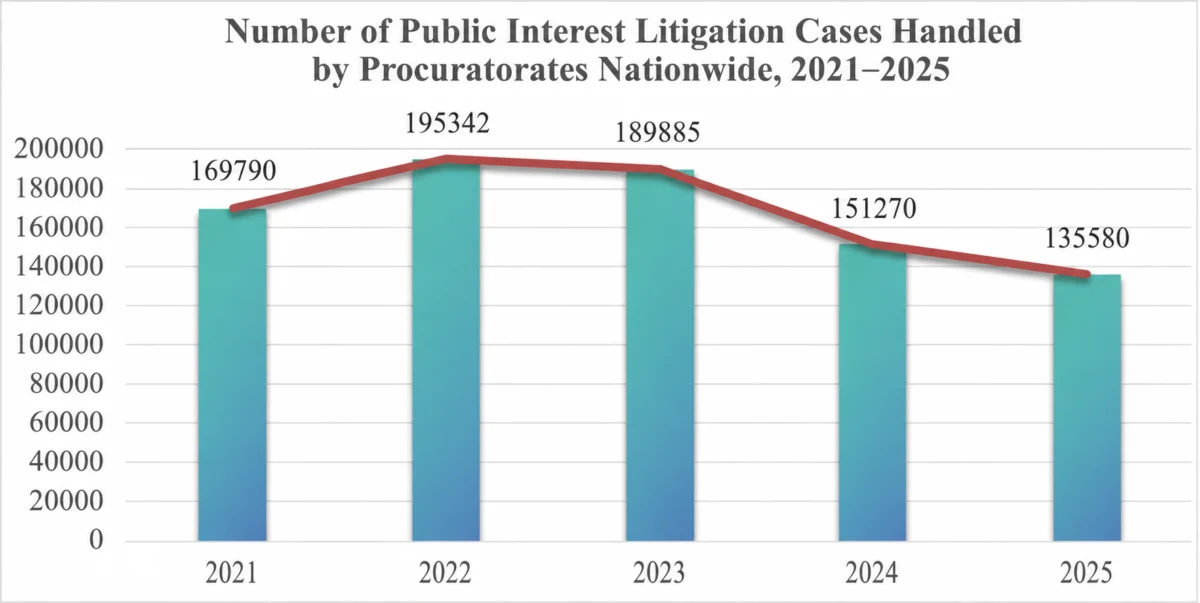
The Standing Committee of the National People’s Congress recently released the second reading draft of the Procuratorate Public Interest Litigation Law, marking a significant milestone in the formalization of one of the most dynamic components of China’s judicial system. This legislative development follows years of pilot programs and incremental adjustments to existing procedural laws, signaling a move toward a standalone, comprehensive framework for how the People’s Procuratorate—China’s state organ for legal supervision—initiates and manages cases in the public interest. As the draft moves toward finalization, the legal community and international observers are scrutinizing the text for its implications on administrative accountability, corporate liability, and its potential extraterritorial application to foreign entities.
The Unique Role of the People’s Procuratorate
To understand the weight of this new legislation, it is essential to define the role of the Procuratorate within the Chinese constitutional order. Unlike a standard prosecutor’s office in a common law system, the Chinese Procuratorate is a "legal supervision" organ. Its mandate extends beyond criminal prosecution to include the oversight of administrative agencies and the judiciary to ensure the "correct" implementation of the law.
The shift toward Procuratorate Public Interest Litigation (PPIL) gained significant momentum in 2018. Following the establishment of the National Supervision Commission, which took over the Procuratorate’s traditional role in investigating official corruption, the Procuratorate pivoted to prioritize four core areas: criminal case handling, civil supervision, administrative supervision, and public interest litigation. PPIL has since become a cornerstone of the agency’s identity, allowing it to act as a guardian of national and societal interests in areas where individual citizens or anemic civil society groups might struggle to litigate against powerful actors.
Historical Context and the Evolution of PPIL
The roots of the PPIL system lie in the early 2000s, a period marked by heightened public frustration over recurring mass-harm scandals. High-profile incidents involving environmental degradation, toxic food safety violations (such as the 2008 melamine milk scandal), and pharmaceutical failures exposed the limitations of traditional litigation. While Chinese law technically allowed for mass cases, the hurdles were often insurmountable for private citizens. These challenges included the high cost of litigation, the complexity of gathering evidence in industrial pollution cases, and a general wariness from the central government regarding organized citizen movements.

A timeline of the system’s development reveals a steady progression:
- 2015: The National People’s Congress authorized a two-year pilot program for the Procuratorate to initiate public interest lawsuits in select regions.
- 2017: Based on the pilot’s success, the Civil Procedure Law and the Administrative Procedure Law were amended to formally grant the Procuratorate the power to file public interest cases.
- 2018-2023: The scope of PPIL was expanded through various judicial interpretations and special laws to include areas like personal information protection, heroes’ and martyrs’ protection, and work safety.
- 2024-2026: The drafting of a standalone "Procuratorate Public Interest Litigation Law" began to consolidate these scattered authorities into a single, cohesive statute.
Statistical Analysis: The "Litigation" Paradox
Recent data from 2025 provides a clear picture of the scale of PPIL operations in China. During that year, the Procuratorate handled a staggering 135,580 public interest cases. However, a closer look at the data reveals a "litigation paradox": the vast majority of these cases never actually reach a courtroom.
Of the 135,580 cases handled in 2025, lawsuits were filed in only 7,305 instances. This means that approximately 94.6% of cases were resolved through "pre-litigation" procedures. This is largely due to the structure of Administrative PPIL, which accounts for roughly 91% of the total caseload. Under this system, the Procuratorate is required to first issue "procuratorial recommendations" to administrative agencies, notifying them of legal violations or failures to perform duties. In the vast majority of cases, agencies choose to rectify the issue immediately to avoid the professional and political embarrassment of being sued by another state organ.
Civil PPIL cases, while representing a smaller fraction of the total volume, are significantly more likely to proceed to a full trial. These cases typically target private enterprises or individuals for torts that impact the public interest, such as large-scale environmental damage or the sale of counterfeit medicine.
The Scope of Article 3: Defined Categories of Protection
The second reading draft of the law, specifically in Article 3, delineates the fields in which the Procuratorate is authorized to act. This list has expanded incrementally over the last decade, reflecting the state’s evolving priorities. The current draft categorizes these into three distinct zones:

Shared Administrative and Civil Jurisdictions
The Procuratorate can pursue both government agencies (for failure to supervise) and private actors (for the underlying harm) in the following areas:
- Environmental and resource protection
- Food and drug safety
- Work safety
- Protection of the rights and interests of vulnerable groups (e.g., the elderly, disabled, and children)
- National defense and the rights of military personnel
- Cultural heritage and relic protection
- Ethnic unity (a relatively new addition to the legislative scope)
Administrative-Only Jurisdiction
Certain areas are strictly focused on the government’s management of state assets. These include:
- Loss of state-owned assets
- Transfer of state-owned land-use rights
Civil-Only Jurisdiction
In these areas, the Procuratorate typically targets private entities for conduct that harms the broader public:
- Monopolistic conduct and unfair competition
- Large-scale violations of labor rights and interests
- Personal information protection (privacy violations)
- Infringement upon the name, image, or reputation of heroes and martyrs
The Controversy of Article 51 and Extraterritoriality
One of the most debated aspects of the new draft is Article 51, found in the supplemental provisions. The article states: “The people’s procuratorates may lawfully initiate public interest litigation against foreign organizations and individuals that carry out unlawful conduct that infringes on our nation’s lawful interests or societal public interest.”
This provision has sparked concern among international legal analysts and foreign chambers of commerce. Some observers argue that Article 51 could be interpreted as a "catch-all" clause that allows the state to bypass the specific categories listed in Article 3 when the defendant is a foreign entity. Critics suggest this could turn PPIL into a tool for economic coercion or political signaling, especially given the vague definitions of "national interest" and "societal public interest."

However, legal experts like Jeremy Daum of China Law Translate suggest a more nuanced interpretation. It is highly probable that the rest of the law’s procedural requirements still apply to foreign defendants. Article 51 is likely intended to clarify that foreign status provides no immunity from PPIL, rather than creating a separate, less-restricted legal track for foreigners. Under this view, a foreign company would still only be liable if their conduct fell within the specific categories of Article 3 and met the threshold of harming the public interest.
Defining the "Public Interest"
A central challenge for the Chinese judiciary has been defining what constitutes a "harm to the national interest or societal public interest." To prevent the system from being overwhelmed by minor disputes, the Procuratorate has issued guiding cases to clarify the threshold.
Generally, for a case to qualify as "public interest," the harm must be:
- Widespread: Affecting an indeterminate number of people rather than a specific individual.
- Significant: Involving a breach of law that the relevant administrative agencies have failed to address.
- Irreparable or systemic: Where traditional private litigation is insufficient to remedy the harm or prevent future occurrences.
In cases involving "ethnic unity" or "heroes and martyrs," the definition of public interest leans more toward the protection of social stability and state-sanctioned historical narratives. These areas are more subjective than environmental or food safety metrics, leading to concerns about the potential for arbitrary enforcement.
Implications for Global Business and Governance
The formalization of the PPIL Law has several major implications for both domestic and international stakeholders. For local Chinese governments, the law increases the pressure for administrative transparency and diligence. The high rate of compliance with procuratorial recommendations suggests that the threat of litigation is an effective tool for ensuring that local bureaus do not overlook environmental or safety regulations in favor of local economic growth.

For foreign businesses operating in China, the law introduces a new layer of compliance risk. While China already has robust administrative and criminal penalties for violations of food safety or environmental laws, the PPIL system adds a civil liability component that can be initiated by the state. A foreign firm could find itself facing a lawsuit not just from an individual victim, but from the Procuratorate, which possesses far greater resources and investigative powers.
Furthermore, the inclusion of "monopolistic conduct" and "personal information protection" in the civil scope of PPIL aligns with China’s broader regulatory crackdown on the tech sector. Multinational corporations must ensure their data handling practices and market strategies are beyond reproach, as they are now subject to a specialized legal watchdog tasked specifically with protecting the "public interest."
Conclusion and Future Outlook
As the 2nd reading draft of the Procuratorate Public Interest Litigation Law undergoes final review, it is clear that China is committed to a state-led model of public interest protection. By empowering the Procuratorate to act as the primary litigant for societal harms, the state has created a system that prioritizes administrative correction over protracted courtroom battles.
While the system has proven effective in addressing industrial pollution and food safety, its expansion into more ideological and extraterritorial domains remains a point of international concern. The final version of the law will be a decisive indicator of whether China intends to use PPIL primarily as a tool for domestic governance and environmental stewardship, or as a broader instrument of state power in the global arena. For now, the legal community awaits the final text, which will provide the definitive rules for this powerful and unique judicial mechanism.

 Reynand Wu
 Nila Kartika Wati