Layla Zulfa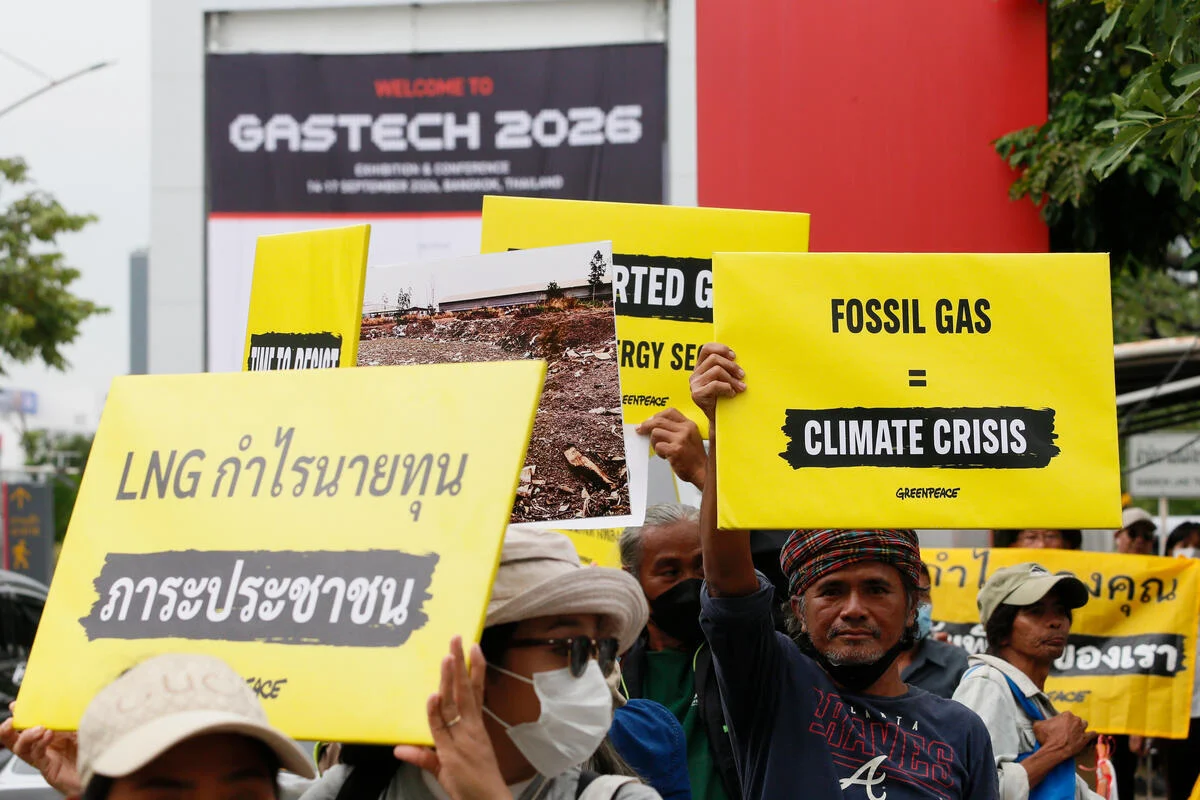
BANGKOK, THAILAND (September 17, 2026) – As titans of the energy sector, leading hyperscalers, and government ministers convene in Bangkok for the prestigious AixEnergy Summit at Gastech 2026, Greenpeace East Asia has issued a grave alert. The environmental organization warns that the burgeoning demand for artificial intelligence (AI) is being met with a dangerous reliance on fossil gas, a strategy that poses significant risks to global climate targets and disproportionately impacts vulnerable communities.
The summit, a pivotal gathering for the global energy industry, is currently witnessing intense discussions surrounding the exponential growth of AI and its substantial energy requirements. Industry leaders are actively promoting a narrative that positions natural gas as an "indispensable baseline" power source, crucial for averting a hypothetical AI energy crisis. However, Greenpeace contends that this framing is a high-risk gamble, serving as a pretext for locking in decades of fossil fuel infrastructure.
The AI Energy Conundrum: A Looming Infrastructure Lock-in
The explosive growth of AI is undeniably driving an unprecedented surge in energy demand. Global capital expenditure for AI-driven data centers is projected to exceed a staggering US$700 billion in 2026, according to an analysis by PwC [1]. This escalating demand has become a critical point of contention, with energy majors and technology giants leveraging the situation to advocate for expanded fossil gas and liquefied natural gas (LNG) infrastructure. Greenpeace East Asia’s analysis of the discussions at Gastech 2026 reveals what it describes as critical flaws in the industry’s approach to powering the next generation of compute capacity.
Greenpeace’s Critique of the Industry’s Approach
Greenpeace highlights several key concerns regarding the proposed solutions for powering the AI boom:
- False Dichotomy: The narrative pushed by industry players often presents a false choice between enabling AI growth with fossil gas or facing an energy blackout. Greenpeace argues that a robust transition to renewable energy sources is not only feasible but essential.
- Infrastructure Lock-in: The investment in new multi-decade fossil gas and LNG infrastructure, justified by AI demand, risks hindering the transition to cleaner energy sources and prolonging the use of polluting fuels.
- Ignoring Renewable Potential: The significant potential of renewable energy sources like solar and wind, particularly in regions like Southeast Asia, is being overlooked or downplayed in favor of fossil fuel solutions.
- Impact on Frontline Communities: The expansion of fossil fuel infrastructure often disproportionately affects local environments, air quality, and the livelihoods of communities living near these facilities.
A Call to Action: Prioritizing Renewables and Strict Procurement
In response to these concerns, Greenpeace is urging hyperscalers, chipmakers, energy developers, and governments to immediately cease using AI expansion as a justification for new gas infrastructure. The organization advocates for stringent measures to ensure that the digital revolution is powered by clean energy.
Specifically, Greenpeace demands that technology companies enforce rigorous 100% renewable energy requirements across their entire supply chains and data networks. This includes scrutinizing and mandating the energy sources used by their suppliers, data center hosts, and manufacturing partners.
Voices from the Frontlines: Regional Perspectives on the AI Energy Challenge
The concerns raised by Greenpeace resonate deeply across the Asia Pacific region, a global epicenter for AI infrastructure development.
Yeonho Yang, Senior Climate & Energy Campaigner at Greenpeace East Asia, articulated the urgency of the situation: "Asia cannot afford to let its digital growth pull the plug on its energy transition. Tech giants like Nvidia, Microsoft, and Google claim to be climate leaders and point to their net-zero targets, yet they are turning a blind eye as their suppliers and data center hosts construct massive gas plants to fuel compute power. From East Asian semiconductor hubs to Southeast Asian data center clusters, powering AI with fossil gas is a total climate failure. This is no longer a matter of voluntary targets. Policymakers must mandate 100% renewable procurement across big tech’s supply chains, and block energy suppliers from exploiting AI power demand to lock in new LNG infrastructure."
In Thailand and across Southeast Asia, communities are already grappling with the escalating impacts of the climate crisis, including severe floods and heatwaves. Manun Wongmasoh, Climate and Energy Campaigner at Greenpeace Thailand, expressed the frustration felt by many: "In Thailand and across Southeast Asia, communities are already suffering the frontline impacts of extreme weather, facing severe flood and heat impacts driven by the climate crisis. Watching utility companies and tech firms lock our energy systems into decades of gas under the badge of AI progress is deeply frustrating. Gas is not a transition fuel—it drives climate disruption. Southeast Asia has abundant solar and wind potential that can power our digital future safely. The energy for tomorrow’s technology must be built on 100% clean, renewable systems."
The implications extend to Australia, a nation poised to host COP31, the upcoming global climate negotiations. Joe Rafalowicz, Head of Climate and Energy at Greenpeace Australia Pacific, underscored the missed opportunity: "The impacts of the climate crisis are escalating: As Australia takes the reins of global climate negotiations at COP31, it should be leading the region in phasing out coal and gas exports so we have a chance at avoiding the most extreme impacts of a hotter world—not opening up new gas projects to power hyperscale data centres running AI applications. Prolonging the life of polluting fossil fuels simply puts the profits of big tech and gas corporations ahead of communities and the natural world. It is indefensible. AI data centres should run on 100% renewable energy no matter where they are located, not serve as an excuse to fast-track new gas and keep polluting."
The Asia Pacific: A Hotspot for AI Expansion and Energy Risks
The Asia Pacific region finds itself at the nexus of the global AI infrastructure boom. East Asia is a powerhouse in semiconductor manufacturing, with Taiwan and South Korea leading in advanced node production, accounting for approximately three-quarters of global capacity. Concurrently, Southeast Asia, encompassing countries like Malaysia, Thailand, Indonesia, Vietnam, and the Philippines, has attracted substantial data center investments, estimated to reach USD 35.08 billion by 2031 according to Arizton [4].
This rapid expansion, coupled with the proposed reliance on fossil gas for energy, presents a multifaceted threat to the region:
- Environmental Degradation: The construction and operation of fossil fuel infrastructure can lead to habitat destruction, water pollution, and land degradation.
- Air Quality Deterioration: Burning fossil fuels releases harmful pollutants into the atmosphere, contributing to respiratory illnesses and other public health problems. Greenpeace Korea’s health impact assessment of a proposed semiconductor cluster LNG power plant in Yongin highlighted significant health risks [5].
- Community Disruption: Projects often involve land acquisition and can disrupt traditional livelihoods, particularly for indigenous and rural communities.
- Climate Change Acceleration: The continued extraction and burning of fossil fuels directly contribute to greenhouse gas emissions, exacerbating the climate crisis and its associated extreme weather events. Reports from CREA and Greenpeace East Asia on electronics industry electricity consumption in Taiwan underscore the significant emissions footprint [6].
The Urgency of Transition: A Shifting Energy Landscape
The discussions at Gastech 2026 come at a critical juncture for global energy policy. While the energy industry grapples with the demands of emerging technologies, regulators and environmental advocates are pushing for a more sustainable path. Reports suggest that regulators are being urged to accelerate their efforts as the AI surge reshapes energy markets [2]. Meanwhile, energy project development continues, with some industry leaders expressing optimism about new supply opportunities fueled by high prices [3].
However, the environmental imperative remains clear. The rapid build-out of data centers and the increasing power demands of AI necessitate a swift and decisive shift towards renewable energy solutions. Organizations like Greenpeace are not only calling for a halt to new fossil fuel infrastructure but are also advocating for robust policy frameworks that mandate renewable energy procurement and hold corporations accountable for their environmental impact. The call for a ban on data centers near residential areas in Southeast Asia, as highlighted by Greenpeace Southeast Asia [7], reflects growing local concerns about the proximity and impact of these energy-intensive facilities. Similarly, Greenpeace Australia Pacific’s report "Energy Vampires" points to the significant energy drain of AI data centers in Australia [8].
The AixEnergy Summit at Gastech 2026 serves as a crucial platform for charting the future of energy. The decisions made today regarding the power sources for the AI revolution will have profound and lasting implications for the global climate, the environment, and the well-being of communities worldwide. The challenge lies in balancing technological advancement with environmental responsibility, ensuring that the pursuit of innovation does not come at the cost of a habitable planet.
Additional Materials & Resources:
- Greenpeace East Asia Report: "Powering the Future: The Case for 100% Renewable Energy for AI" (forthcoming)
- CREA & Greenpeace East Asia Analysis: "The Carbon Footprint of the Digital Frontier: Emissions from Data Centers and AI" (March 2026)
Notes to Editors:
The AixEnergy Summit at Gastech 2026 is a premier global forum bringing together leaders from the energy industry, technology sector, and government to discuss the future of energy. This year’s summit places a significant focus on the intersection of energy demand and the rapid growth of artificial intelligence.
References:
[1] PwC, Global Data Centre Outlook (September 2026)
[2] Energy Connects, Regulators Urged to Move Faster as AI Surge Now Shapes Energy Markets (September 2026)
[3] Yahoo Finance, Baker Hughes CEO Sees No ‘Slowdown’ in Energy Projects, Says High Prices Could Spur New Supply: ‘Full Steam Ahead’ (September 2026)
[4] Arizton, Southeast Asia Data Center Market Investment to Reach USD 35.08 Billion by 2031 (August 2026)
[5] Greenpeace Korea, Health Impact Assessment of the Proposed Yongin Semiconductor Cluster LNG Power Plant (April 2026)
[6] Center for Research on Energy and Clean Air (CREA) & Greenpeace East Asia, Health Impact Assessment of Electronics Industry Electricity Consumption in Taiwan (March 2026)
[7] Greenpeace Southeast Asia, Civil society calls for ban on data centres near residential areas (July 2026)
[8] Greenpeace Australia Pacific, Energy Vampires: The AI Data Centres Draining Australia (May 2026)
Media Contact:
Yujie Xue, International Communications Officer, Greenpeace East Asia, +852 5127 3416, [email protected]


 Raul Delapena Setiawan
 Neng Nana