Nana Muazin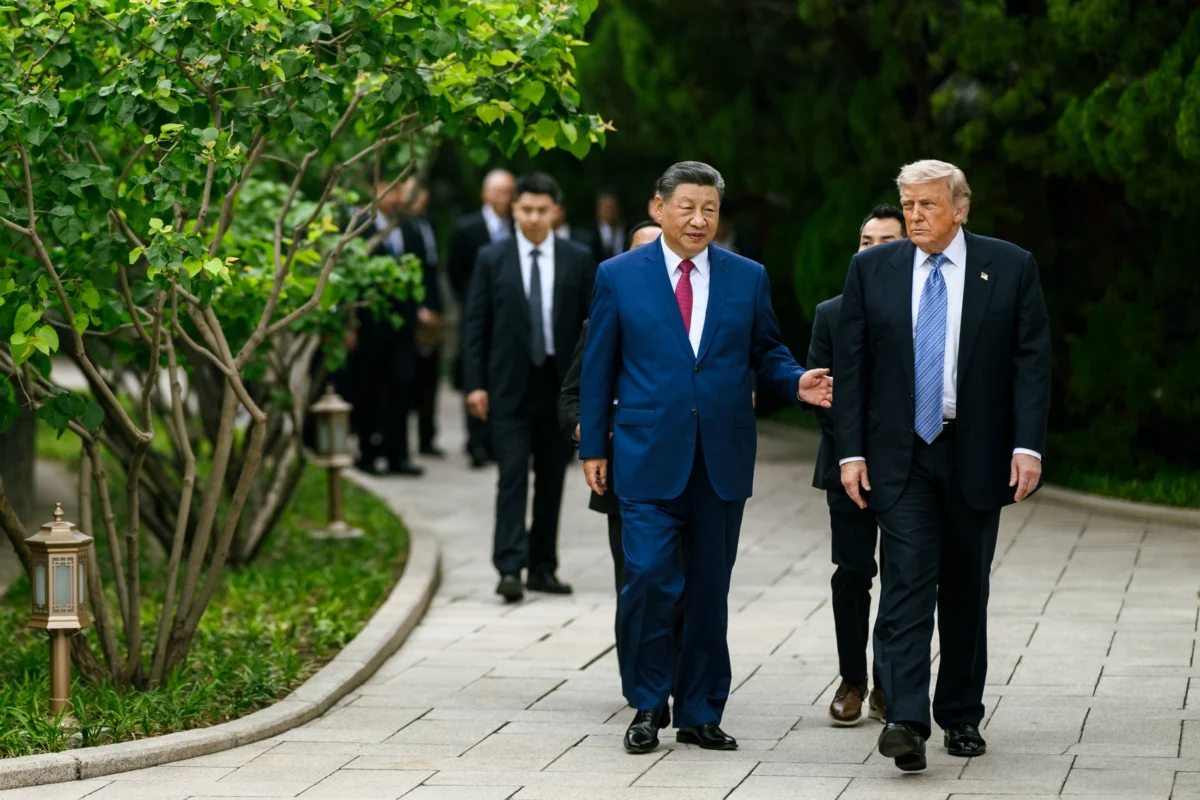
Beijing, China – China on Tuesday unequivocally declared its opposition to what it termed "illegal" unilateral sanctions imposed by the United States on Iranian airlines, a forceful rebuke that comes mere days before a highly anticipated summit between US President Donald Trump and Chinese leader Xi Jinping. The Chinese foreign ministry’s statement directly countered remarks made by US Treasury Secretary Scott Bessent, who had threatened severe punitive measures against entities supporting Iran’s aviation sector, vowing to "shut down" Iranian airlines globally.
The diplomatic spat highlights deepening fissures between Washington and Beijing on critical geopolitical issues, particularly concerning Iran. On Monday, Treasury Secretary Bessent, in a televised interview with CNBC, issued a stark warning: "All the Iranian airlines will be shut down around the world in a matter of days under the weight of American sanctions." He further elaborated on the punitive reach of these measures, stating, "If they land, you cannot provide them with fuel, you cannot provide them with landing services, you cannot sell them tickets or you will be knocked out of the dollar system." This aggressive stance is a cornerstone of the Trump administration’s broader "maximum pressure" campaign designed to cripple Tehran’s economy and force a recalibration of its regional and nuclear policies.

The Escalating US Sanctions Campaign Against Iran
The United States has a long history of imposing sanctions on Iran, particularly since the 1979 Islamic Revolution, with measures intensifying over concerns about its nuclear program, ballistic missile development, and alleged support for terrorism. Under the Trump administration, this policy significantly escalated following the US withdrawal from the Joint Comprehensive Plan of Action (JCPOA), commonly known as the Iran nuclear deal, in 2018. Since then, Washington has progressively reimposed and expanded sanctions targeting key sectors of the Iranian economy, including oil, banking, shipping, and increasingly, aviation.
The stated rationale behind targeting Iran’s aviation sector is to prevent its use for illicit activities, such as transporting weapons, military personnel, and sensitive materials to proxy groups or conflict zones across the Middle East. US officials have repeatedly accused Iranian airlines, including the national carrier Iran Air and others like Mahan Air (which has been sanctioned for years), of facilitating these operations, thereby undermining regional stability and international security.

This month saw a significant broadening of these measures, with the Treasury Department announcing sanctions on "all remaining Iranian airlines" that had not previously faced such penalties. Crucially, these sanctions also target entities outside Iran that provide material support to the country’s aviation industry. Secretary Bessent’s threats underscore the extraterritorial reach of US sanctions, leveraging the dominance of the US dollar in global financial transactions. The warning that any entity providing services to Iranian airlines would be "knocked out of the dollar system" is a powerful deterrent, effectively threatening to cut off access to the vast majority of international trade and finance. This mechanism of secondary sanctions aims to coerce third-country companies and governments into complying with US foreign policy objectives, regardless of their own national interests or international legal interpretations.
China’s Firm Opposition and Strategic Motivations
Beijing, a vital economic partner and diplomatic backer of Tehran, wasted no time in condemning the US threats. Chinese Foreign Ministry spokesman Guo Jiakun, addressing a regular news conference, stated, "China consistently opposes illegal unilateral sanctions that lack a basis in international law or authorisation from the UN Security Council." This statement reflects a long-held principle in Chinese foreign policy, which often champions multilateralism and the authority of the United Nations in international affairs, while criticizing unilateral actions that bypass these frameworks.

China’s opposition is rooted in several strategic and economic considerations. Economically, China is Iran’s largest trading partner and a significant consumer of Iranian oil, despite the existing US sanctions. While the exact figures are often opaque due to the sanctions regime, China has historically purchased substantial volumes of Iranian crude, often at discounted prices, to fuel its rapidly growing economy. This energy trade is strategically vital for China, which seeks diverse energy sources to ensure its energy security and reduce reliance on any single supplier or region. Disrupting this trade through US secondary sanctions directly impacts China’s economic interests and its ability to conduct independent foreign policy.
Diplomatically, China views US unilateral sanctions as an infringement on national sovereignty and a destabilizing factor in global governance. Beijing has consistently advocated for diplomatic solutions and dialogue in resolving international disputes, contrasting sharply with Washington’s punitive approach. Furthermore, supporting Iran against what China perceives as overreaching US influence aligns with Beijing’s broader efforts to promote a multipolar world order and challenge the unipolar dominance of the United States. China has also historically played a role in negotiations concerning Iran’s nuclear program, often advocating for engagement and compromise.
The timing of China’s strong rebuke is particularly noteworthy, coming just ahead of the high-stakes summit between President Trump and President Xi. This demonstrates Beijing’s unwillingness to compromise on what it considers fundamental principles or vital national interests, even in the context of delicate high-level diplomatic engagements. It signals to the US that despite ongoing trade negotiations and other points of contention, China will not passively accept US unilateralism when it impacts its strategic partners or challenges its view of international law.

The Wider US-Iran Conflict and Regional Instability
The backdrop to these escalating economic threats is a profound and dangerous state of heightened conflict between the United States and Iran, which intensified dramatically in late February 2026. This period saw US-Israeli strikes targeting key Iranian figures, including the country’s supreme leader and senior military officials. While details of these specific strikes remain partially under wraps, the impact on regional stability was immediate and severe. Such high-profile assassinations represented a significant escalation, pushing the long-simmering proxy conflicts and tensions into a more overt and perilous phase.
Tehran’s immediate and strategic response was to threaten and subsequently implement actions aimed at blocking the Strait of Hormuz. This narrow waterway, located between Iran and Oman, is a critical chokepoint through which approximately one-fifth of the world’s total oil consumption, and a substantial portion of global liquefied natural gas (LNG), passes daily. Any disruption to traffic in the Strait of Hormuz has immediate and dramatic implications for global energy markets, causing oil prices to surge and threatening the stability of the world economy. Iran’s actions underscored its capacity to retaliate and inflict economic pain on a global scale, directly linking the regional conflict to international economic stability.

The conflict has not remained confined to direct US-Iran confrontation. It has spread, exacerbating existing tensions and drawing in various regional actors across the Middle East. Proxy battles in Yemen, Iraq, Syria, and Lebanon have seen increased activity, with various groups aligning with either Iranian or US-backed factions. This regional diffusion of conflict further complicates diplomatic efforts, raises the specter of miscalculation, and creates a volatile environment where a localized incident could rapidly spiral into a wider conflagration. The targeting of Iranian airlines, if successful in crippling their operations, could be seen by Tehran as yet another act of economic warfare, potentially provoking further retaliatory measures beyond the financial sphere.
The US-China Summit: A Tense Diplomatic Backdrop
China’s defiant statement regarding Iranian sanctions adds a complex and potentially contentious layer to the upcoming summit between President Trump and President Xi, scheduled to begin on Thursday. The summit, widely anticipated to address a myriad of pressing issues including trade imbalances, intellectual property rights, and technological competition, now faces the added strain of significant disagreement on US foreign policy implementation.

Just a day prior to Bessent’s outspoken interview, the US Treasury Secretary had met with Chinese Vice Premier He Lifeng for economic talks, ostensibly laying groundwork for the leaders’ meeting. While the specifics of their discussions were not fully disclosed, it is highly probable that the US stance on Iran and its "maximum pressure" campaign, including its impact on third countries like China, was a topic of conversation. Bessent’s subsequent public declaration, emphasizing the severity of sanctions and the threat of exclusion from the dollar system, can be interpreted as a deliberate move to reinforce US resolve and exert pressure on China ahead of the summit.
For President Trump, securing Chinese cooperation on international issues, including potentially reining in Iran, has been a recurring theme. However, China’s firm stance indicates a clear divergence of interests and principles. The summit, therefore, will not merely be a platform for bilateral trade discussions but also a crucial test of the ability of the world’s two largest economies to manage their geopolitical differences, especially when those differences involve allies and strategic rivals in volatile regions. The outcome of these discussions on Iran, even if not formally part of the main agenda, will be closely watched as an indicator of the broader trajectory of US-China relations.
Implications for Global Commerce and Diplomacy

The implications of this diplomatic standoff extend far beyond the immediate context of US-Iran relations or the US-China summit. Treasury Secretary Bessent’s explicit threat to "knock out of the dollar system" any entity found assisting sanctioned Iranian airlines underscores the immense power of the US financial infrastructure. The US dollar’s role as the world’s primary reserve currency and the dominant currency for international trade and finance gives Washington unparalleled leverage. This ability to weaponize financial access forces global companies, banks, and even governments to choose between complying with US sanctions or risking severe financial penalties, including being cut off from the global financial system. This creates a difficult operating environment for international businesses and can lead to significant economic disruption for countries that maintain ties with sanctioned entities.
China’s robust opposition, however, also highlights a broader international debate about the legitimacy and effectiveness of unilateral sanctions. Many nations, including several European powers, express discomfort with the extraterritorial application of US law and the potential erosion of national sovereignty. China’s stance resonates with countries that seek to diversify their financial systems and reduce their vulnerability to US financial coercion. This could further accelerate discussions on developing alternative payment mechanisms or bolstering regional currencies to circumvent the dollar system, though such initiatives face considerable hurdles.
Looking ahead, the tension over Iran is likely to remain a significant flashpoint in US-China relations. While both nations have an interest in avoiding a full-blown economic or military confrontation, their divergent approaches to international law and global power dynamics suggest continued friction. For Iran, the tightening noose of sanctions, particularly on its aviation sector, will further isolate its economy and exacerbate hardship for its citizens. This increased pressure could lead to unpredictable responses from Tehran, potentially escalating the conflict further if its leadership feels it has nothing left to lose. The world watches keenly as these geopolitical giants navigate a complex web of economic interests, diplomatic principles, and regional rivalries, with profound implications for global stability and the future of international governance.

 Muslim
 Siti Muinah