Siti Muinah
Hong Kong police have re-arrested three individuals on suspicion of sedition, an offense under the city’s national security legislation, following their initial apprehension outside Prince Edward MTR station. The arrests occurred on the seventh anniversary of a contentious 2019 incident where police stormed MTR trains during pro-democracy protests. The latest detentions underscore the ongoing sensitivity surrounding events of that period and the stringent application of national security laws in the Special Administrative Region.
The trio, comprising two men and one woman aged between 33 and 79, were initially arrested on the evening of August 31, 2026, as they gathered near the Prince Edward MTR station. Authorities stated the arrests were made by the National Security Department on suspicion of "doing an act that has a seditious intention with a seditious intention."

Official statements released on Saturday, September 5, 2026, detailed the grounds for the arrests. Police indicated that they observed individuals outside the station holding bouquets and chanting "seditious slogans." The statement further alleged that those arrested were "suspected of spreading false information," as well as engaging in acts that "attack and smear the government and the police force."
This re-arrest on sedition charges brings renewed attention to the controversial "831 incident" of August 31, 2019, a date that has become a focal point for lingering grievances and differing narratives surrounding the 2019 anti-extradition bill protests.
Chronology of the ‘831 Incident’ and Subsequent Events
The events of August 31, 2019, unfolded amidst escalating tensions and widespread street demonstrations across Hong Kong. On that particular evening, following hours of intense clashes between protesters and riot police in various districts, police forces entered the Prince Edward MTR station. Numerous eyewitness accounts and video footage captured police, some wielding batons, storming onto station platforms and entering MTR train carriages.
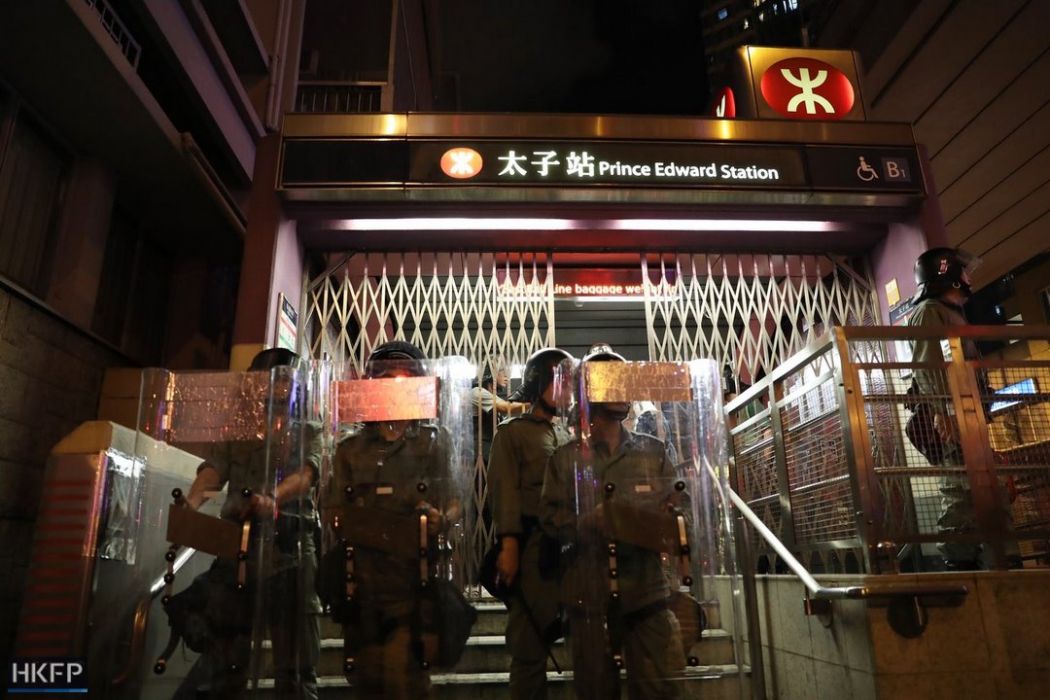
During the operation, officers were observed pepper-spraying individuals inside train cars, and reporters and medics were reportedly prevented from accessing the scene. The actions of the police at Prince Edward station quickly became a flashpoint, fueling public anger and distrust.
Following the incident, the MTR Corporation initially closed several stations, including Prince Edward, citing safety concerns. Official accounts from the Hong Kong Police Force and the government maintained that the police operation was a necessary response to escalating violence and vandalism by protesters. However, discrepancies in the number of injuries reported and the perceived lack of transparency surrounding the events led to widespread speculation and the emergence of unverified rumors, most notably allegations of civilian deaths.
A police watchdog, the Independent Police Complaints Council (IPCC), later conducted a probe into the 2019 protests. While the IPCC largely cleared the police of wrongdoing, its findings faced considerable criticism from civil society groups and some international observers who questioned the council’s independence and the extent of its investigatory powers.

Official Stance and Sedition Charges
The Hong Kong government has consistently sought to counter narratives that suggest excessive force or wrongdoing by the police during the 2019 protests. In their statement following the August 31, 2026, arrests, authorities explicitly addressed the "831 incident," asserting that it was "a lie manipulated by persons with ulterior motives to spread lies, attack the HKSAR Government and smear the Police Force."
The re-arrests on sedition charges highlight the government’s determination to prosecute acts deemed to undermine public order and government authority. Sedition is an offense under Hong Kong’s domestic security law, enacted in 2020, which carries a maximum penalty of seven years imprisonment upon conviction. The broader National Security Law (NSL) for Hong Kong, imposed by Beijing in 2020, has been used to prosecute a wide range of offenses, including secession, subversion, terrorism, and collusion with foreign forces. While sedition is technically an offense under the pre-NSL colonial era ordinance, its enforcement has been intensified in the post-NSL era, often overlapping with provisions of the NSL.
Background of the Arrested Individuals
Local media reports have identified one of the arrested individuals as Virginia Fung, a former pro-democracy district councillor who served from 1994 to 2007. Fung was previously convicted and imprisoned in 2006 for rental allowance fraud, a conviction that subsequently disqualified her from holding public office again. The identities of the other two arrested individuals have not been widely reported. The age range of the arrestees, from 33 to 79, suggests a diverse group of individuals potentially united by their concerns or memories of the 2019 events.

Broader Implications and Context
The re-arrests underscore the persistent political climate in Hong Kong, where expressions of dissent, particularly those referencing past protest movements, are increasingly scrutinized under national security laws. The "831 incident" remains a sensitive topic, representing for many a symbol of state overreach and a turning point in the city’s political landscape. For the authorities, it is framed as a necessary response to public disorder, and any attempts to revive or reinterpret the event are viewed as seditious acts.
The application of sedition charges, even for acts that might appear to be symbolic remembrance or peaceful protest, signals a broad interpretation of what constitutes a threat to national security and public order. This approach has led to concerns among human rights advocates and legal professionals about the shrinking space for free expression and assembly in Hong Kong.
The arrests also occur within the context of Hong Kong’s ongoing efforts to bolster its legal framework for national security. In March 2024, Hong Kong passed its own homegrown national security law, known as Article 23 legislation, which further expanded the scope of offenses related to national security, including new offenses of treason, espionage, sabotage, and sedition. This latest arrest under the sedition charge predates the formal enactment of Article 23, but it demonstrates the continued focus on prosecuting acts deemed seditious under existing or newly strengthened legal provisions.

The legal ramifications for the three individuals could be significant, with sedition charges carrying substantial prison sentences. The case is likely to draw further international attention to Hong Kong’s human rights record and the ongoing impact of national security legislation on civil liberties. The government’s firm stance suggests a continued commitment to prosecuting perceived acts of dissent, while critics maintain that such actions stifle legitimate public discourse and political expression. The re-arrests serve as a stark reminder of the enduring legacy of the 2019 protests and the evolving legal and political landscape of Hong Kong.

 Basiran
 Reynand Wu