Iffa Jayyana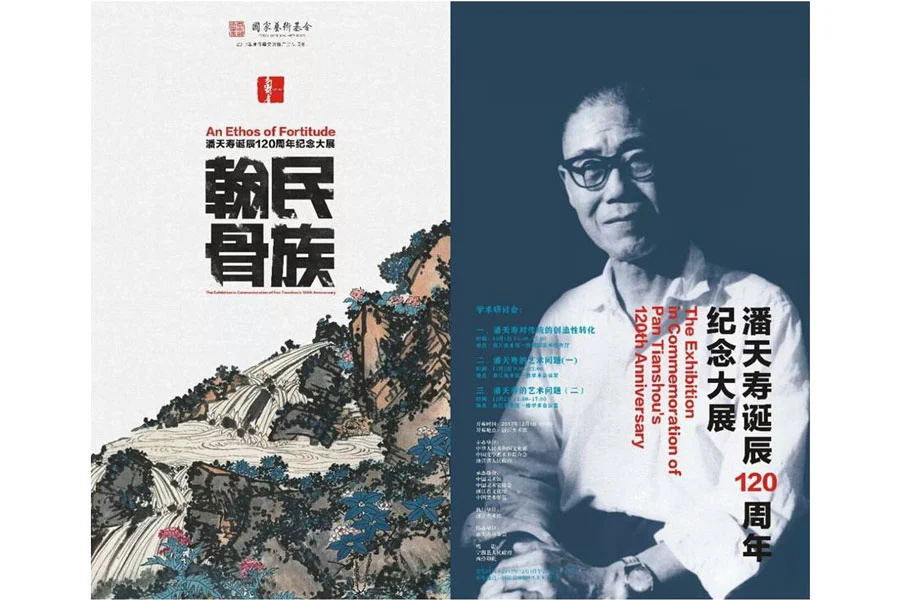
The Zhejiang Art Museum in Hangzhou, East China’s Zhejiang province, has unveiled An Ethos of Fortitude – The Exhibition in Commemoration of Pan Tianshou’s 120th Anniversary, a landmark exhibition that stands as the most extensive presentation of the renowned artist’s oeuvre to date. The exhibition, which commenced on Friday, showcases a remarkable collection of over 120 artworks and manuscripts, offering an unparalleled deep dive into the artistic legacy of one of China’s most influential painters and art educators of the 20th century.
Pan Tianshou, a native of Zhejiang province, was a towering figure in the realm of Chinese traditional painting, leaving an indelible mark not only through his masterful brushstrokes but also through his profound impact on art education. His illustrious career saw him hold pivotal leadership roles, including serving as the president of the Zhejiang Academy of Fine Arts, which is now known as the China Academy of Art. Furthermore, his influence extended to national art circles as the vice-president of the China Artists Association and he also held the esteemed position of vice-president of the Xiling Seal Engravers Society, underscoring his multifaceted contributions to the arts.
A Monumental Tribute to a 20th-Century Master
The sheer scale of An Ethos of Fortitude is a testament to Pan Tianshou’s enduring significance. The exhibition’s curation emphasizes the breadth and depth of his artistic output, spanning various genres and periods of his prolific career. Visitors are presented with an opportunity to engage with his iconic ink wash paintings, characterized by their bold compositions, powerful brushwork, and profound symbolic resonance. Beyond his celebrated paintings, the exhibition also features a selection of his personal manuscripts, offering rare insights into his creative process, philosophical underpinnings, and pedagogical approaches. These documents provide a crucial window into the mind of a master, revealing the intellectual rigor and dedication that informed his artistic practice.
The choice of Hangzhou as the venue for such a significant exhibition is particularly fitting. Pan Tianshou’s deep roots in Zhejiang province, his birthplace, imbue the event with a sense of homecoming and local pride. The Zhejiang Art Museum, a prominent cultural institution, provides a fitting backdrop for this comprehensive retrospective, ensuring that the exhibition is accessible to a wide audience and can be experienced in a setting that respects and celebrates artistic heritage.
Pan Tianshou: A Life Dedicated to Art and Education
Born in 1897 in Ninghai County, Zhejiang province, Pan Tianshou’s artistic journey began at a time of immense social and political change in China. He witnessed the twilight of imperial rule and the dawn of the Republic, a period that profoundly shaped his worldview and artistic expression. His early education laid the groundwork for a lifelong commitment to the principles of traditional Chinese art, while his exposure to evolving societal currents encouraged him to infuse his work with a modern sensibility.
Pan’s association with the Zhejiang Academy of Fine Arts, an institution at the forefront of art education reform, was particularly formative. As its president, he championed a curriculum that sought to balance the study of classical Chinese art forms with the incorporation of modern artistic theories and techniques. His educational philosophy was rooted in the belief that art should not only be aesthetically pleasing but also intellectually engaging and morally uplifting. He stressed the importance of "learning from the ancients while also breaking new ground," a principle that guided his own artistic endeavors and inspired generations of students.
His leadership roles within national art organizations further cemented his status as a leading voice in the Chinese art world. As vice-president of the China Artists Association, he played a crucial role in shaping the direction of contemporary Chinese art, advocating for artistic freedom and cultural exchange. His involvement with the Xiling Seal Engravers Society, a venerable institution dedicated to the art of seal carving, highlighted his mastery and appreciation for the intricate craftsmanship and symbolic depth inherent in this traditional art form.
Chronology of a Creative Force
The exhibition’s extensive collection allows for a chronological exploration of Pan Tianshou’s artistic development. Early works might showcase his foundational training and adherence to classical aesthetics, while later pieces would reveal his mature style, characterized by its audacious compositions and expressive power. Key periods in his life and career, such as his tenure at the Zhejiang Academy of Fine Arts and his engagement with major artistic movements, are likely to be represented through specific thematic sections within the exhibition.
For instance, a significant portion of the exhibition might be dedicated to his iconic depictions of birds and flowers. Pan Tianshou’s approach to these subjects was far from conventional. He often employed exaggerated perspectives, bold outlines, and a powerful, almost sculptural rendering of form. His eagles, for example, are not merely representations of the majestic bird but embody a spirit of resilience and strength, reflecting the artist’s own unwavering character. Similarly, his depictions of flowers and insects often carry deeper symbolic meanings, alluding to themes of natural harmony, the passage of time, and the ephemeral beauty of life.
The manuscripts on display can further illuminate this chronological progression. Early writings might reveal his theoretical explorations of artistic principles, while later correspondence or lecture notes could offer insights into his pedagogical strategies and his reflections on the role of art in a rapidly changing society. This juxtaposition of visual art and textual material provides a richer, more nuanced understanding of Pan Tianshou’s intellectual and creative trajectory.
Supporting Data and Artistic Innovations
Pan Tianshou’s artistic innovations can be understood within the broader context of 20th-century Chinese art. He was a pivotal figure in the movement to revitalize traditional Chinese painting, or guohua. At a time when Western art forms were gaining prominence, Pan remained steadfast in his commitment to the principles of guohua, while simultaneously pushing its boundaries.
His compositions often defied traditional spatial conventions, employing a unique interplay of emptiness and fullness, a concept known as kongbai in Chinese art. This deliberate use of negative space not only creates visual dynamism but also imbues his works with a sense of profundity and contemplation. His brushwork, too, was distinctive. He favored strong, decisive strokes, often described as "bones and flesh" of the painting, conveying a sense of vitality and structural integrity. This powerful execution, coupled with his daring use of color and ink, set him apart from many of his contemporaries.
The sheer number of pieces on display – over 120 – allows for a comprehensive analysis of his stylistic evolution. For example, by comparing works from different decades, one can observe how his bold lines became more pronounced, how his color palette expanded, or how his thematic concerns shifted in response to personal experiences and societal events. The inclusion of preliminary sketches or studies, if present, would offer invaluable insights into his meticulous preparation and the refinement of his ideas before committing them to the final artwork.
Official Responses and Cultural Significance
The opening of An Ethos of Fortitude has been met with considerable enthusiasm from art critics, scholars, and the general public. Museum officials and cultural administrators have lauded the exhibition as a crucial event for preserving and promoting China’s rich artistic heritage.
"This exhibition is not merely a retrospective; it is a vibrant celebration of Pan Tianshou’s enduring spirit and his profound contributions to Chinese art and culture," stated a spokesperson for the Zhejiang Art Museum. "By bringing together such a comprehensive collection of his works, we aim to provide visitors with a deep and immersive experience of his artistic genius and his unwavering dedication to the principles of artistic excellence and moral cultivation."
The exhibition also serves as a significant cultural event for Zhejiang province, reinforcing its identity as a cradle of artistic talent and a custodian of China’s cultural legacy. The large-scale presentation of Pan Tianshou’s work is expected to attract art enthusiasts and scholars from across China and potentially from abroad, contributing to Hangzhou’s reputation as a significant cultural destination.
Broader Impact and Implications
The implications of An Ethos of Fortitude extend beyond mere artistic appreciation. The exhibition plays a vital role in contemporary discourse surrounding cultural identity and artistic inheritance. In an era of globalization, where diverse artistic influences converge, Pan Tianshou’s steadfast commitment to his cultural roots, while simultaneously embracing innovation, offers a compelling model.
His emphasis on the ethical dimension of art and the cultivation of character through artistic practice remains relevant today. As art institutions and educators grapple with the evolving landscape of visual culture, Pan’s pedagogical philosophies, which championed discipline, intellectual rigor, and a deep understanding of artistic tradition, provide valuable lessons.
Furthermore, the exhibition’s success underscores the continued importance of preserving and promoting traditional Chinese art forms. By showcasing the mastery and artistic depth of masters like Pan Tianshou, such exhibitions help to ensure that these invaluable cultural treasures are not only remembered but also continue to inspire and inform contemporary artistic endeavors. The comprehensive nature of this exhibition, delving into both his finished works and his intellectual underpinnings, sets a high standard for future retrospectives of significant artistic figures, offering a holistic and deeply enriching experience for all who engage with it. The legacy of Pan Tianshou, embodied in this monumental exhibition, continues to resonate, offering a profound exploration of artistic fortitude and enduring cultural values.

 Asep Darmawan
 Rifan Muazin