Muslim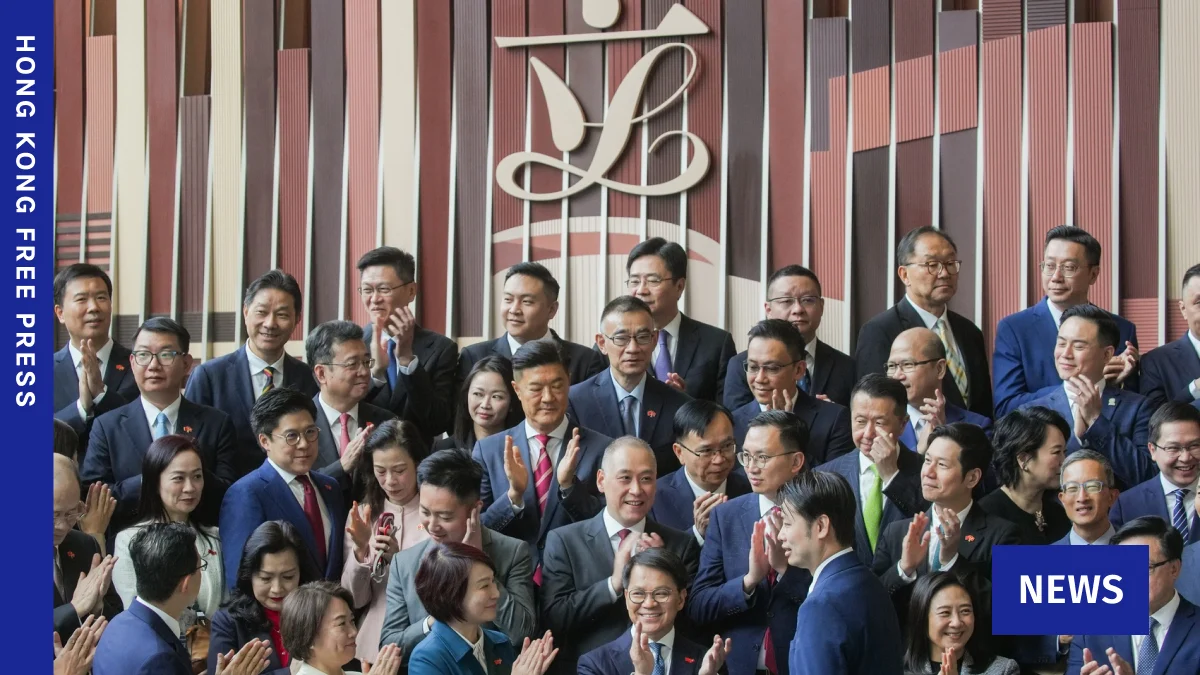
Hong Kong’s Legislative Council (LegCo) President, Starry Lee, has publicly defended the performance of lawmakers, asserting that their contributions extend far beyond recorded speeches in committee meetings. This statement comes in direct response to a recent media report that highlighted several legislators with minimal or no speaking contributions in certain committee sessions. Lee argues that such reports fail to capture the full spectrum of a legislator’s duties and could mislead the public about their effectiveness.
The controversy erupted following a front-page report by the newspaper Ming Pao, which revealed that at least 17 lawmakers had remained silent in some committee meetings during the previous month, with five of them having no speaking record in multiple committees. Among those identified were prominent figures such as Adrian Ho and Dominic Lee from the New People’s Party, and social welfare sector representative Grace Chan. The report also noted that while these lawmakers attended general plenary sessions, their engagement in smaller, topic-specific committees like transport, education, or security appeared limited based on speaking records.

A "Division of Labour" in Legislative Work
In an opinion piece published in Ming Pao on Monday, Legislative Council President Starry Lee directly addressed the media’s findings. She contended that the report’s focus on speaking records was a narrow interpretation of legislative work and did not account for the operational norms within the current LegCo. Lee specifically invoked the concept of a "division of labour" among members of the same political party, suggesting that this strategy is employed to enhance efficiency and avoid redundancy in discussions.
"Lawmakers with political party affiliations often divide tasks at plenary sessions and committee meetings, with different members making inquiries or speaking on different topics to avoid repetition," Lee explained in her Chinese-language article. She further elaborated that this practice is not only a common arrangement within the Legislative Council but also a "reasonable arrangement to increase legislative efficiency." This implies that when one member of a party addresses a particular issue or asks a specific question, other party members might refrain from speaking on the same matter to allow for a broader range of topics to be covered or to prevent lengthy and repetitive debates.

The rationale behind this approach, according to Lee, is rooted in the LegCo’s Rules of Procedure. She referenced a clause from 2017 that empowers the president or committee chair to curtail speeches deemed "irrelevant or tedious repetition." This rule, often utilized to prevent filibustering, also implicitly supports the idea that concise and targeted contributions are valued over sheer volume of speech. By dividing the speaking responsibilities, lawmakers can ensure that diverse perspectives are presented without unnecessary overlap, thereby streamlining the legislative process.
Beyond the Podium: The "Invisible Work" of Legislators
President Lee further argued that evaluating a lawmaker’s performance solely on their public speaking record is fundamentally flawed. She emphasized that a significant portion of their work is often "invisible" to the public but nonetheless crucial to their representative duties. This includes extensive engagement with government officials, stakeholders, and constituents.

"Legislators have to meet with stakeholders and residents on a daily basis, handle a large number of complaints and requests for assistance… and attend various official, industry, or community events," Lee stated. She characterized this "invisible work" as potentially "more arduous than speaking at meetings, which people can see." This encompasses a wide array of activities such as constituency outreach, attending community events, engaging in behind-the-scenes negotiations, and providing support to individuals and groups facing bureaucratic challenges. These tasks, while not always resulting in a recorded speech, are vital for understanding public sentiment, identifying pressing issues, and advocating for the needs of their constituents.
Lee urged the public to adopt a more nuanced approach to assessing legislative performance, advocating for an evaluation based on "quality, instead of quantity." This perspective suggests that the impact and effectiveness of a lawmaker’s contributions should be judged by their substance, relevance, and influence on policy, rather than the frequency of their public pronouncements.
Context of the "Patriots-Only" Legislature

The current composition of the Legislative Council is a direct result of the significant electoral overhaul implemented following the imposition of the Beijing-imposed national security law in 2020. This overhaul, which came into effect with the start of the eighth term of the LegCo on January 1, 2026, fundamentally reshaped Hong Kong’s political landscape. The primary objective of these reforms was to ensure that only individuals deemed "patriotic" – meaning loyal to Beijing – could hold public office.
This stringent vetting process has effectively eliminated opposition voices from the legislature. Prior to the overhaul, the LegCo featured a vibrant opposition bloc that played a critical role in scrutinizing government proposals and advocating for democratic reforms. The current LegCo, comprising 90 members sworn in on January 1, 2026, operates without any opposition members, a stark contrast to its previous iterations. Authorities have maintained that these changes are essential for maintaining the city’s stability and prosperity, arguing that a unified legislative body can better implement policies and foster economic growth. However, these reforms have also drawn widespread international criticism and concern regarding the erosion of democratic freedoms and the curtailment of political dissent in Hong Kong. Many prominent pro-democracy figures are currently incarcerated, living in self-imposed exile, or have withdrawn from public life.
Reactions from Lawmakers and Public Perception

In response to Ming Pao’s report, several lawmakers whose names were mentioned, or who were part of the group with limited speaking records, offered explanations. The prevailing sentiment among them was a desire to avoid repeating points already made by their colleagues. This aligns with President Lee’s explanation of a coordinated party strategy. For instance, Adrian Ho and Dominic Lee, both from the New People’s Party, are likely to have their contributions channeled through party representatives or specific policy advocates within the party. Similarly, Grace Chan, representing the social welfare sector, may have chosen to focus her efforts on behind-the-scenes advocacy or direct engagement with welfare organizations and beneficiaries, rather than public pronouncements in committee meetings.
The debate over speaking records raises broader questions about transparency and public accountability in the legislative process. While the "division of labour" argument offers a plausible explanation for the lack of individual speaking turns, it places a greater onus on the public to trust that this division is effectively and transparently managed. The absence of a vocal opposition further complicates this, as there are fewer independent voices to challenge the official narrative or highlight potential oversights in the legislative process.
The Legislative Council is currently observing its summer recess, approximately seven months after the commencement of the current term in January 2026. This period of hiatus provides an opportunity for reflection on the functioning of the legislature and the expectations placed upon its members.

The Broader Implications of Legislative Performance Metrics
The controversy underscores a persistent challenge in assessing the effectiveness of elected officials: the difficulty in quantifying their contributions. While public speaking records and voting patterns are readily available metrics, they often fail to capture the full scope of legislative work. The emphasis on "patriotic" governance, as implemented through recent electoral reforms, adds another layer of complexity. In a legislature where consensus among pro-Beijing members is expected, the traditional checks and balances provided by robust debate and dissent are largely absent.
The argument for "invisible work" highlights the importance of qualitative assessment, but this can be subjective and difficult for the public to verify without greater transparency. The challenge for Hong Kong’s Legislative Council, particularly in its current political climate, is to ensure that all forms of legislative work, whether visible or not, are conducted in a manner that genuinely serves the public interest and upholds principles of good governance. The debate initiated by Ming Pao’s report, and the subsequent defense by LegCo President Starry Lee, serves as a critical juncture for examining how legislative performance is understood and communicated to the citizens of Hong Kong. The coming months will likely see continued scrutiny of the LegCo’s operations as it navigates its mandate under the new political framework.


 Evan Lee Salim
 Nana
Nana