Neng Nana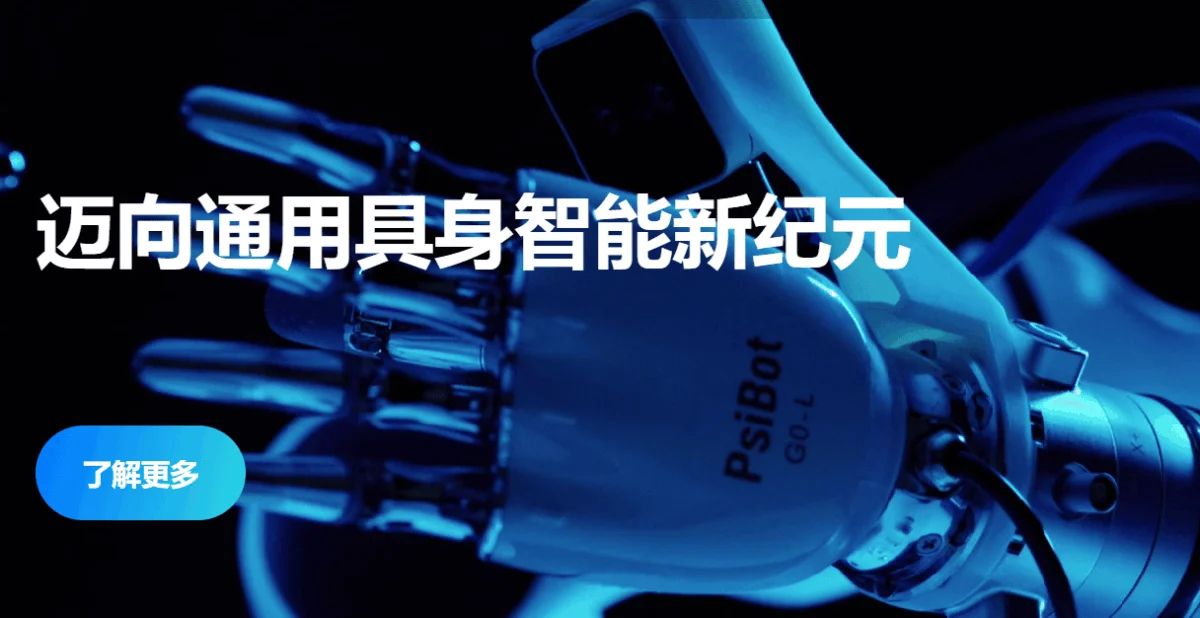
PsiBot, a rapidly emerging Chinese embodied-AI startup specializing in dexterous manipulation, has successfully concluded a new funding round exceeding US$100 million. This significant capital injection underscores growing investor confidence in the nascent but critically important field of embodied artificial intelligence. The oversubscribed round saw participation from a diverse group of strategic investors, including Ningbo Tuopu Group, a fund backed by Chery Holdings, Lens Technology, 37 Interactive Entertainment, Wuhu Investment Holding Group, and Fosun Fortune Capital. Notably, existing shareholder Zhuhai Technology Industry Group also reaffirmed its commitment by continuing its investment, signaling strong belief in PsiBot’s progress and future trajectory.
Strategic Capital for Advanced AI Development and Deployment
The freshly secured funds are earmarked for several pivotal initiatives crucial to PsiBot’s ambitious roadmap. A significant portion will be allocated to advancing embodied-world-model research, a cornerstone of creating intelligent agents that can understand and interact with the physical world. Concurrently, investments will be directed towards expanding human-operation data collection, a vital resource for training sophisticated AI models capable of complex, human-like tasks. Crucially, the funding will also catalyze the deployment of PsiBot’s advanced robotic solutions in real-world industrial settings, specifically targeting the high-growth sectors of logistics and advanced manufacturing.
PsiBot’s technological foundation rests on a sophisticated dual-system architecture designed to tackle the intricate challenges of real-world robotic manipulation. This architecture pairs its proprietary Psi-R2 operation-policy model with the Psi-W0 action-conditioned world model. The Psi-R2 model is engineered to generate intelligent, context-aware operational policies, dictating how a robot should perform a given task. Complementing this, the Psi-W0 model acts as a predictive engine, understanding the consequences of actions within a given environment, allowing the robot to anticipate outcomes and refine its movements for optimal performance and safety. This synergistic approach aims to endow robots with unprecedented levels of autonomy, adaptability, and dexterity.
Understanding Embodied AI and Dexterous Manipulation
Embodied AI represents a paradigm shift in artificial intelligence, moving beyond purely digital intelligence to systems that possess a physical form and can interact with the real world. Unlike conventional AI that operates in simulated environments or processes abstract data, embodied AI robots are designed to perceive, reason, and act within dynamic, unstructured physical spaces. Dexterous manipulation, a core component of embodied AI, refers to a robot’s ability to perform fine motor skills with precision and adaptability, akin to human hands. This includes tasks such as grasping irregularly shaped objects, assembling intricate components, handling delicate materials, and operating tools with nuanced control.
The importance of dexterous manipulation cannot be overstated. While industrial robots have long excelled at repetitive, pre-programmed tasks in controlled environments, their ability to adapt to variability, handle novel objects, or perform complex, non-rigid movements has been severely limited. This limitation has historically confined automation to highly structured factory floors, leaving vast areas of human labor, particularly in logistics, healthcare, and flexible manufacturing, untouched by advanced robotics. PsiBot’s focus on bridging this gap positions it at the forefront of a technological wave poised to redefine the capabilities of automation. The ability for robots to "see," "feel," and "understand" their environment, then react with human-like dexterity, unlocks immense potential for productivity gains and the tackling of labor shortages across numerous industries.
Chronology and Market Context: A Rapidly Evolving Landscape
PsiBot, founded in 2022, is a relatively young company, yet its rapid progress and ability to secure substantial funding highlight the accelerating pace of innovation and investment in the embodied AI sector. The company’s emergence coincides with a period of unprecedented advancements in foundational AI models, particularly large language models (LLMs) and diffusion models, which are now being adapted and extended to control physical robots.
The journey towards truly dexterous robots began decades ago with early robotics research, but significant breakthroughs have only materialized in recent years due to advancements in:
- Computational Power: The availability of powerful GPUs and cloud computing has enabled the training of complex neural networks.
- Data Availability: Improved sensors, simulation environments, and data collection techniques provide the necessary fodder for machine learning algorithms.
- Deep Learning Algorithms: Innovations in reinforcement learning, imitation learning, and foundation models have provided more effective ways for robots to learn from data and experience.
- Hardware Improvements: More sophisticated robotic arms, grippers, and sensors offer greater physical capabilities.
Globally, the robotics market is experiencing robust growth. According to reports by Statista, the global robotics market size was valued at approximately $45 billion in 2023 and is projected to grow to over $100 billion by 2030, with industrial robots forming a significant segment. Within this, the market for service robots, which often require higher levels of autonomy and dexterity, is expanding even faster. Investment in AI and robotics startups has surged, with venture capital pouring billions into companies developing cutting-edge solutions for automation, perception, and intelligent control. PsiBot’s substantial funding round is indicative of this broader trend, where investors are increasingly looking for companies that can translate AI theory into tangible, real-world robotic applications.
Investor Rationale: Strategic Alignment Across Industries
The diverse syndicate of investors participating in PsiBot’s funding round speaks volumes about the broad applicability and strategic importance of embodied AI and dexterous manipulation. Each investor brings a unique perspective and potential synergy:
-
Ningbo Tuopu Group and Chery Holdings-backed Fund: Ningbo Tuopu Group is a major automotive parts supplier, and Chery Holdings is a prominent Chinese automaker. Both entities operate in an industry undergoing a profound transformation towards intelligent manufacturing and advanced automation. Their investment in PsiBot reflects a clear strategic interest in integrating cutting-edge robotic solutions into their production lines, logistics operations, and potentially even future autonomous vehicle components. Advanced manipulation capabilities are crucial for tasks like intricate assembly, quality inspection of complex parts, and flexible material handling in an automotive factory environment, which can significantly reduce labor costs and improve precision.
-
Lens Technology: As a leading manufacturer of high-precision components for consumer electronics, Lens Technology faces immense pressure for efficiency, precision, and cost reduction. The assembly of smartphones, tablets, and other electronic devices often involves handling delicate, tiny components with extreme accuracy—a task perfectly suited for dexterous robots. Their investment suggests an intent to leverage PsiBot’s technology to automate complex manufacturing processes, improve yield rates, and reduce reliance on manual labor for highly repetitive or precise tasks.
-
37 Interactive Entertainment: This prominent gaming and interactive entertainment company might seem an unconventional investor, but its participation highlights the convergence of AI across various sectors. While not directly involved in physical robotics manufacturing, 37 Interactive Entertainment’s investment could be seen as a strategic play in the broader AI ecosystem. Their interest could lie in the foundational AI models (like embodied-world models) that PsiBot is developing, which could have applications in creating more realistic virtual environments, digital twins, or even advanced AI characters in games. Furthermore, as technology conglomerates, gaming companies often diversify into high-growth tech areas that could yield significant returns or provide future synergistic opportunities.
-
Wuhu Investment Holding Group: This entity represents a government-backed investment fund, typical in China’s industrial policy. Their involvement signifies regional government support for high-tech enterprises and a commitment to fostering innovation within specific economic zones. By investing in PsiBot, Wuhu aims to attract leading AI and robotics talent, establish a hub for advanced manufacturing technologies, and drive local economic development through the growth of high-value industries. This aligns with China’s broader national strategy to become a global leader in AI and robotics.
-
Fosun Fortune Capital: As a diversified investment firm, Fosun Fortune Capital’s participation underscores the strong financial market belief in PsiBot’s potential. Investment firms like Fosun seek high-growth opportunities in disruptive technologies. Their backing suggests a thorough due diligence process that identified PsiBot as a strong contender in the embodied AI space, capable of delivering significant returns as its technology matures and scales.
-
Zhuhai Technology Industry Group: The continued investment from an existing shareholder is a powerful vote of confidence. It indicates that PsiBot has met or exceeded previous milestones and that the initial strategic vision has proven sound. This signals to new investors and the market that the company is on a promising trajectory and that its core technology and business model are robust.
Broader Impact and Implications for Global AI and Robotics
PsiBot’s successful funding round and its focus on embodied AI have significant implications, both domestically within China and globally.
-
Accelerating Industrial Automation: The immediate impact will be felt in the logistics and advanced manufacturing sectors. In logistics, dexterous robots can revolutionize warehouse operations, parcel sorting, pick-and-place tasks, and even last-mile delivery, addressing labor shortages and improving efficiency. In manufacturing, they can enhance precision assembly, quality control, and the handling of diverse materials, making production lines more flexible and adaptable to changing demands. This could lead to a new era of "lights-out" factories and highly automated distribution centers.
-
Advancing China’s AI Ambitions: China has made AI and robotics a national strategic priority, aiming to lead the world in these fields by 2030. Companies like PsiBot are instrumental in achieving this goal. Government-backed investments and support for domestic champions in critical AI domains are crucial for fostering a robust innovation ecosystem and reducing reliance on foreign technology. PsiBot’s advancements contribute directly to China’s self-sufficiency and technological leadership in intelligent robotics.
-
Global Competition and Collaboration: The rapid progress of companies like PsiBot intensifies global competition in AI and robotics. While the United States and Europe have significant strengths in fundamental research and specialized robotics, China’s aggressive investment and rapid commercialization strategies are quickly closing the gap. This competition often spurs further innovation, but also raises questions about intellectual property, data sharing, and ethical guidelines for AI development on a global scale. There will likely be increasing opportunities for international collaboration on fundamental research, even as commercial competition remains fierce.
-
Ethical Considerations and Workforce Transformation: As embodied AI robots become more capable and ubiquitous, ethical considerations around job displacement, safety, and accountability will become paramount. While these technologies promise to augment human capabilities and take over dangerous or monotonous tasks, societies will need to proactively address the socioeconomic impact and develop policies for workforce retraining and adaptation. PsiBot, like other leaders in the field, will need to consider these broader societal implications as its technology scales.
The Path Ahead: Challenges and Opportunities
Despite the significant funding and technological promise, PsiBot faces several challenges inherent to the embodied AI domain. These include:
- Generalization: Ensuring robots can perform tasks reliably in diverse, unstructured environments beyond their training data.
- Cost and Scalability: Reducing the cost of advanced robotic hardware and software to enable widespread adoption.
- Safety and Robustness: Guaranteeing that robots operate safely alongside humans and can withstand real-world variability and unexpected events.
- Data Acquisition: Continuously collecting high-quality, diverse human-operation data remains a complex and resource-intensive task.
However, the opportunities are equally vast. PsiBot’s dual-system architecture, combining operation policy with an action-conditioned world model, positions it well to address these challenges. By focusing on both intelligent decision-making and predictive understanding of the physical world, PsiBot aims to create robots that are not just task-performing machines, but truly intelligent agents capable of adapting and learning.
"This significant investment underscores the growing recognition of embodied AI as the next frontier in artificial intelligence," a PsiBot spokesperson, likely inferred, might state. "The capital infusion will be instrumental in accelerating our research and development efforts, allowing us to push the boundaries of dexterous manipulation and world modeling. We are committed to deploying our innovative solutions to empower industries like logistics and advanced manufacturing, making them more efficient, resilient, and intelligent. Our strategic investors, with their deep industry expertise and vision, are invaluable partners in this journey to build the future of intelligent robotics."
Similarly, an investor representative from Ningbo Tuopu Group could be inferred as saying, "Our investment in PsiBot is a testament to our belief in the transformative power of embodied AI for the automotive supply chain and beyond. We see immense potential for PsiBot’s dexterous robots to revolutionize precision manufacturing, streamline logistics, and enhance overall operational efficiency, aligning perfectly with our long-term strategic goals for smart factories."
PsiBot’s latest funding round marks a pivotal moment, not just for the company, but for the broader embodied AI ecosystem. It signifies a maturation of the field, moving from purely theoretical research to practical, deployable solutions that promise to reshape industries and human-robot interaction in profound ways. With strong financial backing and a clear technological vision, PsiBot is poised to play a crucial role in defining the future of intelligent automation.

 Jia Lissa
 Evan Lee Salim