Suro Senen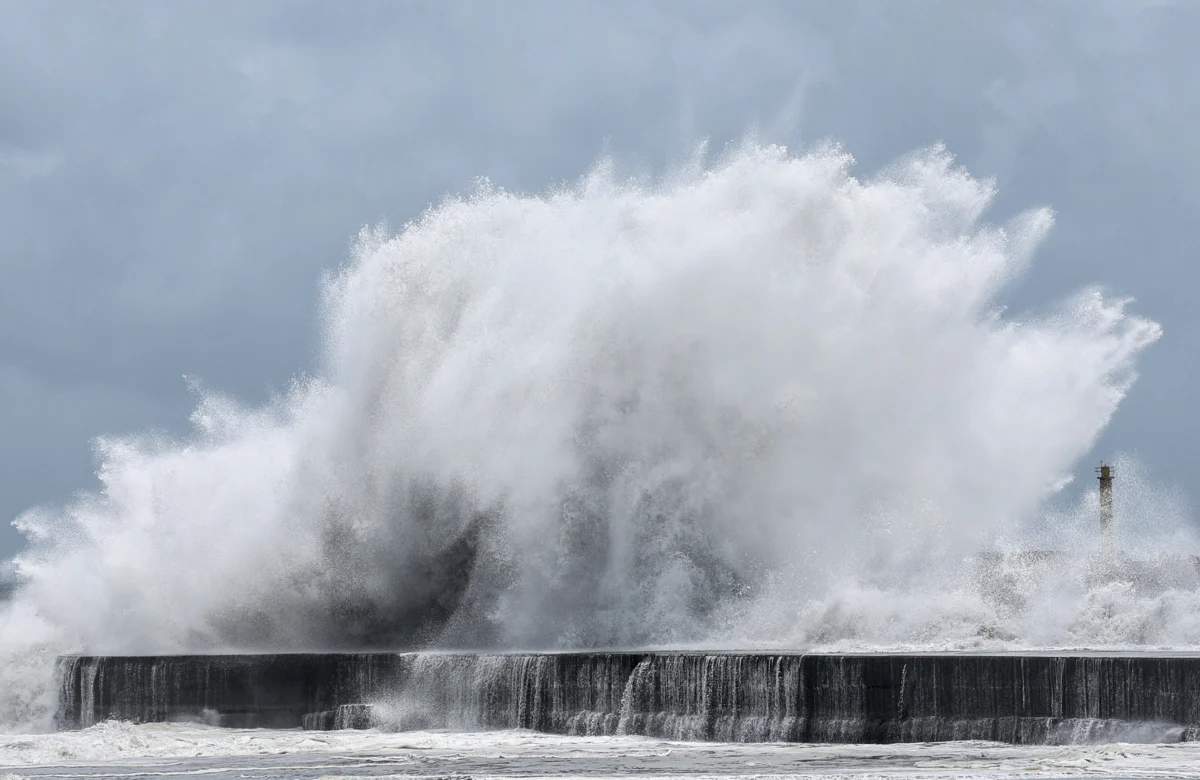
Typhoon Bavi was downgraded to a severe tropical storm on Sunday after making landfall in eastern China, where authorities had orchestrated the preemptive evacuation of nearly two million people from its projected path. The storm, which had previously unleashed its fury across Taiwan and Japan’s southwestern islands, prompted extensive preparedness measures across several Chinese provinces, reflecting a heightened awareness of extreme weather risks following a deadly week of storms in other parts of the country.
Initial Impact and Downgrade in Eastern China

Bavi made its initial landfall at approximately 11:20 PM local time on Saturday (1520 GMT) in Zhejiang province, a densely populated coastal region known for its vibrant economy and manufacturing hubs. The storm struck with formidable force, carrying sustained winds of 144 kilometres (90 miles) per hour upon impact, as reported by the state Xinhua news agency, citing the provincial meteorological observatory. The city of Yuhuan, situated within the core impact zone, bore the brunt of Bavi’s initial assault. National broadcaster CCTV detailed the immediate consequences, reporting "fierce winds and heavy rain, with rapid runoff forming on the ground and roadside trees being uprooted." Despite the intensity of the initial impact, there were no immediate reports of significant damage or casualties in China, a testament to the extensive and timely preparatory actions undertaken by local and national authorities.
By Sunday morning, around 5:00 AM, the China Weather Administration confirmed that Bavi’s intensity had significantly weakened, reclassifying it to severe tropical storm levels. The eye of the storm was subsequently tracked near Yiwu, a major commercial hub renowned for its international trade market. Forecasters anticipate Bavi will continue its trajectory northwestward, though warnings remained in place for continued strong winds, estimated at force 11 or around 108 kilometres per hour, and the potential for substantial rainfall. Zhejiang provincial officials had previously issued dire forecasts, predicting torrential rain across coastal regions, a high probability of flash floods, significant disruptions to transport networks, rivers overflowing their banks, and widespread inundation of agricultural land.
Unprecedented Preemptive Mobilisation and Evacuations

The Chinese government’s response to Typhoon Bavi was characterized by an extraordinary scale of preemptive action, underscoring a commitment to minimizing human and economic losses. As of Saturday morning, a staggering 1.72 million people had been successfully evacuated to designated safe zones across the affected regions. This massive logistical undertaking involved a multi-pronged approach to safeguard communities.
Ahead of the storm’s arrival, a comprehensive suspension of public life was enacted across Zhejiang province. This included the cancellation of classes for students, the cessation of work activities, the grounding of over 400 flights, and the suspension of dozens of train services, effectively bringing daily routines to a halt. Outdoor activities were strictly prohibited, and residents were urged to remain indoors. The government in Wenzhou, a sprawling metropolis of nearly 10 million people in Zhejiang, issued a powerful statement articulating the rationale behind such drastic measures: "The proactive, all-out mobilisation, which is sparing no effort or cost, is undertaken entirely to guard against the (worst-case) scenario." This reflects a strategic shift towards maximum precaution, learning from past disasters.
Visuals broadcast by CCTV showed residents diligently fortifying their properties, using planks to reinforce metal shutters protecting shops and meticulously taping windows to prevent shattering. These localized efforts complemented the broader governmental strategy. The forecast had warned of "exceptionally heavy rains" not only for eastern Zhejiang but also for northeastern Fujian province, another vulnerable coastal area. Beyond Zhejiang, the preparedness extended to other major urban centers. Torrential rain further north had already necessitated the evacuation of more than 100,000 people from their homes in Beijing. The capital’s Miyun Reservoir saw its water discharge flows ramped up in anticipation of potential floodwaters, a measure designed to create capacity for excess runoff. Additionally, state media reported that over 130,000 people had fled their homes in Fujian, and approximately 34,000 individuals from Shanghai’s coastal and high-risk areas were moved to safety, highlighting the extensive reach of the evacuation orders.

Bavi’s Destructive Path Across the Pacific and Asia
Before its encounter with the Chinese mainland, Typhoon Bavi had carved a destructive path across various parts of the Pacific and East Asia, demonstrating its formidable power and the widespread impact of such weather systems. The storm’s genesis saw it form as a super typhoon, initially slamming into Guam and the Northern Mariana Islands earlier in the week. Its immense strength at that stage caused widespread disruption, though specific casualty figures from these remote territories were not immediately available. As it traversed the vast expanse of the Pacific Ocean, Bavi gradually weakened, being downgraded to a typhoon before reaching the East Asian rim.
Northern Taiwan and Japan’s remote southwestern islands were the next to experience Bavi’s wrath. In Taiwan, the storm was initially feared to be the largest typhoon to strike the island in over three decades. While its strong-wind radius ultimately shrunk to 350 kilometres, mitigating the absolute worst-case scenario, the impact was still substantial. More than 14,000 people were evacuated from their homes in northern Taiwan, and hundreds of flights were cancelled, severely disrupting travel. The storm plunged over 170,000 households across the island into darkness due to power outages. Taiwan’s Central Weather Administration (CWA) had issued urgent warnings for "extremely torrential rain" across northern Taiwan and "dangerous waves" reaching up to 10 meters along the coast as Bavi skirted the island’s northern periphery. Jason Cheng, a CWA forecaster, provided crucial updates on the storm’s evolving characteristics. Similarly, in Japan, thousands of households and facilities across Okinawa, particularly in the Miyako region, suffered power losses as the typhoon battered the archipelago’s southwestern islands.

The Philippines also endured severe consequences from Bavi’s influence. The death toll from landslides and other incidents triggered by heavy rains, driven by the typhoon, tragically rose to 18, with most fatalities occurring on the southern island of Mindanao. The widespread disruption forced nearly 11,000 people across the archipelago to flee their homes, seeking refuge from the intensifying conditions. Maritime activities were severely curtailed, with dozens of ports remaining closed and 313 vessels compelled to seek shelter, highlighting the significant economic and social impact on a nation heavily reliant on sea transport.
Broader Context: Climate Change and El Niño’s Influence
The intensity and wide-ranging impact of Typhoon Bavi are increasingly being viewed within the broader context of global climate patterns and climate change. Scientists have repeatedly warned that warmer oceans act as a potent fuel for tropical storms, intensifying their power and adding greater moisture content, which translates into heavier rainfall. This year, the European Union’s Copernicus Marine Service reported that oceans experienced their hottest June on record, setting a concerning precedent and raising fears of fresh temperature highs in the months ahead. This unprecedented ocean warmth provides an ample energy source for the formation and strengthening of typhoons like Bavi.

Adding another layer of complexity to the meteorological landscape is the return of El Niño, a natural climate phenomenon characterized by the warming of Pacific Ocean surface temperatures. Typically occurring every two to seven years, El Niño cycles can significantly influence global weather patterns, often leading to more intense or frequent tropical cyclones in certain regions, while potentially suppressing them in others. Its presence this year further amplifies the conditions conducive to powerful and water-laden storms, making regions like East Asia particularly vulnerable. The confluence of record ocean temperatures and the El Niño phenomenon underscores the urgent need for enhanced climate resilience and disaster preparedness strategies worldwide.
Analysis of Implications and Future Outlook
The comprehensive response to Typhoon Bavi in China, particularly the mass evacuations and widespread suspensions of activity, highlights a sophisticated and robust disaster management system. The lack of immediate casualties in the wake of such a powerful storm’s landfall in a densely populated region is a significant achievement, indicating the effectiveness of early warning systems, public communication campaigns, and logistical coordination. However, the economic cost of such extensive shutdowns and evacuations, while necessary, is substantial, affecting commerce, transport, and daily life.

The broader implications of Bavi’s trajectory and impact across the region point to a future where extreme weather events may become more frequent and more intense. The human and economic toll in the Philippines, coupled with the previous deadly storms in southern and central China that claimed 39 lives and caused rivers to overflow and a reservoir to burst, serve as stark reminders of the ongoing challenges. These events necessitate not only improved immediate response mechanisms but also long-term strategies for climate adaptation, infrastructure resilience, and sustainable development. As Bavi continues its northwestward path, authorities remain vigilant, monitoring its remnants for lingering threats of heavy rainfall and localized flooding. The experience with Bavi reinforces the critical importance of international cooperation in climate science, disaster preparedness, and humanitarian aid to mitigate the escalating risks posed by a changing global climate.


 Sagoh
Sagoh
 Asro
Asro