Jia Lissa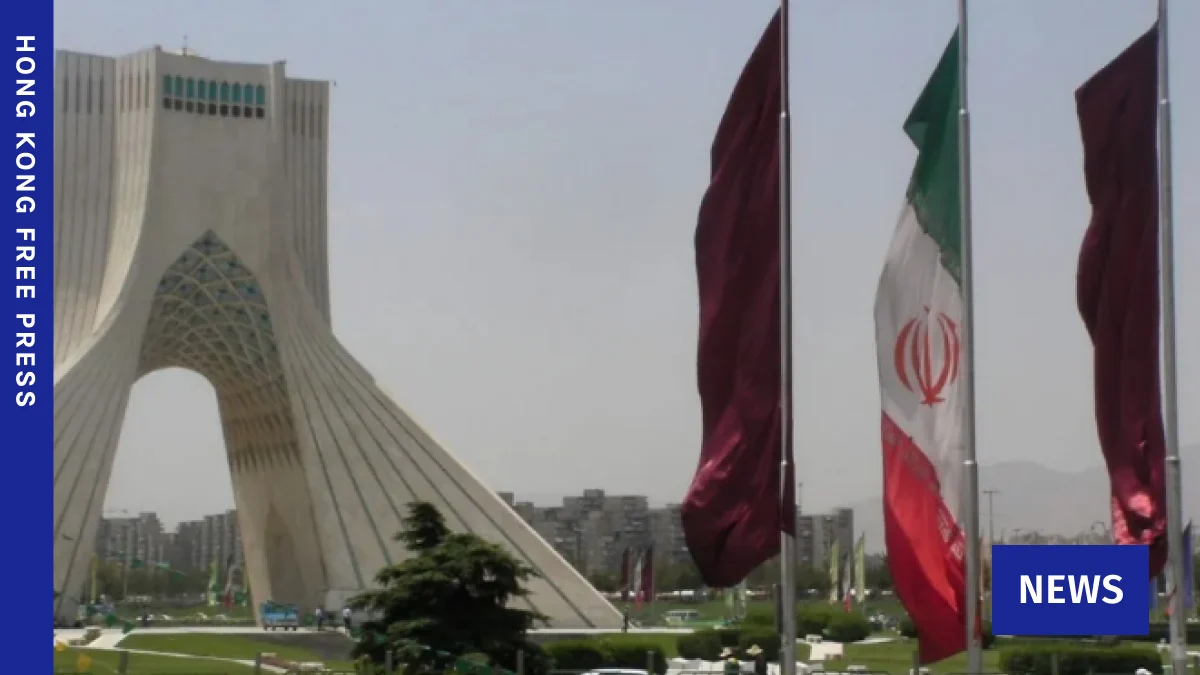
Beijing reiterated its firm stance against unilateral sanctions on Friday, asserting that "sanctions and pressure" are counterproductive to resolving the ongoing Middle East conflict, a direct challenge to Washington’s renewed calls for international cooperation, including from China, to economically isolate Iran. The statement came as the United States intensified its "maximum pressure" campaign against Tehran, a strategy that US President Donald Trump’s administration has vowed would "collapse" the Iranian regime, while Iran has defiantly labeled the measures as "economic terrorism" destined to fail, nearly six months into the re-escalated "war" of economic attrition.
Beijing’s Stance on Sanctions and Diplomacy
Speaking at a regular press briefing, Chinese foreign ministry spokesman Lin Jian addressed questions regarding US President Donald Trump’s threats and the broader American strategy. "Sanctions and pressure will not help resolve the issue," Lin Jian stated unequivocally, underscoring China’s long-held position on the efficacy and legality of such measures. He further elaborated on Beijing’s preferred approach, calling on "all relevant parties to take responsible measures and resolve the problem through political and diplomatic means." This statement reflects China’s consistent advocacy for multilateralism and adherence to international law in addressing complex geopolitical challenges.
The US push for economic pressure was robustly defended by US Treasury Secretary Scott Bessent, who has been instrumental in shaping and implementing the administration’s financial strategies against adversaries. When questioned by CNBC on whether the United States would exert pressure on China to align with the anti-Iran campaign, Bessent acknowledged the sensitivity of diplomatic exchanges, noting that "many conversations are best to have in private," but he pointedly urged Beijing "to get with the programme." This public call highlighted the US administration’s expectation of global solidarity in its efforts to curb Iran’s regional influence and nuclear ambitions.

In response to Bessent’s direct appeal, spokesman Lin reiterated China’s insistence on "responsible measures" for conflict resolution. He further articulated China’s principled opposition to the US approach, stating, "China opposes illegal unilateral sanctions that have no basis in international law and are not authorised by the UN Security Council." This declaration underscores a fundamental divergence in international relations philosophy between Washington and Beijing, with China consistently championing the authority of the United Nations and multilateral frameworks over unilateral state action.
The Genesis of "Maximum Pressure": A Chronology
The current economic standoff is rooted in a significant shift in US foreign policy regarding Iran. The landmark 2015 Joint Comprehensive Plan of Action (JCPOA), often referred to as the Iran nuclear deal, was a multinational agreement aimed at preventing Iran from developing nuclear weapons in exchange for sanctions relief. Signed by Iran, the P5+1 powers (China, France, Germany, Russia, the United Kingdom, and the United States), and the European Union, it was hailed as a diplomatic triumph.
- July 14, 2015: The JCPOA is signed in Vienna, marking a historic agreement after years of negotiations. It imposed strict limits on Iran’s nuclear program in return for the lifting of international sanctions.
- January 16, 2016: "Implementation Day" of the JCPOA. The International Atomic Energy Agency (IAEA) confirms Iran’s compliance, leading to the lifting of a significant portion of UN, US, and EU nuclear-related sanctions.
- May 8, 2018: US President Donald Trump announces the United States’ withdrawal from the JCPOA, fulfilling a key campaign promise. Trump criticized the deal as "the worst deal ever," arguing it did not adequately address Iran’s ballistic missile program or its regional destabilizing activities.
- August-November 2018: The Trump administration begins re-imposing a comprehensive set of sanctions on Iran, targeting its oil industry, banking sector, shipping, and other critical economic pillars. These "snapback" sanctions aimed to cut off Iran’s revenue streams.
- April 2019: The US designates Iran’s Islamic Revolutionary Guard Corps (IRGC) as a foreign terrorist organization, escalating pressure.
- May 2019: The US ends waivers that allowed several countries, including China, India, Japan, South Korea, and Turkey, to continue importing Iranian oil without facing US sanctions. This move aimed to bring Iran’s oil exports to zero. Iran, in response, begins to scale back some of its commitments under the JCPOA, citing the inability of European signatories to uphold their end of the deal due to US sanctions.
- Present Day: The "maximum pressure" campaign continues, marked by persistent diplomatic efforts by Washington to rally international support for isolating the Iranian economy, met with resistance from nations like China and ongoing efforts by European powers to preserve the JCPOA.
The Economic Impact and Global Repercussions
The US sanctions have had a profound and undeniable impact on the Iranian economy. Prior to the 2018 re-imposition of sanctions, Iran was exporting approximately 2.5 million barrels of oil per day (bpd). Following the tightening of sanctions, particularly the end of waivers in May 2019, estimates suggest Iran’s oil exports plummeted to as low as 200,000-400,000 bpd, a staggering reduction of over 80%. This drastic fall in oil revenue, which historically accounts for a significant portion of Iran’s government budget, has severely constrained the country’s finances.

The Iranian rial has depreciated significantly against major international currencies, leading to soaring inflation and a decline in purchasing power for ordinary citizens. The International Monetary Fund (IMF) projected Iran’s economy to contract substantially in the years following the sanctions, with estimates varying but consistently pointing to a deep recession. Shortages of essential goods, including medicines and medical equipment, have been reported, although the US maintains that humanitarian trade is exempt from sanctions. However, the complexities of financial transactions and the fear of secondary sanctions often deter international banks and companies from engaging in even permissible trade with Iran.
For China, a major energy consumer and long-standing trade partner of Iran, the US sanctions present a complex dilemma. China has historically been one of the largest buyers of Iranian oil. While Beijing has formally adhered to some international sanctions, it has consistently rejected unilateral US measures and has sought ways to maintain trade ties with Iran, often through non-dollar transactions or state-backed entities less vulnerable to US financial penalties. China’s continued engagement with Iran is driven by its energy security needs, its strategic interests in the Middle East, and its broader foreign policy principle of non-interference and opposition to extraterritorial application of national laws. This creates a friction point with the US, as Washington views China’s actions as undermining the effectiveness of its sanctions regime.
Official Responses and International Divisions
The responses from various international actors highlight a significant divide in how the Iranian issue is approached.
United States: The Trump administration’s "maximum pressure" strategy is predicated on the belief that severe economic hardship will compel the Iranian leadership to negotiate a new, more comprehensive deal that addresses not only its nuclear program but also its ballistic missile development and its support for regional proxy groups. Officials like Secretary Bessent argue that isolating Iran financially is the most effective non-military means to achieve these goals. They contend that the previous JCPOA was flawed because it did not sufficiently constrain Iran and allowed it to continue destabilizing the region.

China: Beijing’s consistent message, as articulated by Lin Jian, is that sanctions, particularly unilateral ones, are ineffective and often exacerbate tensions. China emphasizes the need for diplomacy, dialogue, and respect for international law and multilateral mechanisms, primarily the UN Security Council. China views the US withdrawal from the JCPOA as a breach of international commitments and a contributor to regional instability. Its reluctance to fully comply with US sanctions stems from its own economic interests and its broader challenge to US hegemony and the extraterritorial application of US law.
Iran: Tehran has vehemently rejected the US sanctions, labeling them "economic terrorism" designed to cripple its economy and force a regime change. Iranian officials, including Supreme Leader Ayatollah Ali Khamenei and President Ebrahim Raisi, have vowed resilience and have stated that Iran will not succumb to pressure. Iran has also responded by gradually reducing its compliance with certain JCPOA commitments, such as uranium enrichment levels and centrifuge numbers, arguing that it cannot be expected to uphold a deal when other parties, especially the US, have abandoned it and prevented its economic benefits.
European Allies (e.g., France, Germany, UK): While sharing US concerns about Iran’s regional activities and ballistic missile program, European powers largely opposed the US withdrawal from the JCPOA. They have consistently affirmed their commitment to the deal, viewing it as the best mechanism to prevent Iran from acquiring nuclear weapons. To counter the impact of US sanctions and incentivize Iran to remain compliant, European nations established the Instrument in Support of Trade Exchanges (INSTEX), a special purpose vehicle designed to facilitate legitimate trade with Iran without relying on direct financial transactions that could trigger US secondary sanctions. However, INSTEX’s effectiveness has been limited due to its narrow scope and the reluctance of European companies to risk US penalties. This demonstrates a clear transatlantic divergence on how best to manage the Iranian challenge.
Broader Impact and Implications
The ongoing US-China disagreement over Iran sanctions has significant implications for global diplomacy, international law, and regional stability.

Geopolitical Friction: The issue adds another layer of complexity to the already strained relationship between the US and China. Both nations are vying for influence on the global stage, and their differing approaches to Iran reflect broader ideological and strategic competition. China’s defiance of US sanctions can be seen as part of a larger effort to challenge the unipolar international order dominated by the US and promote a more multipolar world where UN-sanctioned actions hold precedence over national prerogatives.
International Law and Multilateralism: China’s repeated invocation of "international law" and "UN Security Council authorization" highlights a fundamental debate about the legitimacy of unilateral sanctions. If powerful nations can impose sanctions without international consensus, it risks eroding the authority of international bodies and setting a precedent that could destabilize the global legal framework. This also poses a challenge to the principles of free trade and economic sovereignty.
Middle East Stability: The "maximum pressure" campaign, coupled with Iran’s retaliatory measures, has contributed to heightened tensions in an already volatile Middle East. The risk of miscalculation and escalation remains ever-present, potentially drawing in regional powers and global actors. While the US aims to curtail Iran’s influence, critics argue that isolating Iran could make it more defiant and less amenable to negotiations, potentially pushing it closer to developing nuclear capabilities if the JCPOA completely collapses.
Future of the JCPOA: The fate of the Iran nuclear deal hangs in the balance. Without the economic benefits it promised, Iran has little incentive to fully comply. The European efforts to salvage the deal face immense challenges due to the overwhelming power of US sanctions. The divergence between the US, China, and Europe on this issue makes a unified international approach to Iran incredibly difficult, prolonging the crisis and increasing uncertainty.
In conclusion, China’s unequivocal rejection of US unilateral sanctions against Iran underscores a deep philosophical and strategic divide in international relations. While Washington insists on economic pressure as the primary tool to alter Iran’s behavior, Beijing advocates for diplomatic solutions and adherence to international law. This ongoing standoff not only impacts the future of Iran’s nuclear program and the stability of the Middle East but also serves as a crucial battleground in the broader geopolitical competition between the United States and China, shaping the contours of the global order for years to come.

 Nana Wu
 Lina Hope