Nana Wu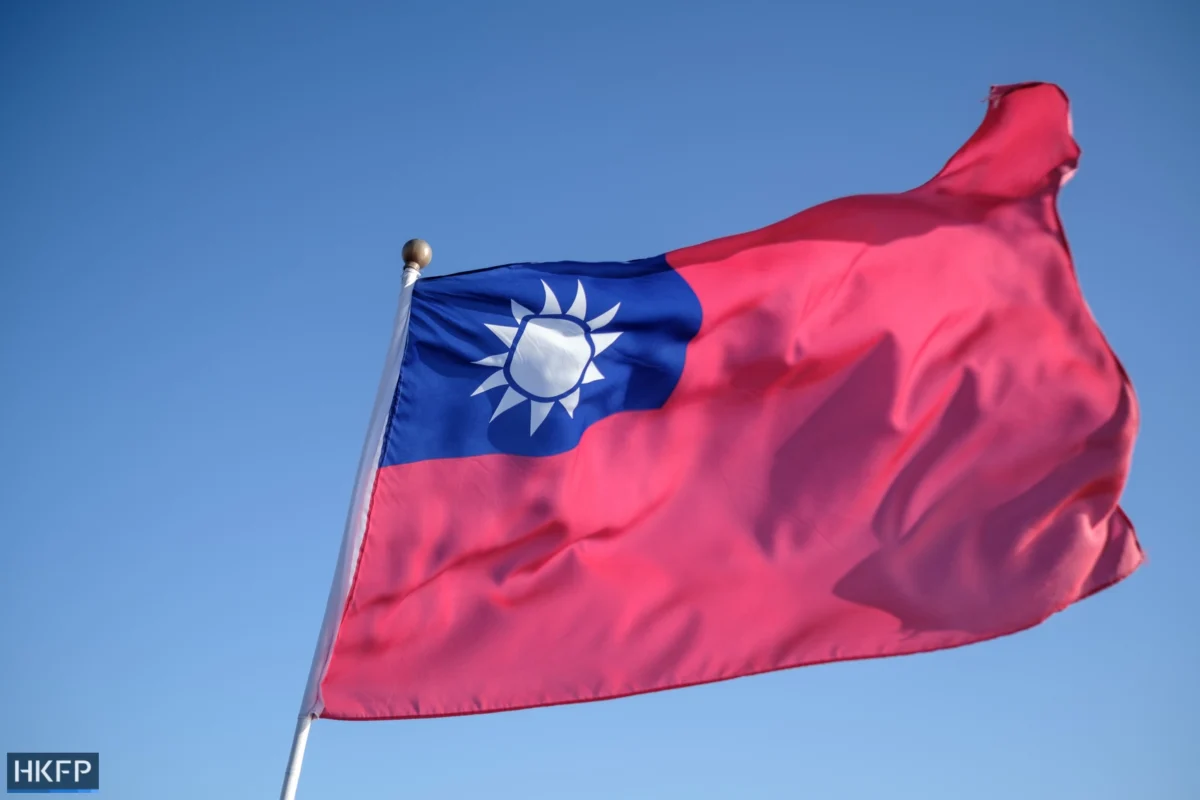
Taipei, Taiwan – Taiwan announced Friday it has deployed maritime assets to closely monitor two China Coast Guard (CCG) ships operating east of the self-governed island, marking a significant escalation in Beijing’s persistent efforts to assert its expansive claims over an increasingly vital area of the Western Pacific. This development follows a pattern of heightened Chinese maritime activity, which Taipei has consistently condemned as "provocative" and a thinly veiled form of "expansionism," further ratcheting up cross-strait tensions and raising concerns among regional and international observers.
The two CCG vessels were identified approximately 151 nautical miles (280 kilometers) east and 43 nautical miles northeast of Orchid Island, a small volcanic island off Taiwan’s southeastern coast. Taiwan’s Coast Guard Administration (CGA) reported that these Chinese ships were observed "stationary and drifting" and confirmed that their own vessels, including the patrol ship "Taipei," are actively engaged in continuous monitoring operations. The CGA explicitly labeled these Chinese patrols as "Pseudo-law enforcement," directly challenging Beijing’s narrative of conducting routine and legitimate operations within its claimed jurisdiction.
China, which views Taiwan as an integral part of its territory to be reunified with the mainland, by force if necessary, maintains that the waters surrounding the democratic island fall under its jurisdiction. This assertion is vehemently rejected by Taipei, which governs itself as an independent entity with its own democratically elected government, military, and maritime borders. The recent deployment of CCG ships to the eastern side of Taiwan represents a strategic expansion of Beijing’s "gray zone" tactics, moving beyond the more frequently contested Taiwan Strait and South China Sea to demonstrate its presence in an area historically considered less directly challenged by mainland forces.

The Contested Waters: A Deep Dive into Cross-Strait Dynamics
The ongoing maritime standoff east of Taiwan is deeply rooted in the complex and fraught relationship between Beijing and Taipei, a dynamic shaped by historical legacies, geopolitical ambitions, and differing interpretations of international law. China’s "One China" principle dictates that there is only one sovereign state under the name China, and Taiwan is an inseparable part of it. This principle forms the bedrock of Beijing’s foreign policy and its claims over Taiwan, leading to its unwavering stance that any maritime activities it conducts around the island are entirely within its sovereign rights.
Conversely, Taiwan, officially the Republic of China (ROC), asserts its sovereign independence, maintaining that the People’s Republic of China (PRC) has never exercised jurisdiction over it. Taiwan’s government operates under a democratic framework, holding regular elections and maintaining its own distinct identity. From Taipei’s perspective, the waters surrounding the island, including its Exclusive Economic Zone (EEZ), are its legitimate territory, and any unauthorized presence by foreign vessels, particularly those asserting jurisdiction, constitutes a violation of its sovereignty and international maritime norms.
The waters east of Taiwan are not just symbolically important; they hold significant geostrategic value. This region provides access to the broader Western Pacific, serving as a critical gateway for maritime traffic and potentially for naval operations. For China, asserting control or at least a significant presence in these waters could be seen as a move to encircle Taiwan more completely, project power further into the Pacific, and potentially complicate any international support or intervention in a future cross-strait conflict. For Taiwan, maintaining unfettered access and control over these waters is crucial for its defense, economic activities, and national security. The depth of these waters also makes them strategically important for submarine operations, adding another layer of complexity to the ongoing maritime chess game.
A Pattern of "Salami-Slicing": Chronology of Chinese Maritime Expansion
The current incident is not an isolated event but rather the latest manifestation of China’s long-term strategy of incremental assertiveness, often termed "salami-slicing." This approach involves gradually increasing pressure and expanding claims through non-military or quasi-military means, thereby avoiding direct confrontation while slowly shifting the status quo in its favor.

For years, Chinese ships, including naval vessels, coast guard ships, and maritime militia, have regularly plied the East China Sea, particularly around the disputed Senkaku/Diaoyu islands claimed by Japan, and extensively in the South China Sea, where Beijing has built artificial islands and fortified military outposts despite competing claims from several Southeast Asian nations. These operations are consistently framed by Beijing as "routine law enforcement" or "safeguarding national territorial sovereignty and maritime rights and interests," even when they involve aggressive maneuvers against other nations’ vessels or encroach upon internationally recognized EEZs.
The shift in focus to the waters east of Taiwan began more noticeably last month. Prior to this, Chinese maritime activities primarily concentrated on the Taiwan Strait, the narrow body of water separating Taiwan from mainland China, and areas to Taiwan’s southwest. The catalyst for this eastward expansion appears to be recent talks between Japan and the Philippines concerning the establishment of a maritime boundary in that specific area of the Western Pacific. Beijing swiftly condemned these discussions as "illegal," perceiving them as an infringement upon its purported jurisdiction and a challenge to its regional influence. This reaction underscores China’s sensitivity to any international cooperation that might define or solidify maritime boundaries in areas it considers its own.
Taiwanese officials have been vocal in their assessment of these evolving tactics. Lii Wen, a deputy secretary-general of Taiwan’s National Security Council, recently warned an international forum that China’s "authoritarian expansionism" in regional waters is likely to persist if the global community fails to take decisive action. He specifically highlighted China’s strategy of "constantly pushing the limits through an incremental salami-slicing approach," emphasizing the cumulative effect of these seemingly minor incursions in fundamentally altering the regional security landscape. This methodical expansion gradually normalizes China’s presence in previously uncontested zones, making it harder for other nations to object to future, more significant moves.
Official Stances and Diplomatic Exchanges
The official statements from both sides reflect their deeply entrenched and opposing positions, highlighting the intractable nature of the dispute.

From Taipei’s perspective, the deployment of its Coast Guard vessels is a necessary and proportionate response to protect its sovereignty and maritime interests. The Taiwan Coast Guard Administration (CGA) has been unequivocal in its condemnation of the CCG’s actions. Their description of the Chinese patrols as "Pseudo-law enforcement" is a direct rhetorical counter, designed to undermine China’s legitimacy claim and highlight the perceived illegality of the incursions under international law. The CGA’s transparency in reporting the exact locations of the Chinese ships – 151 nautical miles east and 43 nautical miles northeast of Orchid Island – and identifying its own monitoring vessels, like the "Taipei," serves to inform both its domestic audience and the international community of the concrete details of the standoff. This approach aims to garner international sympathy and underscore Taiwan’s role as a responsible actor facing an aggressive larger power.
On the other side, the China Coast Guard (CCG), through its spokesperson Jiang Lue, presented a starkly different narrative. Jiang Lue asserted that the CCG was carrying out a "routine law enforcement patrol in the waters east of China’s Taiwan Island." This phrasing is crucial, as it unilaterally incorporates Taiwan into China’s administrative geography and implies that the CCG operates within undisputed Chinese territory. Lue further stated that the CCG "will continue to strengthen law enforcement patrols in waters under China’s jurisdiction and resolutely safeguard national territorial sovereignty and maritime rights and interests." This statement serves multiple purposes: it reiterates China’s sovereignty claims, signals its intent to maintain and potentially increase its presence, and frames its actions as defensive and legitimate. Beijing’s consistent use of the term "law enforcement" for activities that other nations might classify as military or paramilitary is a key component of its "gray zone" strategy, seeking to blur the lines and avoid outright military confrontation while still projecting power.
Internationally, the situation garners significant attention, though direct diplomatic statements on specific CCG maneuvers are less common than broader declarations. Regional powers like Japan and the Philippines, whose maritime boundary talks apparently triggered this latest CCG deployment, have expressed general concerns about maritime security and freedom of navigation in the Indo-Pacific. The United States and its allies frequently reiterate their commitment to a free and open Indo-Pacific, implicitly challenging China’s expansive claims and "gray zone" tactics, without always directly commenting on every individual incident. The lack of direct, forceful condemnation from a broad international front for each specific CCG action, as Lii Wen alluded to, is precisely what allows China to pursue its "salami-slicing" strategy, gradually normalizing its assertive behavior.
Strategic Implications and Regional Repercussions
The deployment of China Coast Guard vessels east of Taiwan carries significant strategic implications, not only for cross-strait relations but also for the broader regional security architecture of the Indo-Pacific. This move signifies a notable expansion of China’s operational sphere, effectively pushing its declared "jurisdiction" further into the Pacific and creating a more encompassing ring around Taiwan.

Firstly, it intensifies China’s "gray zone" pressure on Taiwan. By utilizing coast guard vessels rather than overt naval warships, Beijing can assert its claims and test Taiwan’s response thresholds without triggering a direct military confrontation, which would carry higher risks of escalation and international condemnation. These tactics are designed to exhaust Taiwan’s resources, both human and material, as its CGA must continuously monitor and respond to these incursions. This places a strain on Taiwan’s defense budget and personnel, forcing it to divert resources from other critical areas.
Secondly, this expansion challenges the existing status quo in a region already fraught with territorial disputes. The waters east of Taiwan have traditionally been less contested by mainland Chinese forces, offering Taiwan a strategic depth and a potential avenue for external support in a crisis. China’s increased presence here directly threatens that strategic depth, potentially limiting Taiwan’s operational freedom and complicating any defensive or resupply efforts.
Thirdly, the incident sends a clear message to the international community about China’s unwavering determination to enforce its claims, regardless of international opposition or differing interpretations of maritime law. The explicit rejection of Japan-Philippines talks concerning maritime boundaries in the area highlights China’s intent to unilaterally define maritime zones that it considers its own. This approach directly conflicts with the principles of the United Nations Convention on the Law of the Sea (UNCLOS), which emphasizes negotiated boundaries and freedom of navigation. For nations like the United States, Japan, and Australia, which advocate for a rules-based international order, China’s actions represent a direct challenge to these foundational principles.
The increased frequency and expanded geographical scope of these patrols also raise the risk of miscalculation and accidental confrontation. Even if conducted by coast guard vessels, close encounters in contested waters can quickly escalate, especially with differing rules of engagement and assertive maneuvering. Any collision or serious incident could rapidly spiral into a larger crisis, potentially drawing in other regional and global powers.

Moreover, these actions have economic implications, particularly for fishing industries and commercial shipping routes that traverse these waters. Uncertainty over maritime jurisdiction can disrupt traditional fishing grounds and raise concerns about the safety and predictability of shipping lanes, impacting regional trade and economic stability.
The Path Forward: Taiwan’s Resilience and International Engagement
In the face of China’s escalating maritime assertiveness, Taiwan remains steadfast in its resolve to defend its sovereignty and democratic way of life. The proactive deployment of its Coast Guard vessels to monitor the CCG ships demonstrates Taipei’s commitment to maintaining vigilance and responding to threats in its surrounding waters. This resilience is a cornerstone of Taiwan’s strategy, which seeks to deter aggression while simultaneously appealing for international understanding and support.
Taiwan’s government continues to advocate for peaceful resolution of cross-strait differences through dialogue, but it also consistently calls upon the international community to recognize the broader implications of China’s "gray zone" tactics. Taipei believes that if China’s incremental expansionism goes unchecked, it could set a dangerous precedent for other territorial disputes globally and undermine the principles of a free and open Indo-Pacific.
The future outlook for cross-strait relations and regional security hinges on a delicate balance. Taiwan will likely continue to strengthen its defense capabilities, enhance its maritime domain awareness, and seek closer security cooperation with like-minded democracies. For the international community, the challenge lies in finding effective ways to uphold international law, ensure freedom of navigation, and support Taiwan’s democratic integrity without inadvertently escalating tensions. This involves a combination of diplomatic messaging, multilateral exercises, and a consistent adherence to the principles of a rules-based international order. As China continues to test boundaries, the waters east of Taiwan will remain a critical barometer of regional stability and a focal point for the evolving dynamics of power in the Indo-Pacific.

 Evan Lee Salim
 Jia Lissa