Asep Darmawan
Tuesday, December 12th, 2017, marked the third operational anniversary of the central route of China’s monumental South-to-North Water Diversion Project (SNWDP). This colossal infrastructure initiative, designed to address the stark disparity in water resources between the country’s water-rich south and its arid northern plains, has, in just three years, fundamentally reshaped the hydrological landscape of North China and spurred a significant green economic transformation in its water-supplying regions. The central route alone has delivered over 10 billion cubic meters of vital water, benefiting more than 53 million people and demonstrating the project’s profound multi-faceted impact.
The Genesis of a Grand Vision: Addressing China’s Water Imbalance
China’s rapid economic growth and vast population have long been hampered by an uneven distribution of water resources. While the southern regions, particularly those fed by the Yangtze River, are abundant, the northern plains, home to major industrial centers, agricultural hubs, and megacities like Beijing and Tianjin, face chronic water scarcity. This imbalance has historically led to over-extraction of groundwater, ecological degradation, and significant challenges for sustainable development.
The concept of diverting water from the south to the north dates back to the 1950s, envisioned by Chairman Mao Zedong. After decades of planning, feasibility studies, and technological advancements, the South-to-North Water Diversion Project officially commenced construction in the early 2000s. It stands as one of the largest engineering projects in human history, comparable in scale to the Three Gorges Dam or even the ancient Grand Canal. The project is designed with three distinct routes—eastern, central, and western—each with its own timeline, source, and destination.
The Eastern Route, utilizing the historic Grand Canal, draws water from the lower reaches of the Yangtze River in Jiangsu province, flowing north through Shandong and into Tianjin. It began trial operations in 2013, primarily serving cities along its path and providing crucial water to drought-prone areas.
The Central Route, the focus of this anniversary, is arguably the most ambitious. It originates from the Danjiangkou Reservoir, located at the confluence of the Hanjiang and Danjiang rivers in Hubei province. Water flows through a network of canals and tunnels, largely by gravity, traversing Henan province before reaching Beijing and Tianjin. Its design capacity is immense, aiming to transport up to 13 billion cubic meters of water annually.
The Western Route, still in its conceptual and planning stages, is intended to divert water from the upper reaches of the Yangtze River and its tributaries to the Yellow River basin, addressing water scarcity in China’s arid northwestern regions. This route presents significant engineering challenges due to the rugged terrain of the Tibetan Plateau.
Central Route’s Pivotal Role and Operational Success
Since its full operation on December 12, 2014, the central route has become a lifeline for numerous northern cities. The 10 billion cubic meters of water delivered have substantially augmented local water supplies in key recipient areas, including Beijing, Tianjin, and provinces like Hebei and Henan. This influx of fresh water has had several critical impacts:
- Alleviating Water Scarcity: Beijing, for example, now receives approximately 70% of its municipal water supply from the central route, significantly reducing its reliance on local groundwater and surface sources. Tianjin also benefits immensely, with the project providing a substantial portion of its industrial and residential water needs.
- Ecological Restoration: The sustained supply of diverted water has allowed for a reduction in groundwater extraction in northern regions. This has begun to reverse years of environmental degradation, with observed rises in groundwater tables, restoration of wetlands, and improved water quality in local rivers and lakes that were previously dry or polluted. Experts from the Ministry of Water Resources have noted that this ecological recovery is a direct and measurable benefit, contributing to improved biodiversity and urban environments.
- Ensuring Urban and Industrial Development: Reliable water access is fundamental for economic activity. The SNWDP has provided the necessary water security for continued urban expansion, industrial operations, and agricultural productivity in the north, preventing potential bottlenecks to growth caused by water shortages.
Environmental Protection and the Rise of Green Industries in Source Regions
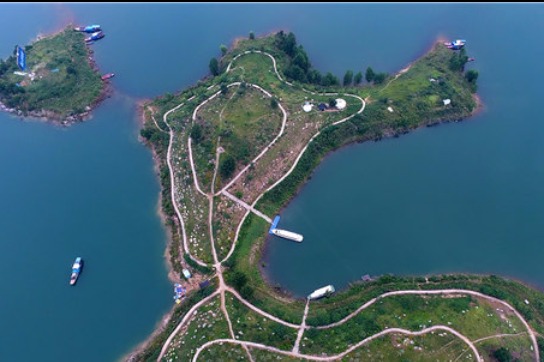
A critical, often overlooked, aspect of the SNWDP is the comprehensive environmental protection efforts undertaken in the water source regions. Provinces like Henan, Hubei, and Shaanxi, which contribute water to the central route, have implemented stringent environmental regulations and invested heavily in ecological restoration. This was not merely a benevolent act but a necessary condition for the project’s long-term success, ensuring the quality of the diverted water.
These efforts included:
- Industrial Restructuring: High-polluting industries were either shut down, relocated, or forced to adopt advanced pollution control technologies.
- Afforestation and Soil Conservation: Extensive tree-planting programs and measures to prevent soil erosion were implemented around the Danjiangkou Reservoir and along the feeder rivers to maintain water quality and reduce sedimentation.
- Water Quality Monitoring: Sophisticated monitoring systems were established to continuously track water quality, ensuring it met national standards before diversion.
Paradoxically, these protective measures, initially seen as potential economic burdens, have catalysed a new wave of sustainable development. The cleaner environment and improved ecological health have attracted investment in "green industries," creating new economic opportunities and jobs for local residents.
- Eco-tourism: Pristine landscapes, clear waters, and revitalized ecosystems have made these regions attractive destinations for domestic tourists. Investments in hotels, resorts, and related services have flourished, providing alternative livelihoods for communities that once relied on more extractive industries.
- Ecological Agriculture: The focus on clean water has naturally led to the development of organic and ecological farming practices. Farmers are shifting from traditional, chemically intensive agriculture to producing high-quality, sustainably grown produce, often commanding premium prices. This includes organic fruits, vegetables, and specialized agricultural products that benefit from the unpolluted environment.
- Forestry and Aquaculture: Sustainable forestry practices and environmentally friendly aquaculture are also gaining traction, further diversifying the local economy while contributing to ecological preservation.
Officials from Hubei, Henan, and Shaanxi provinces have repeatedly emphasized the "win-win" scenario, where environmental stewardship has directly translated into economic growth and improved living standards. They highlight the importance of ecological compensation mechanisms, where recipient regions contribute financially to the environmental protection efforts of the source areas, fostering a shared responsibility for the project’s sustainability.
A Personal Story of Return and Renewal: Xia Qinghua’s Journey
The transformation in these source regions is perhaps best illustrated through the personal narratives of individuals like Xia Qinghua. For 12 years, the 43-year-old worked in a small toy factory in Shenzhen, Guangdong province, one of China’s bustling manufacturing hubs. His life mirrored that of millions of migrant workers who left their rural homes in pursuit of economic prosperity in distant cities.
Xia’s hometown, Chenjiawan, a village in Hubei’s Shiyan city, was once a poverty-stricken area with limited job prospects. He recounts leaving at the tender age of 17, driven by the stark absence of opportunities. "When I left at age 17, I had never seen an egret," he recalls, highlighting the environmental degradation of his youth.
Despite earning a respectable 5,000 yuan ($756) a month in Shenzhen, Xia frequently worked until 11 pm. The financial gain came at a significant personal cost. "The salary was good, but I felt lonely and helpless because I had no family around me," he explains, articulating a sentiment common among long-term migrant workers. His attempts to return home earlier were met with failure; an entrepreneurial venture in 2011 involving a small truck and a transportation business resulted in a 50,000 yuan investment loss and 20,000 yuan in debt, forcing him back to Shenzhen.
The emotional toll of separation was immense. Xia describes tearful goodbyes with his wife and daughter, especially during the Spring Festival holidays, when he could only return home once a year. "I remember very clearly leaving home on the evening of the fifth day of the Lunar New Year in 2013. My wife, my daughter and I cried in each other’s arms. They all didn’t want me to go," he recounts, tears glinting in his eyes even years later.
The turning point for Xia and his community came in 2014, precisely when Hubei Beidouxing Eco-agriculture and Forestry Co began investing in the area. This company was drawn by the newly cleaner environment, a direct result of the environmental protection efforts mandated by the SNWDP. "Great improvements have happened to the environment in my hometown. Now, there are birds everywhere. They are beautiful," Xia observes, a testament to the visible ecological recovery.
In June, Xia Qinghua finally realized his long-held dream: he returned to Chenjiawan. He now works in the warehouse of a farm operated by Hubei Beidouxing, earning approximately 2,000 yuan a month. While this salary is less than half of what he earned in Shenzhen, Xia’s happiness is palpable. He is close to his family, able to care for his 70-year-old unwell father, and actively participates in his community. His income is further supplemented by leasing 0.5 hectares of farmland to Hubei Beidouxing, bringing in an additional 4,000 yuan annually. Xia Qinghua’s story is a microcosm of a broader social trend: the "reverse migration" of skilled workers back to revitalized rural areas, prioritizing family, quality of life, and a cleaner environment over purely financial gains.
Broader Impact and Implications
The third anniversary of the central route’s operation offers a moment for reflection on the broader implications of the South-to-North Water Diversion Project:
- Water Security and Resource Management: The project stands as a testament to China’s proactive approach to national resource management. It has significantly enhanced water security for a large segment of the population and critical economic zones, demonstrating the capacity for large-scale engineering solutions to complex environmental challenges.
- Ecological Civilization: The SNWDP aligns with China’s overarching strategy of building an "ecological civilization." The emphasis on environmental protection in source regions and the subsequent fostering of green industries exemplify a shift towards balancing economic development with ecological sustainability. This represents a long-term commitment to ensuring that natural capital is preserved for future generations.
- Regional Development and Equity: The project has contributed to a more balanced regional development by stimulating new economic models in previously disadvantaged source areas. The flow of investment into green sectors helps reduce regional disparities and creates more equitable opportunities across the country.
- Challenges and Future Outlook: Despite its successes, the SNWDP is not without its ongoing challenges. Maintaining water quality across thousands of kilometers, managing potential ecological impacts in recipient areas, and ensuring the long-term financial sustainability of the project (including ecological compensation) remain critical. The Western Route’s future development also presents formidable engineering and environmental hurdles. Furthermore, the immense scale of water transfer necessitates rigorous water conservation efforts in recipient areas to ensure efficient and responsible use of this valuable resource.
Looking ahead, the SNWDP will continue to be a cornerstone of China’s water management strategy. Its successes, particularly the central route’s three-year operational milestone, provide valuable lessons in large-scale infrastructure planning, environmental governance, and the intricate balance between human development and ecological preservation. The transformation observed in regions like Shiyan, where egrets now grace the skies and migrant workers return home, underscores the project’s profound and multifaceted legacy. It is a testament to how integrated infrastructure development, when coupled with stringent environmental protection, can indeed forge a path towards a more sustainable and equitable future.



 Neng Nana