Evan Lee Salim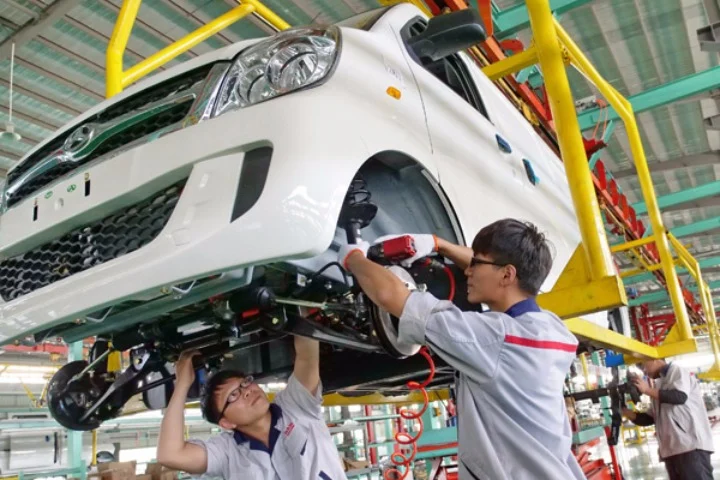
Beijing Automotive Group Co (BAIC Group), one of China’s prominent state-owned automakers, has declared an ambitious strategic shift towards electrification, committing to phase out the production and sale of conventional fuel-powered cars under its proprietary brand nationwide by 2025. This bold move underscores the intensifying drive within China’s automotive industry to embrace new energy vehicles (NEVs) and align with the nation’s stringent environmental targets and technological leadership aspirations. The announcement, made by BAIC Group Chairman Xu Heyi, also detailed an earlier target to cease sales of self-developed conventional fuel vehicles in Beijing by 2020, positioning the capital as a vanguard for this transformative transition.
The declaration by Chairman Xu Heyi was delivered during a significant weekend event marking the inauguration of a cutting-edge new energy car technology and innovation center in Beijing. This collaborative initiative brings together BAIC’s dedicated NEV arm, BJEV, with 14 other esteemed institutions, including the venerable Tsinghua University and leading battery manufacturer CATL (Contemporary Amperex Technology Co Ltd). The establishment of this center is a critical component of BAIC’s broader NEV campaign, designed to consolidate and amplify innovative resources, thereby fostering a robust ecosystem for advanced electric vehicle development.
A Strategic Pivot in a Dynamic Market
BAIC Group’s decision is not an isolated corporate strategy but rather a reflection of the profound shifts occurring within China’s automotive landscape, which has rapidly emerged as the world’s largest market for new energy vehicles. The nation’s aggressive push for electrification is driven by a multifaceted agenda encompassing energy security, air quality improvement, and the ambition to secure a global lead in emerging automotive technologies. This policy-driven environment, characterized by generous subsidies, a dual-credit system that mandates NEV production quotas, and increasingly restrictive regulations on internal combustion engine (ICE) vehicles in major urban centers, has created fertile ground for automakers to pivot towards electric mobility.
For BAIC, a conglomerate with a diverse portfolio that includes joint ventures with international giants like South Korea’s Hyundai and Germany’s Daimler AG (owner of the Mercedes-Benz brand), the focus on its own-branded conventional fuel vehicles for the phase-out is strategic. This allows the group to maintain its international partnerships while aggressively transforming its core domestic brand identity into a leader in sustainable transportation. The clear differentiation signals a commitment to nurturing its independent technological capabilities and market presence in the NEV sector.
The Innovation Hub: Catalyzing Future Mobility
The newly established technology and innovation center in Beijing represents a cornerstone of BAIC’s future strategy. Its mandate is to construct an open platform designed to efficiently mobilize global innovative resources. This collaborative model aims to facilitate unprecedented cooperation among various stakeholders: companies like BJEV and CATL, academic institutions such as Tsinghua University, dedicated research facilities, and even end-users. Such an integrated approach is crucial for accelerating research and development, particularly in critical areas like battery technology, power electronics, intelligent connectivity, and autonomous driving.
Xu Qiang, head of the Beijing Municipal Science and Technology Commission, lauded the center as an "important and practical move" towards enhancing cooperation and significantly improving innovative capabilities and core competitiveness within the new energy vehicle domain. The involvement of CATL, a global leader in battery manufacturing, is particularly noteworthy. Battery technology remains the linchpin of EV performance, range, and cost. Direct collaboration with CATL ensures BAIC’s access to cutting-edge battery solutions and expertise, potentially leading to breakthroughs in energy density, charging speed, and longevity. Tsinghua University’s participation, meanwhile, brings invaluable academic research prowess and talent development capabilities to the consortium.
China’s NEV Ascendancy and BAIC’s Market Position
The timing of BAIC’s announcement coincides with the robust growth trajectory of the new energy vehicle market in China. Data from the China Association of Automobile Manufacturers (CAAM) revealed that from January to November of the preceding year, China witnessed the sale of 609,000 new energy cars, representing a significant year-on-year growth of 51.4 percent. CAAM further estimated that the total sales for the category could reach an impressive 700,000 units for the full year, solidifying China’s position as the undisputed global leader in NEV adoption and production.
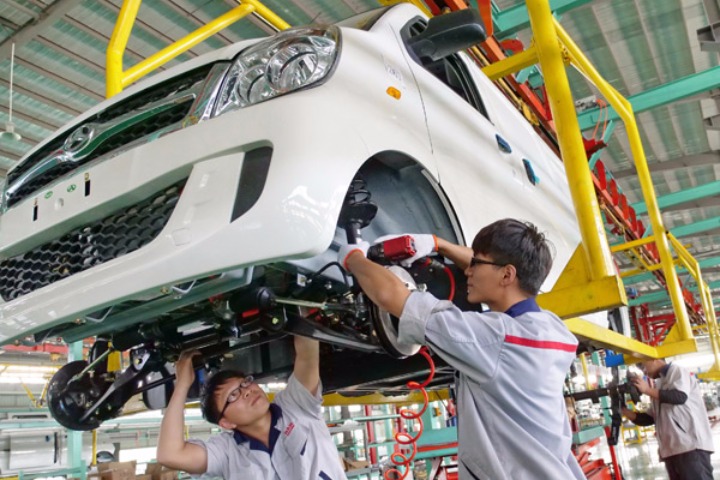
Within this burgeoning market, BAIC Group, primarily through its BJEV subsidiary, has established itself as one of the country’s leading new energy carmakers. The company’s performance metrics underscore its increasing dominance: in November alone, BJEV sold 21,598 cars, marking an extraordinary 85 percent surge from the previous month. This strong monthly performance contributed to its cumulative sales of over 88,000 units in the first 11 months of the year, demonstrating a consistent upward trend and a clear indication of market acceptance for its electric vehicle offerings. This robust sales momentum provides a strong foundation for BAIC’s accelerated transition strategy.
Investment in Future Growth and Infrastructure
Recognizing the capital-intensive nature of automotive innovation, particularly in the EV sector, BJEV has outlined substantial investment plans. At the Guangzhou auto show, BJEV Deputy General Manager Zhang Yong announced a commitment to invest approximately 10 billion yuan ($1.5 billion) into research and development over the subsequent three to five years. This significant financial injection is earmarked for accelerating the development and launch of new models, with a target of introducing two to three new NEV models annually. Such a rapid product refresh cycle is crucial for remaining competitive in a fast-evolving market and catering to diverse consumer preferences.
Beyond product development, BAIC Group is also addressing a critical barrier to widespread EV adoption: charging infrastructure. The company previously announced an ambitious plan to invest another 10 billion yuan to construct 3,000 solar-powered battery changing stations. This strategy focuses on battery swapping technology, an alternative to traditional charging that allows EV owners to exchange a depleted battery for a fully charged one in minutes. This approach tackles the "range anxiety" and "charging time" concerns that often deter potential EV buyers, particularly in fleet operations where vehicle downtime must be minimized. The integration of solar power into these stations further enhances their environmental credentials and potentially reduces operational costs.
Furthermore, BJEV has set an aggressive target to deploy 500,000 new energy cars specifically for the taxi and ride-sharing sectors across 1,000 cities by 2022. This strategic focus on B2B fleet sales is a smart move for several reasons: it ensures high utilization rates for the vehicles, accelerates the adoption of NEVs in public transportation, and provides a visible testament to the reliability and efficiency of electric vehicles, thereby indirectly boosting consumer confidence. Fleet operators benefit from lower operating costs (electricity vs. fuel) and reduced maintenance, aligning perfectly with the economic incentives for electrification.
Broader Implications and Challenges Ahead
BAIC Group’s commitment to phasing out conventional fuel vehicles under its own brand carries significant implications for various stakeholders and the broader automotive industry. Environmentally, this move will contribute to reducing urban air pollution and lowering carbon emissions in China, aligning with the nation’s commitments under the Paris Agreement. Economically, it will spur further investment in the NEV supply chain, from battery manufacturing and charging infrastructure development to software and autonomous driving technologies, creating new jobs and fostering technological advancements.
From a competitive standpoint, BAIC’s aggressive stance puts pressure on other domestic and international automakers operating in China to accelerate their own electrification strategies. While the policy environment already mandates a shift, a major player like BAIC publicly committing to a full phase-out of ICE vehicles under its own brand sends a strong signal about the inevitability and urgency of this transition. For its joint ventures with Hyundai and Daimler AG, the impact is less direct as the pledge specifically targets "self-developed conventional fuel-powered cars." However, the expertise gained and the infrastructure built by BAIC in its NEV pursuit will undoubtedly influence and potentially benefit these partnerships in their own electrification efforts within the Chinese market.
Despite the ambitious targets and robust investment, significant challenges remain. The cost of NEVs, while decreasing, still presents a barrier for some consumers, particularly as government subsidies are gradually scaled back. The availability and reliability of charging infrastructure, despite BAIC’s efforts with battery swapping, need to expand rapidly to keep pace with sales growth. Furthermore, the technological maturity of batteries, including energy density, lifespan, and safety, will continue to be a critical area of development. The sourcing of raw materials for batteries, such as lithium, cobalt, and nickel, also poses geopolitical and supply chain complexities.
In conclusion, BAIC Group’s strategic decision marks a pivotal moment in its corporate history and reinforces China’s unwavering commitment to leading the global transition to electric mobility. By setting aggressive phase-out targets, investing heavily in R&D and infrastructure, and fostering collaborative innovation, BAIC is not merely adapting to policy mandates but actively shaping the future of sustainable transportation, both domestically and, potentially, on the global stage. The success of this ambitious campaign will serve as a critical barometer for the broader automotive industry’s ability to navigate the complexities and capitalize on the opportunities presented by the electric vehicle revolution.


 Suro Senen