Iffa Jayyana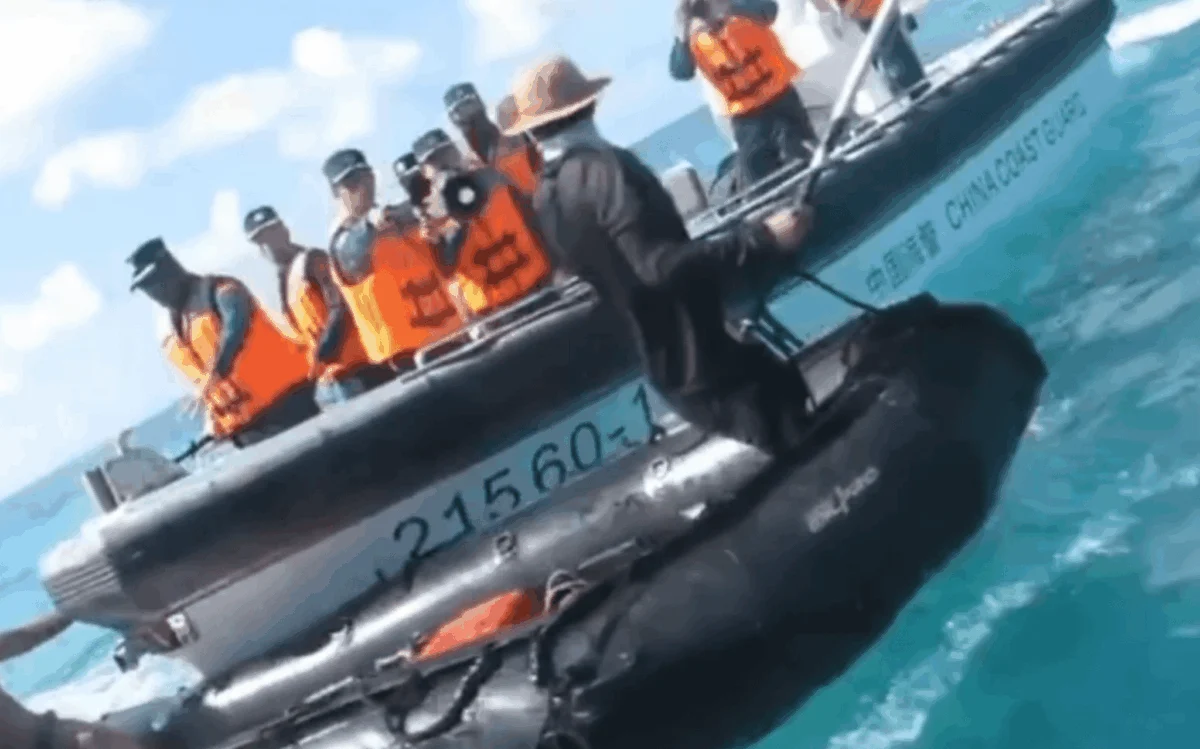
Beijing, China – China urgently summoned the Philippine ambassador on Tuesday, July 21, 2026, to lodge a vehement protest following a violent confrontation between Chinese and Philippine vessels at a disputed shoal in the South China Sea. This latest incident, which saw a Filipino sailor reportedly clubbed with a baton, has drawn sharp condemnation from Manila’s key allies and further intensified already volatile regional tensions. The diplomatic rebuke from Beijing underscores the deepening chasm between the two nations over their competing claims in the strategically vital waterway, even as international efforts to de-escalate the situation appear increasingly strained.
The highly contentious encounter unfolded on Monday, July 20, 2026, near Second Thomas Shoal, known as Ren’ai Reef by China and Ayungin Shoal by the Philippines. The Philippine military accused the China Coast Guard (CCG) of resorting to aggressive tactics, including ramming, towing, and physically assaulting a Filipino sailor with a baton, during a routine resupply mission to the BRP Sierra Madre. This aging naval vessel, intentionally grounded on the shoal in 1999, serves as a crucial Philippine outpost, garrisoned by a small contingent of marines who rely on these missions for sustenance and supplies. The reported use of physical force marks a significant escalation from previous incidents, which typically involved water cannons, blocking maneuvers, and verbal warnings.

China’s Ministry of Foreign Affairs swiftly issued its own statement, asserting that it had "urgently summoned" the Philippine ambassador to "lodge solemn representations over the Philippines’ deliberate provocation and attack… at Ren’ai Reef." The ministry accused the Philippine side of instigating the confrontation, stating, "The Philippine side provoked first, yet it has turned the blame upside down, distorted the facts, and maliciously hyped the issue." This counter-accusation highlights the profound divergence in narratives between Beijing and Manila, each portraying the other as the aggressor in a high-stakes maritime standoff.
Deepening Regional Dispute and International Outcry
The South China Sea, a vast expanse of water estimated to carry over $3 trillion in annual global trade, remains one of the world’s most contested maritime regions. China claims sovereignty over nearly the entire sea, delineated by its expansive "nine-dash line," a claim that an international arbitral tribunal in The Hague emphatically rejected in 2016. The Permanent Court of Arbitration ruled that China’s claims have no legal basis under the United Nations Convention on the Law of the Sea (UNCLOS). Despite this legally binding decision, Beijing continues to assert its historical rights, disregarding the ruling and intensifying its presence and activities across the disputed areas.

Multiple nations in the region, including the Philippines, Vietnam, Malaysia, Brunei, and Taiwan, have overlapping territorial claims. These competing assertions, coupled with the rich fishing grounds and potential oil and gas reserves, frequently lead to altercations in the heavily patrolled waterway. The Second Thomas Shoal, in particular, has become a recurring flashpoint, representing a direct challenge to the Philippines’ assertion of its exclusive economic zone (EEZ).
The international community, particularly the Philippines’ allies, reacted with alarm to the latest incident. Australian Foreign Minister Penny Wong condemned China’s "destabilising and dangerous conduct," urging all parties to adhere to international law. Her statement echoed Washington’s earlier condemnation of Beijing’s "dangerous and aggressive actions." The United States, a treaty ally of the Philippines, has repeatedly affirmed its commitment to Manila’s defense under the 1951 Mutual Defense Treaty (MDT), a cornerstone of security cooperation in the Indo-Pacific.
Chronology of a Volatile Encounter

The incident on Monday began as Philippine vessels, including civilian boats and escort ships, embarked on a resupply mission to the BRP Sierra Madre. These missions are critical for maintaining the presence of Filipino marines on the shoal, who live in challenging conditions aboard the rusting warship. For years, these missions have been met with various forms of obstruction by the CCG, ranging from shadowing and blocking maneuvers to the use of powerful water cannons.
According to the Philippine military, the CCG vessels engaged in an unprecedented level of aggression. Reports indicate that Chinese vessels attempted to ram and tow Philippine boats, disrupting their course and preventing them from reaching the Sierra Madre. It was during these chaotic maneuvers that a Filipino sailor was allegedly struck with a baton, sustaining injuries that required medical attention. The precise details of the confrontation, including visual evidence from both sides, are expected to emerge in the coming days, but the immediate allegations from Manila paint a grim picture of deliberate physical assault.
The speed with which both Beijing and Manila issued their condemnations and diplomatic actions highlights the severity of the incident. China’s decision to summon the ambassador suggests a strong desire to control the narrative and project an image of resolute defense of its sovereignty, while the Philippines’ public accusations underscore its determination to expose China’s aggressive behavior and rally international support.

US Diplomacy and Regional Security Dynamics
The timing of this clash coincided with the arrival of US Secretary of State Marco Rubio in Manila on Tuesday for a summit of the 11-member Association of Southeast Asian Nations (ASEAN). Rubio’s presence in the Philippine capital, just hours after the incident, added an immediate geopolitical layer to the unfolding crisis. While in Manila, Rubio reaffirmed Washington’s steadfast commitment to "freedom of navigation in Southeast Asia" and underscored the enduring strength of the US defensive umbrella in the region.
In an op-ed published in Philippine media outlets on Tuesday, Rubio articulated the broader strategic implications of China’s actions. He warned that "This freedom is by no means guaranteed. If these waters were to fall under the control of a power willing to use trade as a geopolitical weapon, both the United States and the ASEAN states would face serious new threats to their sovereignty, security, and economic future." This thinly veiled allusion to China’s growing assertiveness serves as a stark reminder of the broader competition for influence and control in the Indo-Pacific.

Secretary Rubio has indicated his openness to meeting with his Chinese counterpart, Wang Yi, who is also attending the ASEAN summit. While no talks have been publicly confirmed, such a meeting would offer a critical opportunity for high-level dialogue on de-escalation, even amidst the backdrop of escalating tensions. Previous meetings between Rubio and Wang, including on the sidelines of an ASEAN gathering in Kuala Lumpur last year and in Munich in February, have sought to manage bilateral relations despite deep-seated disagreements. However, the recent violent clash could make any such discussions particularly fraught.
Broader Implications and the Path Forward
The latest confrontation at Second Thomas Shoal carries significant implications for regional stability, international law, and the complex geopolitical dynamics of the Indo-Pacific.

Escalation Risk: The use of physical force, as alleged by the Philippines, marks a dangerous escalation in the long-running dispute. Such tactics increase the risk of miscalculation, accidental collisions, and even direct armed conflict, which could have catastrophic consequences for the entire region and beyond. The international community watches closely, concerned that the rules-based international order is being tested and potentially undermined.
Challenge to International Law: China’s continued disregard for the 2016 arbitral ruling undermines the authority of international law and institutions. The Philippines, by consistently invoking the ruling and its rights under UNCLOS, seeks to uphold these principles, making the dispute not just about territory, but about the very framework of global governance.
Strengthening Alliances: The incident will likely further solidify the US-Philippines alliance and deepen security cooperation between Manila and other like-minded partners such as Australia and Japan. The increased frequency of joint military exercises and diplomatic statements of support are indicative of a concerted effort to counterbalance China’s growing military and maritime power in the region.

ASEAN’s Role: The ASEAN summit provides a crucial platform for regional leaders to address the escalating tensions. While ASEAN members often find it challenging to present a united front on the South China Sea due to differing national interests and relationships with China, the severity of this latest incident may prompt stronger collective calls for peaceful resolution, adherence to international law, and restraint from all parties. The ongoing presence of US and Chinese top diplomats at the summit underscores its importance as a venue for both confrontation and potential, albeit limited, dialogue.
Economic Ramifications: The South China Sea is a critical artery for global trade, with major shipping lanes traversing its waters. Any significant disruption or escalation of conflict could have severe economic repercussions, impacting global supply chains, energy security, and regional economies. The stability of these trade routes is paramount for sustained economic growth in Asia and worldwide.
In conclusion, the violent clash at Second Thomas Shoal and the subsequent diplomatic exchanges between China and the Philippines represent a dangerous inflection point in the South China Sea dispute. With major powers like the United States and Australia firmly backing the Philippines, and China resolutely asserting its claims, the region faces an increasingly precarious future. The coming days and the discussions at the ASEAN summit will be critical in determining whether a path towards de-escalation can be found, or if the already strained relations will continue to spiral into more frequent and perilous confrontations. The international community remains hopeful for a peaceful resolution, yet deeply concerned by the growing willingness of parties to employ more aggressive tactics in pursuit of their territorial ambitions.

 Asep Darmawan
 Jia Lissa