Asep Darmawan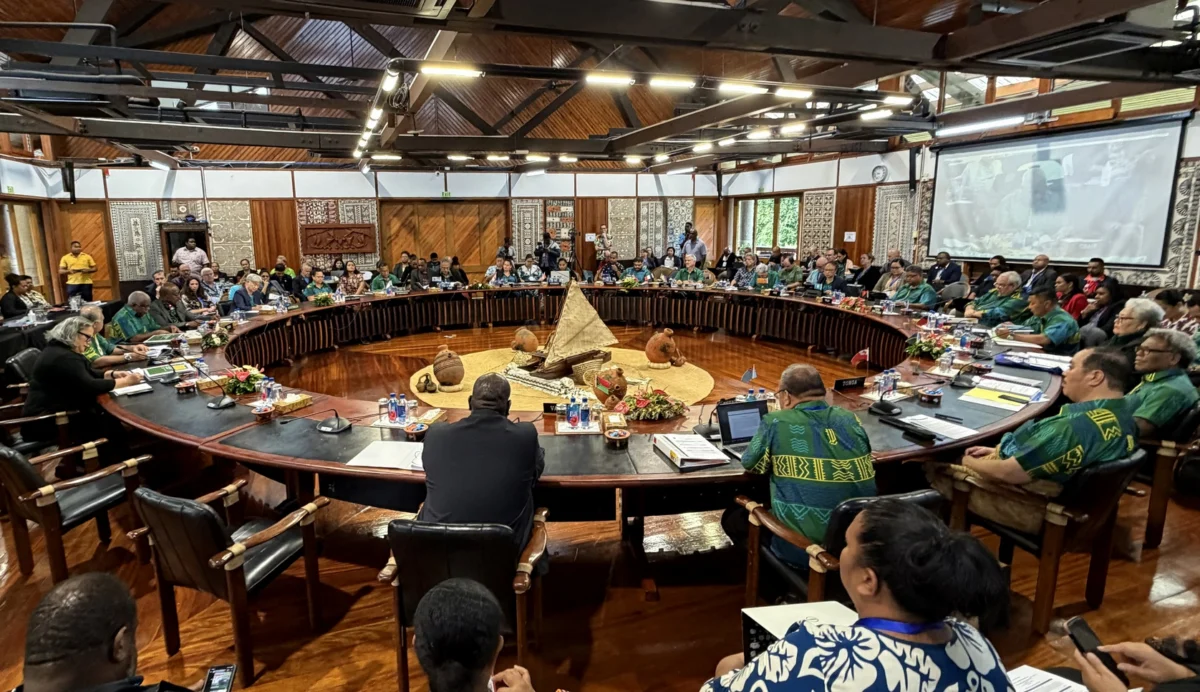
Suva, Fiji – A crucial meeting of Pacific diplomats concluded on Friday without a unified condemnation of China’s recent test of a nuclear-capable missile in the region, a failure that has exposed significant rifts within the Pacific Islands Forum (PIF). New Zealand’s Foreign Minister, Winston Peters, openly criticized the lack of consensus, accusing some member states of appeasing “outsiders” at the expense of regional solidarity.
The controversy stems from China’s launch of an intercontinental ballistic missile (ICBM) last month. The missile, reportedly capable of carrying nuclear warheads, was test-fired with minimal prior notification to a handful of Pacific nations. The projectile’s trajectory appeared to bring it down in a patch of ocean located between the Solomon Islands, Nauru, and Tuvalu, according to regional monitors. This act of military projection by Beijing in a strategically vital region has amplified existing geopolitical tensions and concerns about China’s expanding influence in the Pacific.

While several Pacific leaders had individually expressed strong condemnation following the launch, the 18-member Pacific Islands Forum, the region’s premier political and economic bloc, has been unable to forge a collective stance. The inability to issue a joint statement underscores the complex diplomatic landscape of the Pacific, where economic ties and strategic considerations often weigh heavily on political decisions.
New Zealand’s top diplomat, Winston Peters, voiced his frustration after an extended session of discussions. He revealed that the forum had not reached an agreement on a joint statement to condemn the missile test. While Peters declined to name the specific member states that obstructed the consensus, it is widely understood that nations with close economic and political ties to China, such as Kiribati and Nauru, showed little inclination to formally criticize Beijing’s actions.
“They didn’t actually lay out any reasons apart from their disagreement,” Peters stated to journalists, highlighting the lack of concrete justifications offered for blocking the condemnation. He further elaborated, accusing these dissenting nations of prioritizing the desires of "outside partners" over the collective interests of the Pacific Islands Forum.

Peters’ remarks carried a thinly veiled criticism directed at China’s growing assertiveness. "We made it very clear that we do not think that outsiders should be telling the insiders — that’s us who have been here for thousands of years — what our position should be," he asserted, emphasizing the long-standing presence and inherent right of Pacific nations to determine their own regional security outlook.
Tuvalu, a small island nation with a diplomatic alliance with Taiwan, also voiced its disappointment and its desire for a unified regional response. The country’s Permanent Secretary for Foreign Affairs, Labour, and Trade, Pasuna Tuaga, revealed that Tuvalu had not received advance notice of the missile test. "We don’t want to be intimidated by any powers," Tuaga stated on the sidelines of the talks. "That’s not the way that we want to be treated. That’s why we want to send a very strong statement from the Pacific as an intercollective, because that would also strengthen our position."
Tuaga further elaborated on the proximity of the missile’s landing site, noting it had fallen "somewhere very close" to Tuvalu’s Exclusive Economic Zone. The nation had subsequently sought assistance from various international partners, including the United States and China, in locating the dummy warhead from the test. This request highlights the practical implications and potential risks posed by such military exercises to vulnerable island nations.

Geopolitical Undercurrents in the Pacific
The inability of the Pacific Islands Forum to present a united front on the Chinese missile test reflects a broader geopolitical struggle for influence in the region. China has significantly increased its diplomatic and economic engagement with Pacific Island nations in recent years, offering substantial development aid, infrastructure projects, and security assistance. This outreach has led to concerns among traditional partners, such as the United States, Australia, and New Zealand, about China’s strategic ambitions and its potential to alter the regional security balance.
The missile test itself is a potent demonstration of China’s growing military capabilities and its willingness to project power into regions far from its mainland. The ICBM test, conducted without adequate warning, is seen by many as a deliberate act to assert dominance and challenge the existing regional order. Such actions carry significant implications for maritime security, freedom of navigation, and the overall stability of the Indo-Pacific.
Australia’s Foreign Minister, Penny Wong, who attended the meeting, expressed her hope that China would heed the concerns already voiced by a majority of Pacific nations. "The majority of the Pacific Islands Forum did express concerns over China’s ballistic missile test," she confirmed, underscoring that while a joint statement was elusive, a significant portion of the membership shared apprehensions.

A Fractured Consensus and Future Implications
The meeting in Fiji’s capital, Suva, was a precursor to the full PIF leaders’ summit scheduled to be held in Palau in September. Palau, an archipelago situated approximately 800 kilometers west of the Philippines, is known for its strong diplomatic ties with Taiwan, a self-governing democracy that Beijing claims as its territory. The upcoming leaders’ meeting is expected to address not only the missile test but also the contentious issue of which key international partners will be invited to attend.
Last year, the Solomon Islands, a nation that has deepened its security ties with China, controversially banned all partner nations from attending the PIF leaders’ meeting in Honiara. This decision was reportedly made in response to pressure from China to exclude Taiwan from any regional discussions. This incident further highlighted the growing divisions within the forum and the increasing influence of external powers on internal PIF deliberations.
The recurring theme of "outsiders meddling" in the affairs of the Pacific, as voiced by Peters, suggests a growing sentiment within some PIF member states that external powers are attempting to dictate their foreign policy and regional security alignment. This internal debate is crucial for the future effectiveness of the Pacific Islands Forum as a collective voice for the region.

The failed attempt to issue a joint condemnation of the Chinese missile test serves as a stark reminder of the challenges facing regional diplomacy in the Pacific. It underscores the delicate balancing act that Pacific Island nations must perform between maintaining their sovereignty, fostering economic development, and navigating the increasingly complex geopolitical currents of the Indo-Pacific. The outcome of these discussions will undoubtedly shape the security landscape and diplomatic relations of the region for years to come.
Background of the Missile Test
The specific missile tested by China, while not officially identified, is widely believed to be an intercontinental ballistic missile capable of reaching long distances. Such tests are a critical component of a nation’s nuclear deterrence strategy and are closely monitored by international security agencies. The choice of the Pacific Ocean as a testing ground is not new for China, but the timing and the relative lack of warning for nearby nations have drawn particular attention.
The potential debris field from such a launch poses a significant risk to maritime activities and the fragile marine ecosystems of the Pacific. For low-lying island nations, the proximity of these tests to their territories raises direct concerns about safety and environmental impact, in addition to the broader implications for regional security and nuclear proliferation.

The Role of External Powers
The Pacific has become a focal point for strategic competition, with the United States and its allies increasingly wary of China’s growing military and economic footprint. Washington has responded by enhancing its own diplomatic engagement and security partnerships in the region, including increased naval presence and renewed focus on maritime security initiatives.
The current situation highlights the tension between the desire of many Pacific Island nations to remain non-aligned and their vulnerability to external pressures. The economic realities faced by many of these nations, often dependent on foreign aid and trade, can make it difficult to take strong stances against powerful global actors.
The Pacific Islands Forum’s ability to overcome internal divisions and present a united front on critical security issues will be paramount in asserting its collective voice and safeguarding its interests in an increasingly contested geopolitical arena. The coming months, leading up to the Palau summit, will be critical in determining the future direction of regional diplomacy and the extent to which the Pacific can chart its own course amidst global power rivalries.

 Nila Kartika Wati
 Basiran