Asep Darmawan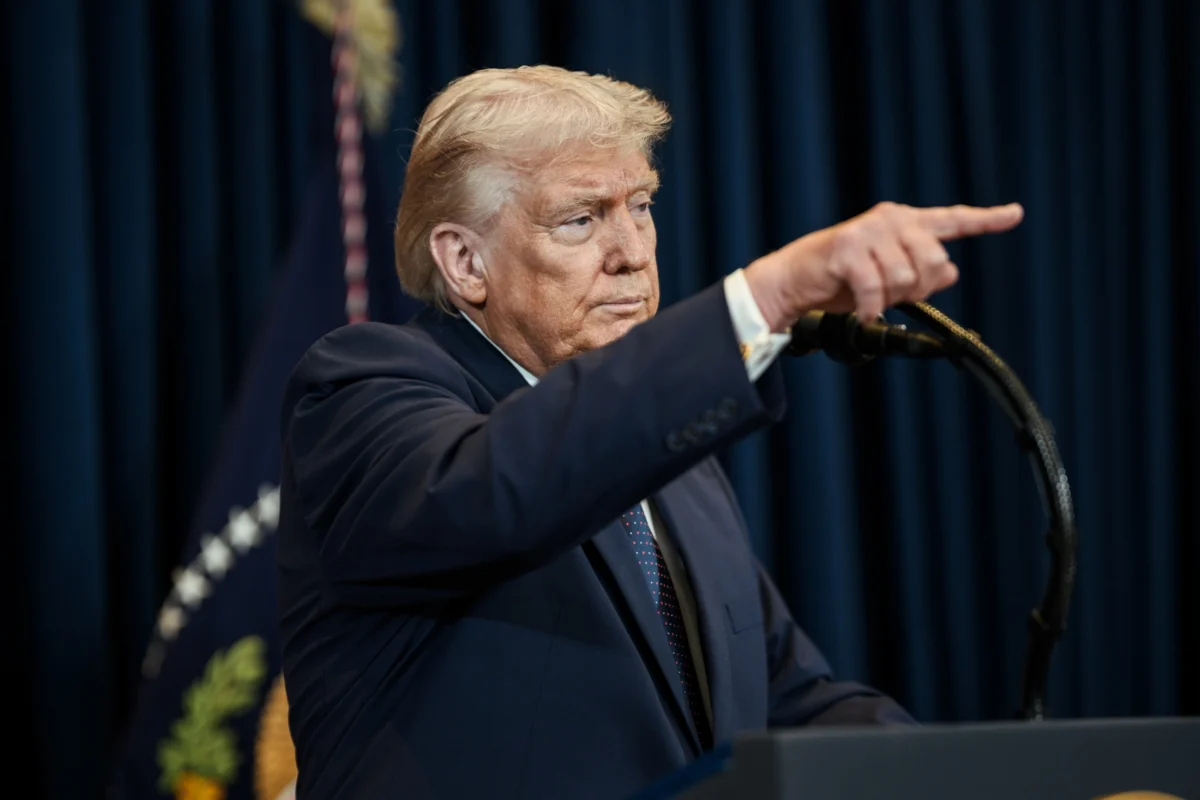
Washington, United States – The United States on Thursday announced a significant escalation of its trade policy, implementing new tariffs on imports from 60 trading partners globally. These duties, which come into effect on Friday, are explicitly tied to concerns over forced labor practices and are designed to replace an expiring set of global duties rolled out by President Donald Trump earlier this year. The move signals a robust and legally fortified approach by the Trump administration to leverage trade policy for human rights objectives, while simultaneously rebuilding a tariff structure previously challenged by the Supreme Court.
The newly imposed levies will range from 10 percent to 12.5 percent and will impact a broad spectrum of major global economies, including industrial powerhouses such as China, India, and the European Union. This widespread application underscores the administration’s intent to globalize its stance against forced labor in supply chains. U.S. Trade Representative Jamieson Greer emphasized the historical precedent for this action, stating, "The United States has had a forced labor import ban for nearly a century, and rigorously enforces it; it’s well past time for our trading partners to do the same." Greer further highlighted the extensive reach of these new measures, noting that the targeted economies collectively represent the majority of U.S. trade volume.
Chronology of Tariff Actions and Legal Maneuvers

The Trump administration’s latest tariff announcement is the culmination of several months of strategic maneuvering following a significant legal setback. In February of this year, the Supreme Court delivered a blow to the president’s ability to unilaterally impose steep levies, striking down a host of his previous duties. This ruling forced the administration to seek alternative legal authorities to maintain its protectionist trade agenda.
Following the Supreme Court’s decision, President Trump swiftly utilized different statutory powers to reimpose a 10-percent tariff on a wide array of imports. However, these temporary duties were designed to last only 150 days, with their expiry scheduled for Friday, the same day the new, more permanent tariffs take effect. The volley of new duties, initially proposed in June after a months-long investigation, is therefore not merely an extension but a strategic replacement, crafted to be more resilient against future legal challenges. This deliberate process, involving extensive investigation, aims to establish a stronger legal foundation for the tariffs, differentiating them from earlier, more ad-hoc measures.
Differentiated Tariffs and Global Impact
The new tariff structure introduces a tiered system based on a country’s commitment to combating forced labor. Under Thursday’s announcement, economies that have already implemented a forced labor import prohibition or have formally committed to doing so will face the lower 10-percent rate. This group includes significant trading partners such as Canada, the European Union, India, and the United Kingdom. This incentive-based approach aims to encourage greater international cooperation in eradicating forced labor from global supply chains.

Conversely, countries perceived as having weaker or non-existent forced labor import bans will incur the higher 12.5 percent tariff. This category notably includes China, Japan, South Korea, and dozens of other nations. The differentiation reflects a calibrated approach, rewarding perceived compliance while penalizing perceived inaction. However, specific trade agreements provide some relief for certain partners. The European Union, Taiwan, Japan, South Korea, and Switzerland will benefit from provisions aligning with existing trade pacts previously negotiated with the United States, offering a degree of mitigation from the full impact of the new duties.
International Reactions and Exemptions
The imposition of these new tariffs has predictably drawn swift condemnation from several targeted nations. Japanese government spokesman Minoru Kihara expressed Tokyo’s "regrets" over the tariffs, particularly highlighting that the higher rate was imposed "solely on the grounds that there is no ban on the import of products produced through forced labour." This statement underscores a key point of contention: whether the absence of a specific import ban, as opposed to direct evidence of forced labor in a country’s exports, is sufficient justification for such tariffs.
Australia’s trade minister Don Farrell decried the tariffs as "unjustified," arguing that they were "inconsistent with our free trade agreement, and should be removed." This immediate pushback from close allies like Japan and Australia signals potential diplomatic friction and calls into question the perceived fairness and legal basis of the measures from the perspective of affected nations.
Despite the broad scope, certain goods and categories will remain exempt from these new tariffs. Products already facing sector-specific duties, such as steel and aluminum, will not be impacted. Additionally, certain energy products and fertilizers will be exempt. Crucially, goods covered by the US-Mexico-Canada (USMCA) free trade pact will also be excluded, a U.S. official confirmed, demonstrating a strategic effort to protect specific established trade relationships.
Broader US Trade Strategy and Ongoing Investigations
The current wave of tariffs is part of a larger, multifaceted trade strategy by the Trump administration. Washington is concurrently conducting separate investigations into 16 economies concerning excess industrial capacity. These probes could potentially lead to the imposition of additional duties on these countries, creating a dynamic and evolving landscape of trade restrictions. Experts warn that these investigations could result in varying tariff rates among countries, adding another layer of complexity to global trade relations.
Trade lawyer Greta Peisch, a former general counsel for the Office of the U.S. Trade Representative and now a partner at Wiley Rein, noted that the administration’s strategy of imposing a baseline tariff while maintaining the threat of further duties serves to "maintain leverage over its trading partners." This approach, she explained, also creates an incentive for countries to comply with existing trade pacts. Peisch highlighted the administration’s focus on thorough investigations, indicating a desire for the incoming tariffs to be robust and withstand potential court challenges. This meticulous preparation, she suggested, makes it "much more likely that they stay for the duration of Trump’s term," signaling a "much more protectionist world’s largest economy" moving forward, according to Josh Lipsky of the Atlantic Council. Lipsky also pointed out that resurrecting tariffs concurrently boosts government revenues, offering a financial incentive beyond trade leverage.

Economic and Geopolitical Implications
The new tariffs carry significant economic and geopolitical implications. For the United States, consumers may face higher prices for imported goods, and businesses may see increased costs for raw materials or components, potentially impacting profitability and competitiveness. Global supply chains, already under pressure from previous trade disputes and geopolitical tensions, could experience further disruption as companies scramble to adapt to the new tariff regime, potentially leading to reshoring efforts or diversification away from heavily taxed nations.
The targeting of major economies like China and the EU exacerbates existing trade tensions. While the tariffs are framed around human rights, they are intertwined with broader economic competition. China, for instance, has historically rejected allegations of widespread forced labor and is likely to view these tariffs as another front in the ongoing economic rivalry with the US. The EU, despite receiving the lower tariff rate, may still express concern over the unilateral nature of the US action and its potential to disrupt global trade norms.
The move also raises questions about the future of multilateral trade institutions like the World Trade Organization (WTO). The reliance on unilateral tariffs, even if legally distinct from previous measures, continues a trend that undermines the WTO’s dispute resolution mechanisms and its role in fostering a rules-based global trading system.

Recent Trade Actions and Future Outlook
This latest salvo follows a series of recent aggressive trade actions by the Trump administration. Shortly before this announcement, a 25-percent tariff took effect on various Brazilian goods, with Washington accusing the Latin American giant of unfair trade practices. This week, President Trump also ordered new 50-percent tariffs on many Canadian products, citing Ottawa’s "discriminatory treatment" of American alcohol, automobiles, and dairy products.
The Canadian tariffs, which are set to take effect in a month, rely on an untested legal provision, demonstrating the administration’s willingness to explore and utilize diverse legal tools to swiftly wield trade policy. Lipsky noted that this signals the "fragile" nature of existing U.S. tariff deals, implying that even established agreements are not immune to re-evaluation or modification by the administration. Despite this, the European Union, which has signed a trade pact with the US, expressed an expectation that Washington "will honor the commitments that are spelled out under the EU-US Joint Statement," indicating a hope for stability amidst the fluctuating trade landscape.
The new tariffs represent a calculated and legally bolstered strategy by the Trump administration to address forced labor concerns while simultaneously reinforcing its "America First" trade agenda. While designed to be more robust against legal challenges and to incentivize global compliance with human rights standards, these measures are poised to reshape global trade flows, ignite further international disputes, and solidify a more protectionist stance from the world’s largest economy for the foreseeable future.

 Jia Lissa