Evan Lee Salim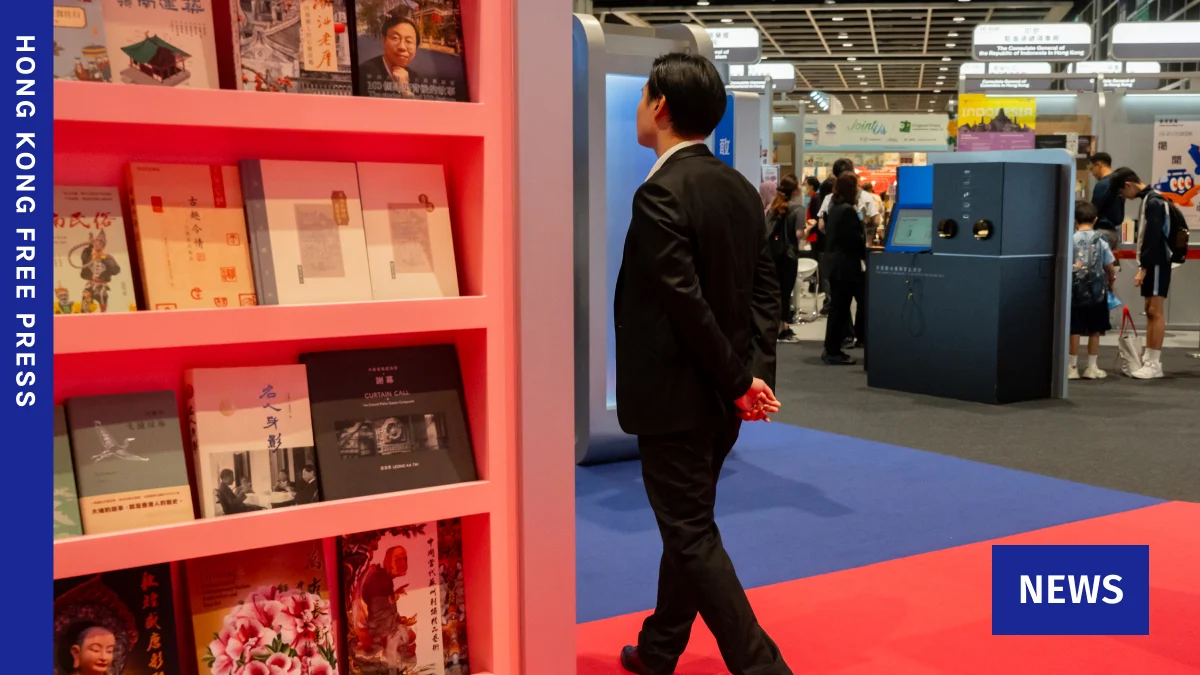
Hong Kong authorities have significantly escalated their checks for "banned books" arriving from Taiwan, a move that has compelled publishers on the self-ruled island to engage in pre-emptive self-censorship before dispatching their titles. This heightened vigilance, revealed by a senior Taiwanese official, signals a further tightening of controls on information flow into the city under the Beijing-imposed National Security Law.
Increased Surveillance of Imported Publications
Liang Wen-chieh, deputy minister of Taiwan’s Mainland Affairs Council (MAC), the top cross-strait policy body, stated at a press conference on Thursday that Hong Kong’s national security authorities have been actively monitoring imported publications originating from Taiwan. These authorities are reportedly looking for books deemed prohibited under the sweeping national security legislation, with a scope that Liang described as "potentially large."

"So far, they have not publicized a list of books they consider prohibited," Liang noted in Mandarin. "We can only collect information on a case-by-case basis regarding the books and their nature." This lack of transparency in defining what constitutes a "banned book" creates an environment of uncertainty for publishers and distributors.
The MAC’s statement indicates a marked increase in the frequency of these inspections. Since March, Hong Kong authorities have reportedly been examining "almost every book shipment" from Taiwan, a stark contrast to the previous practice of conducting such checks only once every few months. This intensified scrutiny suggests a proactive and systematic effort to intercept sensitive materials.
Context of Recent Raids and Arrests
Liang’s remarks follow a significant crackdown on independent bookstores in Hong Kong. Last week, national security police raided two such establishments, leading to the arrest of five individuals. They were accused of allegedly displaying and selling seditious publications. One of the titles reportedly flagged as problematic was the Chinese edition of "Let Only Red Flowers Bloom: Identity and Belonging in Xi Jinping’s China," a book originally authored by American journalist Emily Feng and recently published by a Taiwanese house. The subject matter of the book, focusing on identity and belonging within contemporary China under President Xi Jinping, is likely to be a point of contention for Beijing.

Publishers Resort to Self-Censorship
The intensified inspections and subsequent arrests have created a chilling effect on the Taiwanese publishing industry. Liang confirmed that Taiwanese publishers are now engaging in self-censorship before shipping books to Hong Kong. This means that authors and publishers are proactively reviewing their content and making decisions about what can and cannot be sent, rather than relying on Hong Kong authorities to make those determinations.
"I can only say Hong Kong is now very different from the city we used to know," Liang lamented, reflecting on the shift in the city’s landscape of freedom and expression.
The impact of this policy extends to logistics companies as well. This week, a Taiwan branch of a Hong Kong-based logistics firm, Jaguar Logistics, reportedly informed its clients that it would cease shipping "prohibited books" to Hong Kong. The company cited its need to comply with the Beijing-imposed national security law. Furthermore, Jaguar Logistics stated it would also refrain from shipping to bookstores that are currently under investigation by the Hong Kong government. Taiwanese media outlet Formosa Television reported that the company specifically named four bookstores that had been raided by national security police earlier this year.

Official Stance and National Security Law
When approached for comment, Hong Kong’s Customs and Excise Department stated that it would not comment on remarks made by individual organizations. However, in an emailed response, the department affirmed its commitment to "tightly safeguard national security." It further elaborated that it would detain shipments suspected of containing seditious items and refer them to the police for investigation.
The legal framework underpinning these actions is the National Security Law, which Beijing imposed on Hong Kong in June 2020. This legislation was introduced following a year of widespread pro-democracy protests and civil unrest. The law criminalizes acts of subversion, secession, collusion with foreign forces, and terrorism. These offenses are broadly defined and can encompass actions that disrupt transportation and other essential infrastructure.
The implementation of the National Security Law granted Hong Kong police extensive new powers. Since its enactment, there have been hundreds of arrests, and numerous new legal precedents have been established. The law has also led to the dissolution of dozens of civil society groups. Hong Kong authorities maintain that the legislation has restored stability and peace to the city, rejecting criticisms from international trade partners, the United Nations, and non-governmental organizations.

Broader Implications for Freedom of Expression and Trade
The intensified scrutiny of imported books from Taiwan has significant implications for freedom of expression and the intellectual landscape of Hong Kong. Books have historically served as crucial conduits for diverse ideas and critical perspectives. The current climate suggests a deliberate effort to curate the information available to Hong Kong residents, aligning it with the political sensitivities of mainland China.
The self-censorship practiced by Taiwanese publishers and the refusal of logistics companies to transport certain materials highlight the extraterritorial reach of the National Security Law and its impact on cross-border activities. This situation not only affects the book trade but also raises concerns about the broader implications for academic exchange, cultural dialogue, and the free flow of information between Taiwan and Hong Kong.
The ambiguity surrounding the definition of "banned books" creates a significant challenge for all stakeholders. Without clear guidelines, publishers and distributors are left to guess what content might be deemed illegal, leading to an overestimation of risk and a broader chilling effect on legitimate expression. This can stifle creativity and limit the availability of diverse viewpoints in Hong Kong’s public sphere.

The situation underscores the ongoing erosion of Hong Kong’s autonomy and freedoms since the handover to China in 1997. The once-vibrant hub for free speech and a gateway to mainland China for international ideas is increasingly becoming an extension of Beijing’s censorship apparatus. The book fair, a prominent cultural event in Hong Kong, now operates under the shadow of these restrictions, potentially transforming it from a celebration of literature and ideas into a space of caution and self-regulation.
The increased customs inspections and the subsequent impact on logistics and publishing industries represent a tangible manifestation of the National Security Law’s influence on daily life and commerce in Hong Kong. As authorities continue to enforce these measures, the long-term consequences for the city’s cultural identity and its role as an international center remain a significant concern. The focus on publications from Taiwan, a democratic entity with distinct political views from mainland China, further highlights the ideological battleground that Hong Kong has become.


 Nana Wu
 Lina Hope