Dwi Wanna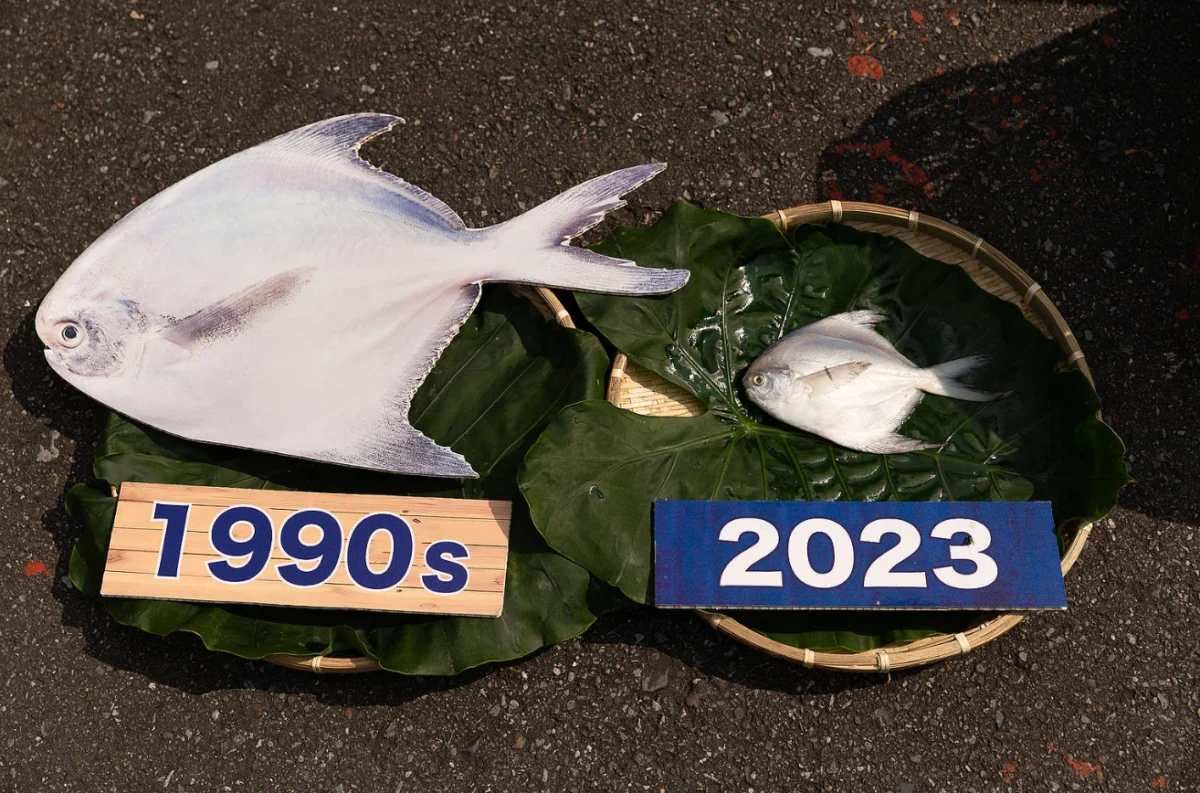
Taiwan, an island nation intrinsically linked to the vast Pacific, is grappling with a complex web of challenges threatening its rich marine ecosystems. While public awareness often focuses on visible issues like beach cleanups, a dedicated group of citizen scientists is delving deeper, collecting crucial data and spearheading educational initiatives to safeguard the future of its waters. Their efforts, spanning from the pre-dawn bustle of fishing ports to bustling street-side educational booths, underscore a growing movement where ordinary citizens are taking extraordinary steps to protect the ocean.
In 2025, volunteers demonstrated that ocean protection is not an abstract ideal but an actionable pursuit. They appeared at fishing ports in Daxi, Yilan, before the sun rose, and engaged the public at educational booths in Taichung, illustrating the diverse avenues through which individuals can contribute to marine conservation. This grassroots movement, spearheaded by organizations like Greenpeace, highlights a multi-faceted approach to addressing both distant-water labor rights and the pervasive issue of coastal overfishing.

Taiwan’s Marine Richness Under Threat: A Biodiversity Hotspot Facing Ecological Strain
Taiwan’s maritime territories are a global treasure trove of marine biodiversity, boasting over 3,000 recorded fish species, representing approximately one-tenth of the world’s total. This remarkable abundance, however, is under severe pressure. Decades of unchecked overfishing, coupled with habitat destruction, inadequate fisheries management, and the escalating impacts of climate change – including coral bleaching and ocean acidification – are steadily eroding these once vibrant underwater landscapes. A critical report from 2025, "Protecting Our Seas: From Coral Surveys to Distant-Water Fisheries Governance – A Review of 2025 Ocean Action," further emphasized the urgent need for comprehensive marine protection strategies. The report detailed how industrial fishing practices, combined with the degradation of coral reefs, are pushing marine life to its limits, making collective action imperative.
The Citizen Scientist Fish Survey Project: Quantifying the Decline of Marine Life
Recognizing the critical need for empirical data to inform policy and conservation efforts, Greenpeace launched the "Citizen Scientist Fish Survey Project" in 2023. This ambitious initiative aims to meticulously record fish species and their lengths at fishing ports, providing a scientific basis for understanding and combating overfishing.
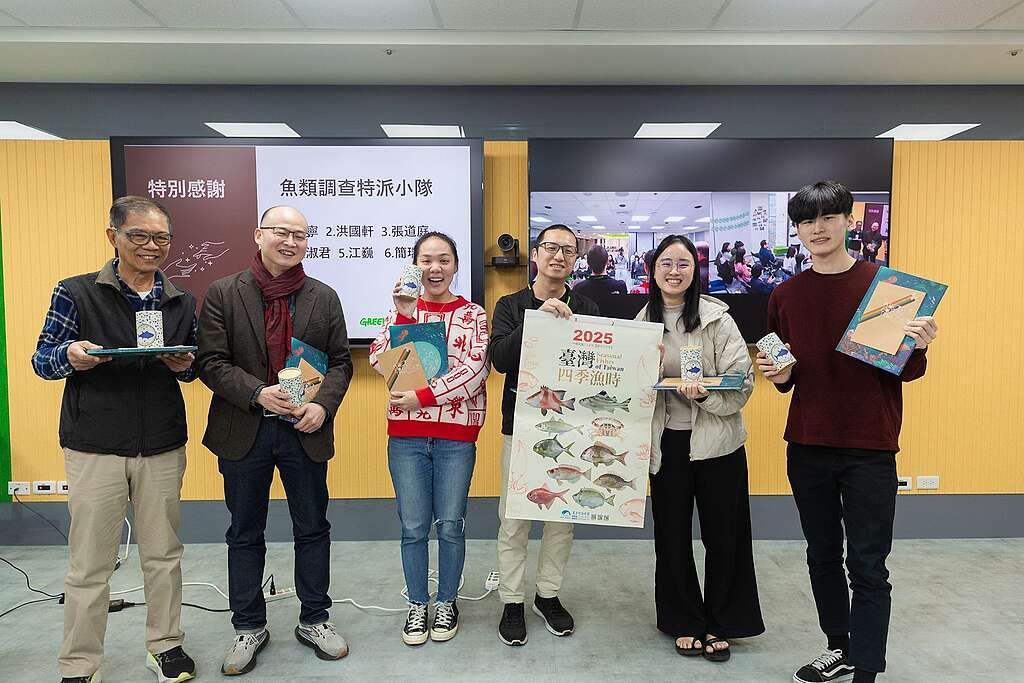
The project represents a pioneering collaboration between citizen scientists and academic experts. Associate Professor He Xuanqing from the Department of Aquaculture at National Kaohsiung University of Science and Technology, and Associate Professor Xu Weiyuan from National Taiwan Ocean University, a specialist in data science and environmental biology, have lent their expertise. Together, they have integrated artificial intelligence with the efforts of trained volunteers, a first for AI development in Taiwan concerning fish species identification and body length estimation. This synergy allows for the collection of invaluable empirical data on the body lengths of commonly found coastal fish species, directly investigating the alarming correlation between diminishing fish sizes and rampant overfishing.

Now in its fourth year, the project has grown significantly, engaging over 35 dedicated citizen scientists. These volunteers are instrumental in two key roles: fishing port survey volunteers and fish labeling volunteers.
On the Front Lines: Fishing Port Survey Volunteers
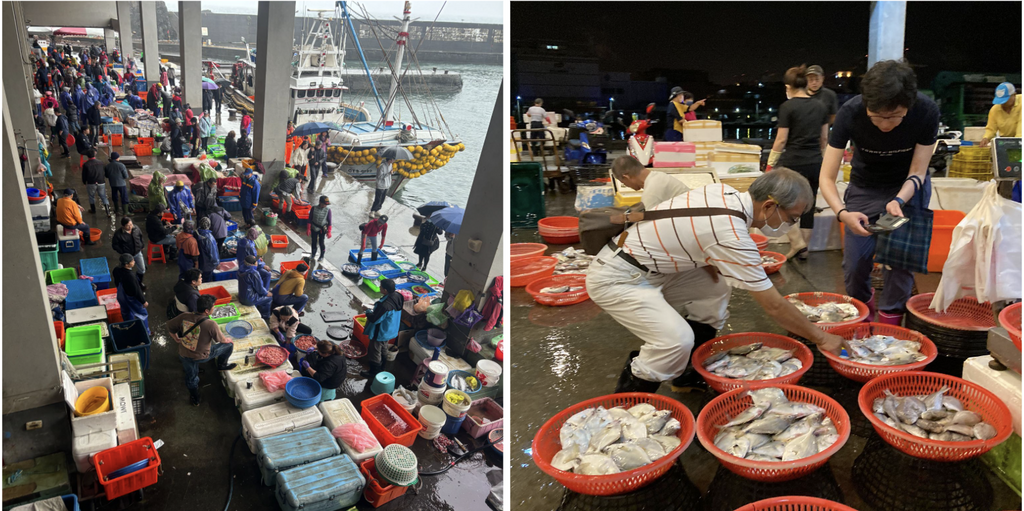
Fishing port survey volunteers are the eyes and ears of the project, venturing out to fishing ports before dawn to capture photographic evidence of targeted fish species. Prior to their fieldwork, these volunteers undergo rigorous training camps to familiarize themselves with the diverse array of common target fish species. Their duties involve visiting bustling fish markets in key locations across Taiwan, including Daxi and Nanfangao in Yilan, Kezailiao and Qianzhen Fishing Ports in Kaohsiung, Donggang in Pingtung, and Magong Fishing Port in Penghu.
The critical task for these volunteers is to arrive at the port early, before the day’s fresh catches are dispersed. They meticulously identify the target fish species, place a specially designed scale reference object alongside the fish, and capture high-quality photographs. These images form the backbone of the project, providing the raw data for subsequent analysis. The dedication required for these early morning shifts, often under challenging weather conditions, highlights the volunteers’ deep commitment to ocean health.
Decoding the Data: Fish Labeling Volunteers and AI Integration
Complementing the fieldwork, fish labeling volunteers play a crucial role in processing the vast amount of visual data. These volunteers are trained to identify and classify numerous target fish species. They meticulously label hundreds of photos uploaded by their counterparts, marking the species present in each image using specialized computer software. This laborious yet essential process is fundamental to building a comprehensive database. Over time, this database fuels the development of sophisticated AI tools capable of accurately identifying fish species and estimating their body lengths. This innovative approach marks a significant advancement in Taiwan’s efforts to monitor its marine resources.
In its inaugural year in 2023, the project focused on 40 common nearshore fish species in Taiwan. During this period, volunteers successfully collected a staggering 18,180 fish sample photographs from fish markets across five major ports.
The Stark Reality: Fish Are Shrinking, a Tell-Tale Sign of Overfishing
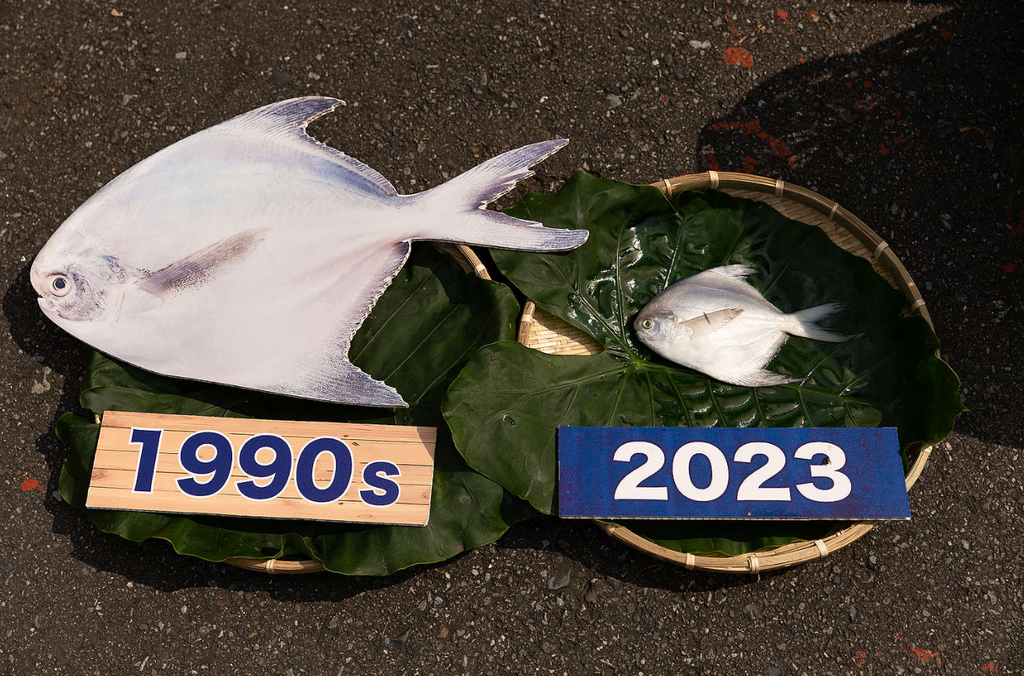
The initial findings released by the project have painted a concerning picture. On World Oceans Day 2024, Greenpeace unveiled survey results for 40 common fish species in Taiwan. The data revealed that a significant proportion – over half – of the samples from 24 "fresh catch" species failed to meet the "50% sexual maturity length (Lm50)." This metric is crucial as it indicates the age at which a fish population can sustainably reproduce. Species like silver pomfret, star pomfret, greater amberjack, pomfret, and black seabass showed particularly alarming proportions, with over 90% of their sampled individuals falling below the Lm50 threshold, signaling the most severe instances of overfishing. This revelation directly correlates with the public call for stronger marine protection legislation. In response to this alarming trend, the originally one-year citizen scientist fish survey project was extended into a long-term volunteer monitoring program. The scope was further expanded in 2025 to include 45 fish species, with volunteers collecting a cumulative total of 24,227 photos over three years, continuously bolstering Greenpeace’s ocean conservation advocacy in Taiwan.
The urgency of these findings was underscored by a press conference held by the Greenpeace Ocean Project team outside the Executive Yuan on March 9, 2023. They presented a stark comparison between the mature body length reference values from past scientific literature and the juvenile fish currently being sold in markets. This visual evidence served as a powerful plea for the prompt review and passage of the "Marine Conservation Act." Public anticipation and advocacy ultimately paid off, with Taiwan’s "Marine Conservation Act" finally being passed at the end of 2024 and officially coming into effect in July 2025.
Voices from the Ports: Fishermen’s Struggles and Migrant Worker Exploitation
The direct engagement with the fishing industry has provided volunteers with invaluable, firsthand insights into the realities faced by those at the heart of marine resource utilization. Conversations with fish vendors have revealed a palpable sense of unease. Many vendors have shared their concerns about dwindling fish catches and the increasing difficulties faced by the fishing industry.
Volunteer Daoting observed a profound internal conflict among fishermen. "During auction processes, some fishermen are very friendly, and they also privately lament that fish catches are gradually becoming smaller," he noted. "Watching unscrupulous commercial vessels engage in uncontrolled fishing, they are also unable to control it. Otherwise, fewer and smaller fish are not good for anyone." This sentiment highlights the powerlessness many local fishermen feel in the face of large-scale industrial fishing operations.
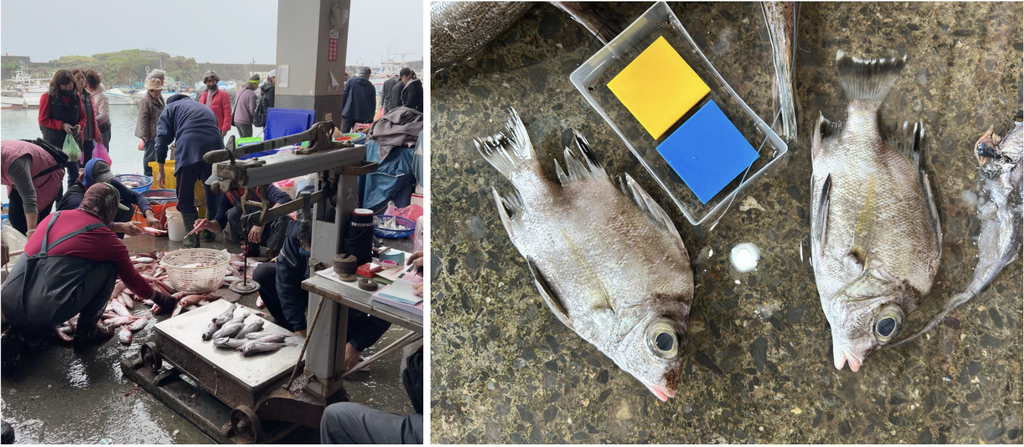
For volunteers with personal ties to coastal communities, the changes in the ocean are particularly poignant. Jia, who grew up in Donggang, expressed deep shock upon witnessing an extremely small red snapper being caught. "The severity of overfishing exceeded imagination," she stated. "I realized I cannot just be a consumer; I must start taking action." Similarly, volunteer Christina from Malaysia was dismayed to see rare fish species, which should be conserved in marine museums, appearing in the bloody chaos of auction scenes.
A poignant and anonymous volunteer account shed light on another critical dimension of the industry: the plight of migrant workers. "The conditions on ships were dirty and chaotic, with migrant workers directly showering on board, and working conditions were extremely harsh. It was very distressing to see," the volunteer reported. This observation underscores that marine conservation is not solely about the health of fish populations but also encompasses the fundamental dignity and labor rights of every individual within the entire industry chain. This dual challenge of resource depletion and human rights exploitation has become a central focus for many ocean advocacy groups.
Empowering Change: Volunteer-Designed Ocean Education Booths
The impact of ocean issues extends beyond overfishing and encompasses distant-water challenges such as fisheries labor rights reform and the threat of deep-sea mining. To address this broader spectrum of concerns, Greenpeace has initiated comprehensive public outreach programs, with volunteers at the forefront of designing and executing educational campaigns.
In 2024 and 2025, the Greenpeace Community Outreach Campaign Team launched the "Taichung Ocean Volunteer Project." This initiative aims to empower volunteers in Taichung, a city without a Greenpeace office, to become independent advocates capable of independently organizing public awareness campaigns, from booth preparation to lesson plan creation.
The Relay of Ocean Protection: Experienced Volunteers Guiding New Recruits
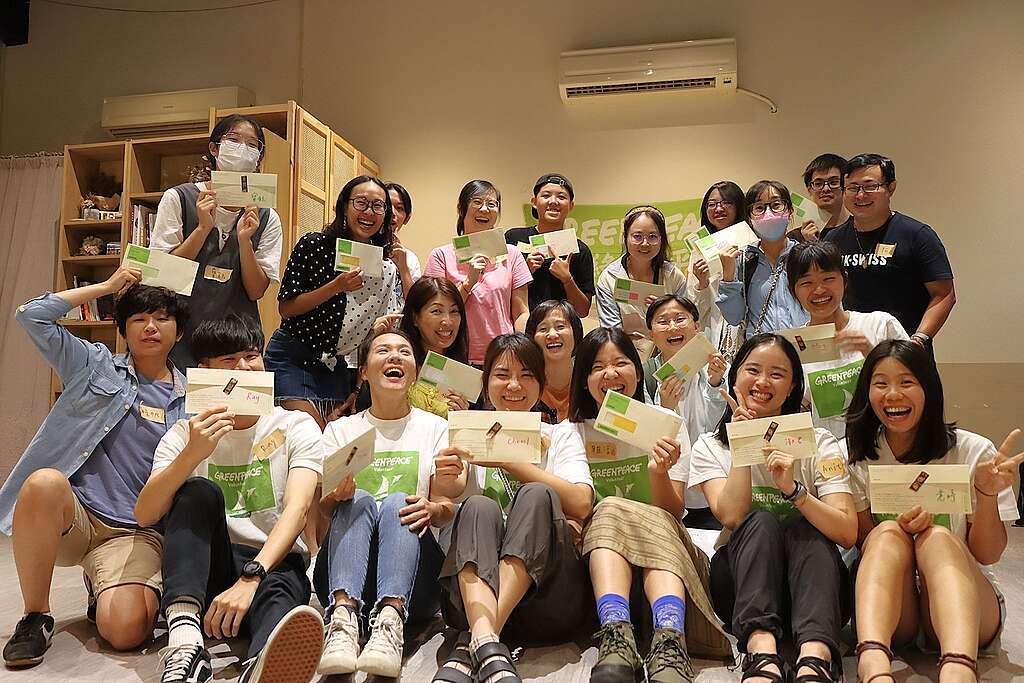
The "Ocean Booth Volunteer Project Training Camp" has been a cornerstone of this empowerment strategy. The first camp, held from August 31 to September 1, 2024, in Taichung, saw 18 volunteers divided into three groups focusing on "Deep-sea mining," "Distant-water issues" (overfishing and fisheries labor rights), and "Nearshore issues" (Taiwan Marine Conservation Act and sustainable seafood). A unique aspect of this training is the leadership provided by experienced Greenpeace volunteers who share their advocacy expertise, guiding new recruits through the entire process of developing and implementing an ocean advocacy action from inception to execution.
The second training camp, from August 16 to 17, 2025, engaged 19 volunteers across three thematic groups: "Coral bleaching," "Marine protected areas," and "Overfishing." In addition to content expertise, volunteers received training in social media marketing to amplify their messages and expand their reach.
From Concept to Creation: Volunteers Design Engaging Educational Experiences
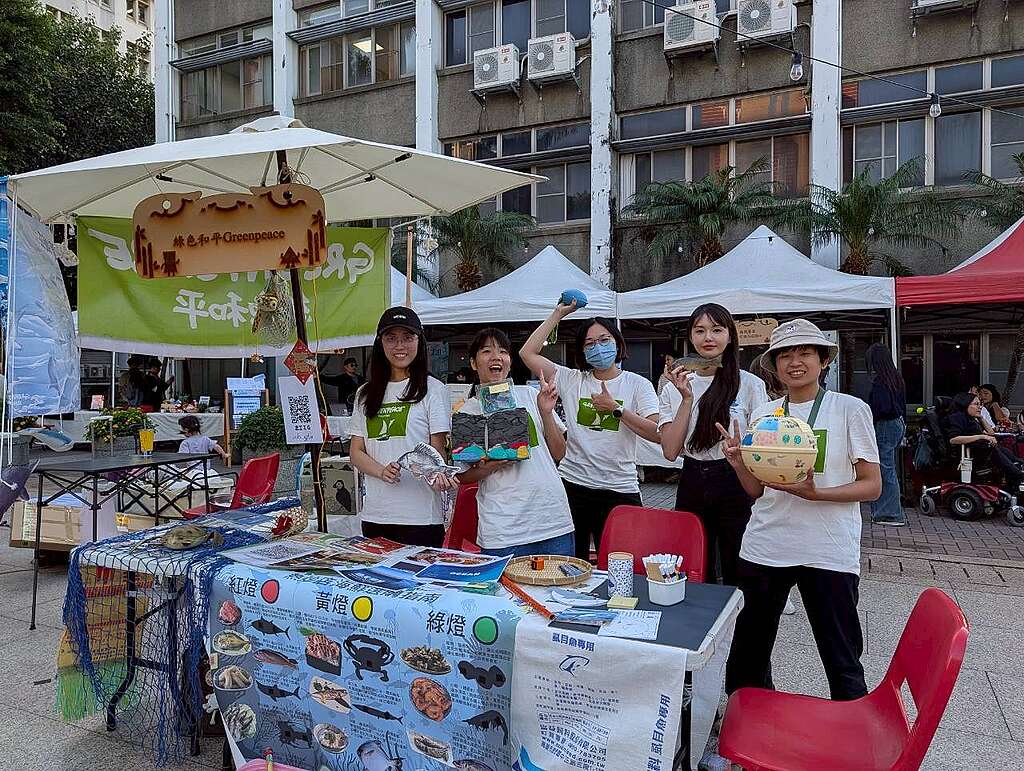
The volunteers’ creativity shines through in the innovative educational tools and activities they develop. During New Year booth events, they ingeniously crafted "marine debris pens" using driftwood, fishing nets, and lines salvaged from marine debris. These pens were then used to invite the public to create ocean-themed spring couplets, fostering a hands-on connection to the issue of marine pollution.
To simplify complex sustainable seafood guidelines, volunteers developed an easy-to-understand "red, yellow, green light" system. "Green light" signifies abundant resources that can be consumed frequently, "yellow light" indicates decreasing resources for occasional consumption, and "red light" denotes endangered species that should be avoided. This visual aid was incorporated into an engaging "Seafood purchasing guide for stir-fry restaurant" poster. Participants engaged in a simulated "fishing" activity, where they "caught" seafood from a box and then compared it to the poster’s light categories, learning in a playful manner how to make ocean-friendly choices in their daily lives.
A particularly impactful educational tool is the handcrafted 3D model of "Tuna Human Cans." From the outside, it resembles a typical tuna can, but its interior reveals cutouts of fishermen, dolphins, sharks, and tuna. This display cleverly links fishing methods, the working conditions of fishermen, and the broader ecological and human rights issues associated with tuna consumption. By encouraging participants to interact with bycatch models like sharks and dolphins, volunteers spark conversations about the ecological damage caused by certain fishing practices and the human rights concerns faced by distant-water fishermen, transforming abstract issues into tangible points of consumer awareness. For those seeking deeper understanding, QR codes link to the documentary "Before You Eat," providing further context on the realities of distant-water fishing.
The Ripple Effect: Measuring the Impact of Volunteer Action
Over the past three years, the dedicated efforts of Greenpeace ocean volunteers have been instrumental in bringing critical ocean issues into public discourse. Through their persistent booth activities and engaging public conversations, they have achieved significant milestones:
- Expanding Reach: The number of people engaged in protective efforts has grown substantially, with over two thousand individuals directly impacted by the volunteers’ creative initiatives and tireless work.
- Policy Influence: The collective advocacy of volunteers played a significant role in raising public awareness and supporting the eventual passage of Taiwan’s "Marine Conservation Act" in 2025.
- Data Collection: Thousands of photographs of fish have been collected, contributing to a vital database that informs scientific research and conservation policy.
- Public Awareness: Countless individuals have been reached through educational booths and outreach activities, fostering a greater understanding of the complex challenges facing Taiwan’s oceans.
Collective Strength: Volunteers Reflect on the Future of Ocean Protection
The dedication and passion of these volunteers are palpable. Senior volunteer A-Kuan emphasizes the importance of bringing unseen issues to light: "Just because you cannot see it does not mean it is not happening." The volunteers’ commitment to creating interactive games and educational tools stems from a desire to help the public understand that behind the seafood on their plates lie complex human rights exploitation issues.
Volunteer Yixuan, who served as a group leader, highlighted the continuous improvement in communication skills during booth activities. "At the beginning, our opening lines were very awkward, but later we adjusted quickly depending on tools and situations, such as using ‘marine debris spring couplets’ to attract attention. I think this is a big improvement for everyone!" This adaptability and learning are hallmarks of the volunteer program.

Baoyu, a volunteer for two consecutive years, identified the camaraderie and shared purpose as the primary motivators. "Because the initial volunteer experience was so good, everyone was willing to listen and accept each other’s opinions, so we continued until now," she shared. "Of course, the second group of team members was also very positive and warm." This sense of community and shared mission is crucial for sustaining long-term engagement in environmental activism.
The Continuing Call to Action: Weaving a Stronger Net for Ocean Health
The net of ocean protection, woven by these dedicated volunteers, has expanded significantly since 2025, extending from meticulous data collection at fishing ports to creative public engagement in vibrant markets. Each photograph collected and every conversation held represents a step towards restoring the health of our increasingly depleted seas. While thousands of photos have been gathered and countless individuals have been reached, the immense challenges confronting our oceans persist.
The baton of ocean protection is continuously being passed on. Individuals seeking to contribute can now join this vital movement. Those interested in contributing directly to data collection can sign up as "fish survey volunteers" and become frontline guardians of the ocean. For those unable to commit time but eager to support the cause, joining Greenpeace volunteers and following their Instagram community provides a pathway to stay informed about activities and stand in solidarity with ongoing actions. The future of our oceans depends on this collective strength, and every contribution, no matter how small, helps weave a stronger, more resilient net for marine conservation.

 Asep Darmawan
 Asro
Asro