Ali Ikhwan
The United States is poised to enact a significant tax overhaul, a move that has drawn considerable attention from international economic observers, particularly in China. Chinese scholars are urging for a balanced and objective perspective on the potential impacts of this legislation, emphasizing that the anticipated benefits might be more nuanced than initially presented, especially concerning targeted beneficiaries within the US economy. While the reform aims to position the US as a more attractive business destination, experts suggest that the actual economic ramifications, both domestically and internationally, warrant careful consideration.
US Tax Reform: A Closer Look at the Numbers
The cornerstone of the US tax reform proposal is a substantial reduction in the corporate tax rate, a move intended to stimulate business investment and repatriation of foreign earnings. However, analyses from institutions like the US Congressional Budget Office (CBO) suggest that the headline reduction in the nominal corporate tax rate, often cited as a 15 percentage point decrease, might translate into a more modest real decrease in tax payments for many corporations. This is attributed to a simultaneous expansion of the tax base, which effectively offsets some of the rate cut. Liu Shangxi, head of the Chinese Academy of Fiscal Sciences, explained that the net impact on actual tax liabilities could be as little as a 2 percentage point reduction.
This complexity means that investors are unlikely to make immediate, wholesale decisions to shift capital to the US solely for tax avoidance purposes. Instead, they are expected to engage in thorough calculations, weighing the real effects of the tax changes against other crucial investment factors. These include the inherent market potential of the US, the quality of its infrastructure, the regulatory environment, and other business-friendly conditions that contribute to overall profitability and long-term viability. The allure of a lower tax rate alone may not be sufficient to overcome these fundamental economic considerations.
Anticipated Beneficiaries and the Ripple Effect
The prevailing assumption among economic scholars is that the initial beneficiaries of the US tax cuts will be business owners and investors. The theory posits that increased profitability and retained earnings could subsequently fuel greater investment. This heightened investment, in turn, is expected to create more job opportunities and potentially lead to an upward pressure on workers’ wages as demand for labor increases. However, the timeline and magnitude of these secondary effects remain subjects of ongoing debate and depend heavily on the overall economic climate and the specific sectors that experience the most significant investment inflows.
China’s Own Tax Reform Journey
In parallel to the US developments, China has been actively pursuing its own comprehensive tax reform agenda for years. A pivotal element of this initiative has been the value-added tax (VAT) pilot program, launched in 2012. This program has been instrumental in streamlining the tax system and reducing the tax burden on businesses. Official data indicates that, as part of China’s broader economic rebalancing strategy, these tax reduction efforts have collectively shaved off nearly 1.7 trillion yuan (approximately $257 billion) from tax revenues to date.
The Chinese reforms have strategically targeted key sectors deemed crucial for sustainable growth and innovation. Specifically, tax incentives have been implemented for businesses engaged in technology innovation and those contributing to green development initiatives. Furthermore, small and medium-sized enterprises (SMEs), often considered the backbone of the economy, have also benefited from targeted tax relief measures designed to foster their growth and competitiveness.
The impact of these reforms on government revenue has been substantial. Over the past five years, the central government’s income from administrative fees has seen an average annual decline of 320 billion yuan. Similarly, provincial-level governments have experienced a reduction of approximately 47 billion yuan per year in their administrative fee income, reflecting a broader trend of fiscal recalibration and a commitment to easing the burden on economic actors.
A Timeline of US Tax Reform
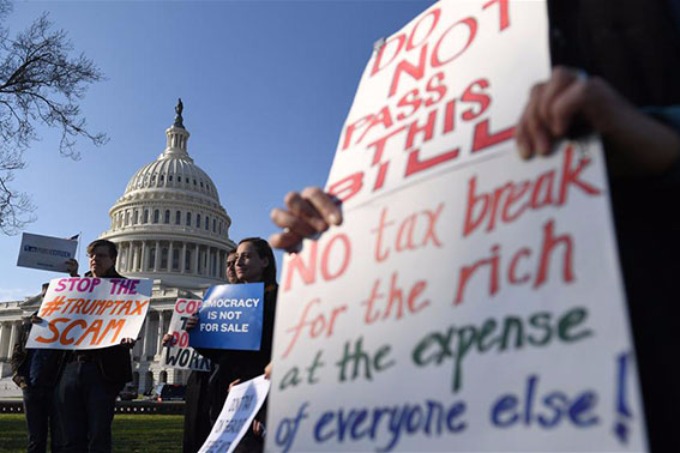
The legislative process for the US tax overhaul has been a complex and often contentious one. The approval of the tax reform bill in the US Congress marked a significant milestone, but the journey to becoming law is not yet complete. A period of at least two weeks is typically required for President Donald Trump to sign the bill into law, though the possibility of further delays cannot be entirely ruled out.
The period leading up to congressional approval was characterized by intensive negotiations between the House of Representatives and the Senate. Differences between their respective versions of the tax bill required careful deliberation and compromise to reconcile. These negotiations continued intensely, with a target for resolution often set for mid-December, underscoring the urgency and political stakes involved in passing the legislation.
Addressing Base Erosion and Profit Shifting
A critical component of both the House and Senate tax bills involves the introduction of measures to combat "base erosion and profit shifting" (BEPS). This refers to tax avoidance strategies that exploit gaps and mismatches in international tax rules to artificially shift profits from higher-tax jurisdictions to those with lower or no taxes. The Organization for Economic Cooperation and Development (OECD) has identified BEPS as a significant challenge to the integrity of global tax systems, and its recommendations have influenced the design of the US legislation.
The inclusion of BEPS rules in the US tax reform package is likely to have several implications for international businesses and investors, including those from China. According to a research note from the professional services firm KPMG, Chinese investors may potentially see an increase in their after-tax returns from investments in the US as a result of these provisions. Conversely, Chinese multinational enterprises could face intensified competition from their US counterparts. This heightened competition stems from the reduction in the US corporate tax rate, which could enhance the cost-competitiveness of American firms in the global marketplace.
In light of these potential shifts, Chinese tax policymakers may need to consider implementing responsive measures to maintain the competitiveness of Chinese businesses. This could involve adjustments to domestic tax policies or the exploration of new incentives to support Chinese companies operating both domestically and internationally.
Global Ramifications and the Specter of Tax Competition
The potential enactment of the US tax reform bill could trigger a broader global economic trend, according to Liu Yi, a professor at the School of Economics in Peking University. He suggests that if President Trump successfully signs the bill into law, a wave of tax reduction competition among the world’s major economies is likely to emerge over the long term. Countries may feel compelled to lower their own corporate tax rates to remain competitive and attract foreign investment.
This intensified tax competition, however, could have broader societal implications. Professor Liu cautioned that a global race to the bottom in corporate taxation might lead to reduced government expenditures on social welfare programs. This, in turn, could potentially have a negative impact on the living standards of citizens and the overall social safety net. The challenge for policymakers worldwide will be to strike a delicate balance between fostering economic growth through tax incentives and ensuring the sustainability of essential public services. The US tax overhaul, therefore, is not merely a domestic policy change but a development with far-reaching consequences for the global economic landscape.


 Nana Wu
 Suro Senen