 Azzam Bilal Chamdy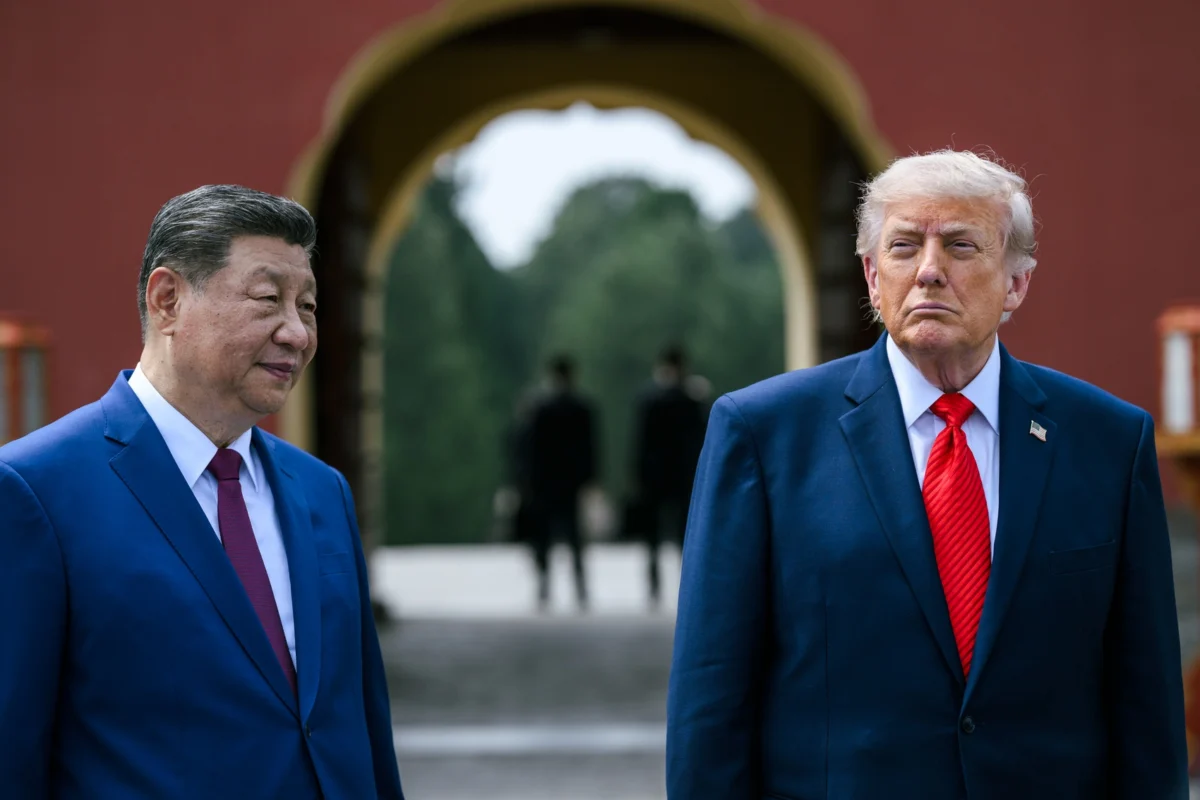
Washington finds itself at a critical juncture in the global artificial intelligence landscape, as US President Donald Trump faces mounting pressure to formulate a robust response to the increasing success of Chinese AI models. These models, often characterized by their cost-effectiveness and adaptability, are gaining traction among companies that, despite acknowledging the superior power of pricier US versions from developers like Anthropic or OpenAI, prefer the more accessible alternatives. The unfolding situation highlights a deepening technological rivalry between the two global powers, forcing the White House to balance national security concerns with the imperatives of fostering innovation and maintaining economic competitiveness.
The Escalating AI Cold War: US Responds to Chinese Dominance in Accessibility
The perceived surge in Chinese AI capabilities has been a growing concern within US policy circles for several years, but it reached a fever pitch this week with the launch of Kimi K3 by Beijing-based firm Moonshot. White House officials were quick to allege that Kimi K3 was developed by illicitly acquiring the capabilities of Anthropic’s most powerful models through a process known as "distillation." This development has brought the intricate challenges of intellectual property (IP) protection, technological sovereignty, and economic competition sharply into focus, prompting urgent calls for a decisive US strategy.
The preference for Chinese AI models, even if less powerful, underscores a significant market shift. Many businesses, particularly startups and those in emerging markets, are drawn to these models due to their lower operational costs and, crucially, their often open-source nature. This contrasts sharply with the proprietary, high-cost offerings from American AI behemoths, creating a chasm in the global AI market that the US government is now struggling to bridge. The economic implications are substantial, as a burgeoning segment of the AI industry gravitates towards solutions that offer greater flexibility and affordability, regardless of their origin.

Allegations of Industrial Espionage: The ‘Distillation’ Controversy
At the heart of the current dispute lies the practice of "distillation." In the realm of AI, distillation refers to a technique where a smaller, simpler "student" model is trained to mimic the behavior and outputs of a larger, more complex "teacher" model. This process is widely used across the industry as a legitimate method to create more efficient and deployable AI systems, often by taking a powerful proprietary model and using it to generate data that then trains a smaller model. However, US officials contend that Chinese firms have deployed this method at an industrial scale to illicitly copy proprietary American systems, effectively engaging in intellectual property theft and industrial espionage.
Anthropic, a leading US AI developer, has been particularly vocal on this issue. Earlier this year, the company sent formal letters to US lawmakers, explicitly accusing Chinese firms Moonshot, DeepSeek, and MiniMax of industrial-scale distillation of its Claude models. Sarah Heck, Anthropic’s head of public policy, publicly articulated the company’s strong stance on social media platform X (formerly Twitter), stating that "illicit distillation is IP theft and industrial espionage" and constitutes "a national challenge that creates serious national security risks for the United States and democratic allies." This direct accusation by a major American AI firm has lent significant weight to the White House’s concerns, transforming a technical debate into a geopolitical flashpoint.
The alleged widespread use of illicit distillation by Chinese entities, according to US officials, represents a systematic effort to rapidly close the technological gap with American innovators without incurring the substantial research and development costs. If proven, this would allow Chinese companies to offer competitive AI solutions at a fraction of the cost, undermining the business models of US firms that invest billions in cutting-edge AI research.
Circumventing Sanctions: The Nvidia Chip Conundrum
Beyond IP theft, the US administration has also raised serious questions about how Chinese firms are acquiring the necessary hardware to power their increasingly sophisticated AI models. Michael Kratsios, director of the White House Office of Science and Technology Policy, on Wednesday decried the alleged distillation practices and strongly suggested that Moonshot had also circumvented US export curbs on powerful AI chips from Nvidia. Nvidia, a US-based company, dominates the global market for graphics processing units (GPUs), which are the foundational infrastructure for training and running advanced AI models.

The US government, under both the previous and current administrations, has imposed stringent export controls on high-end AI chips to China, aiming to limit Beijing’s ability to develop advanced computing capabilities that could be used for military modernization or surveillance. These restrictions are a cornerstone of Washington’s broader strategy to curb China’s technological ascent in critical sectors. The allegation that Chinese firms are bypassing these controls, potentially through complex supply chains or modified chip designs, poses a direct challenge to the efficacy of US sanctions policy.
In response to these concerns, the Commerce Department’s Bureau of Industry and Security has initiated a formal investigation into Chinese firms, including Moonshot, specifically scrutinizing their use of these restricted chips. A spokesperson for the Bureau confirmed the ongoing probe to The Information, signaling a serious commitment from the US government to enforce its export regulations. The outcome of this investigation could have far-reaching consequences for the global semiconductor industry and the future of AI development, potentially leading to further tightening of export controls or more targeted sanctions. The ability of China to access or produce these critical chips is seen as a key determinant in the long-term AI race.
Washington’s Policy Toolkit: Sanctions, Bans, and Regulatory Debates
The White House is exploring a range of policy options to address what it perceives as aggressive and illicit tactics by Chinese AI developers. Treasury Secretary Scott Bessent this week escalated the rhetoric by threatening sanctions against China, a move that would significantly broaden the scope of existing US-China economic tensions. These potential sanctions could target specific companies, individuals, or even entire sectors involved in the alleged IP theft or circumvention of export controls.
Adding another layer of complexity to the policy debate are reports that the US is also weighing a ban or curbs on foreign-made open-source models that are often built through distillation. Such a policy would represent a drastic step, potentially cutting off American companies from a significant and growing segment of the global AI market. The implications of such a ban would extend beyond US-China relations, impacting the broader ecosystem of AI development and deployment, particularly for smaller enterprises and startups globally that rely on the accessibility and flexibility of open-source solutions.

The consideration of such measures comes against a backdrop of increasing US-China technological competition, which has seen the US previously implement bans on Chinese telecommunications giants like Huawei and explore restrictions on platforms like TikTok. These actions underscore a broader strategic effort by Washington to safeguard its technological leadership and national security interests in an era defined by rapid digital transformation and geopolitical rivalry. The debate around AI is thus not merely about technology but about global power dynamics, economic influence, and the future of digital governance.
A Divided Industry: Startups vs. AI Giants
The prospect of a ban or strict curbs on foreign-made open-source models has ignited a fierce debate within the American technology industry itself, highlighting a significant divergence of interests between established AI giants and the vibrant startup community. Open-source, or open-weight, models are particularly appealing to startups and companies that seek greater control over their AI infrastructure. These models cost less, offer customizable source code, and free developers from being beholden to the proprietary ecosystems of large companies like Anthropic, OpenAI, or Google, which typically offer their models as "black boxes" that must be used "as is" and often come with substantial licensing fees.
The startup community has vehemently urged the White House to reconsider any plan to block foreign-made open-source models. They argue that such a move would unfairly reward the dominant US AI giants, stifle crucial competition, and impose prohibitively high prices for AI solutions on entrepreneurs. This sentiment was echoed by Bill Gurley, a prominent former venture capitalist, who wrote in The Washington Post that "Lobbyists are urging Washington to treat open-model AI as a security threat. In fact, it is something more familiar: proper competition that should be welcomed."
On Wednesday, this opposition coalesced into a formal appeal, with a group of 179 startups, under the banner of the "Little Tech Association," sending a letter to the Trump administration. The letter strongly urged the administration to "think twice against any outright ban or strict curbs on foreign-made models." The Association warned that "Denying American startups access to models available abroad would stifle competition, entrench incumbents, and function as a tax on intelligence," articulating concerns that such policies would harm the very innovation ecosystem the US claims to protect.

The "Kimi Panic" and Calls for a Light Touch
Critics of limiting open-source models suggest that the current alarm, dubbed the "Kimi Panic" by some, is partly driven by the commercial interests of OpenAI and Anthropic. These two AI giants are reportedly facing immense financial pressure ahead of anticipated Initial Public Offerings (IPOs) in the coming months. Wall Street investors are scrutinizing their business performance more closely than ever, making the prospect of robust, low-cost competition from foreign open-source models a significant concern for their valuations and future profitability. Some analysts believe that lobbying for restrictions on open-source models could be a strategic move by these companies to eliminate emerging rival technologies and solidify their market dominance before going public.
David Sacks, the White House’s former chief on AI policy and a figure who still maintains influence with the president, publicly dismissed the urgency of the situation. "The Kimi Panic needs to stop," Sacks stated on X, advocating for a continuation of the administration’s current approach. He argued that "President Trump’s light-touch regulatory approach is working… As long as we don’t sabotage ourselves with unnecessary rules, the US will continue to win." This perspective emphasizes market forces and limited government intervention as the optimal path for American AI leadership.
Further weighing into the debate, and firmly supporting the use of Chinese models, was Jensen Huang, the highly influential CEO of Nvidia. As the provider of the core infrastructure for nearly all advanced AI development, whether proprietary or open-source, Nvidia holds a unique position. When asked by Axios if American companies should be allowed to use Chinese AI models, Huang responded unequivocally, "absolutely." He added, "These Chinese models are excellent. Open source models that are excellent should be used," underscoring the quality and utility of these alternative systems from a hardware perspective. Huang’s statement highlights a potential conflict of interest within the US tech sector, as Nvidia’s business thrives on the widespread adoption and utilization of AI, regardless of the model’s origin, as long as it requires their powerful chips.
Broader Geopolitical and Economic Implications
The ongoing debate over Chinese AI models and US policy responses carries profound geopolitical and economic implications. At a macro level, it signifies an intensification of the US-China tech rivalry, which is increasingly being viewed as a "cold war" for technological supremacy. The outcome of this struggle could redefine global power dynamics for decades to come, influencing everything from economic growth to military capabilities.

For the global AI development and innovation ecosystem, the US policy choices could lead to fragmentation. A ban on foreign-made open-source models could create a bifurcated AI landscape, with distinct US-centric and China-centric ecosystems, potentially hindering global collaboration and the free flow of innovation. Such a scenario would force countries and companies worldwide to choose sides, complicating supply chains and limiting access to diverse technological advancements.
Economically, restricting access to open-source models would undoubtedly raise costs for American startups, potentially stifling innovation at the grassroots level. This could put US entrepreneurs at a disadvantage compared to their international counterparts who would still have access to these cost-effective alternatives. Moreover, it could inadvertently strengthen the market position of the very US AI giants whose proprietary models are the most expensive, creating a less competitive domestic market. The challenge for the Trump administration lies in meticulously defining the line between legitimate national security concerns and protectionist economic policies, ensuring that its actions do not inadvertently harm America’s long-term technological dynamism. The global community watches closely as Washington navigates this complex intersection of technology, trade, and national security.
Timeline of Key Developments
- Earlier This Year: Anthropic dispatches letters to US lawmakers, formally accusing Chinese firms Moonshot, DeepSeek, and MiniMax of industrial-scale distillation of its proprietary Claude models. This marks a significant escalation in private sector engagement on the issue.
- This Week: Moonshot officially releases its Kimi K3 AI model, immediately drawing scrutiny from White House officials who allege it was developed through illicit distillation of Anthropic’s technologies.
- Wednesday:
- Michael Kratsios, Director of the White House Office of Science and Technology Policy, publicly condemns the alleged distillation practices and suggests Moonshot may have circumvented US export curbs on Nvidia AI chips.
- The "Little Tech Association," representing 179 US startups, sends a letter to the Trump administration, urging against any outright ban or strict curbs on foreign-made open-source AI models, citing concerns about competition and innovation.
- Ongoing: The Commerce Department’s Bureau of Industry and Security formally initiates an investigation into Chinese firms, including Moonshot, regarding their use of restricted Nvidia AI chips, signaling a direct enforcement effort.
- Imminent: Treasury Secretary Scott Bessent threatens sanctions against China in response to the allegations. Reports indicate the US is actively weighing a ban or significant curbs on foreign-made open-source AI models, setting the stage for potential new regulations.
- Upcoming Months: Anthropic and OpenAI are reportedly facing significant financial pressure as they prepare for anticipated Initial Public Offerings (IPOs), a factor that some critics suggest influences their advocacy for stricter controls on competitive open-source models.

 Jia Lissa