Ammar Sabilarrohman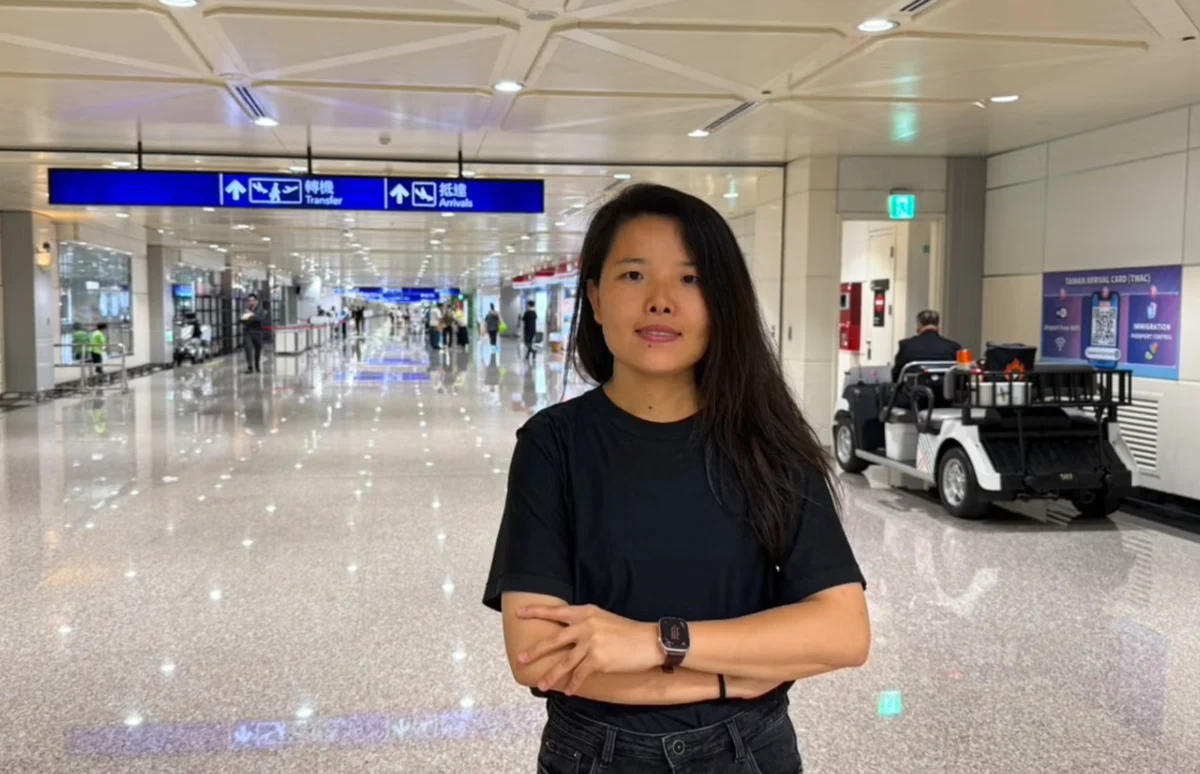
Taiwan confirmed on Friday that it has provided "temporary accommodation" to a Chinese citizen, a development that quickly brought into sharp focus Beijing’s escalating campaign against religious freedom and dissent. The individual in question has been identified by the U.S.-based Christian human rights organization ChinaAid as Ruth Wang, a prominent lawyer from Beijing’s Vdoor Law Firm, who had been representing the detained leaders of the renowned Beijing Zion Church. Wang, accompanied by her family, reportedly arrived in Taiwan on Wednesday, seeking protection from Taiwanese authorities due to intense and increasing government pressure stemming from her legal work.
Taiwan’s Mainland Affairs Council (MAC), the island’s top body for China policy, issued a brief but significant statement in response to media inquiries. While refraining from identifying the individual, the MAC confirmed that it had provided a "Chinese national transferring through a Taiwanese airport" with "temporary accommodation on humanitarian grounds and is following up on the matter." This carefully worded statement underscores the delicate diplomatic balance Taiwan must maintain while upholding its commitment to democratic values and human rights. The incident not only highlights the plight of religious minorities and human rights defenders in mainland China but also subtly emphasizes the ideological chasm between democratic Taiwan and authoritarian Beijing.
The Intensifying Crackdown on Religious Freedom in China

The flight of Ruth Wang is not an isolated incident but rather a symptom of a broader and more severe crackdown on religious communities across mainland China under the leadership of President Xi Jinping. Since 2012, the Chinese Communist Party (CCP) has aggressively pursued a policy known as "Sinicization of religion," which aims to bring all faiths – including Christianity, Islam, Buddhism, and Taoism – under strict Party control and ensure their practices align with socialist values and Chinese culture. This policy mandates loyalty to the Party above religious doctrine and has led to unprecedented levels of repression.
For Christians, this has meant increased pressure on both state-sanctioned churches, which operate under the Three-Self Patriotic Movement (Protestant) or the Chinese Patriotic Catholic Association (Catholic), and the vast network of unregistered "house churches." While state-sanctioned churches face mandatory ideological education, surveillance, and restrictions on youth participation, house churches, which choose to operate independently of government oversight, face far more severe persecution. They are often deemed "illegal organizations" and are subject to forced closures, demolitions, arrests of pastors and congregants, and confiscation of property.
The revised Regulations on Religious Affairs, implemented in February 2018, significantly tightened controls over religious activities, granting local authorities broader powers to monitor, investigate, and punish unregistered religious groups. These regulations have been widely criticized by international human rights organizations for legalizing and intensifying the crackdown. Reports from organizations like the U.S. Commission on International Religious Freedom (USCIRF) and Pew Research Center consistently document a deteriorating environment for religious freedom in China, with thousands of arrests, detentions, and instances of harassment reported annually. Estimates suggest that tens of millions of Christians in China worship outside state-approved churches, making them particularly vulnerable to these policies.
The Case of Beijing Zion Church: A Symbol of Resistance

Beijing Zion Church, founded by pastor Ezra Jin (also known as Jin Mingri), was one of the largest and most prominent unregistered Protestant churches in Beijing, boasting a congregation of over 1,500 members. Known for its vibrant community and intellectual leadership, Zion Church had for years managed to operate in a semi-open manner, attracting a diverse congregation including professionals, academics, and artists. However, its prominence also made it a target as the CCP’s religious repression intensified.
The church began experiencing significant harassment in early 2018. Authorities demanded the removal of a large cross from its building, a demand the church refused, citing religious freedom. This defiance led to escalating pressure, including threats to the church’s landlord, disruption of services, and the installation of surveillance cameras around its premises.
Chronology of Pressure on Zion Church:
- Early 2018: Authorities demand the removal of the church’s cross. Pastor Jin and the congregation refuse.
- Mid-2018: Increased harassment, including threats to landlords, disruption of utilities, and installation of surveillance equipment.
- September 9, 2018: Beijing authorities officially ban Zion Church, declaring it an "illegal social organization." Hundreds of police and urban management officers raid the church’s premises, sealing it off, confiscating property, and detaining some members. The church’s WeChat public account is also shut down.
- October 2018: Following the forced closure, several Zion Church members, including Pastor Ezra Jin, are detained on "suspicion of the illegal use of information networks." This charge is frequently used against individuals who disseminate information or organize activities deemed sensitive by the authorities.
- July 2019: Pastor Ezra Jin is reportedly released from detention. His release was widely attributed to direct intervention from U.S. President Donald Trump, who, according to reports, raised Jin’s case with Chinese President Xi Jinping during a G20 summit in Osaka. This diplomatic leverage underscored the international attention drawn to the persecution of religious leaders in China.
- Ongoing: Despite Pastor Jin’s release, ChinaAid reported that at least eight other members of Zion Church who were detained in October 2018 remain in custody, facing various charges related to their religious activities. Their fate remains uncertain, highlighting the arbitrary nature of legal processes for dissidents in China.
Ruth Wang: A Lawyer on the Front Lines

Ruth Wang’s role as a lawyer for the detained leaders of Beijing Zion Church placed her directly in the crosshairs of the Chinese state’s apparatus for suppressing dissent. In China, human rights lawyers, particularly those who take on politically sensitive cases involving religious freedom, ethnic minorities, or civil rights, operate under immense personal and professional risk. The "709 crackdown" of 2015, which saw hundreds of lawyers, legal assistants, and activists detained, interrogated, and some imprisoned, served as a stark warning to those who challenge the state.
Lawyers representing individuals from unregistered churches often face disbarment, harassment, surveillance, and even detention themselves. Their law firms can be pressured to drop cases, and their families can be targeted. Wang’s decision to flee China, as reported by ChinaAid, was driven by "concerns about increasing government pressure related to her legal work and representation of detained Beijing Zion Church leaders." This implies that the pressure had escalated to a point where her safety, and potentially that of her family, was directly threatened, making continued advocacy untenable within China. Her flight underscores the increasingly perilous environment for legal professionals dedicated to upholding human rights in the country. The fact that she traveled with her family further suggests a profound fear for their collective well-being.
Taiwan’s Deliberate and Humanitarian Response
Taiwan’s response to Ruth Wang’s arrival reflects a careful balancing act between its democratic principles and the complex political realities of cross-strait relations. The Mainland Affairs Council’s statement, while confirming the provision of "temporary accommodation on humanitarian grounds," meticulously avoided terms like "asylum" or "refugee," which carry significant legal and political weight. This is a deliberate strategy to provide assistance without directly challenging Beijing’s sovereignty claims or creating a formal precedent that could be politically exploited.

Taiwan lacks a comprehensive asylum law specifically for mainland Chinese citizens, often handling such cases on an ad-hoc basis through existing immigration laws or special arrangements based on humanitarian considerations. Each case is evaluated individually, taking into account national security, social stability, and cross-strait relations. However, Taiwan has a historical track record of offering sanctuary to Chinese dissidents, particularly after the Tiananmen Square crackdown in 1989, albeit under different geopolitical circumstances.
By emphasizing "humanitarian grounds" and the individual merely "transferring through a Taiwanese airport," the MAC seeks to frame its action as a compassionate response to an individual’s distress rather than a political statement. Nevertheless, the act itself carries significant symbolic weight, positioning Taiwan as a beacon of freedom and democracy in contrast to mainland China’s authoritarianism. It subtly reinforces Taiwan’s distinct identity and commitment to universal human rights, values that are central to its self-governance and international standing.
Broader Implications for Cross-Strait Relations and Human Rights
The incident involving Ruth Wang is poised to add another layer of complexity to the already strained relations between Taiwan and mainland China. Beijing views Taiwan as a renegade province that must be reunified with the mainland, by force if necessary, and consistently opposes any actions by other nations or entities that might suggest Taiwan’s independent sovereignty. Taiwan’s decision to host a Chinese dissident, particularly one involved in a politically sensitive religious freedom case, will almost certainly be viewed by Beijing as an interference in its internal affairs and a provocative political move.

While Beijing has not yet issued an official response, it is likely to condemn Taiwan’s actions, possibly accusing Taipei of harboring "criminals" or engaging in "separatist activities." Such condemnations could manifest in increased diplomatic pressure, military posturing near Taiwan, or further restrictions on cross-strait exchanges. The incident underscores the fundamental ideological differences between the two sides: Taiwan, a vibrant democracy, feels compelled to respond to humanitarian crises, while China, an authoritarian state, views such actions as challenges to its sovereign authority.
Beyond cross-strait politics, Wang’s flight serves as a potent reminder of the deteriorating human rights situation in mainland China. It highlights the courage of individuals like Ruth Wang, who risk everything to defend fundamental freedoms, and the escalating cost of dissent in a society where the rule of law is subservient to the Party. International human rights organizations will likely cite this case as further evidence of China’s systematic suppression of religious freedom and its crackdown on the legal profession.
The symbolism of a Chinese human rights lawyer seeking refuge in democratic Taiwan is profound. It visually represents the aspirations for freedom that many within mainland China hold and the stark contrast between two systems of governance. For Taiwan, offering temporary accommodation, even with careful diplomatic language, reinforces its moral authority and its commitment to universal values, solidifying its identity as a democratic bulwark in the face of an increasingly assertive authoritarian neighbor. The ultimate resolution of Ruth Wang’s case will be closely watched, as it could set a precedent for future instances of mainland Chinese dissidents seeking refuge and further shape the narrative of human rights and democracy in the Indo-Pacific region.

 Sagoh
Sagoh
 Asro
Asro