Neng Nana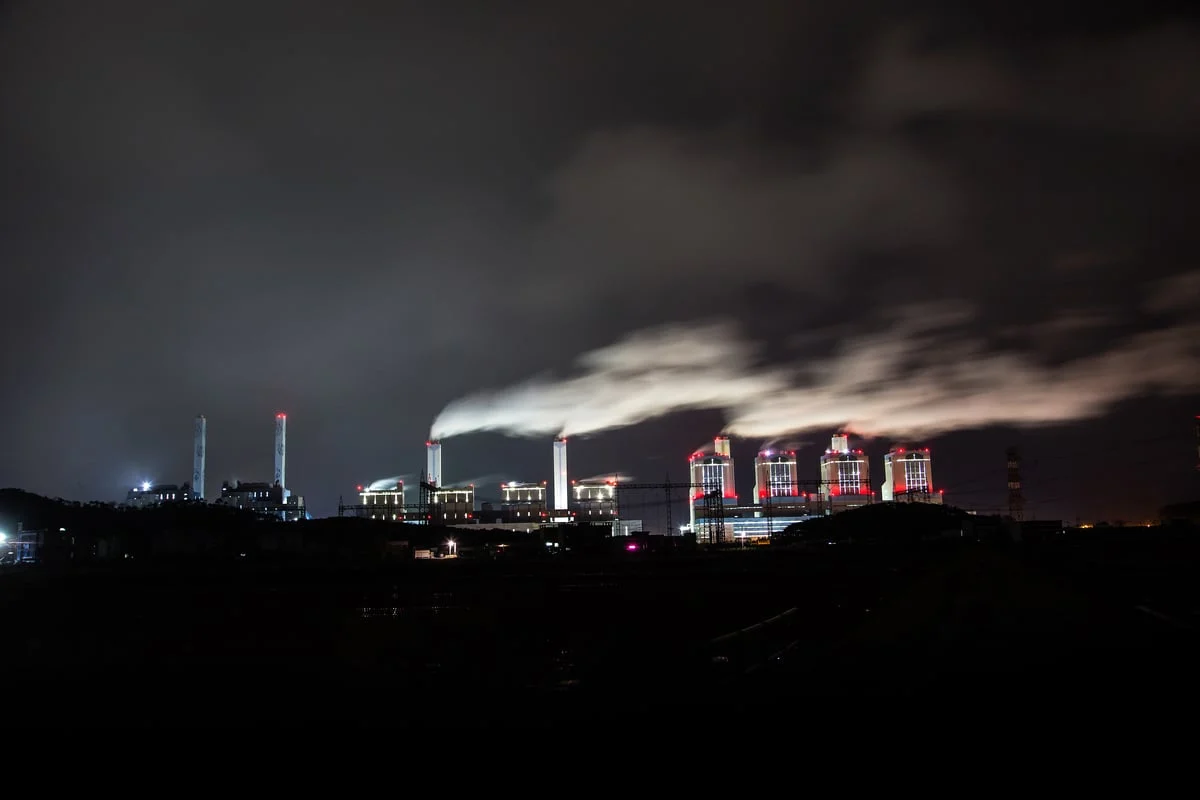
SEOUL – In the wake of the Ministry of Climate, Energy, and Environment’s unveiling of the "Energy Transition Promotion Plan" on April 6th, Greenpeace East Asia has issued a strong critique, labeling the government’s strategy as inadequate and posing a significant risk of failing to reduce the nation’s reliance on volatile fossil fuels. This dependence, exacerbated by ongoing geopolitical tensions, including the war in Iran, has become a pressing concern for economic stability and national security.
The government’s plan outlines ambitious targets for expanding renewable energy capacity, aiming for over 100 gigawatts by 2030 and increasing the share of renewable energy in overall power generation to more than 20%. While these goals represent a step towards decarbonization, Greenpeace points to several provisions within the plan that undermine its effectiveness. Notably, while the plan proposes retiring 40 out of the nation’s 60 coal-fired power plants by 2040, it simultaneously permits the retention of 21 coal plants that will still possess remaining design life after this date, designating them as "security reserves."
Lingering Coal Power: A Threat to Decarbonization Goals
Yeonho Yang, Climate and Energy Campaign Lead at Greenpeace East Asia’s Seoul office, expressed deep concern over the continued reliance on coal. "It is deeply concerning that, under the banner of ‘energy security,’ a third of coal plants are being kept on standby as emergency power sources, leaving the door open for their continued pollution," Yang stated. "This crisis has made it evident that the government’s coal phase-out plan is one that can be called off at any moment, leaving the government’s commitment in question."
The decision to maintain operational coal plants, even as "security reserves," is viewed by environmental advocates as a significant concession that jeopardizes progress towards climate goals. Historically, such "reserve" designations have often led to extended operational periods, particularly during times of perceived energy scarcity. The ongoing conflict in the Middle East, impacting global energy markets and supply chains, has heightened anxieties about energy security, potentially providing a pretext for the continued use of these older, polluting facilities.
The LNG Swap: A False Transition?
Further compounding Greenpeace’s criticism is the plan’s projected reliance on Liquefied Natural Gas (LNG) to fill the gap created by the planned reduction in coal power. "Furthermore, the government’s pledge to reduce coal means little when the gap is simply filled by another fossil fuel, LNG, which, under the current plan, is set to expand to its largest installed capacity in the country’s history," Yang elaborated. "This is a fossil fuel swap rather than a genuine shift to clean energy. Only with a full shift to renewables can we avoid the economic crisis triggered by recurring geopolitical events. People cannot wait for a self-sufficient, affordable, and clean energy system."
The expansion of LNG infrastructure, while often presented as a cleaner alternative to coal, still contributes to greenhouse gas emissions and perpetuates dependence on fossil fuels. This strategy, according to Greenpeace, represents a missed opportunity to accelerate the transition to truly sustainable energy sources. The projected increase in LNG capacity, reaching historic levels, signifies a continued investment in fossil fuel infrastructure at a time when global scientific consensus calls for an immediate and drastic reduction in such investments.
Transport Sector Challenges: Speeding Up, Not Shifting Gears
In the transport sector, the government has set a target to accelerate its goal of having 40% of new vehicle sales be electric or hydrogen by 2030. This includes provisions for the early electrification of police cars, LPG taxis, rental vehicles, and corporate fleets. However, Greenpeace argues that the plan lacks the necessary punitive measures to enforce a genuine market shift away from fossil fuels.
Eunseo Choi, Transport Campaign Lead at Greenpeace East Asia, highlighted the shortcomings of the current approach. "This is a critical inflection point for South Korea’s transport sector, which accounts for 26.4% of its oil consumption," Choi stated. "Simply pledging to ‘bring forward’ the existing 40% by 2030 target is unlikely to send the urgent market signal needed for a rapid transition. Without clear deadlines for phasing out internal combustion engine cars and strong policy support, the current approach falls far short of what is needed to cut road transport emissions – not only to protect people’s daily lives but also to free the economy from its dependence on the volatile and insecure oil industry."
The transport sector’s significant contribution to oil consumption underscores the urgency of a robust transition. The current plan’s emphasis on accelerating existing targets, rather than establishing new, more aggressive ones or implementing binding phase-out dates for internal combustion engine (ICE) vehicles, is seen as insufficient to drive the necessary innovation and investment in electric and hydrogen mobility.
The Need for Binding Policies and Reallocated Subsidies
Choi further emphasized the need for stronger government intervention. "The government must strengthen the promised revision of vehicle greenhouse gas standards this year and announce a phase-out of internal combustion engine vehicle sales, sending a clear and powerful signal to both industry and consumers that the transition is no longer optional," she urged. "At the same time, the temporary fuel tax cut, which disproportionately benefits higher-income households, should have a clear sunset date, with the recovered fiscal resources reinvested into expanding renewable energy-powered charging infrastructure."
The current fuel tax cut, intended to alleviate economic burdens, is criticized for its regressive nature and for failing to incentivize a shift towards cleaner transportation. Greenpeace’s call for its repurposing towards renewable energy infrastructure aligns with a broader strategy of redirecting fiscal support towards sustainable solutions, thereby creating a virtuous cycle of investment and adoption.
Greenpeace’s Call for a Petrostate to Electrostater Transition
Greenpeace East Asia, in its comprehensive assessment, urges the South Korean government to move beyond what it terms "emergency" fossil fuel reserves and temporary measures. This includes reconsidering the easing of coal restrictions and the continuation of fuel tax cuts. Instead, the organization advocates for an accelerated transition from a "petrostate trap to an electrostate."
This strategic shift would involve redirecting fiscal support towards electric vehicles, the development of widespread charging infrastructure, and the establishment of a concrete roadmap to achieve 100 gigawatts of renewable energy capacity by 2030. The ultimate goal, according to Greenpeace, is to build a power and transport system that is structurally immune to the geopolitical shocks that are currently paralyzing the Korean economy and jeopardizing its future prosperity.
Broader Implications for South Korea’s Economy and Energy Security
The debate surrounding South Korea’s energy transition is not merely an environmental issue; it is intrinsically linked to the nation’s economic stability and national security. A persistent reliance on imported fossil fuels leaves the country vulnerable to global price fluctuations and supply chain disruptions, as evidenced by recent geopolitical events. The war in Iran and its ripple effects on oil markets serve as a stark reminder of this vulnerability.
Supporting Data and Context:
- Global Energy Market Volatility: The ongoing conflict in the Middle East has led to significant volatility in global oil and gas prices. The International Energy Agency (IEA) has consistently warned of the risks associated with over-reliance on a limited number of energy suppliers. South Korea, as a net energy importer, is particularly susceptible to these external shocks.
- Renewable Energy Potential: South Korea possesses significant untapped potential for renewable energy, particularly solar and offshore wind. Studies by organizations like the Korea Energy Economics Institute (KEEI) have highlighted the economic and environmental benefits of a more aggressive renewable energy deployment strategy.
- Transport Sector Emissions: The transport sector’s 26.4% share of oil consumption in South Korea translates to a substantial portion of the country’s greenhouse gas emissions. Transitioning this sector is crucial for meeting national climate targets.
- Historical Energy Policy: South Korea has historically prioritized economic growth and industrial development, often relying on stable and affordable energy sources, which have predominantly been fossil fuels. The current "Energy Transition Promotion Plan" represents a policy shift, but its implementation and the pace of change are under scrutiny.
Chronology of Events (Inferred):
- Early 2022 – Present: Heightened geopolitical tensions in the Middle East, including the escalation of conflicts, lead to increased global energy price volatility and supply chain concerns.
- Late 2022 – Early 2023: South Korean government engages in discussions and planning for its national energy strategy, considering global energy market dynamics and domestic energy security needs.
- April 6, 2023: The Ministry of Climate, Energy, and Environment officially announces the "Energy Transition Promotion Plan."
- April 2023 (Following announcement): Greenpeace East Asia reviews the plan and issues its critical response, highlighting perceived shortcomings and advocating for more robust measures.
Analysis of Implications:
The Greenpeace critique suggests that the South Korean government’s current energy strategy risks perpetuating, rather than resolving, the nation’s vulnerability to fossil fuel dependency. By maintaining a significant portion of its coal fleet and significantly increasing LNG capacity, the country remains exposed to the economic and environmental consequences of fossil fuel reliance. The lack of stringent regulations and phase-out deadlines in the transport sector further exacerbates this issue.
A failure to accelerate the transition to renewables and electric mobility could lead to continued economic instability, as the nation remains hostage to volatile global energy markets. Environmentally, it would undermine South Korea’s commitments to climate action and could lead to increased air pollution and associated health costs. Conversely, a more decisive and ambitious energy transition, as advocated by Greenpeace, could foster energy independence, stimulate innovation in green technologies, create new economic opportunities, and build a more resilient and sustainable future for South Korea.
The government’s plan, while acknowledging the need for renewable energy expansion, appears to be a cautious step rather than a bold leap. The coming months and years will reveal whether South Korea can indeed transition from its "petrostate trap" to a truly "electrostater" future, one that is insulated from the unpredictable currents of global geopolitics and built on the foundation of clean, affordable, and secure energy.
Media Contact:
Yujie Xue, International Communications Officer, Greenpeace East Asia, [email protected]

 Lina Hope
 Evan Lee Salim