Raul Delapena Setiawan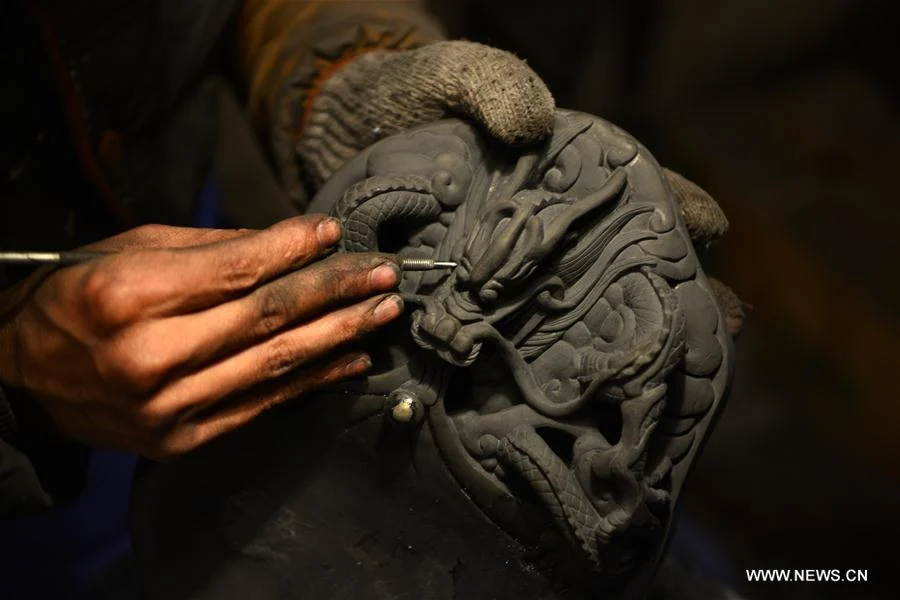
In the heart of Southwest China’s Guizhou province, specifically within the picturesque landscapes of Cengong county, a time-honored tradition of inkstone carving is not merely surviving but actively flourishing. On November 30, 2017, a craftsman was meticulously shaping a Sizhou inkstone in his studio, a scene that encapsulates the enduring legacy of this art form. Sizhou inkstones, primarily originating from Cengong county, boast a history stretching back thousands of years, playing an indispensable role in the practice of Chinese calligraphy and painting. For dedicated practitioners of these ancient arts, the inkstone is as critical as the ink itself, its quality profoundly influencing the texture and consistency of the ink that is ground upon its surface. These inkstones, alongside paper, ink, and brushes, constitute the esteemed "four treasures of study," fundamental tools that have shaped China’s rich cultural and artistic heritage.
The Enduring Significance of the Inkstone in Chinese Art
The "four treasures of study" (文房四宝 – wénfáng sìbǎo) represent more than just implements; they are symbolic conduits for artistic expression and intellectual pursuit in Chinese culture. Paper, with its varied textures and absorbency, serves as the canvas. Ink, traditionally derived from soot and binder, offers a spectrum of black tones. Brushes, crafted from animal hair and bamboo, provide the artist with a versatile range of strokes and nuances. And at the foundation of this ensemble lies the inkstone, a platform for preparing the ink and a testament to artisanal skill.
The inkstone’s role is multifaceted. It is not merely a receptacle but an active participant in the ink preparation process. A well-made inkstone possesses a fine, dense grain that allows for the smooth grinding of ink sticks. This grinding process, often performed with water, releases the pigment from the ink stick, creating a liquid ink of desired consistency. The quality of the stone directly impacts the fineness of the ink particles, the evenness of the grind, and the retention of moisture. A superior inkstone can produce ink that is rich, lustrous, and capable of producing subtle gradations of tone, essential for the expressive power of calligraphy and painting. Conversely, a poorly made inkstone can result in gritty ink, uneven strokes, and a duller finish, hindering the artist’s ability to achieve their desired aesthetic.
A Legacy Forged in Stone: The History of Sizhou Inkstones
The history of inkstone production in China is ancient, with evidence of their use dating back to the Han Dynasty (206 BCE – 220 CE). However, specific regional styles and materials have evolved over millennia, each developing unique characteristics. Sizhou inkstones, predominantly associated with Cengong county, have carved out a distinguished niche within this long tradition. While precise historical records detailing the absolute genesis of Sizhou inkstone carving are scarce, the region’s geological makeup, rich in suitable stone deposits, has undoubtedly contributed to its long-standing tradition.
The production of Sizhou inkstones typically involves extracting a specific type of fine-grained, dense stone, often a type of slate or schist. This raw material is then meticulously shaped, ground, and polished by skilled artisans. The process is labor-intensive and requires a deep understanding of the stone’s properties, as well as the precise requirements for an effective inkstone. The carving itself can range from simple, functional designs to elaborate, intricate artworks, often incorporating motifs from nature, mythology, or calligraphy.
The Craftsmanship of Cengong County
Cengong county, situated in the southeastern part of Guizhou province, has become synonymous with Sizhou inkstone carving. The local geological conditions provide an abundance of the high-quality stone necessary for this craft. Over generations, families and communities in Cengong have passed down the knowledge and techniques of inkstone making, transforming it into a significant cultural and economic activity.
The process begins with the careful selection of raw stone blocks, which are then roughly shaped into the desired form. This is followed by a painstaking grinding and smoothing process, often using abrasive sand and water. The surface of the inkstone must be perfectly flat and smooth, with a subtle texture that facilitates the grinding of ink. The final stage involves the meticulous carving of decorative elements, if any, and the finishing touches to achieve a lustrous sheen. Each Sizhou inkstone is a unique piece, reflecting the individual skill and artistic vision of the craftsman.
The "Four Treasures" in the Modern Era: Challenges and Resilience
In an age of rapid technological advancement and digital media, the traditional arts of calligraphy and painting, and by extension the "four treasures of study," face a unique set of challenges. While the demand for authentic, handcrafted inkstones remains strong among connoisseurs and dedicated artists, the broader societal engagement with these traditional arts has shifted. Younger generations may be more inclined towards digital art forms, and the time-consuming nature of traditional ink preparation can seem anachronistic to some.
However, this does not signal the decline of Sizhou inkstone carving. Instead, it highlights the resilience and adaptability of such traditional crafts. The craftsmen of Cengong county are not just producing functional tools; they are preserving a cultural heritage. Their work embodies a commitment to quality, a deep respect for tradition, and an artistic sensibility that resonates with those who appreciate the tangible and the authentic.
The inclusion of Sizhou inkstones in cultural exhibitions, art fairs, and heritage tours serves to raise awareness and foster appreciation for this craft. The Xinhua photograph, taken in November 2017, serves as a visual testament to the ongoing practice and the dedication of the artisans. It underscores that this is not a dying art form but one that continues to be actively practiced and nurtured.
Supporting Data and Economic Impact
While specific up-to-the-minute economic data for Sizhou inkstone production in Cengong county is not readily available, the broader context of traditional Chinese crafts provides insight into their economic significance. The market for handcrafted cultural artifacts in China is substantial, driven by domestic demand from collectors, artists, and tourists, as well as an increasing international interest in Chinese art and culture.
The production of Sizhou inkstones contributes to the local economy of Cengong county through employment, the sale of raw materials, and the finished products. Artisans, often working in small workshops or even from their homes, rely on this craft for their livelihood. The preservation of this skill set also ensures the continuity of local employment opportunities, particularly in rural areas where alternative economic avenues might be limited.
Furthermore, the tourism associated with such heritage crafts can be a significant economic driver. Visitors drawn to Cengong county to witness the inkstone carving process, purchase authentic pieces, or learn about the tradition can contribute to local businesses, including accommodation, dining, and other cultural attractions.
Broader Implications and Future Outlook
The continued practice of Sizhou inkstone carving in Cengong county has several broader implications:
- Cultural Preservation: It ensures the survival of a significant aspect of Chinese intangible cultural heritage. The skills, knowledge, and aesthetic principles associated with inkstone carving are passed down through generations, preventing their erosion.
- Economic Sustainability: It provides a source of income for local artisans and contributes to the economic vitality of Cengong county, particularly in a region that may face developmental challenges.
- Artistic Continuity: It supports the ongoing practice of traditional Chinese calligraphy and painting by providing essential, high-quality tools. This, in turn, perpetuates the artistic traditions themselves.
- National Identity and Pride: The preservation and promotion of such unique cultural crafts contribute to a broader sense of national identity and pride in China’s rich artistic legacy.
The future of Sizhou inkstone carving will likely depend on several factors: the continued dedication of artisans, the ability to adapt to changing market demands without compromising quality, and effective governmental and institutional support for cultural heritage preservation. Initiatives such as heritage workshops, educational programs for younger generations, and marketing efforts to reach wider audiences could play a crucial role.
The photograph from November 2017 serves as a snapshot of this enduring tradition. It is a reminder that in a world increasingly dominated by the ephemeral, the creation of tangible, beautiful, and functional objects, imbued with centuries of history and skill, continues to hold profound value. The Sizhou inkstone, a humble yet essential component of the "four treasures of study," stands as a testament to the enduring power of craftsmanship and the deep roots of Chinese artistic culture. The continued work of craftsmen in Cengong county ensures that this legacy will be carried forward for generations to come.

 Asep Darmawan
 Rifan Muazin