Pevita Pearce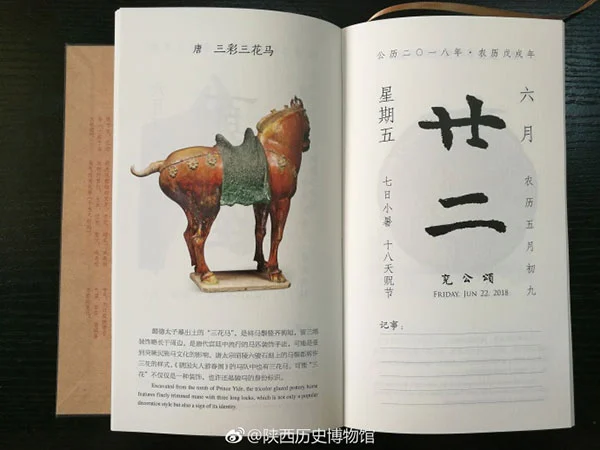
The Shaanxi History Museum unveiled its first-ever calendar dedicated to cultural relics on Tuesday, offering a daily glimpse into 365 exquisite pieces from China’s storied past. This ambitious project, titled the "Shaanxi History Museum Calendar," aims to bring the richness of ancient Shaanxi’s heritage directly into households, blending historical scholarship with contemporary design.
A Collaboration of Heritage and Design
The 2018 edition of the calendar, subtitled "Glamour of Chang’an, the Tang Treasures," represents a significant collaborative effort. Experts from the esteemed Shaanxi History Museum, renowned for its vast collection of artifacts spanning millennia, partnered with the design team behind the highly successful "Palace Museum Calendar." This strategic alliance draws upon the curatorial expertise of one institution and the proven appeal and market success of another, signaling a thoughtful approach to engaging a wider audience with cultural heritage. The "Palace Museum Calendar" has consistently been a bestseller, demonstrating a strong public appetite for such meticulously curated historical products. By replicating this successful model, the Shaanxi History Museum calendar is positioned for considerable interest.
The calendar’s innovative format is designed for both aesthetic appreciation and practical utility. Each turn of the page reveals a dual-page spread. The left side showcases high-quality images of a selected cultural relic, accompanied by bilingual (Chinese-English) introductions. These introductions are crafted to provide concise yet informative details about each artifact’s historical significance, artistic merit, and provenance. The right side is dedicated to the conventional calendar layout, featuring dates, space for personal note-taking, and creatively incorporating inscriptions from ancient masters for the representation of dates and festivals. This integration of calligraphy and historical texts adds another layer of cultural depth, transforming the calendar into a daily encounter with ancient artistry and scholarship.
Deep Dive into the "Glamour of Chang’an, the Tang Treasures"
The theme "Glamour of Chang’an, the Tang Treasures" is particularly resonant. Chang’an, the ancient name for modern-day Xi’an, served as the capital of numerous dynasties, most notably the Tang Dynasty (618-907 AD). The Tang Dynasty is widely regarded as a golden age in Chinese history, characterized by its cosmopolitanism, flourishing arts and culture, and significant territorial expansion. It was a period of unprecedented exchange with other civilizations, reflected in its art, architecture, and societal norms. The Shaanxi History Museum houses an unparalleled collection of Tang Dynasty artifacts, from delicate ceramics and intricate gold and silver wares to vibrant murals and tomb figurines.
By focusing on Tang treasures, the calendar offers a window into this pivotal era. Visitors and users of the calendar will encounter objects that tell stories of imperial court life, bustling trade routes along the Silk Road, religious influences from Buddhism and other faiths, and the everyday lives of people in one of the world’s most magnificent ancient metropolises. The selection of 365 pieces ensures a diverse representation, potentially including:
- Imperial Regalia: Items associated with emperors and empresses, reflecting the power and ceremony of the court.
- Tang Sancai: The iconic glazed pottery, known for its vibrant sancai (three-color) glazes, often depicting horses, camels, dancers, and court ladies, offering insights into Tang aesthetics and daily life.
- Silk Road Artifacts: Objects that bear witness to the extensive trade and cultural exchange facilitated by the Silk Road, such as foreign coins, exotic glassware, and imported artworks.
- Buddhist Art: Sculptures, paintings, and ritual objects that highlight the significant role Buddhism played during the Tang Dynasty.
- Literary and Calligraphic Works: Examples of calligraphy from renowned masters, showcasing the elegance and expressiveness of ancient Chinese script.
The inclusion of both Chinese and English descriptions is crucial for accessibility, aiming to attract both domestic and international audiences. This bilingual approach democratizes access to cultural knowledge, allowing a broader demographic to engage with and appreciate China’s rich heritage.
Context and Historical Significance of Shaanxi’s Heritage
Shaanxi province holds a preeminent position in Chinese history and culture. As the cradle of Chinese civilization, it has been the capital for many of China’s most influential dynasties, including the Zhou, Qin, Han, and Tang. The Shaanxi History Museum, established in 1983, is one of China’s major modern museums, housing over 430,000 artifacts. Its collection is a testament to the province’s historical importance, providing an unparalleled resource for understanding the evolution of Chinese civilization.
The decision to release a cultural relics calendar is not merely a commercial venture; it is a strategic initiative to promote cultural education and heritage preservation. In an era where digital distractions are abundant, tangible objects like calendars can serve as a grounding force, fostering a deeper connection to history and tradition. The museum’s approach echoes a growing trend among cultural institutions worldwide to find innovative ways to disseminate their collections and engage the public beyond the traditional museum visit.
Chronology of Cultural Engagement
While the release of the 2018 calendar is a recent event, the concept of utilizing cultural artifacts for educational and promotional purposes has a longer lineage. Museums have historically produced catalogs, exhibition guides, and reproductions. However, the "Palace Museum Calendar" pioneered the integration of a daily calendar format with high-quality reproductions and scholarly annotations, creating a highly sought-after annual product.
The Shaanxi History Museum’s initiative can be seen as building upon this precedent:
- Pre-2010s: Museums primarily focused on traditional publications and exhibitions.
- Early 2010s: The emergence of digital platforms and social media began to change how museums interacted with the public.
- Mid-2010s: The "Palace Museum Calendar" achieved remarkable commercial and cultural success, demonstrating the viability of a premium, curated calendar product.
- 2017: The Shaanxi History Museum, recognizing this potential and leveraging its own significant collection, decided to develop its own calendar.
- December 2017: The "Shaanxi History Museum Calendar" for 2018 is officially released.
This timeline illustrates a gradual evolution in how cultural institutions engage with the public, moving from passive display to active dissemination and interactive experiences.
Supporting Data and Potential Impact
The success of the "Palace Museum Calendar" provides a valuable benchmark. Reports indicate that the "Palace Museum Calendar" has sold millions of copies annually, generating substantial revenue and fostering widespread public interest in the Forbidden City’s treasures. If the Shaanxi History Museum calendar can achieve even a fraction of this success, it would represent a significant boost for the museum’s funding and its mission of cultural promotion.
Furthermore, the calendar serves as a powerful educational tool. For students and educators, it offers a readily accessible resource for learning about Chinese history and art. For the general public, it provides a daily dose of cultural enrichment, potentially sparking curiosity and encouraging further exploration of Shaanxi’s historical sites and the Shaanxi History Museum itself.
The economic implications are also noteworthy. The production and sale of such a calendar create jobs in design, printing, distribution, and marketing. It also contributes to the broader tourism industry by potentially drawing more visitors to Shaanxi, eager to see the artifacts featured in the calendar in person.
Official Responses and Broader Implications
While specific official statements from the Shaanxi History Museum’s director or curator regarding the calendar’s release are not detailed in the provided text, the very act of launching such a product implies a strategic decision by the museum’s leadership. It signals a commitment to innovative outreach and a recognition of the potential of well-designed, culturally rich merchandise.
The collaboration with the "Palace Museum Calendar" team suggests an understanding of market dynamics and the importance of leveraging proven success factors. This partnership indicates a proactive approach to making cultural heritage accessible and appealing in a competitive consumer landscape.
The broader implications of this initiative extend beyond the immediate impact of calendar sales. It represents a significant step in the ongoing effort to modernize museum operations and engage a diverse audience. By embracing innovative formats and collaborations, institutions like the Shaanxi History Museum are demonstrating their adaptability and their commitment to ensuring that China’s rich cultural legacy continues to resonate with present and future generations. The calendar is more than just a way to mark days; it is a curated journey through time, a testament to the enduring power of history and art to captivate and educate. It highlights a strategic shift in how cultural heritage is perceived and disseminated, moving it from the hushed halls of academia and museums into the everyday lives of people, fostering a continuous dialogue between the past and the present.

 Asep Darmawan
 Rifan Muazin