Asep Darmawan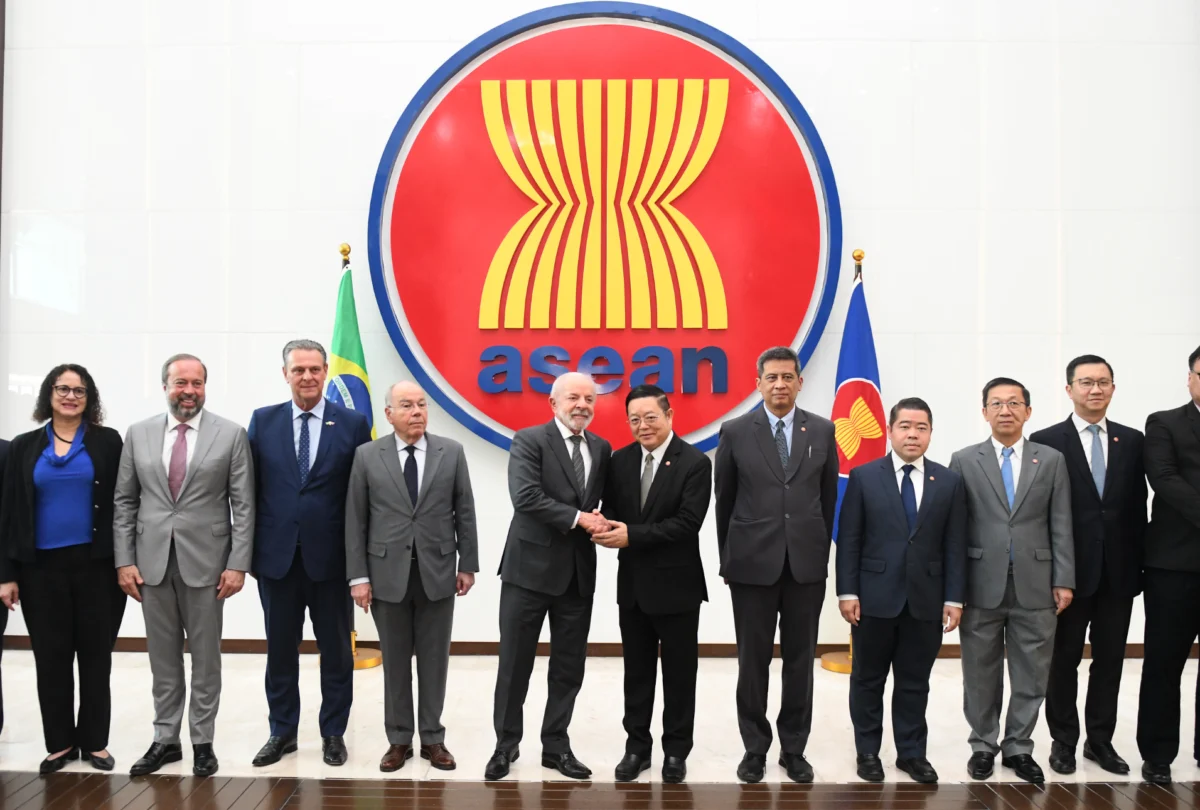
Escalation in the South China Sea: The Recent Clash
The immediate catalyst for the renewed US condemnation was a maritime incident that occurred on Monday, involving vessels from China and the Philippines. According to statements from the Philippine military, a Filipino sailor was wounded during an encounter near a disputed outpost within the crucial waterway. While specifics of the confrontation, such as the exact location or nature of the vessels involved, were not immediately detailed in the initial reports, these incidents typically transpire around features like Second Thomas Shoal (Ayungin Shoal), where the Philippines maintains a small contingent aboard the grounded BRP Sierra Madre. Such clashes often involve Chinese Coast Guard or maritime militia vessels attempting to block or harass Philippine resupply missions to these remote outposts.

In response to the Philippine accusations, the Chinese Coast Guard swiftly issued its own statement, dismissing Manila’s account as a "complete distortion of the truth." Beijing’s narrative often frames such encounters as legitimate law enforcement actions within what it considers its sovereign territory, asserting that Philippine vessels are engaging in illegal activities. This divergence in accounts is characteristic of the ongoing disputes, where both sides accuse the other of provocation, making independent verification challenging in the immediate aftermath of such events. These confrontations, though often localized, carry significant geopolitical weight, drawing in external powers due to the strategic importance of the South China Sea.
United States’ Robust Diplomatic Stance and Strategic Reaffirmation
Following the incident, the US State Department issued a forceful condemnation, stating, "China’s troubling pattern of provocations against the Philippines’ legitimate maritime operations undermines regional peace and stability and directly contradicts China’s repeated commitments to resolve disputes peacefully." This statement reiterates a consistent US position that challenges China’s expansive claims and actions in the South China Sea, which Washington views as inconsistent with international law, particularly the 2016 Permanent Court of Arbitration ruling.

Secretary Rubio’s arrival in Manila was highly anticipated, given the timing of the clash and his prior commitments to bolster US alliances in the region. His visit marks his first as Secretary of State to the Philippines, a nation with which the United States shares a longstanding Mutual Defense Treaty (MDT). This treaty, signed in 1951, commits both countries to come to each other’s aid in the event of an armed attack, a cornerstone of security in the Indo-Pacific. The US has repeatedly affirmed that this MDT extends to Philippine public vessels, aircraft, and armed forces—including its coast guard—anywhere in the South China Sea, a critical reassurance for Manila.
Further articulating Washington’s strategic priorities, Secretary Rubio penned an op-ed published in Philippine media outlets on Tuesday morning. In it, he "heralded Washington’s commitment ‘to freedom of navigation in Southeast Asia’ while reaffirming the US defensive umbrella in the region." His words carried a thinly veiled warning to Beijing: "This freedom is by no means guaranteed. If these waters were to fall under the control of a power willing to use trade as a geopolitical weapon, both the United States and the ASEAN states would face serious new threats to their sovereignty, security, and economic future." This direct allusion to China underscored concerns about Beijing’s potential to leverage its economic and military might to control vital global trade routes, thereby impacting the economic stability and sovereignty of nations reliant on these maritime passages.
Rubio’s Extensive Diplomatic Agenda in Manila

Secretary Rubio’s primary purpose in Manila is to attend a meeting of his counterparts from the 11-member Association of Southeast Asian Nations (ASEAN). This forum provides a crucial platform for multilateral diplomacy, allowing the US to engage directly with key regional players on security, economic, and political issues. While his entourage has not publicly confirmed a bilateral meeting with his Chinese counterpart, Wang Yi, who is also scheduled to be in Manila on Wednesday and Thursday for the ASEAN meetings, Rubio has expressed openness to the possibility. Such a meeting, if it occurs, would be a high-stakes diplomatic encounter, offering a direct channel for communication on the contentious South China Sea issue and broader US-China relations. The two top diplomats have previously met on the sidelines of the ASEAN summit in Kuala Lumpur last year and again in Munich in February, indicating a pattern of engagement despite significant geopolitical friction.
Beyond the ASEAN ministerial, Secretary Rubio has a packed schedule of bilateral and multilateral engagements. Speaking to the press before his departure from Washington on Sunday, he indicated plans to participate in a meeting with fellow Quad countries—Australia, Japan, and India—on the sidelines of the ASEAN summit. The Quadrilateral Security Dialogue, or Quad, is a strategic security dialogue between these four nations, focused on maintaining a free, open, prosperous, and inclusive Indo-Pacific. This meeting will likely address regional security challenges, including the South China Sea, and coordinate strategies for promoting shared values and interests. Additionally, Rubio scheduled meetings with South Korea and possibly Vietnam, both crucial partners in the US Indo-Pacific strategy, sharing concerns about maritime security and regional stability.
Rubio also outlined a significant economic dimension to his diplomatic outreach. He intends to raise the issue of US economic commitment to energy infrastructure, critical minerals, and artificial intelligence during these various meetings. This focus highlights the Biden administration’s broader strategy to deepen economic engagement with the Indo-Pacific, offering alternatives to China’s Belt and Road Initiative and strengthening supply chain resilience, particularly in sectors vital for future technological advancement and green energy transitions.

Historical Context and the Geopolitical Significance of the South China Sea
The South China Sea is one of the most geopolitically complex and strategically vital waterways in the world. It serves as a major global trade route, through which an estimated one-third of global shipping—trillions of dollars in trade annually—passes. It is also believed to hold vast reserves of oil and natural gas, as well as rich fishing grounds, making control over its resources a significant economic driver for claimant states.
Beijing claims sovereignty over almost the entire South China Sea, an assertion encapsulated by its "nine-dash line," a demarcation that extends hundreds of miles from its southern coast, encroaching upon the exclusive economic zones (EEZs) of several neighboring countries. This claim, however, was decisively rejected by an international arbitration tribunal in The Hague in 2016, following a case brought by the Philippines. The Permanent Court of Arbitration ruled that China’s claims had no legal basis under the United Nations Convention on the Law of the Sea (UNCLOS), to which China is a signatory. Beijing, however, has consistently rejected this ruling, calling it "null and void" and refusing to recognize its legitimacy.

Multiple ASEAN member states, including the Philippines, Vietnam, Malaysia, Brunei, and Indonesia, have territorial claims that overlap with China’s expansive assertions. This creates a constant source of friction, leading to frequent standoffs, confrontations, and incidents involving naval, coast guard, and fishing vessels from various nations. China’s construction of artificial islands and militarization of features in the Spratly and Paracel Islands have further exacerbated tensions, altering the physical geography and military balance of power in the region.
ASEAN’s Delicate Balancing Act
ASEAN, as a regional bloc, finds itself in a challenging position, seeking to maintain unity and stability among its diverse members while navigating the competing interests of major powers. While several ASEAN states are claimants in the South China Sea dispute, the bloc as a whole has struggled to present a unified front against China due to varying economic ties and diplomatic considerations. Efforts to establish a Code of Conduct (COC) in the South China Sea, aimed at preventing incidents and managing disputes peacefully, have dragged on for decades, with little substantive progress. The current tensions underscore the urgent need for an effective COC, yet negotiations remain fraught with challenges, primarily due to China’s reluctance to agree to a legally binding and enforceable framework.

Broader Geopolitical Implications and Global Context
The renewed tensions in the South China Sea and Secretary Rubio’s visit to Manila are not isolated events but are situated within a broader context of shifting global power dynamics and strategic competition. The US, under successive administrations, has emphasized its commitment to a "free and open Indo-Pacific," a strategy aimed at countering China’s growing influence and ensuring adherence to international rules and norms. The strengthening of alliances like the US-Philippines MDT and multilateral groupings like the Quad are central to this strategy.
Furthermore, the article briefly notes that "The visit comes as the United States and Iran are once again embroiled in conflict, more than a week after the resumption of hostilities over another strategic waterway, the Strait of Hormuz." This detail, while seemingly tangential, highlights the multifaceted nature of US global security commitments. It suggests that while the Indo-Pacific is a primary focus, Washington’s strategic attention is often divided across multiple theaters, each presenting its own challenges to maritime security and global trade. The Strait of Hormuz, like the South China Sea, is a critical chokepoint for global energy supplies, and conflicts there have significant international repercussions. This broader context underscores the global interconnectedness of maritime security and the constant demands on US diplomatic and military resources.

Outlook and Future Implications
The current situation in the South China Sea remains highly volatile. The incident involving the Philippine sailor serves as a stark reminder of the potential for miscalculation and escalation. Secretary Rubio’s robust condemnation and reaffirmation of US commitments are intended to send a clear message to Beijing about the red lines Washington and its allies are prepared to defend. However, China’s consistent refusal to acknowledge international rulings and its continued assertion of sovereignty suggest that these confrontations are likely to persist.
The diplomatic efforts at the ASEAN summit, particularly any potential engagement between Rubio and Wang Yi, will be closely watched for signs of de-escalation or further hardening of positions. The discussions with Quad partners, South Korea, and Vietnam will further solidify a network of like-minded nations committed to upholding maritime law and regional stability. Ultimately, the future of peace and prosperity in the Indo-Pacific hinges on the ability of regional and global powers to manage these complex disputes through dialogue and adherence to international legal frameworks, preventing localized incidents from spiraling into broader conflicts. The outcomes of these high-stakes diplomatic meetings in Manila will undoubtedly shape the trajectory of security and economic cooperation in one of the world’s most dynamic and critical regions.

 Sagoh
Sagoh
 Asro
Asro