Nana
Nana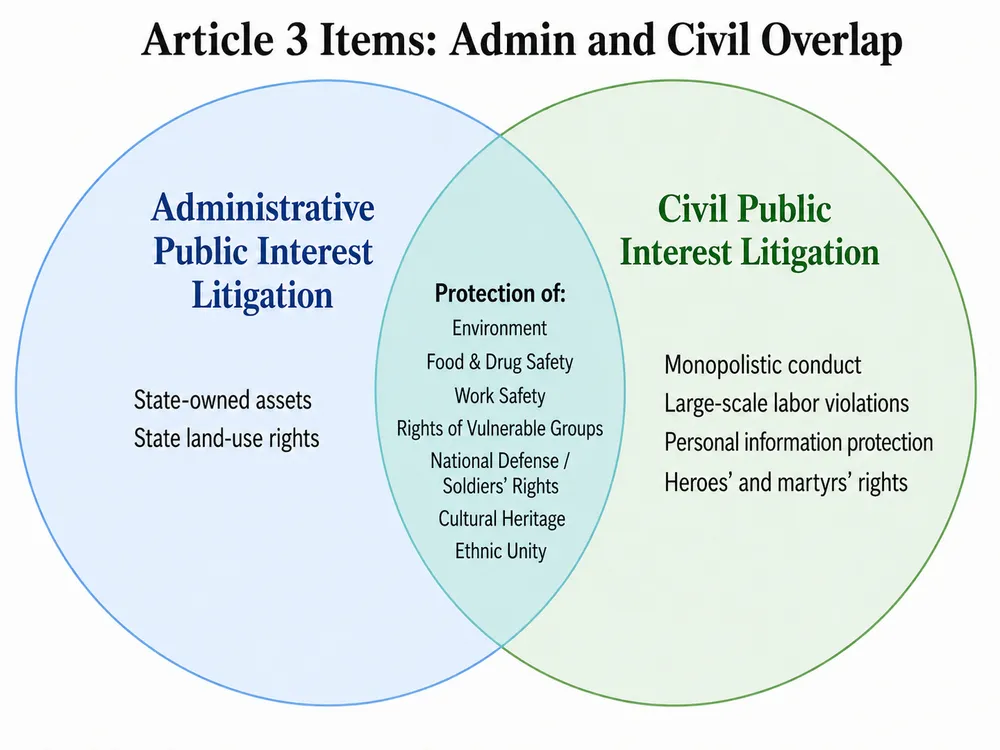
The National People’s Congress of the People’s Republic of China has released the second review draft of the Public Interest Litigation Law, marking a significant milestone in the country’s efforts to codify and expand its unique "procuratorate-led" public interest legal framework. This specialized legislation aims to provide a unified procedural basis for protecting national interests and societal public welfare, consolidating nearly a decade of judicial experimentation into a comprehensive statutory code. By establishing clear guidelines for jurisdiction, investigation, trial, and enforcement, the law seeks to harmonize the roles of the People’s Procuratorates and the People’s Courts in addressing systemic harms ranging from environmental degradation to data privacy breaches.
A New Statutory Foundation for Public Interest Protection
The draft law, structured across six chapters and 52 articles, is anchored in the Constitution of the P.R.C. Its primary objective is to regulate the activities of the procuratorate—China’s state prosecution service—in its capacity as the "representative of the public interest." While previous public interest litigation (PIL) activities were governed by disparate provisions in the Civil Procedure Law and the Administrative Litigation Law, this new legislation creates a standalone framework tailored to the complexities of public interest cases.
Under Article 3, the draft significantly broadens the scope of administrative public interest litigation. Procuratorates are empowered to file suits against administrative organs that either abuse their authority or fail to perform their regulatory duties in nine specific areas. These include ecological and environmental protection, food and drug safety, state-owned asset protection, production safety, and the protection of vulnerable groups such as minors, women, and the elderly. Notably, the draft includes modern challenges such as countering telecommunications fraud and promoting ethnic unity, reflecting the government’s evolving priorities in social governance.
For civil public interest litigation, the law targets natural persons, legal persons, and unincorporated organizations. Beyond environmental and safety issues, the draft specifically includes anti-monopoly actions, large-scale labor rights violations, personal information protection, and the defense of the reputation and honor of "heroes and martyrs." This wide-ranging jurisdiction positions the procuratorate as a central figure in China’s modern regulatory landscape.
Chronology and Evolution of Public Interest Litigation in China
The release of this second review draft is the culmination of a decade-long legislative journey. To understand the significance of the current draft, it is necessary to examine the timeline of PIL development in China:
- 2014: The Fourth Plenary Session of the 18th CPC Central Committee first proposed the establishment of a public interest litigation system led by the procuratorate.
- 2015: The Standing Committee of the National People’s Congress (NPCSC) authorized a two-year pilot program in 13 provincial-level regions, allowing procuratorates to initiate PIL cases in limited fields like environment and food safety.
- 2017: Following the success of the pilot, the Civil Procedure Law and the Administrative Litigation Law were formally amended to grant procuratorates a permanent legal basis for filing public interest lawsuits.
- 2018–2022: The scope of PIL expanded through various "specialized" laws. For example, the Heroes and Martyrs Protection Law (2018) and the Personal Information Protection Law (2021) added specific categories of public interest that the procuratorate could defend.
- 2023: The NPC included the drafting of a dedicated Public Interest Litigation Law in its five-year legislative plan to resolve procedural inconsistencies and clarify the boundaries of prosecutorial power.
- 2024: The first and now second review drafts were released for public comment, signaling that the law is nearing final adoption.
Supporting Data: The Scale of Prosecutorial Intervention
Statistical data from the Supreme People’s Procuratorate (SPP) underscores the necessity of this unified law. Since the formal implementation of the PIL system in July 2017, the volume of cases has grown exponentially. According to official reports, between 2017 and the end of 2023, Chinese procuratorates handled more than 900,000 public interest litigation cases.
Environmental protection remains the dominant sector, accounting for approximately 50% of all cases. In 2023 alone, procuratorates filed over 190,000 PIL cases, a significant portion of which were resolved through "procuratorial recommendations" without ever reaching a courtroom. This "pre-litigation" success rate is a hallmark of the Chinese system; the SPP reports that over 90% of administrative organs correct their behavior after receiving a formal recommendation from the procuratorate, demonstrating the efficiency of the supervisory model the new law seeks to formalize.
Procedural Innovations and Investigative Powers
One of the most critical sections of the draft law is Chapter III, which outlines the investigation and filing process. Article 16 grants procuratorates the explicit power to collect evidence, including questioning witnesses, inspecting sites, and evaluating digital data. However, Article 17 sets a clear boundary: procurators must not employ "compulsory measures" such as physical detention or the freezing of assets, which are typically reserved for criminal investigations. This distinction ensures that PIL remains a civil or administrative corrective tool rather than a punitive criminal instrument.

The "Procuratorial Recommendation" process, detailed in Section 2 of Chapter III, serves as a mandatory pre-litigation step for administrative cases. Before filing a lawsuit, the procuratorate must notify the relevant administrative organ of its failure to act. The organ generally has two months to rectify the issue. In urgent cases involving immediate harm to the public interest, this period is shortened to 15 days. Only if the organ fails to correct its behavior within the timeframe can the procuratorate proceed to a court trial.
Official Responses and Stakeholder Perspectives
Legal experts and officials have characterized the draft as a "systemic upgrade" of China’s judicial oversight. Representatives from the SPP have emphasized that the law is not intended to replace administrative governance but to "coordinate and supplement" it. Article 5 specifically states that procuratorates must not interfere with the lawful exercise of administrative duties, a provision designed to reassure local governments that the law is a tool for correction rather than a challenge to their authority.
Environmental NGOs and legal scholars have generally welcomed the draft, particularly the provisions in Article 27 that allow for "litigation support." Under this article, if an NGO or another authorized organization initiates a civil public interest lawsuit, the procuratorate can provide legal and evidentiary support, effectively lowering the barrier to entry for civil society groups which often lack the investigative resources of the state.
However, some international observers have noted the implications of Article 51, which explicitly extends the law’s reach to foreign organizations and individuals whose actions harm China’s national or public interests. This extraterritorial dimension suggests that foreign companies operating outside China could potentially face litigation in Chinese courts for environmental damage or data violations that affect the Chinese public.
Analysis of Broader Implications
The formalization of the Public Interest Litigation Law carries profound implications for both domestic governance and international business. Domestically, it reinforces the "Supervision" function of the procuratorate, moving it beyond the traditional role of a criminal prosecutor into a more active "social architect." By including areas like "production safety" and "state-owned land usage rights," the law provides a legal mechanism to hold local officials accountable for negligence that leads to industrial disasters or the loss of public funds.
For the private sector, particularly in the tech and manufacturing industries, the law raises the stakes for compliance. The inclusion of "anti-monopoly" and "personal information protection" in Article 3 means that large-scale data breaches or unfair market practices are no longer just regulatory matters; they are potential triggers for a state-led lawsuit. Unlike private litigation, a suit led by the procuratorate brings the full investigative weight of the state, making the cost of non-compliance significantly higher.
Furthermore, the law introduces a "third-party performance" mechanism in Article 48. If a defendant refuses to restore an environment or apologize as ordered by a court, the court can hire a professional institution to carry out the work at the defendant’s expense. This ensures that judgments result in actual restoration of the public interest rather than mere paper victories.
Conclusion
The P.R.C. Public Interest Litigation Law (Second Review Draft) represents a sophisticated effort to institutionalize the protection of the public good through a hybrid of administrative oversight and judicial enforcement. By providing a clear, unified procedural path, the law aims to reduce the "governance gaps" that often occur when administrative agencies are slow to act. As the draft moves toward its final reading, its emphasis on objective fairness, transparency, and "protection first" will likely set the tone for Chinese judicial practice for the next decade, offering a unique model of public interest law that contrasts with the private-actor-driven systems found in many Western jurisdictions.


 Rifan Muazin
 Raul Delapena Setiawan