Lina Hope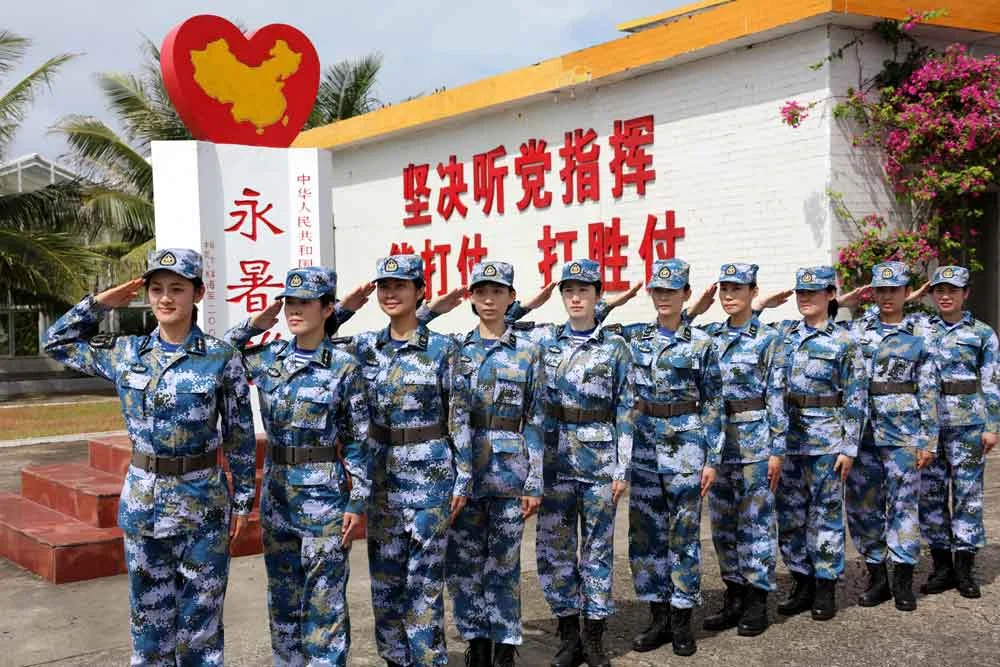
The People’s Liberation Army (PLA) Navy officially announced a landmark deployment in December 2017, stationing a contingent of ten female service members to the garrison guarding the Nansha Islands in the South China Sea. This pivotal move marked the first instance of female personnel being permanently stationed on these strategically vital, southernmost territories of China, signifying a significant evolution in the PLA’s operational capabilities and personnel management. The historic deployment commenced formally on Yongshu Reef on a Monday, signaling a new chapter for the garrison and for women within the Chinese military.
A New Chapter for Garrison Life on Yongshu Reef
The ten women comprising this pioneering group are a diverse mix of officers and sergeants, bringing with them a high level of education and specialized skills crucial for the complex operations of a remote island garrison. With an average age of 23, all members possess university diplomas, reflecting the PLA’s emphasis on recruiting highly qualified personnel. Their roles within the garrison are varied and critical, encompassing a wide range of essential functions from staff duties and communications to vital medical services. This integration of female talent into core operational and support roles underscores a broader trend within the PLA to diversify its workforce and leverage a wider pool of expertise. The deployment to Yongshu Reef, one of the largest and most developed of China’s outposts in the Nansha Islands, highlights the sophisticated infrastructure now present in these distant territories.
Before this unprecedented deployment, female PLA members had indeed visited and performed duties on the Nansha Islands, but these engagements were limited to short-term missions. These previous assignments, often for specific tasks or inspections, meant that the female personnel remained under the command of their original mainland units and did not form part of the permanent island garrison. The current deployment, therefore, represents a fundamental shift from temporary assignments to full integration into the island’s permanent operational structure, underscoring a long-term commitment to a diversified and fully functional garrison.
Strategic Context: The Nansha Islands and South China Sea
The Nansha Islands, internationally known as the Spratly Islands, are a highly contested archipelago in the South China Sea, claimed in whole or in part by China, Vietnam, the Philippines, Malaysia, Brunei, and Taiwan. Their strategic importance cannot be overstated. Located along vital international shipping lanes through which trillions of dollars in trade pass annually, the islands are also believed to sit atop significant oil and natural gas reserves, as well as rich fishing grounds. China’s assertion of "indisputable sovereignty" over the islands and surrounding waters forms a core tenet of its foreign and defense policy, leading to extensive reclamation and construction efforts on several features, including Yongshu Reef (Fiery Cross Reef).
Yongshu Reef, in particular, has undergone substantial transformation. China has developed it into a fully functional outpost featuring an airfield capable of accommodating military aircraft, a deep-water harbor, and extensive support facilities. These developments are integral to China’s ability to project power and maintain its presence in the southern reaches of the South China Sea. The deployment of female personnel to such a strategically sensitive and infrastructurally advanced location underscores China’s confidence in its control and its commitment to normalizing and enhancing its presence in the region.
China’s Evolving Military and Female Integration
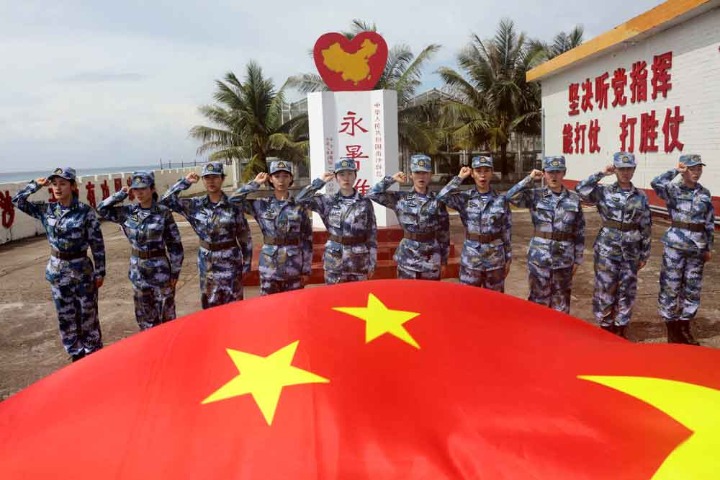
The integration of women into combat and frontline support roles is a global trend among modern militaries, and the PLA is no exception. Over the past few decades, China has progressively expanded the roles available to women within its armed forces, moving beyond traditional administrative and medical positions to include pilots, special forces operators, naval officers, and now, permanent garrison members in contested territories. This evolution is reflective of the PLA’s broader modernization drive, aiming to create a more versatile, highly trained, and efficient fighting force.
The decision to deploy female service members to the Nansha Islands aligns with several strategic objectives. Firstly, it enhances the PLA’s operational flexibility and personnel diversity. Secondly, it contributes to the overall welfare and morale of the garrison by providing a more inclusive and representative environment. Globally, the presence of women in garrisons is often associated with improved social dynamics, enhanced problem-solving capabilities, and a more comprehensive approach to personnel management. For the PLA, this move also serves as a public demonstration of its commitment to gender equality within its ranks, showcasing its progressive stance on military service to both domestic and international audiences. The average age and high educational attainment of the deployed women further emphasize the PLA’s strategy of deploying highly competent individuals to critical posts.
Infrastructure and Living Conditions on Yongshu Reef
The remote and often harsh environment of the Nansha Islands presents unique challenges for long-term habitation. However, reports from the deployed personnel paint a picture of surprisingly developed and comfortable living conditions on Yongshu Reef. Zhou Yaling, one of the ten pioneering women, was quoted expressing her pleasant surprise, stating, "Nansha is more beautiful than what they had imagined. There are airports, harbors, streets, hospitals and sporting grounds. All of them make the islands like a lovely city on the sea."
This vivid description highlights the extensive investment China has made in transforming these remote coral reefs into livable and sustainable outposts. The presence of an airport facilitates rapid transportation and logistical support, while deep-water harbors enable the docking of larger naval vessels and supply ships. The mention of "streets" suggests a developed internal road network, and "hospitals" indicates comprehensive medical facilities, crucial for personnel operating far from mainland medical centers. Furthermore, "sporting grounds" underscore the attention paid to recreational facilities and the morale of the garrison, recognizing the psychological demands of isolated service. These amenities are not merely conveniences but essential components of maintaining a healthy, effective, and long-term human presence in a challenging geopolitical environment.
Ensuring Welfare in Remote Deployments
Recognizing the unique psychological and physical demands of serving in such a remote and strategically sensitive location, the PLA has implemented specific measures to ensure the well-being of its personnel. Zhang Jiahong, the political commissar of the PLA Nansha Islands Garrison, confirmed that the female members would be routinely rotated back to the mainland every several months for rest periods. This systematic approach to rest and recuperation is vital for preventing burnout, maintaining morale, and ensuring the long-term health and operational effectiveness of the deployed troops.
Such rotation policies are standard practice for militaries operating in challenging or isolated environments worldwide. They mitigate the effects of prolonged separation from family, limited social interaction, and the constant stress associated with living in a geopolitically tense area. By providing regular breaks on the mainland, the PLA demonstrates a commitment to the holistic welfare of its service members, particularly those undertaking pioneering roles in novel operational settings. This policy is crucial not only for the individual well-being of the female soldiers but also for the overall sustainability and effectiveness of the Nansha garrison.
Chronology of China’s Presence and Female Military Roles
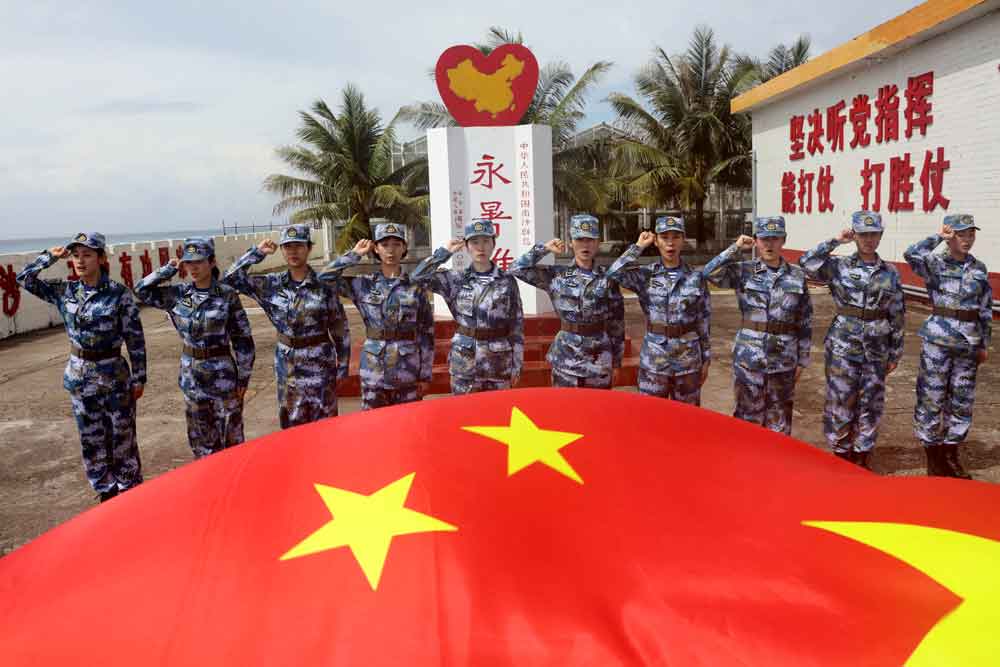
China’s historical claims to the Nansha Islands date back centuries, with modern presence intensifying in the late 20th and early 21st centuries.
- 1940s-1950s: Post-WWII, China reasserted claims, publishing maps.
- 1980s: China established a more permanent presence on several features in the Nansha Islands, including Yongshu Reef, often in response to occupations by other claimant states.
- 2013-2016: Extensive land reclamation and construction activities dramatically expanded the size and capabilities of features like Yongshu Reef, transforming them into artificial islands capable of supporting significant military infrastructure.
Parallel to these developments, the role of women in the PLA has steadily evolved:
- 1950s-1970s: Women primarily served in support roles such as communications, medical services, and cultural work.
- 1980s-1990s: Expansion of roles into scientific research, education, and certain technical fields.
- 2000s onwards: Significant integration into more diverse and traditionally male-dominated roles, including combat pilot training, naval operations, special forces, and now, frontline garrison duty in contested areas. The deployment in December 2017 to the Nansha Islands stands as a testament to this ongoing modernization and gender integration, representing a critical milestone in both the PLA’s operational diversification and its commitment to leveraging the full spectrum of its human resources.
Beyond the Garrison: Broader Implications
The deployment of female service members to the Nansha Islands carries significant symbolic and operational implications, both domestically and internationally. Symbolically, it reinforces China’s assertion of permanent and legitimate sovereignty over the Nansha Islands. The establishment of a diversified, fully integrated garrison, including women, projects an image of normalcy and stability for its presence in a highly disputed region. It signals that these outposts are not merely temporary military installations but evolving, self-sustaining communities.
Operationally, the integration of female personnel can enhance the garrison’s capabilities in various ways. In roles such as communications, medical services, and administrative support, their skills are directly transferable and often crucial for efficient operations. Furthermore, a diverse workforce can bring varied perspectives and problem-solving approaches, potentially leading to more robust and adaptable garrison management. This move also highlights the PLA’s commitment to building a modern military that reflects contemporary societal values, thereby boosting morale and recruitment appeal.
Internationally, this development may be viewed as a further consolidation of China’s presence and influence in the South China Sea. While not a direct military escalation, it adds another layer of permanence and sophistication to China’s operations in the region. Other claimant nations and international observers will likely interpret this as a reinforcement of China’s long-term strategy for the Nansha Islands, further solidifying its "faits accomplis" in the contested waters.
Challenges and Future Outlook
Despite the advanced facilities, serving in the Nansha Islands presents unique challenges. The isolation, the tropical climate, the constant geopolitical tension, and the limited social outlets can take a toll on personnel. The PLA’s commitment to regular rotations and welfare provisions is therefore paramount. The successful integration of this pioneering female contingent will likely pave the way for similar deployments in other remote or challenging locations, further diversifying the PLA’s operational capabilities across its expansive domain.
This deployment marks a significant step in the PLA’s journey towards becoming a world-class military. By integrating highly educated and capable women into critical, permanent garrison roles in a strategically vital and contested region, China not only enhances its immediate operational effectiveness but also sends a clear message about its long-term vision for its military and its presence in the South China Sea. The experiences and successes of these ten women will undoubtedly inform future personnel policies and further shape the evolving landscape of military service in China.


 Iffa Jayyana
 Laily UPN