Raul Delapena Setiawan
Koror, Palau – On the final day of a pivotal regional summit, Palau’s President Surangel Whipps Jr. issued a fervent call on Thursday for a "unified" Pacific response to China’s test-firing of an intercontinental ballistic missile (ICBM) in July. The gathering, the 18-member Pacific Islands Forum (PIF), has been overshadowed by allegations of Chinese interference, underscoring the escalating geopolitical competition for influence in the strategically vital Pacific Ocean. President Whipps emphasized the critical need for regional solidarity to compel Beijing to respect sovereignty, uphold transparency, and act as a responsible international partner.
The July missile test, described by monitors as landing in an oceanic expanse between the Solomon Islands, Nauru, and Tuvalu, demonstrated China’s expanding military capabilities and its assertive posture in a region historically dominated by Western powers. The test, for which China provided only short notice to a limited number of nations, sparked immediate condemnation from several Pacific leaders. However, the PIF, despite the palpable concerns among its members, had yet to issue a formal, collective response as the summit drew to a close. Palau, as the host nation and a steadfast diplomatic ally of Taiwan, has been at the forefront of advocating for a robust, coordinated message from the region.
Palau’s Stance and the Call for Regional Unity

President Whipps articulated Palau’s strong disapproval of China’s actions, telling journalists, "That’s definitely something that we’ll be discussing today, and a unified Pacific voice is critical in getting Beijing to respect sovereignty, to respect transparency, and to be a responsible partner." He continued, "I think that’s the message that we should be sending to Beijing. So it’s important we have a unified position and we’ll work on that." The Palauan leader did not mince words, stating that Beijing had "threatened and really disrespected" the region by conducting the missile test without adequate prior notification. "They never bothered to tell us that that’s what’s happening," Whipps asserted, highlighting a profound breach of regional trust and international protocol regarding military exercises in shared spaces.
China, in response to global criticism, maintained that the launch was "a routine arrangement of China’s annual military training" and that "relevant countries were informed in advance." However, the stark discrepancy between China’s claim of informing "relevant countries" and the widespread lack of notification perceived by Pacific nations has only fueled regional anxieties and reinforced calls for greater transparency. The PIF summit’s culmination in a leaders’ retreat on Thursday was expected to be the crucible where the precise wording for a joint communiqué addressing these multifaceted challenges would be hammered out, reflecting the delicate balance member states must strike between asserting their sovereignty and navigating complex diplomatic relations.
The Chinese Missile Test: Details and Geopolitical Significance
The intercontinental ballistic missile test in July represented a significant display of China’s rapidly advancing military technology and its growing strategic reach. While specific details about the missile type were not officially disclosed, the designation "ICBM" implies a capability to deliver warheads over vast distances, potentially thousands of kilometers. Such tests are often conducted to validate missile systems, enhance deterrence capabilities, and project power. For the small island nations of the Pacific, the trajectory and landing zone of such a powerful weapon, even if unarmed, within their broad maritime zones raise profound concerns about environmental safety, freedom of navigation, and the broader militarization of the region.

The precise location where the missile reportedly landed – a patch of ocean between the Solomon Islands, Nauru, and Tuvalu – falls within the exclusive economic zones (EEZs) or adjacent international waters important to these nations. While international law permits missile tests in international waters with appropriate safety warnings, the perceived lack of sufficient and timely notification to all affected states, as articulated by President Whipps, is a critical point of contention. This act is viewed by some as an assertion of power and a disregard for the sensibilities and sovereign interests of smaller states in the region, intensifying existing concerns about China’s intentions.
Geopolitical Chessboard: China’s Expanding Influence in the Pacific
The PIF summit in Palau underscored the intensifying geopolitical competition in the Pacific, with China’s security and economic influence being a dominant theme. Beijing has, over the past two decades, significantly expanded its engagement with Pacific Island nations through various initiatives, including the Belt and Road Initiative (BRI), extensive aid packages, infrastructure development projects, and diplomatic outreach. This engagement has often been framed as mutually beneficial cooperation, aiming to foster economic growth and improve living standards in the region.
However, critics, particularly from Western allies like the United States, Australia, and New Zealand, view China’s rapid expansion as a strategic maneuver to enhance its military presence, secure access to vital maritime routes, and challenge the existing regional order. Concerns have been raised about "debt diplomacy," where vulnerable nations might become over-reliant on Chinese loans, potentially compromising their sovereignty. Beijing’s push for security pacts, such as the controversial agreement signed with the Solomon Islands in 2022, has further exacerbated these fears, prompting renewed engagement from traditional partners. The recent establishment of an embassy in the Solomon Islands, coupled with discussions about naval access, has been seen as a significant step in China’s regional security ambitions.

Taiwan’s Role and Diplomatic Tensions
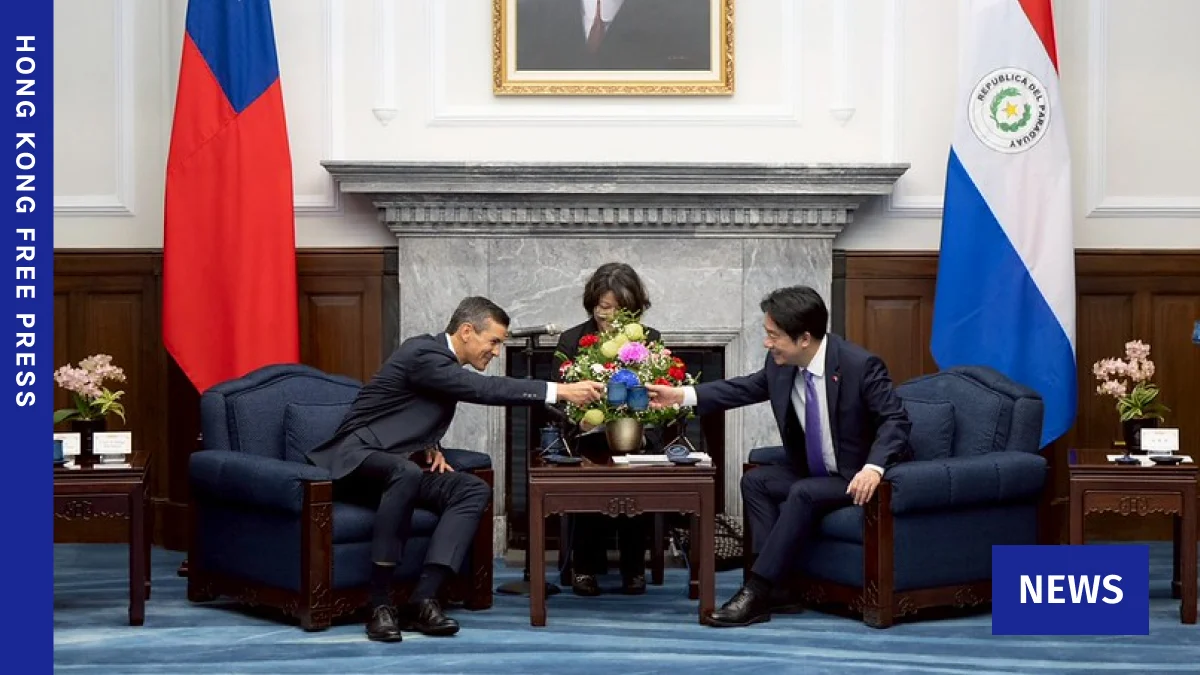
The hosting of the summit by Palau, one of Taiwan’s dwindling number of diplomatic allies, added a layer of acute diplomatic tension. Palau explicitly invited Taiwan’s Foreign Minister Lin Chia-lung to attend sideline events as an aid partner, a move that drew immediate and sharp rebuke from Beijing. China’s Pacific envoy, Qian Bo, publicly warned of "consequences" following Taiwan’s presence at the opening ceremony. This incident highlights the ongoing diplomatic tug-of-war in the Pacific, where Beijing leverages its economic and political power to isolate Taiwan internationally. Over the years, several Pacific nations, including Kiribati and the Solomon Islands, have switched their diplomatic recognition from Taipei to Beijing, often after receiving substantial economic incentives. Palau’s decision to openly host a Taiwanese minister, despite the implicit threats, signals a clear defiance of Beijing’s "One China" policy and a commitment to its diplomatic ties with Taiwan.
Divisions within the Pacific Islands Forum and Allegations of Meddling
The summit was further complicated by a notable absence of several key leaders, who instead sent lower-ranked ministers. This situation led New Zealand Foreign Minister Winston Peters to suggest that foreign interference might have played a role in these absences. "Well, you’d be defying gravity and logic if you said it wasn’t a big problem," Peters remarked, hinting at external pressures on PIF members. Such alleged meddling, if confirmed, undermines the forum’s cohesion and its ability to forge a unified regional voice on critical issues like security and sovereignty.

Specific examples of this regional fragmentation were evident. Kiribati’s pro-Beijing president had already announced he would not be attending the summit. More dramatically, Solomon Islands Prime Minister Matthew Wale unexpectedly departed Palau on Sunday to address a political crisis at home, stemming from a no-confidence motion lodged against his leadership. This development is particularly significant given the Solomon Islands’ recent political trajectory. Under Wale’s predecessor, the nation became China’s closest partner in the Pacific, signing a secret security pact with Beijing that alarmed Australia, New Zealand, and the United States. Wale, upon his recent election, had vowed to review this pact and repair ties with Western allies, signaling a potential shift in the islands’ foreign policy orientation. His sudden departure and the domestic political turmoil underscore the fragility of governance in some Pacific nations and their susceptibility to both internal and external pressures, which can be exploited by competing global powers.
The Broader Security Implications and International Reactions
The Chinese ICBM test and the subsequent discussions at the PIF summit are set against a backdrop of increasing militarization and strategic competition in the Indo-Pacific. For Australia, New Zealand, and the United States, China’s growing assertiveness, particularly its military expansion, represents a direct challenge to regional stability and the rules-based international order. These Western allies have long viewed the Pacific Islands as their strategic backyard and have intensified their own diplomatic and aid efforts in response to China’s inroads. The US, for instance, has reopened embassies, increased aid, and deployed high-level officials to the region, while Australia and New Zealand have reinforced their defense cooperation and development assistance.
Analysts suggest that China’s missile test, irrespective of its stated "routine" nature, serves multiple strategic purposes: to demonstrate its power projection capabilities, to deter potential adversaries, and to send a message about its willingness to assert its interests. The perceived lack of transparency surrounding such a significant military exercise, particularly one impacting the maritime spaces of sovereign nations, risks escalating regional tensions and eroding trust. It also raises questions about adherence to international norms regarding safety of navigation and responsible conduct in international waters.

The Path Forward: Challenges for Regional Cohesion
Achieving a truly unified Pacific voice, as advocated by President Whipps, remains a significant challenge for the PIF. The forum’s members represent a diverse array of political systems, economic development levels, and strategic priorities. While many share concerns about climate change, illegal fishing, and the preservation of their sovereignty, their approaches to engaging with major powers like China, the US, and Australia often differ, influenced by historical ties, economic dependencies, and internal political dynamics. The allure of economic assistance and infrastructure development from China can be a powerful incentive, making it difficult for some nations to openly align against Beijing’s actions.
The summit’s final communiqué, if it manages to address the missile test directly and strongly, will be a crucial indicator of the PIF’s collective resolve. However, the internal divisions, the alleged external interference, and the complex web of diplomatic and economic relationships will undoubtedly temper any unified stance. The events in Palau highlight the ongoing struggle for the Pacific Islands to navigate a multipolar world, assert their agency, and protect their unique interests amidst the intensifying competition between global powers. The call for unity by Palau’s president is not merely a reaction to a single missile test, but a broader plea for the Pacific to define its own future in an increasingly contested geopolitical landscape.

 Sagoh
Sagoh
 Asro
Asro